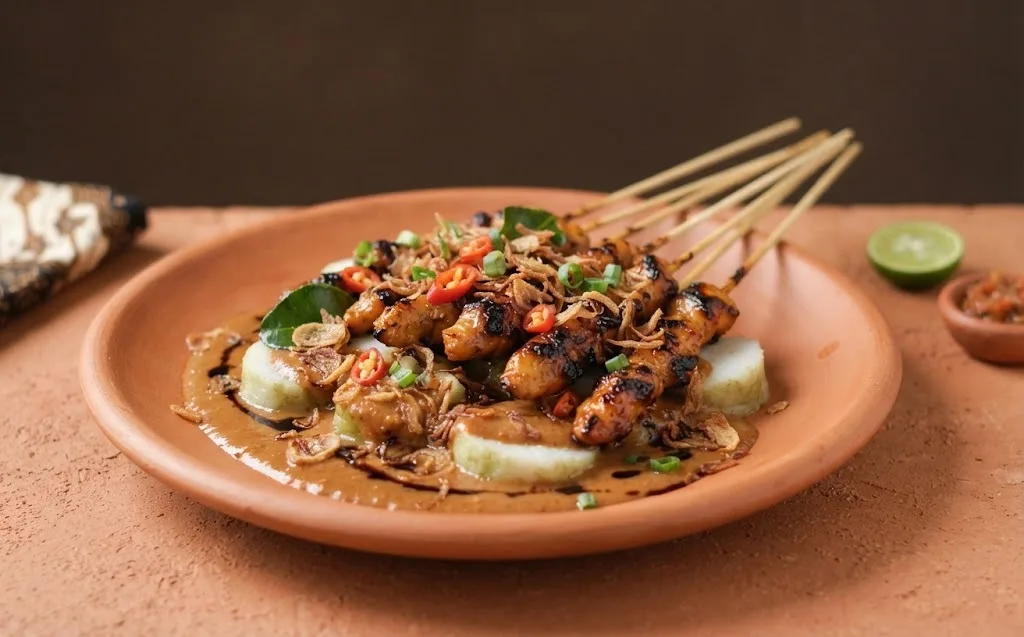
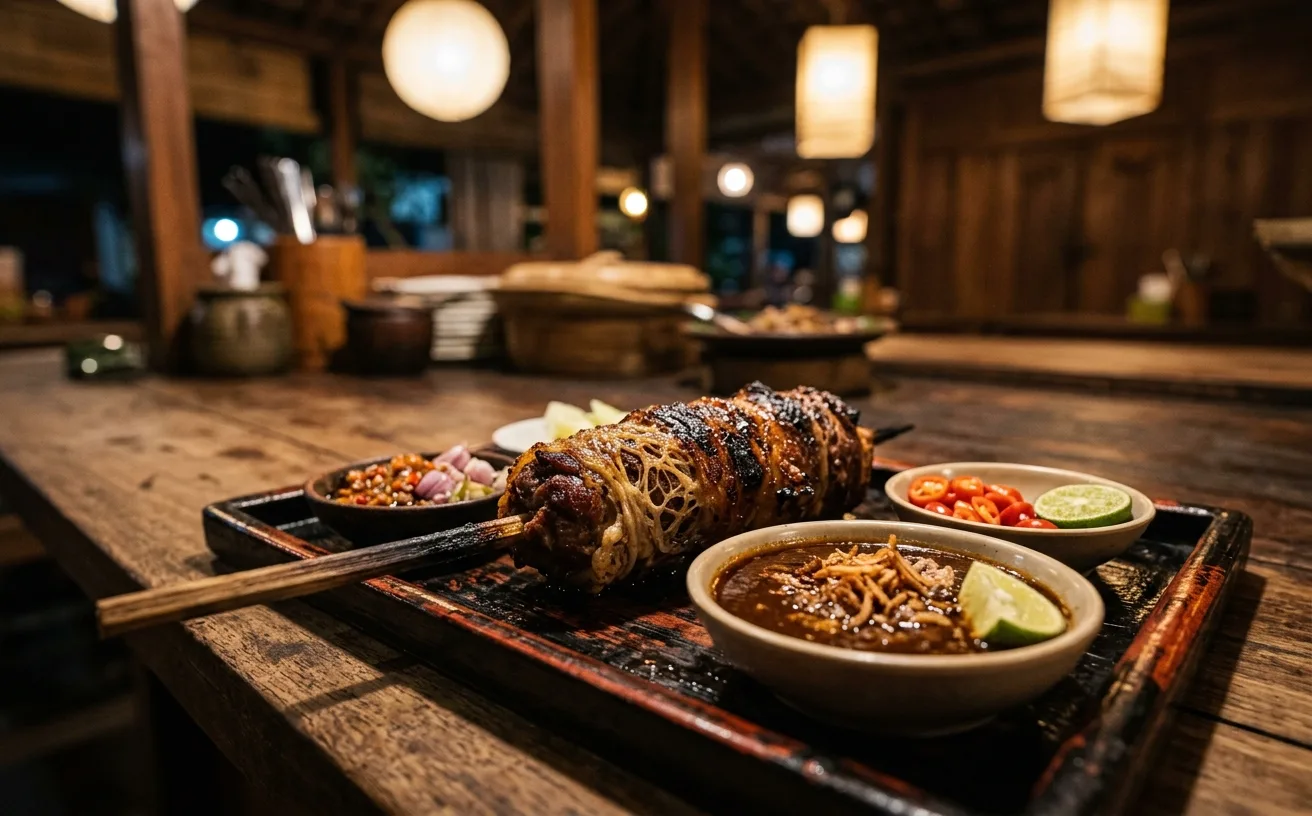
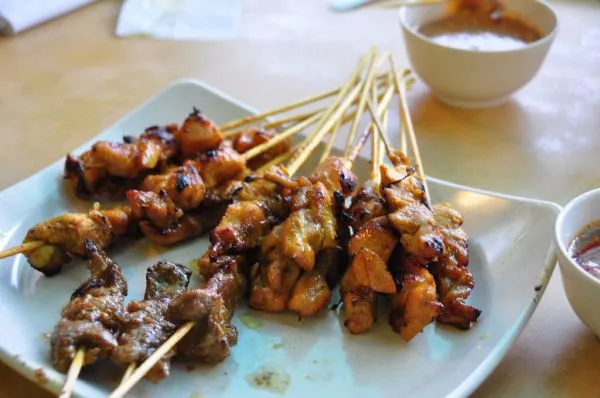
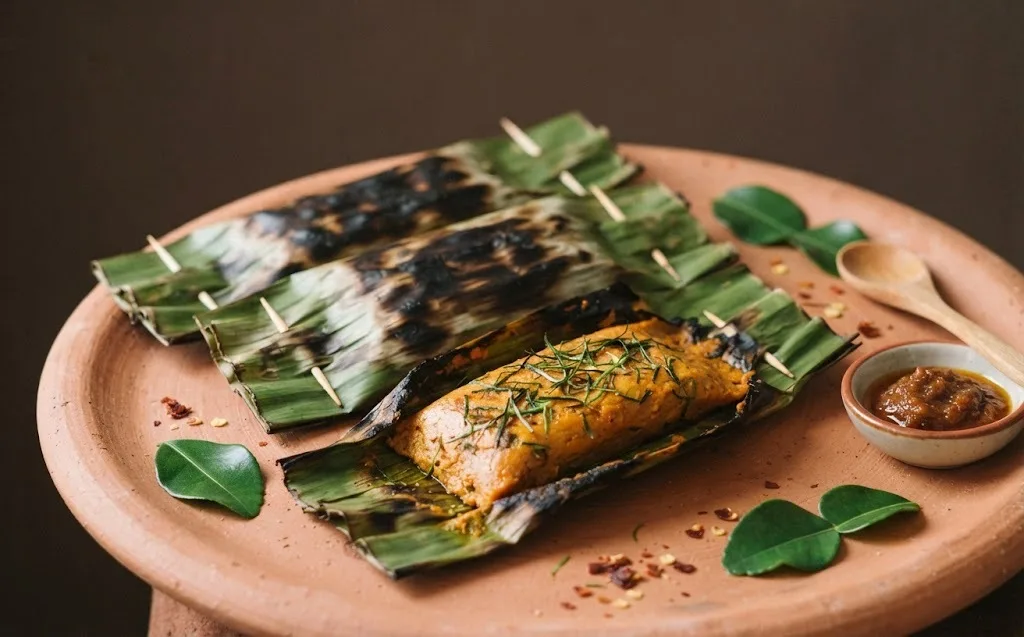
Young goat skewers, typically served not with peanut sauce but with a sharper dressing of sweet soy, raw shallots, chili and tomato (sambal kecap). Prized in Java, where the meat is often grilled unmarinated so the goat flavor stays front and center.
Also known as satay kambing, goat satay, Indonesian goat satay.
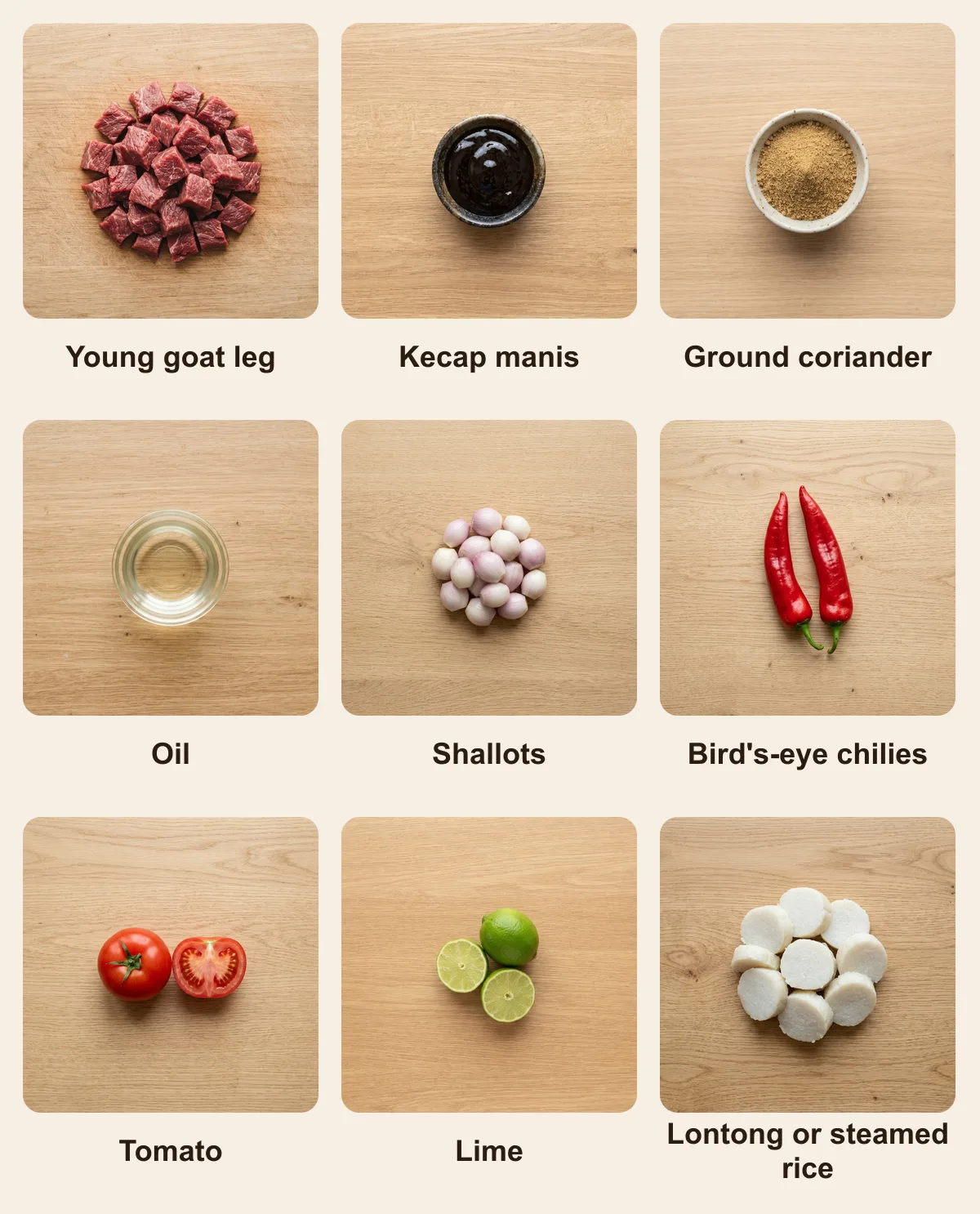
Ingredients
- 700 g young goat leg, in 2 cm cubes, some fat left on
- 6 tbsp kecap manis, divided
- 1 tsp ground coriander
- 1 tbsp oil
- 4 shallots, finely sliced
- 3 bird's-eye chilies, sliced
- 1 tomato, diced
- juice of 1 lime
- lontong or steamed rice, to serve
How to make it
- 1
Toss the goat with 2 tablespoons of kecap manis, the coriander and the oil — Tegal-style sate kambing skips long marinades to keep the goat flavour forward.
- 2
Thread onto bamboo skewers, slipping in an occasional cube of fat.
- 3
Grill over medium coals, fanning rather than flaring, 8-10 minutes; brush with another spoon of kecap manis in the final 2 minutes.
- 4
Stir the shallots, chilies, tomato and lime into the remaining kecap manis and serve this sambal kecap as a pool for dipping.
Pro tip: Everything rests on kambing muda — the youngest goat you can find; older goat needs a different recipe, not a longer marinade.
Where Sate Kambing comes from
It is prized in Java, and in Jakarta and Yogyakarta there are warungs that sell nothing else. The preference for young goat is specific and the age of the animal is often advertised, because kambing muda is mild and tender where an older animal is assertive in a way that divides opinion.
Yogyakarta pushes the same logic to its end point with sate klathak, the sister dish from Bantul: identical young goat, seasoned with little more than salt and pepper and grilled on iron bicycle spokes so the metal cooks each cube from the inside, with a light curry gravy on the side instead of sweet soy. Different dressing, same creed — let goat taste of goat.
Young goat with sambal kecap, set beside the other goat sates
For goat that tastes plainly of goat, Sate Kambing is the pick: kambing muda in small cubes, little or no marinade, and a sharp sambal kecap of sweet soy, raw shallot, chilli and tomato. Sate Klathak, its sister dish from Bantul, uses the same young goat but seasons larger cubes with little more than salt and pepper, grills them on iron spokes and serves a light curry gravy. Sate Madura can be made with goat too, though there the skewers are drenched in fine peanut sauce, which Kambing cooks avoid because it buries the meat. Sate Buntel minces goat or lamb and lets caul fat baste it, whereas Kambing keeps lean cubes moist with pieces of fat threaded between them.
Compare: Sate Klathak · Sate Madura · Sate Buntel
How Sate Kambing is cooked
Grilling without a marinade — at most the quick kecap manis toss used in the recipe here — is a deliberate choice and it changes the technique. With no marinade to protect it, goat needs a piece of fat threaded between the lean pieces — the same solution used from Uzbekistan to Iraq — and a moderate rather than fierce fire.
Some warungs tenderise with a rub of grated pineapple or papaya for a short time, which is a legitimate local practice, but the window is short: both fruits contain aggressive protein-digesting enzymes and thirty minutes is often enough. The sambal kecap is made fresh and raw, and its sharpness against unadorned goat is the entire design.
Ingredients and shopping
Young goat (kambing muda), from the leg or shoulder, in small cubes, with pieces of goat fat threaded between. Freshness and the age of the animal matter more here than in any other satay. Tegal, the north-coast town whose warungs made this dish famous, even grades it by month: balibul means under five months old, batibul under three — and the sign outside tells you which one you are getting.
For sambal kecap: kecap manis, raw shallots sliced thin, bird's-eye chilli, tomato and sometimes lime. It is assembled rather than cooked. Lontong or rice, and a bowl of goat curry (gulai or tongseng) is often served alongside in Java.
How Sate Kambing is served
With sambal kecap spooned over, lontong or rice, and often a bowl of tongseng or gulai broth alongside. Sliced cabbage and tomato. It is evening food and the specialist warungs that make it are known by name in Java.
Common mistakes
Serving it with peanut sauce
Sate kambing traditionally takes sambal kecap. Peanut sauce buries the goat flavour the dish is built to show.
Older goat
Kambing muda — young goat — is the requirement. Older animals are assertive in a way this preparation does not disguise.
Long fruit-enzyme tenderising
Pineapple and papaya work fast and do not stop. Thirty minutes is often enough; hours turns the meat to mush.
No fat between the pieces
With no marinade, threaded fat is the only thing keeping lean goat moist.
Sate Kambing: questions and answers
Why is it not served with peanut sauce?
Sate kambing is built to show the goat flavour, and sambal kecap — sweet soy with raw shallot, chilli and tomato — is sharp rather than covering. Peanut sauce buries it.
What is kambing muda?
Young goat. Its mildness and tenderness are why it is specified, and warungs frequently advertise it.
What is sambal kecap?
An uncooked dressing of kecap manis, raw sliced shallot, bird's-eye chilli and tomato, assembled fresh and spooned over the skewers.
How do you avoid the gamey smell (prengus)?
Buy the youngest animal you can and do not rinse the meat under the tap — Javanese cooks hold that water spreads the smell rather than washing it away. Wipe the cubes dry and get them straight onto the coals; age does the rest, which is why the cult of kambing muda exists.
Sources and further reading
- Sate kambing — Wikipedia
- Sate Kambing Tegal, Balibul atau Batibul Sama Empuknya — detikFood