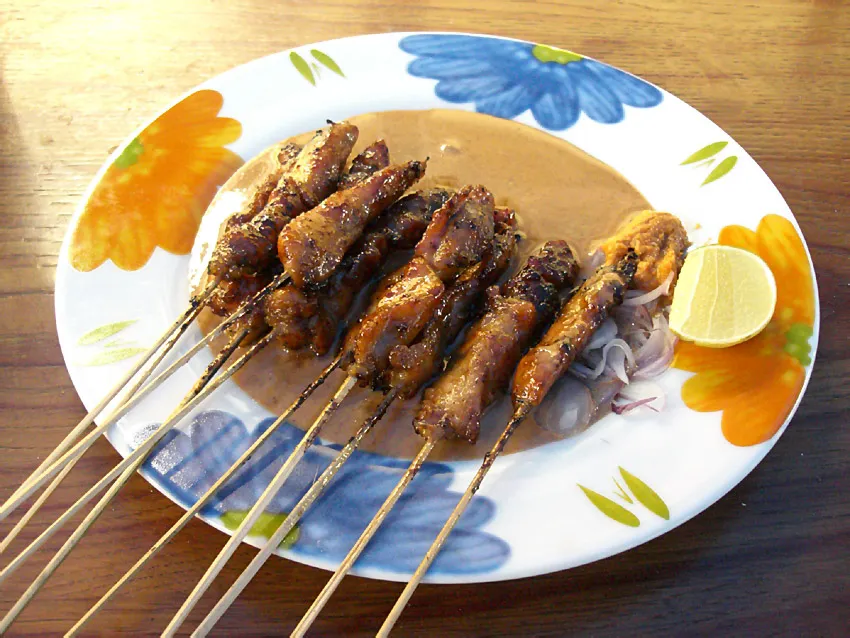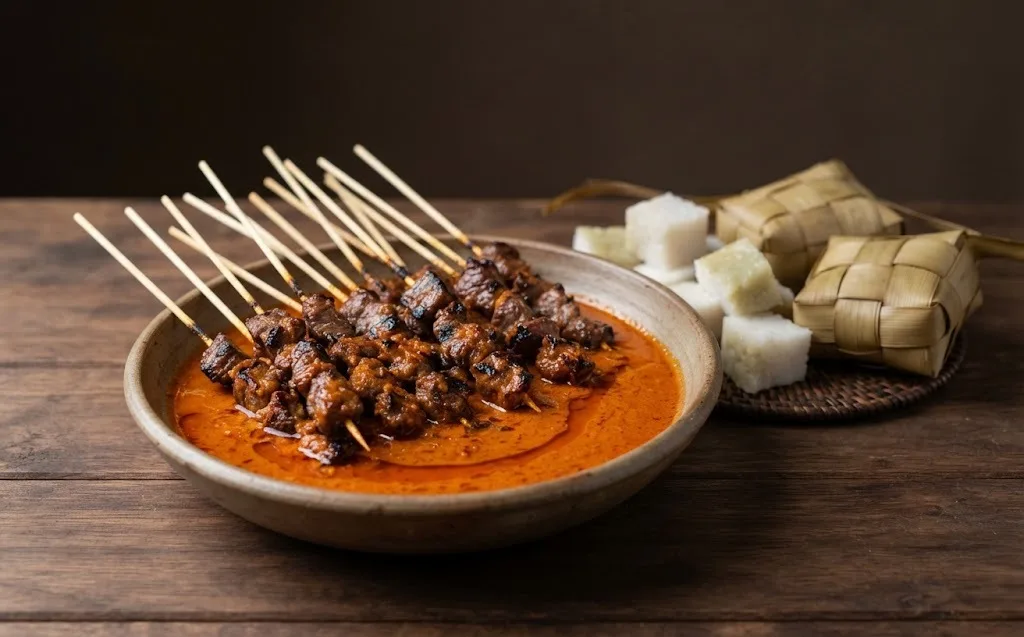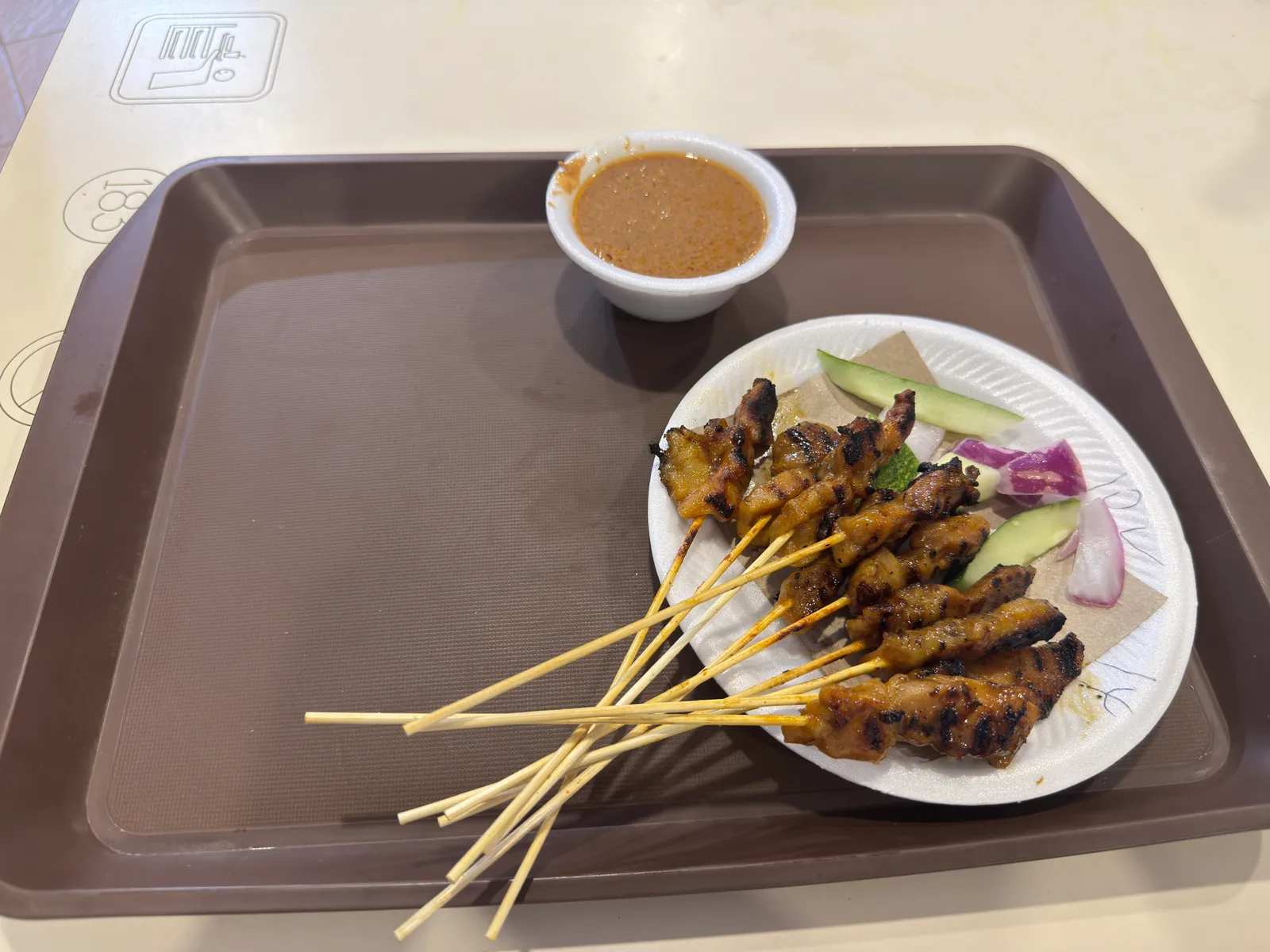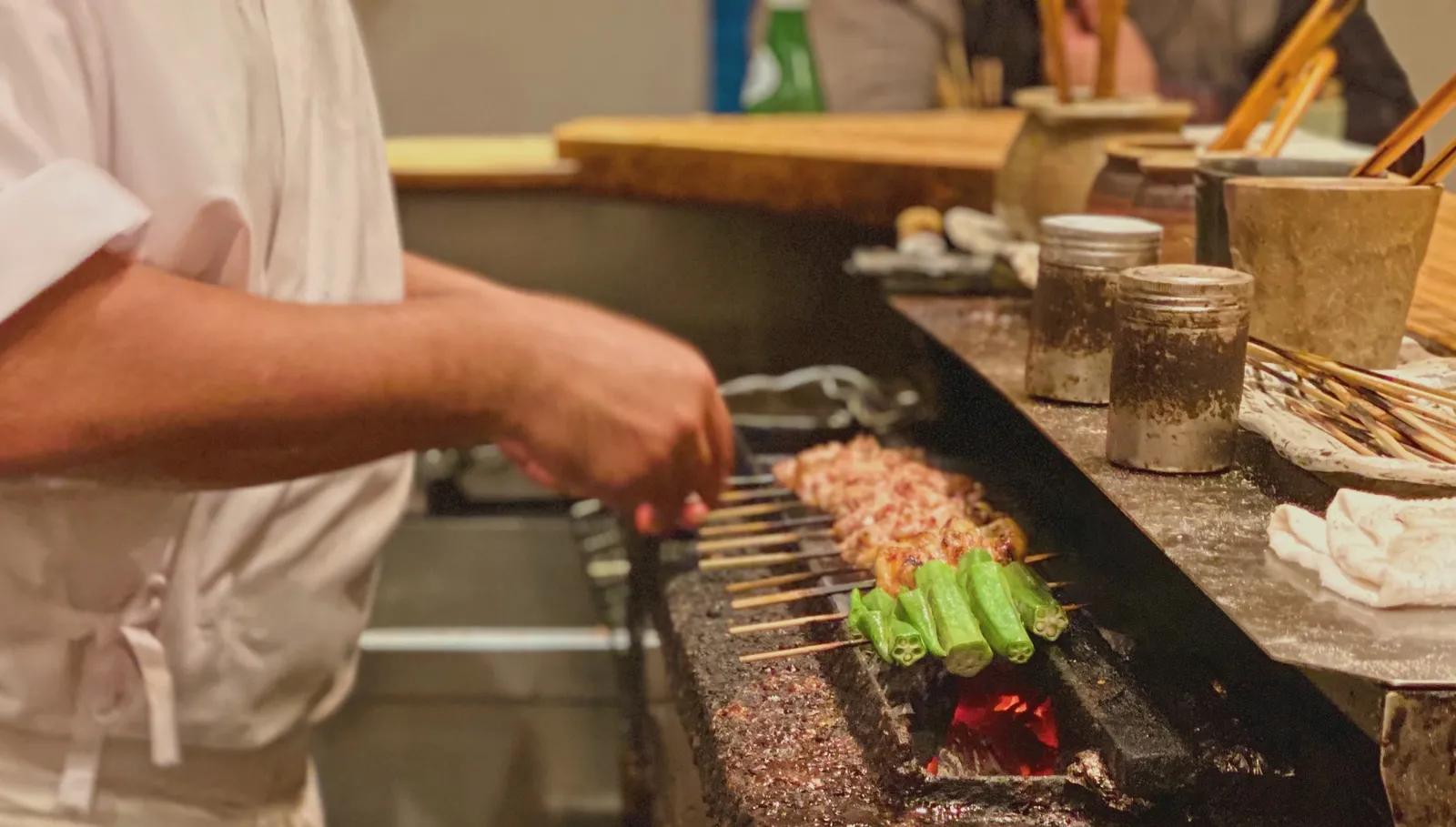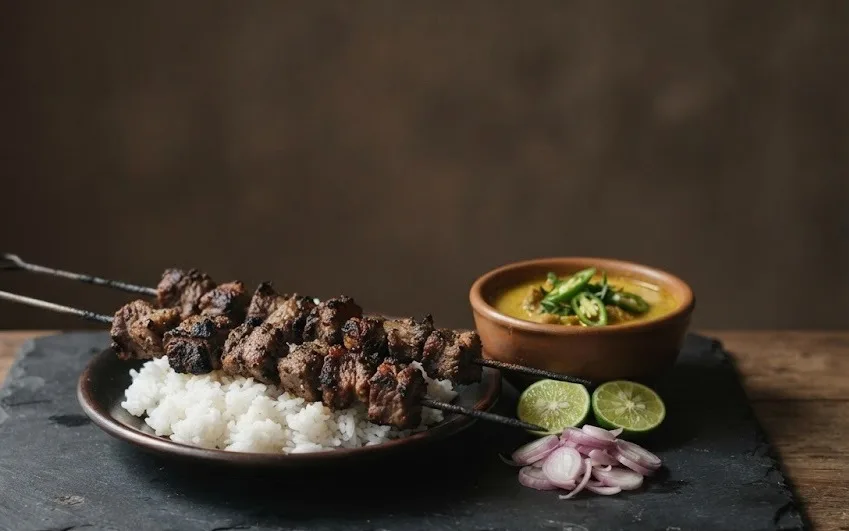
From Pleret in Bantul, just south of Yogyakarta: young goat cubes seasoned with little more than salt and pepper, grilled on the iron spokes of bicycle wheels instead of bamboo, the metal conducting heat into the meat's core so it cooks through evenly; each order comes with a light curry gravy. The onomatopoeic name mimics the crackle of salt hitting the coals.
Also known as sate klathak pak pong, klathak, jogja iron skewer satay.
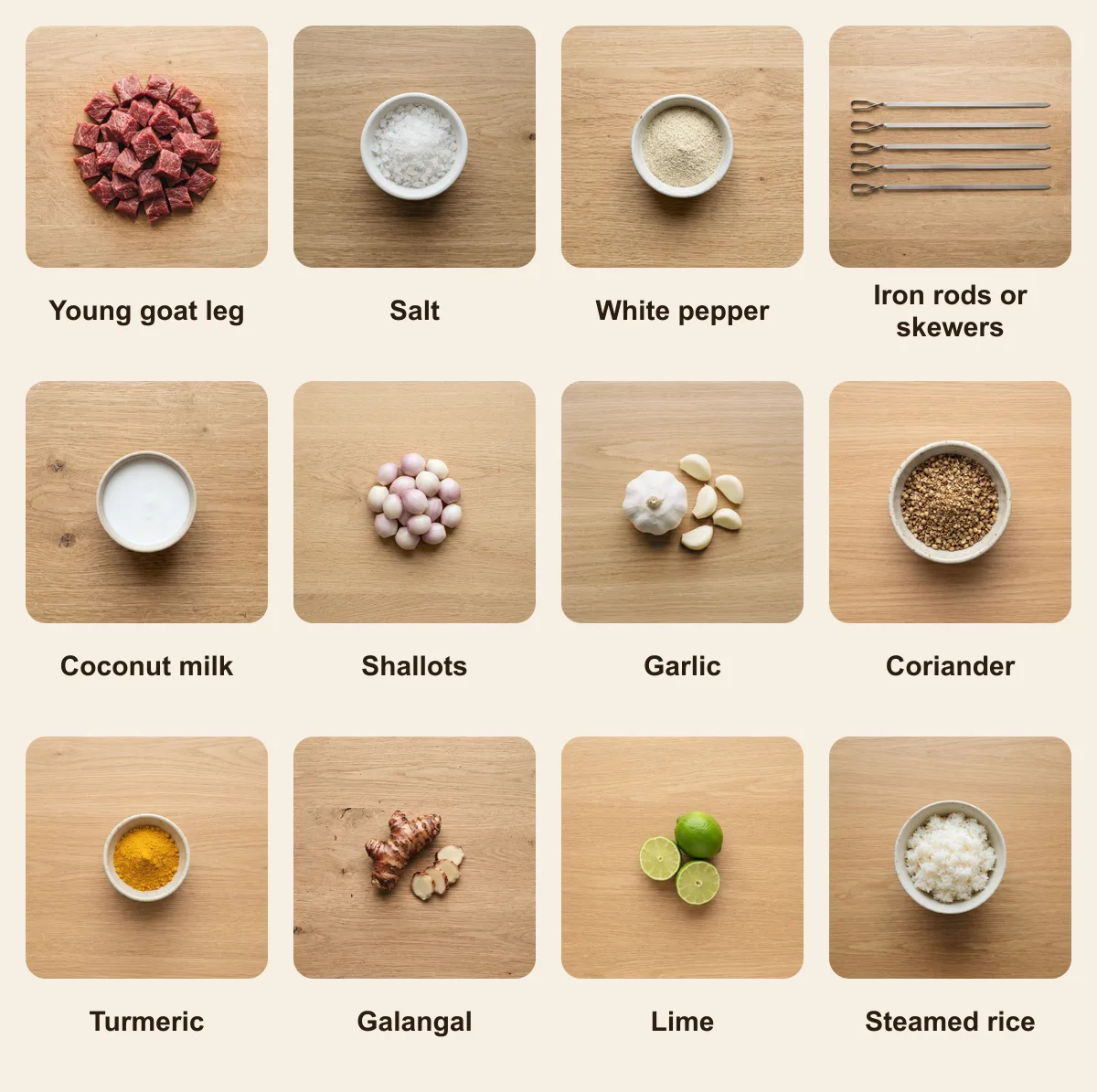
Ingredients
- 700 g young goat leg, 3 cm cubes
- 1.5 tsp salt
- 0.5 tsp white pepper
- 4 long iron rods or metal skewers (the klathak signature)
- for the gulai: 200 ml coconut milk, 1 tbsp curry spice paste (shallot, garlic, coriander, turmeric, galangal)
- 1 lime and sliced shallots, to serve
- steamed rice
How to make it
- 1
Rub the goat with only salt and white pepper — klathak's radical minimalism is the recipe.
- 2
Thread onto iron rods; the metal conducts heat into each cube's core, cooking it from inside while the coals work the outside.
- 3
Grill over high charcoal 10-12 minutes, turning as the surface crackles (the 'klathak' sound of salt popping on fire).
- 4
Meanwhile simmer the spice paste with coconut milk 10 minutes into a thin gulai gravy.
- 5
Serve the rods over rice with the gulai poured at the side and lime to cut the goat.
Pro tip: Real bicycle-spoke iron is the tradition, but any solid metal skewer beats bamboo here — the internal conduction is why klathak goat cooks juicy without any marinade.
Where Sate Klathak comes from
It is a genuine local speciality with a handful of famous warungs on Jalan Imogiri Timur in Bantul, and the bicycle-spoke detail is not a gimmick — it is a solution to a specific cooking problem that bamboo cannot solve.
Iron spokes and salt: Bantul's answer to goat satay
The skewer itself is what separates Sate Klathak from its relatives. Iron bicycle spokes carry heat into the middle of each young goat cube, so the pieces can be cut larger than the centimetre-and-a-half standard of Satay and still cook evenly with little more than salt and pepper on them. Sate Kambing uses the same kambing muda but keeps small cubes on bamboo, threads fat between them and dresses them with sambal kecap. Klathak arrives two skewers to a portion with a light curry gravy at the warungs of Jalan Imogiri Timur. Sate Taichan also goes onto the grill almost bare, though it is chicken and leans on a fiery sambal.
Compare: Satay · Sate Kambing · Sate Taichan
How Sate Klathak is cooked
Iron spokes conduct heat into the centre of the meat, which is exactly the opposite of what bamboo or wood does. For thick cubes of goat, that internal conduction means the middle cooks at the same time as the outside, so the meat can be left plain and still come out evenly done.
It is a rare case where the skewer material is chosen for thermal conductivity rather than for convenience — the reverse of the wooden-skewer logic behind çöp şiş and arrosticini, where non-conduction is the point. The seasoning is minimal because the technique is doing the work: salt, pepper, and coals.
Ingredients and shopping
Young goat (kambing muda) in generous cubes, larger than ordinary satay, with fat included. Freshness and the age of the animal matter, as with all plainly seasoned goat.
Bicycle spokes if you are committed, or any thin iron or steel skewer — the conductivity is the point, not the bicycle. Salt and a little pepper, and nothing else. A light goat curry gravy (kuah gulai) served in a bowl on the side.
How Sate Klathak is served
Two skewers to a portion with a bowl of light curry gravy on the side and rice, at a warung on Jalan Imogiri Timur. The gravy is spooned over or used as a dip, and it is deliberately light so it does not bury the plainly seasoned meat.
Common mistakes
Bamboo skewers
They do not conduct heat, so thick goat cubes stay raw in the middle. The metal spoke is the technique.
Small cubes
Klathak uses larger pieces precisely because the conducting skewer can cook them through. Small cubes make it ordinary satay.
Adding a marinade
Salt and pepper. The dish is built to show young goat and the technique that cooks it evenly.
Older goat
With no marinade there is nothing to disguise an assertive animal. Kambing muda is the requirement.
Sate Klathak: questions and answers
Why bicycle spokes?
Iron conducts heat into the centre of thick goat cubes, so they cook evenly without a marinade. Bamboo does not conduct and leaves the middle raw.
Why is it barely seasoned?
The dish is built to show young goat and the evenness of the metal-skewer cook. Salt and pepper are all it takes.
Where is it from?
Pleret, in Bantul regency just south of Yogyakarta city, in the Special Region of Yogyakarta — a handful of warungs along Jalan Imogiri Timur specialise in it.
Sources and further reading
- Sate Klathak Pak Pong — Visiting Jogja (official Yogyakarta tourism portal)
- Sate Klatak — Indonesia.travel (Indonesia's national tourism board)