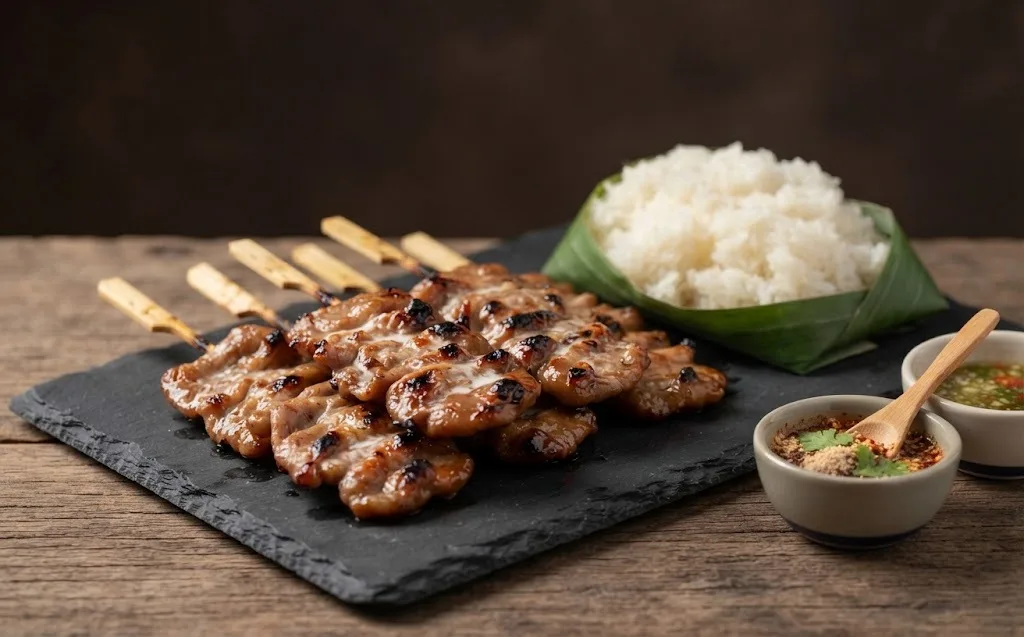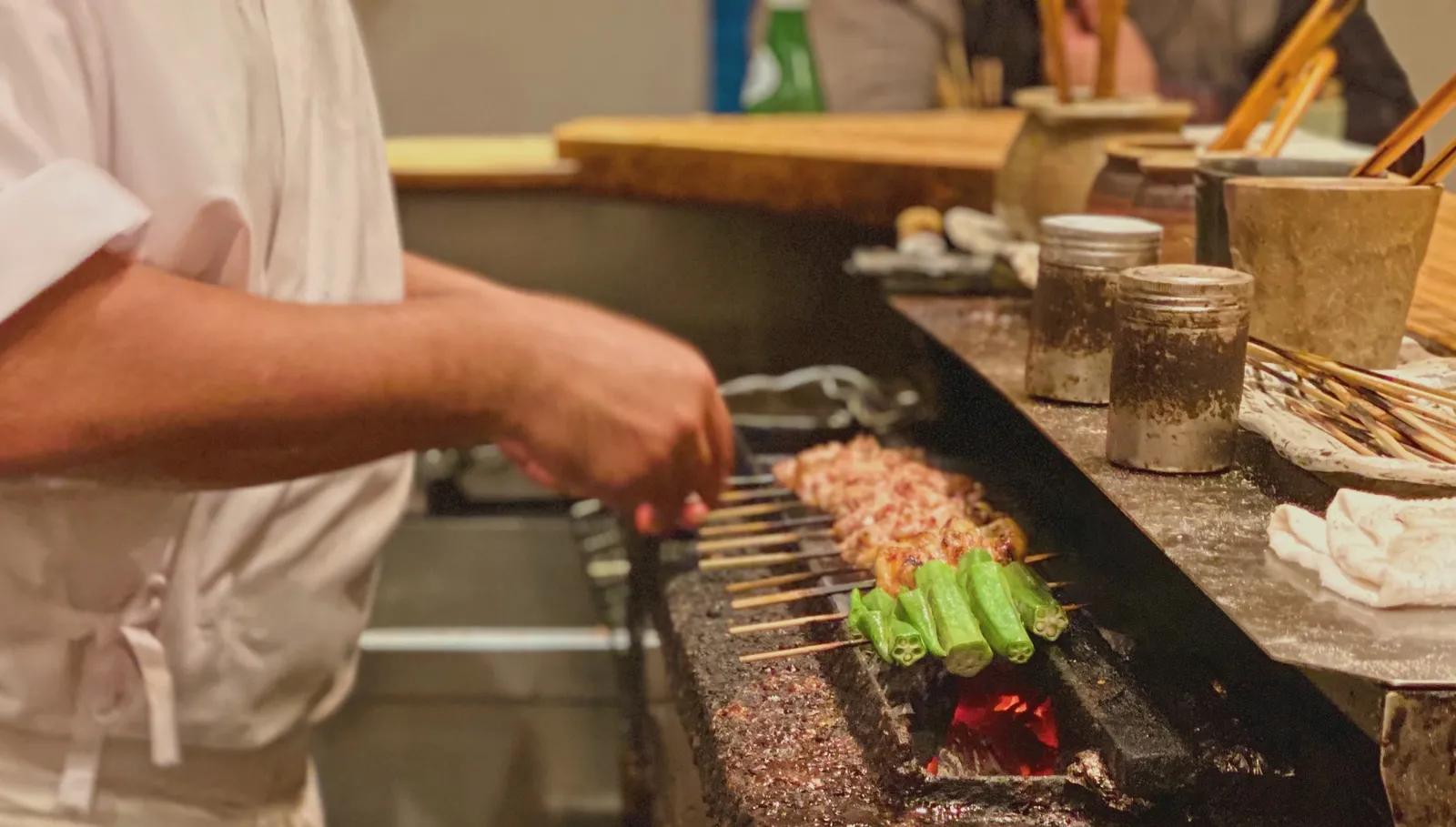
Japan's chicken-skewer discipline: every part of the bird — thigh, skin, meatball (tsukune), even cartilage — cut small, skewered, and grilled over binchotan charcoal, finished either with salt (shio) or a glossy soy-mirin glaze (tare). Whole izakaya specialize in nothing else.
Also known as 焼き鳥, yakitori skewers, kushiyaki.
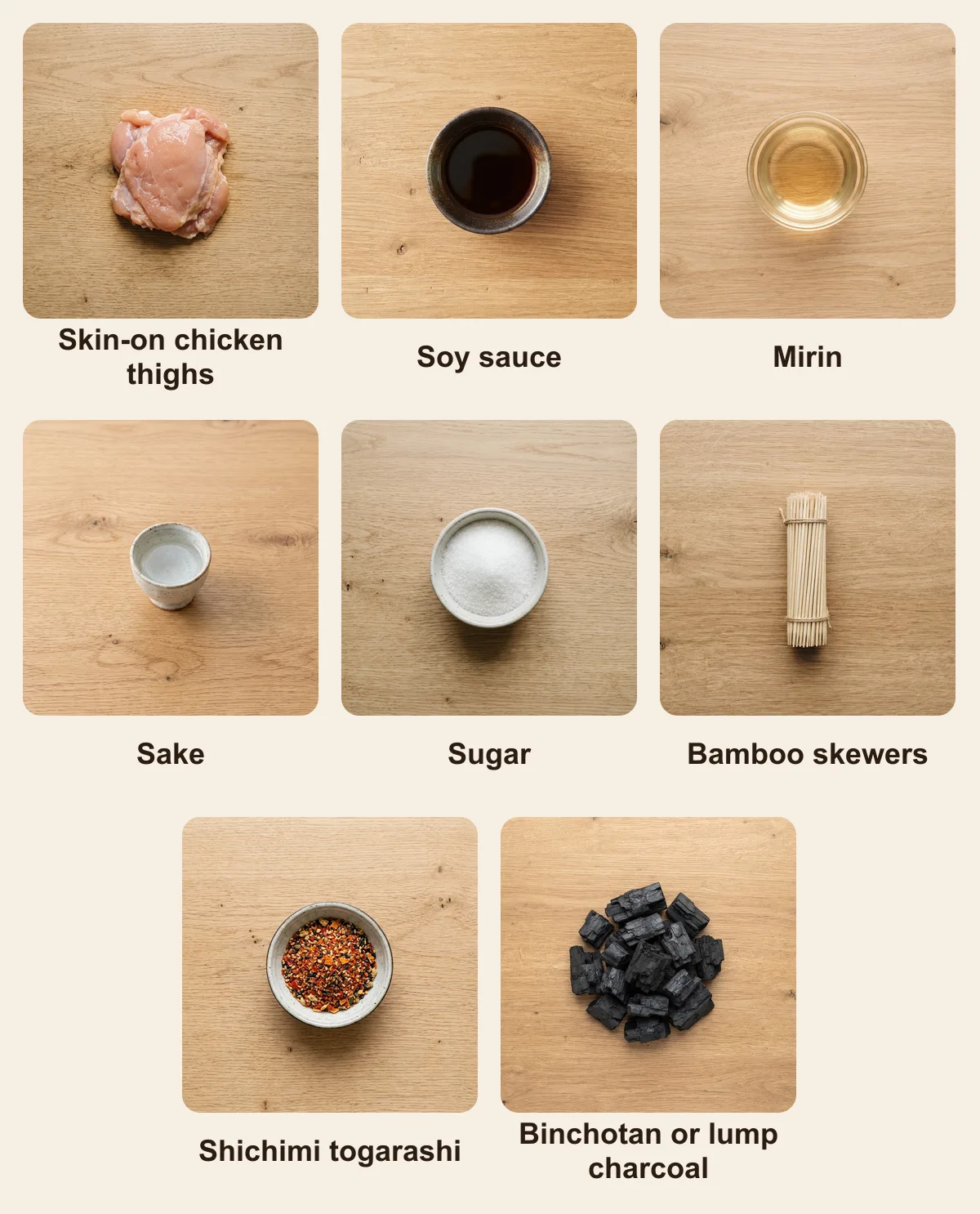
Ingredients
- 600 g chicken thighs, skin on
- 100 ml soy sauce
- 100 ml mirin
- 50 ml sake
- 25 g sugar
- 12 bamboo skewers, soaked 30 min
- Shichimi togarashi
- Binchotan or good lump charcoal
How to make it
- 1
Simmer soy, mirin, sake and sugar until reduced by a third into a glossy tare; pour it into a tall, narrow container.
- 2
Separate skin from thighs. Cut the meat into 2.5 cm pieces and thread snugly; weave the skin onto its own skewers in ribbons.
- 3
Grill naked (no oil, no seasoning) over hot charcoal, turning every 45 seconds, until about 70% done.
- 4
Plunge each skewer fully into the tare, return it to the grill 30 seconds, and repeat twice more to build a lacquered glaze.
- 5
Serve with a pinch of shichimi, skin skewers extra-crisp.
Pro tip: Dip, never brush. Dunking the whole skewer deposits a film thin enough to caramelize without burning, and each pass through fire and sauce laminates another layer, which is how yakitori-ya build that mirror glaze.
Where Yakitori comes from
It became widespread in the Meiji era as meat-eating returned to Japan after centuries of Buddhist prohibition, and it spread through post-war street stalls before settling into the restaurant form it has now. The best shops buy whole birds and butcher them in-house, because the range of cuts is the whole proposition.
How Yakitori is cooked
Binchotan is the technical foundation. It is a very hard white charcoal that burns with almost no flame or smoke and radiates intense infrared heat, which cooks the surface fast without the drying convection of an ordinary fire. It is expensive and it is the single largest difference between a good yakitori shop and a home grill.
Tare — the glaze — is built by repeatedly dipping cooked skewers into a soy, mirin, sake and sugar mixture that has been reduced and then continuously replenished, sometimes for decades in an old shop. Each dip and return to the fire lays down another layer. Shio, the salt finish, is the alternative and is used for cuts where the meat itself is the point.
Ingredients and shopping
A whole chicken, broken down: thigh (momo), breast (mune), skin (kawa), wing (teba), liver (reba), heart (hatsu), gizzard (sunagimo), tail (bonjiri), neck (seseri) and the small oyster (soriresu). Each goes on its own skewer with its own timing.
Short bamboo skewers, soaked. For tare: soy sauce, mirin, sake and sugar, reduced. For shio: good salt, and that is all. Binchotan if you can source it; otherwise lump charcoal, and accept a smokier result.
How Yakitori is served
Skewers arrive as they are cooked, a few at a time, at a counter facing the grill. Beer or sake, shichimi togarashi and sansho pepper on the counter. Ordering is progressive — you order more as you go, and the shop paces the cuts.
Common mistakes
Mixing cuts on one skewer
Each part of the bird has its own timing. One cut per skewer is the entire organising principle.
Applying tare from the start
Its sugar burns. The skewer is grilled first, then dipped and returned to the fire repeatedly to build layers.
Salting a cut that should be tared and vice versa
Fatty cuts like skin and thigh take salt well; leaner or offal cuts usually take tare. Shops choose deliberately.
A flaming fire
Binchotan burns without flame. On lump charcoal, wait for the flames to die and grill over pure embers.
Yakitori: questions and answers
What is the difference between tare and shio?
Tare is a soy-mirin-sake glaze built up by repeated dipping; shio is simply salt. Fatty cuts often take salt, leaner and offal cuts take tare.
Why is each cut on its own skewer?
Every part of the bird has a different cooking time and texture. Separating them is the organising principle of the whole discipline.
Can I make yakitori at home?
Yes, over lump charcoal with the flames burnt down. You lose binchotan's flameless infrared heat, which is the main compromise.