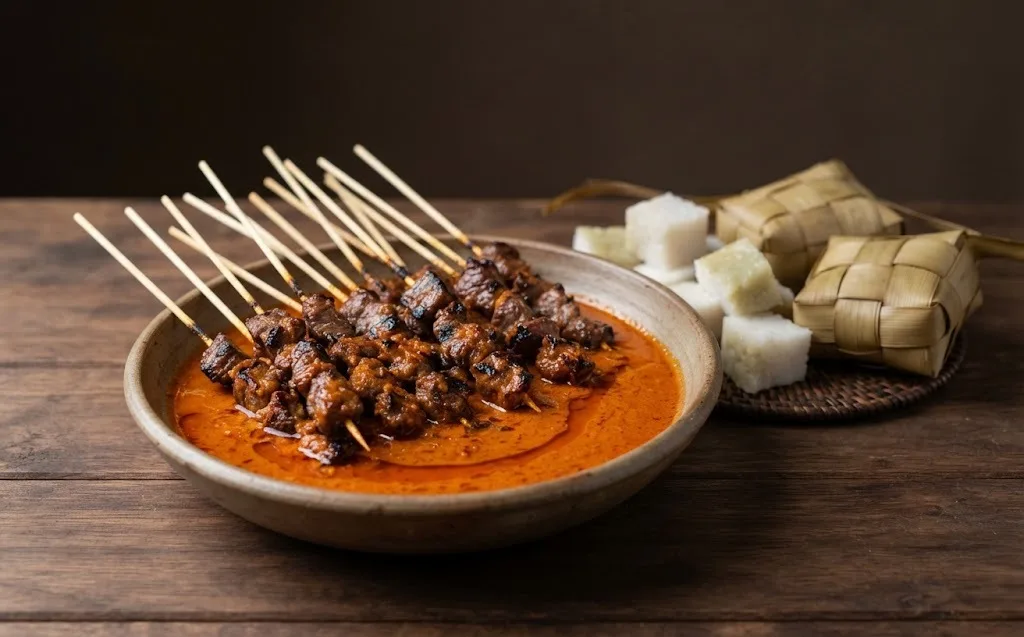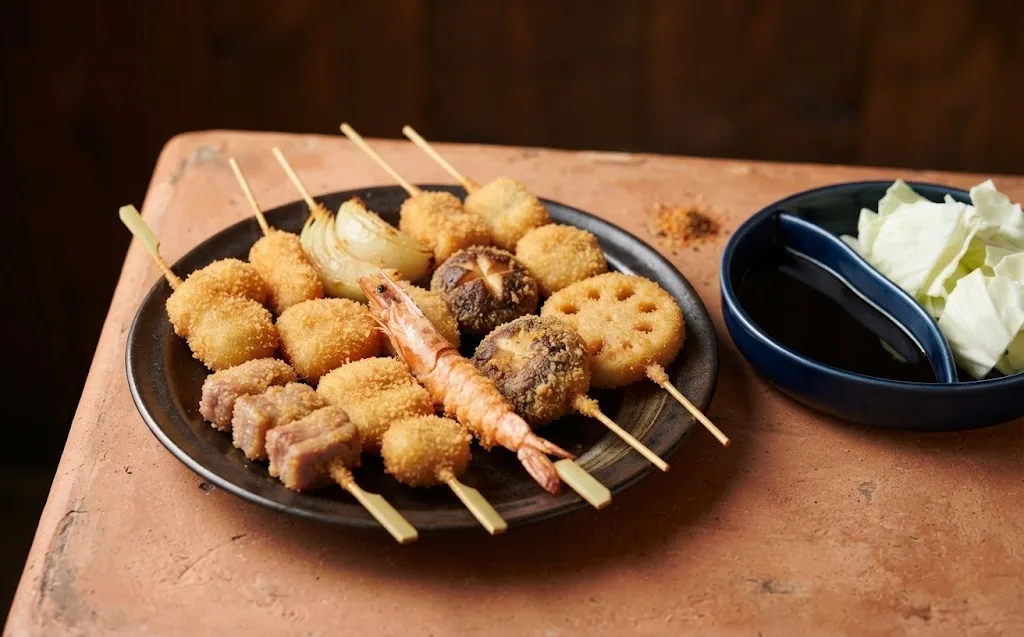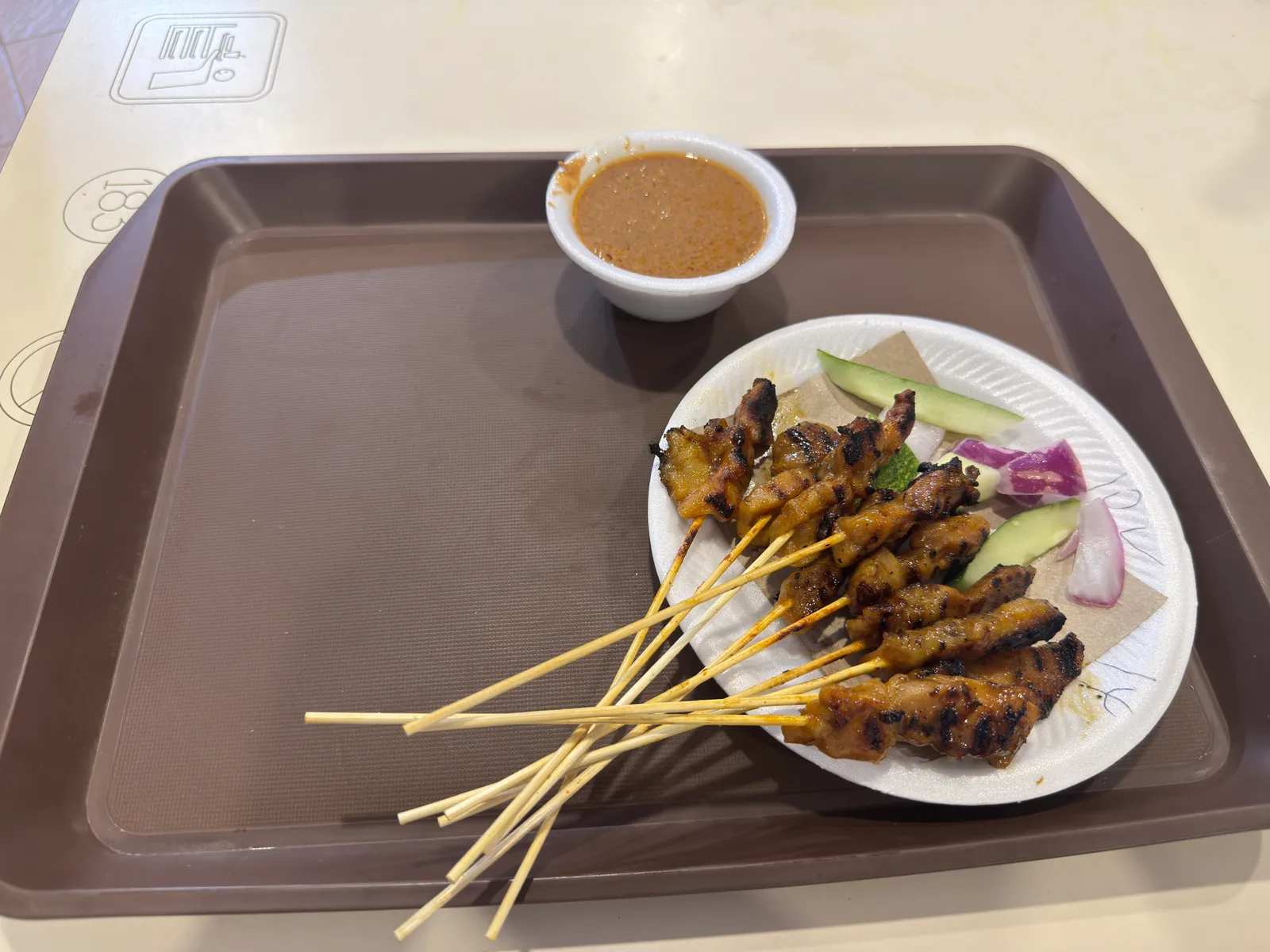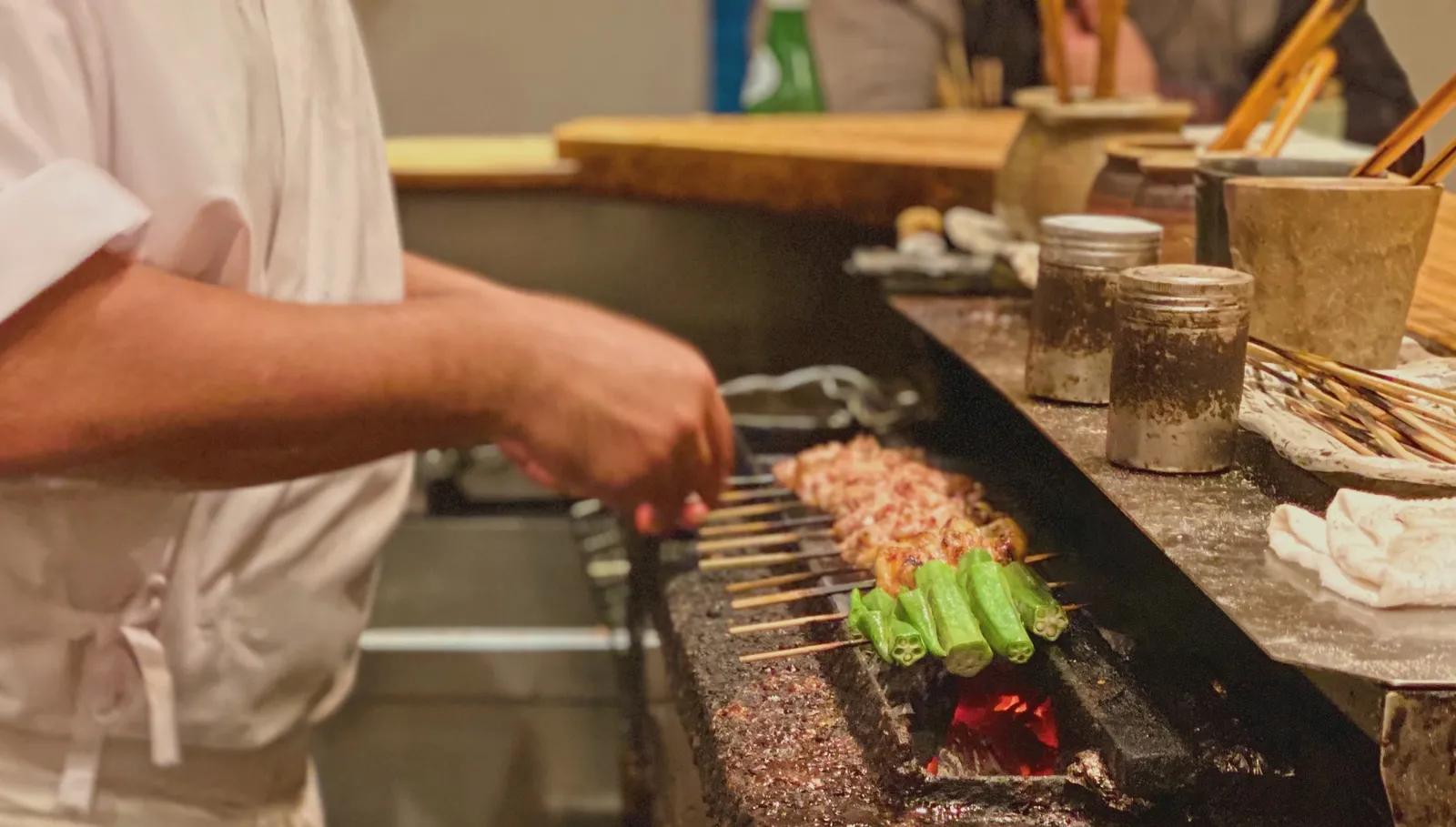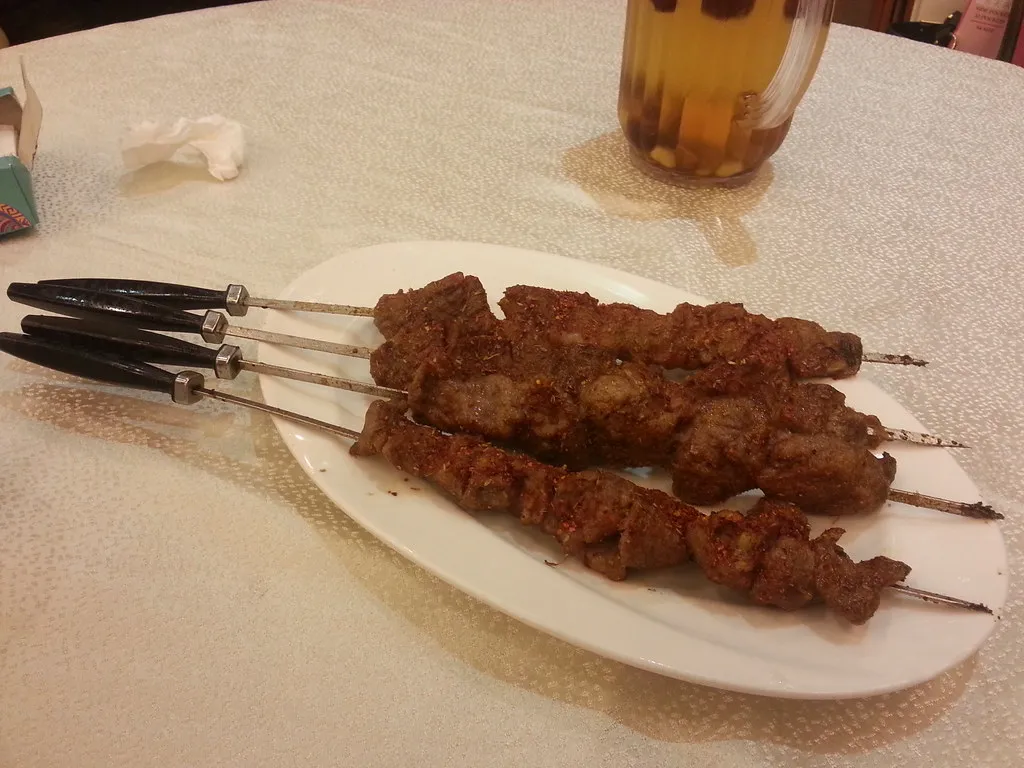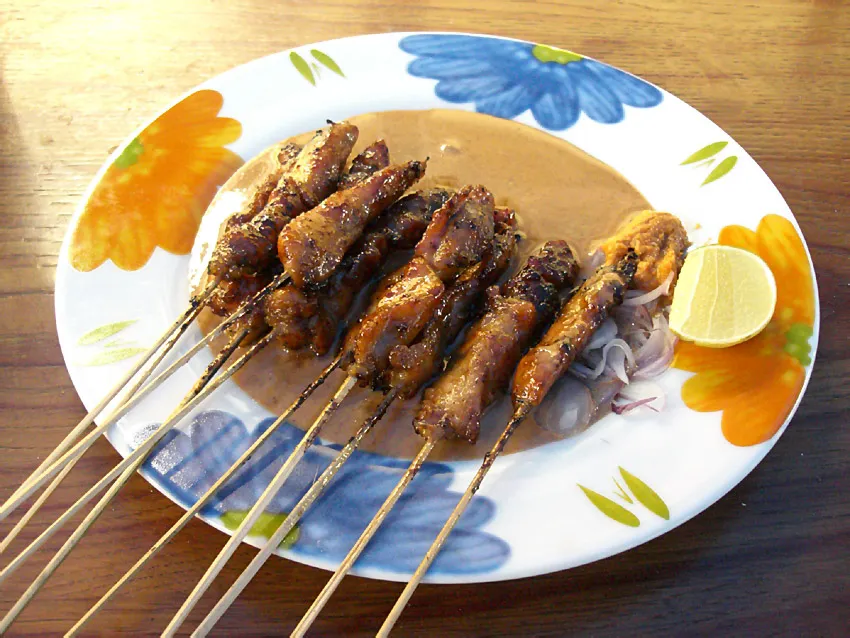
East Java's distinctive chicken satay from Ponorogo, cut in long thin fillet strips rather than cubes so each skewer carries one continuous ribbon of meat, bathed ('dicelup') in a sweet kecap-garlic marinade and basted repeatedly while grilling before its peanut sauce arrives. The strip cut and repeated bathing yield a more tender, deeply glazed satay than the standard sate ayam.
Also known as sate ayam ponorogo, ponorogo satay, sate gule ponorogo.
Reference video
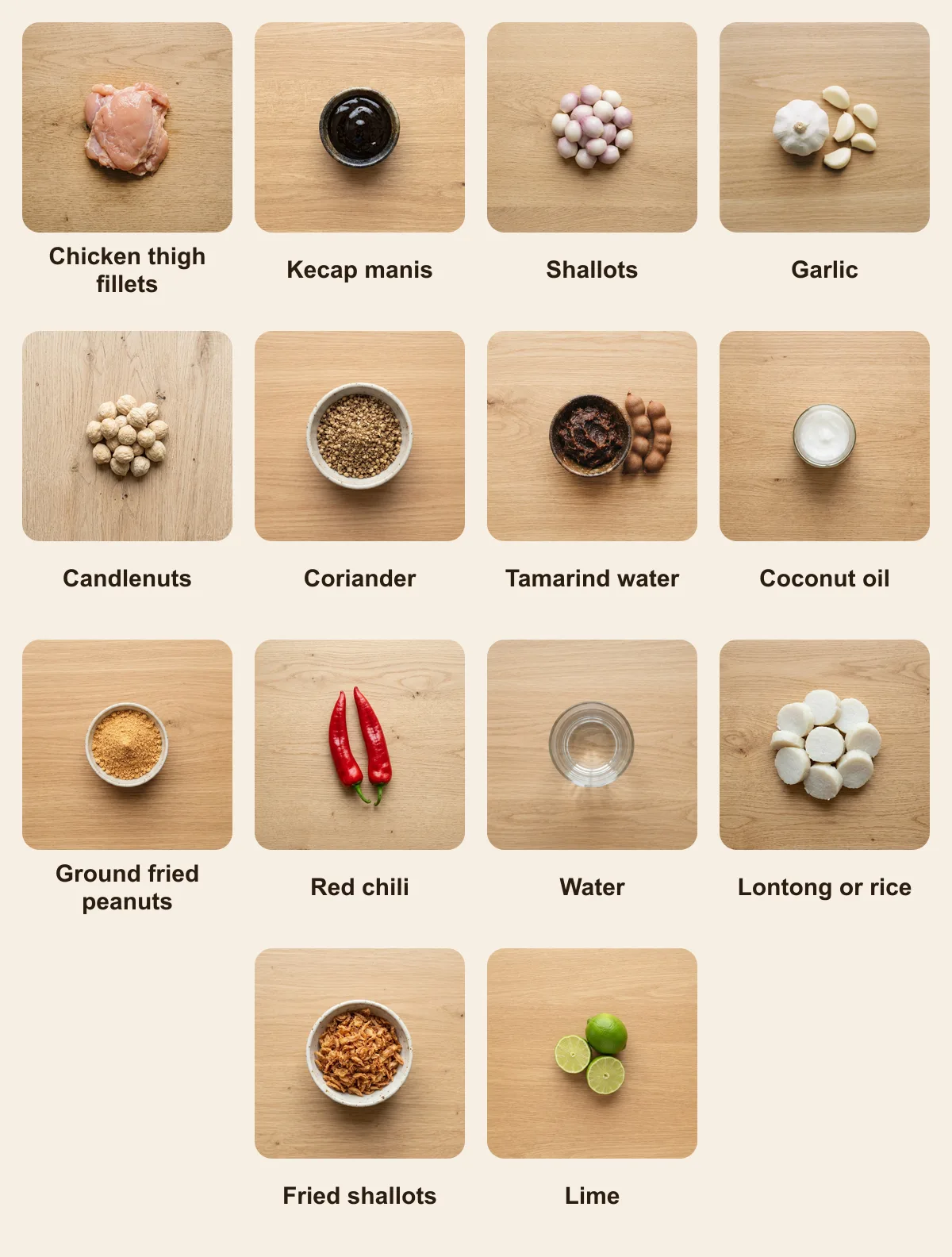
Ingredients
- 600 g chicken thigh fillets, cut into long strips 1.5 cm wide (not cubes)
- 3 tbsp sweet soy sauce (kecap manis), plus more for basting
- 2 tbsp bumbu: shallot, garlic, candlenut and coriander, ground
- 1 tsp tamarind water
- 2 tbsp coconut oil, plus a little for basting
- for the sauce: 150 g fried peanuts ground fine, 1 red chili, 200 ml water, kecap manis
- lontong (compressed rice cakes) or steamed rice
- fried shallots and lime
How to make it
- 1
Blend the bumbu with kecap manis, tamarind and coconut oil and slick it through the chicken strips for 1 hour.
- 2
Snake each long strip down its own skewer Ponorogo-style, so one fillet ribbon covers the stick end to end.
- 3
Simmer the ground peanuts, chili and water with a swirl of kecap manis 10 minutes to a pourable sauce.
- 4
Grill over glowing coconut-shell charcoal or medium coals 8-10 minutes, basting with kecap manis mixed with a little oil at each turn.
- 5
Blanket with the peanut sauce, scatter fried shallots, and serve with lontong and lime.
Pro tip: The lengthwise fillet cut is the whole identity — strips soak marinade along the muscle fiber and grill tender where cubes would seize.
Where Sate Ponorogo comes from
The town's warungs advertise the technique explicitly, since it is what customers travel for.
One chicken ribbon per stick, not four or five cubes
On the plate Sate Ponorogo looks much like Sate Ayam, with peanut sauce, lontong and fried shallots; the difference sits on the skewer. Instead of four or five thigh cubes, each stick carries a single long strip of thigh snaked end to end, and that ribbon is bathed again and again in a thin kecap-garlic marinade before and during grilling, building a deeper glaze. Sate Madura, from the island off East Java, marinates its chicken only lightly and lets a fine, pourable sauce carry the flavour. Sate Taichan sits at the far end, with no marinade or glaze whatsoever.
Compare: Sate Ayam · Sate Madura · Sate Taichan
How Sate Ponorogo is cooked
The ribbon cut is the structural difference. A single long strip of thigh, threaded onto the skewer, presents more surface than four separate cubes and has no cut faces in the middle, so it glazes more thoroughly and dries less. It also lets the meat be sliced thinner without falling apart.
Dicelup — bathing — describes the repeated dipping of the raw skewers into the marinade before and during grilling. Each dip and return to the coals lays down glaze, in the same manner as Japanese tare or Korean dakkochi, and Ponorogo's warungs do it more times than most.
Ingredients and shopping
Chicken thigh, boned and sliced into long strips of about a centimetre thick, threaded onto the skewer in a wave. The strip should run the full length of the exposed skewer.
The marinade is kecap manis, a ground bumbu of shallot, garlic, candlenut and coriander, a splash of tamarind and oil, thin enough to dip into repeatedly. Peanut sauce as for sate ayam, with lontong and lime. Fried shallots on top.
How Sate Ponorogo is served
Ten skewers with peanut sauce, kecap manis, lontong, sliced shallot and fried shallots, in the standard Javanese manner. The difference from sate ayam is in the meat rather than the plate, and Ponorogo expects you to notice.
Common mistakes
Cubing the meat
Ponorogo's identity is the continuous ribbon. Cubes make it standard sate ayam.
Dipping once
The repeated bathing is what builds the glaze and the tenderness. Dip, grill, dip again, several times.
A thick marinade
It has to be thin enough to dip raw skewers into repeatedly. Thin it with a little water or oil.
A fierce fire
Kecap manis is sugar-heavy and burns. Moderate coals with constant turning.
Sate Ponorogo: questions and answers
What does dicelup mean?
Bathed — describing the repeated dipping of the skewers into the marinade before and during grilling, which builds the glaze.
Is it served with peanut sauce?
Yes, like sate ayam. The difference is in the cut and the glazing rather than in the accompaniment.
Sources and further reading
- Sate Ponorogo — Wikipedia (Indonesian)
- Gurih Lezat Sate Ponorogo, Begini Asal-usul hingga Resepnya — Detik.com
- Resep Sate Ayam Ponorogo, Dagingnya Harum Ketumbar dan Tidak Alot — Kompas.com