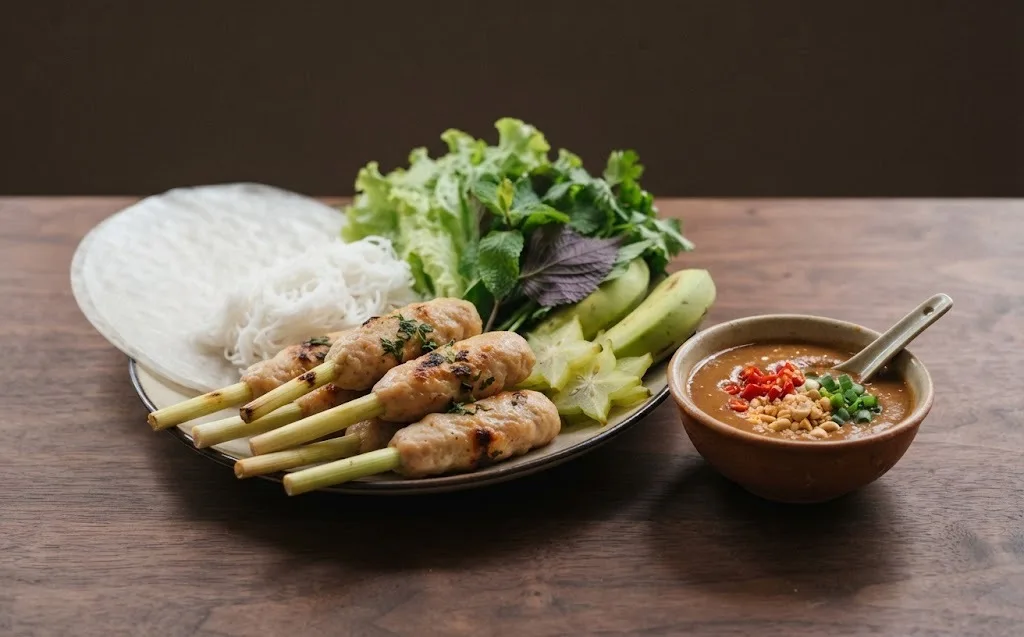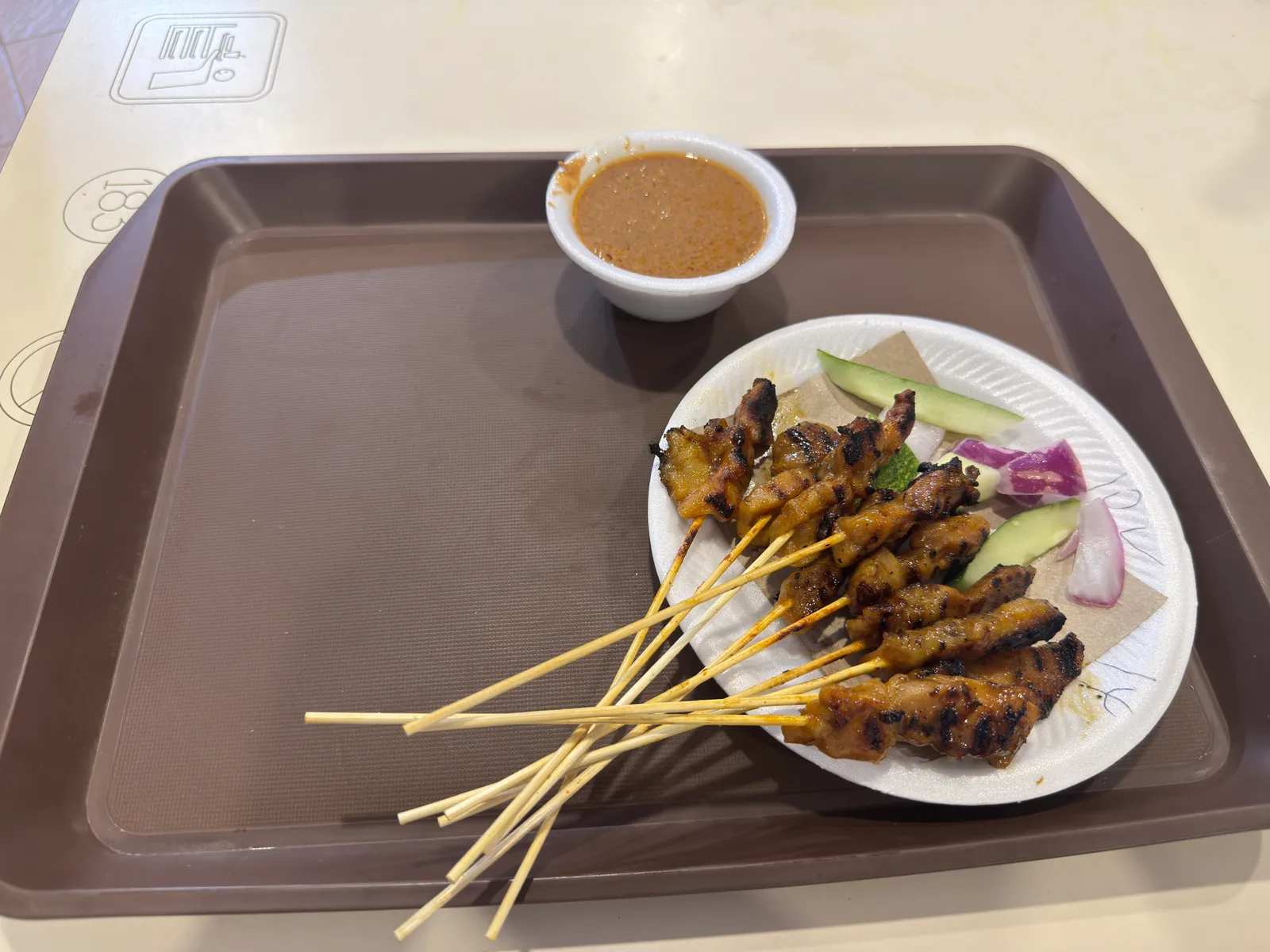
Southeast Asia's kebab descendant, likely adapted from Arab and Indian Muslim traders' kebabs by Javanese street cooks: small pieces of turmeric-marinated chicken, goat, or beef on bamboo sticks, grilled over coconut charcoal and sauced with sweet-spicy ground peanut. Indonesia alone counts dozens of regional sate styles.
Also known as sate, saté, sate ayam.
Reference video
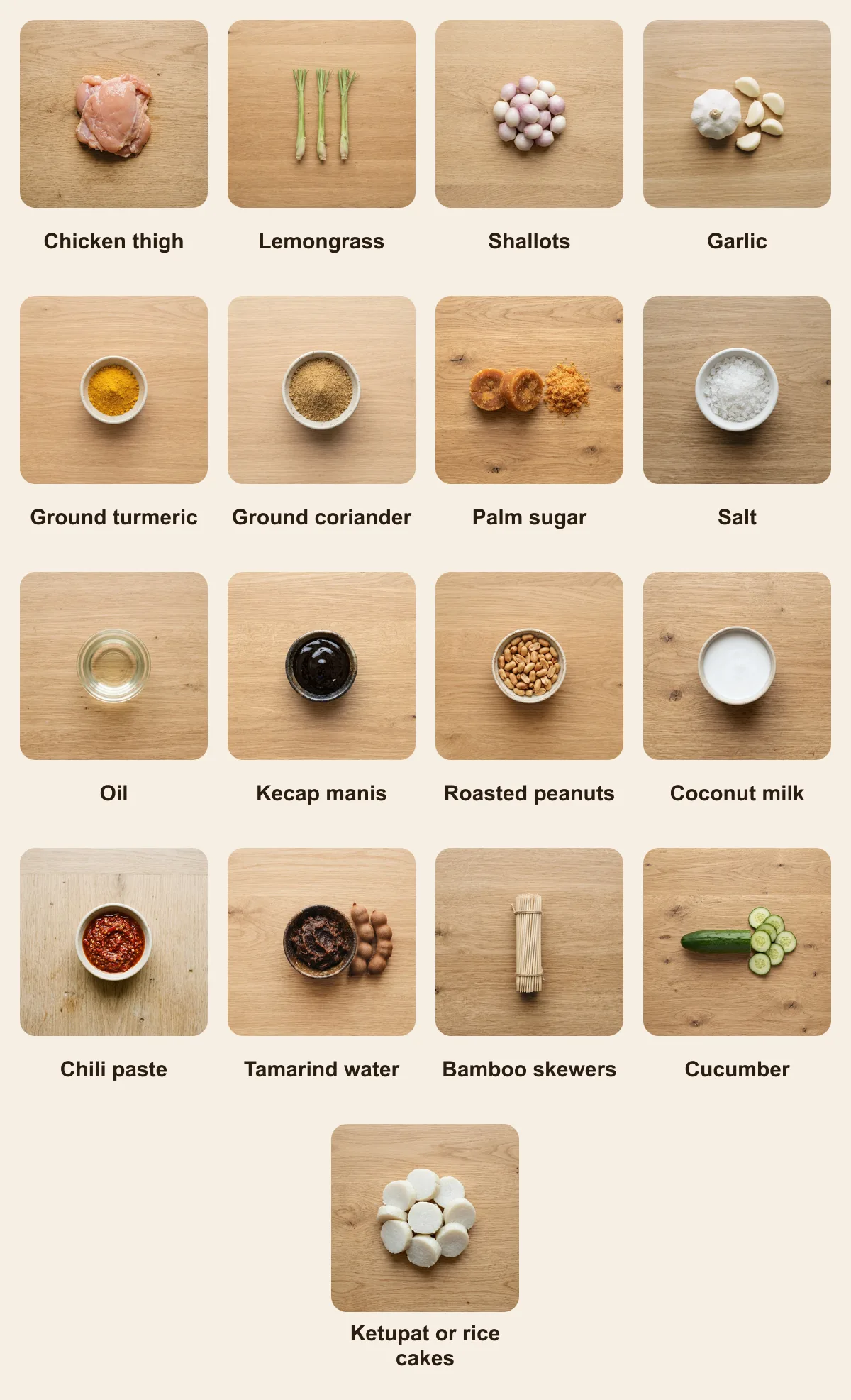
Ingredients
- 700 g chicken thigh, in 1.5 cm pieces
- 2 lemongrass stalks (tender cores), plus 1 whole stalk for basting
- 3 shallots and 3 garlic cloves
- 2 tsp ground turmeric and 2 tsp ground coriander
- 25 g palm sugar, plus a pinch for the sauce
- 1 tsp salt, 30 ml oil and 45 ml kecap manis (Indonesian sweet soy sauce)
- 150 g roasted peanuts, ground (sauce)
- 200 ml coconut milk, 1 tbsp chili paste, 1 tbsp tamarind water (sauce)
- 16 bamboo skewers, soaked 30 min
- Cucumber chunks, raw shallot and ketupat or rice cakes
How to make it
- 1
Blitz lemongrass, shallots, garlic, turmeric, coriander, palm sugar, salt and oil into a paste and marinate the chicken 3 hours.
- 2
For the sauce, simmer ground peanuts with coconut milk, chili paste, tamarind and a little sugar until the oil rises to the top, then keep warm.
- 3
Thread the chicken without crowding the tip of each stick.
- 4
Grill over hot charcoal, fanning the coals and turning often, 7-9 minutes, brushing with a mix of oil and kecap manis using the bruised lemongrass stalk.
- 5
Serve the sticks over the sauce with cucumber, shallot and pressed rice.
Pro tip: Bash the spare lemongrass stalk into a frayed brush and baste with it all through the grilling; it mops, perfumes and bastes in one gesture, exactly as the satay men of Java and Malaysia do.
Where Satay comes from
What holds the family together is the bamboo stick, the small cut and the charcoal; almost everything else — the marinade, the sauce, the accompaniment — varies by island and by town.
Satay as the template, and where its cousins break away
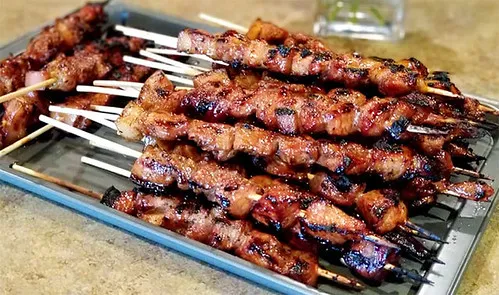
Satay sets the family template: turmeric-marinated chicken, goat or beef cut to about a centimetre and a half, threaded on bamboo, grilled over coconut charcoal and finished with sweet-spicy ground peanut. Sate Ayam stays closest to that outline, with chicken thigh and a peanut sauce sweetened by kecap manis. Satay Kajang, from Malaysia, enlarges the chunks to roughly two and a half centimetres and puts fried chilli paste in a separate spoon. Sate Padang abandons peanut entirely for a turmeric-and-rice-flour gravy over pre-simmered beef, tongue and offal, while Sate Lilit trades the cube for minced fish or pork wrapped around lemongrass, with no dipping sauce at all.
Compare: Sate Ayam · Satay Kajang · Sate Padang · Sate Lilit
How Satay is cooked
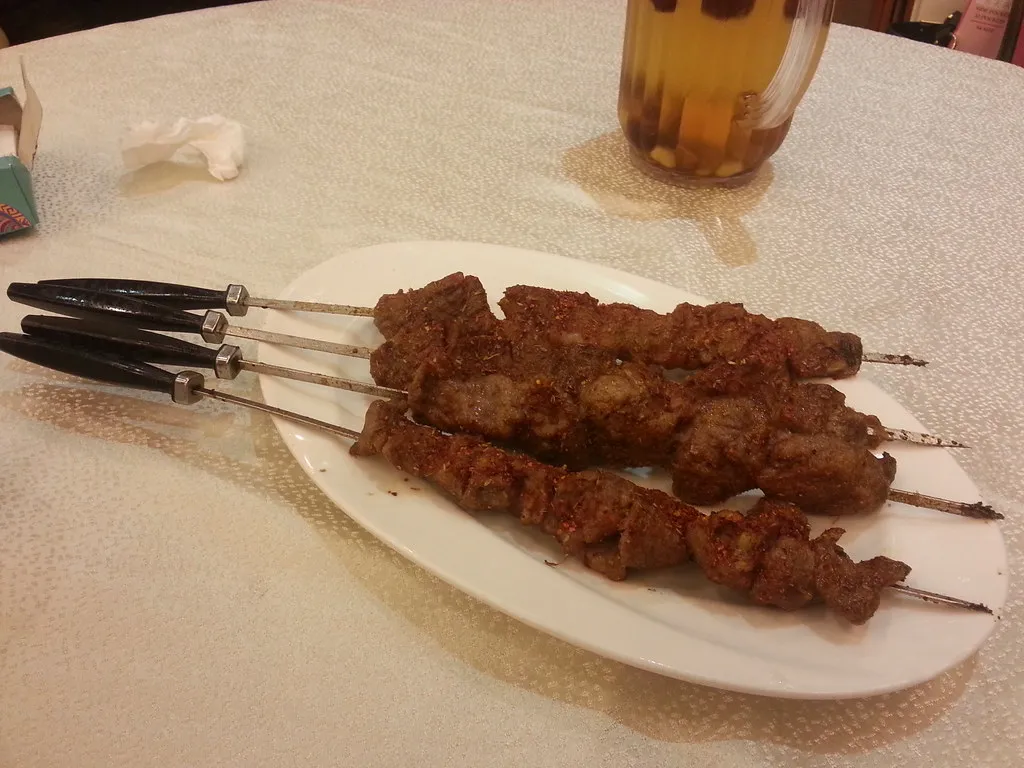
The pieces are small, around a centimetre and a half, and this is a deliberate departure from the Middle Eastern skewers satay descends from. Small pieces cook in minutes over a shallow charcoal trough and take on a high ratio of char and glaze to meat, which is the flavour profile the whole tradition is built around.
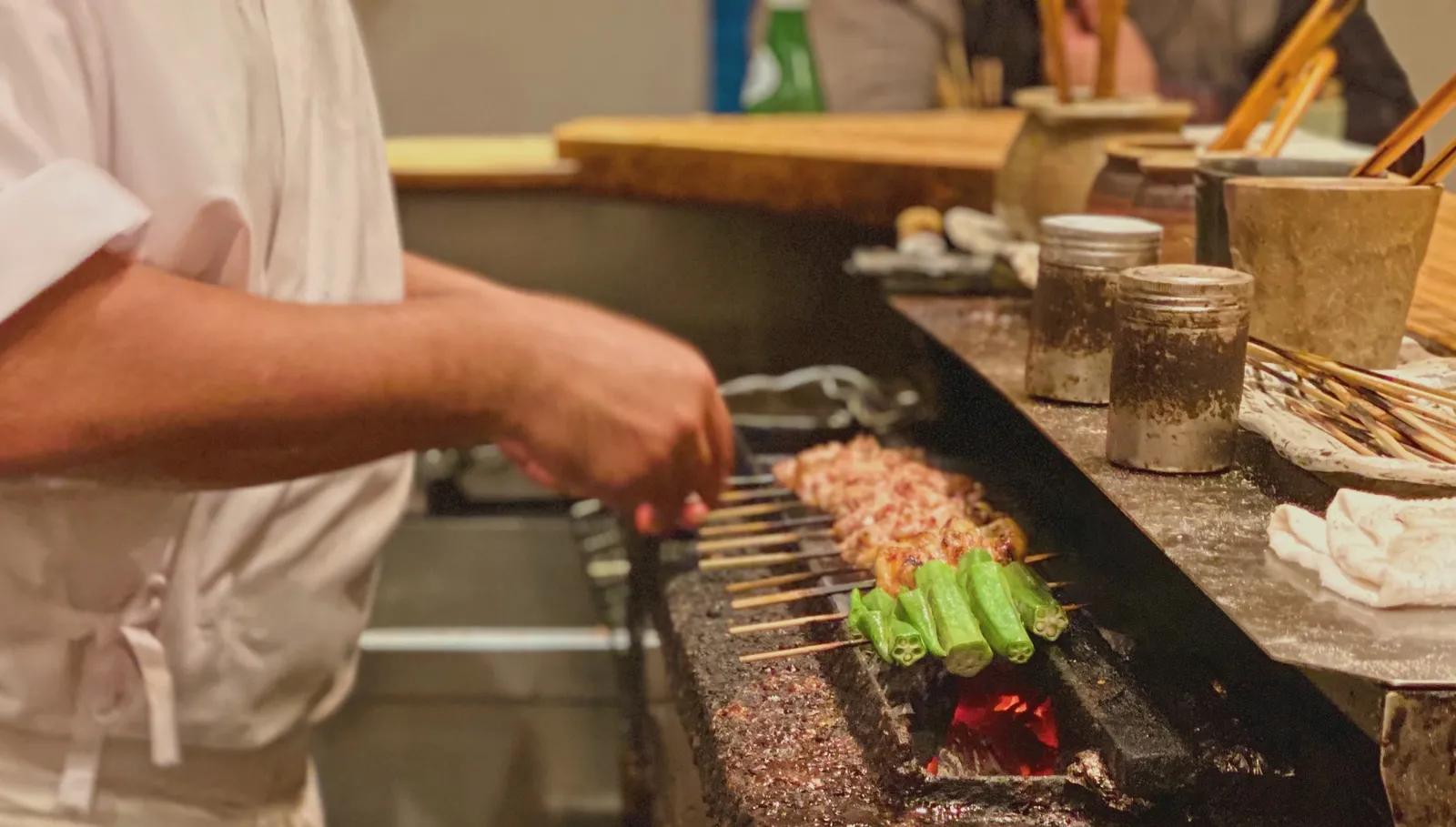
Coconut-shell charcoal burns hot and fast, and the vendor fans the coals by hand with a woven fan — which is not theatre but temperature control. The skewers are basted repeatedly with a mixture of oil and kecap manis or marinade, and the constant fanning keeps the fire responsive to that basting.
Ingredients and shopping
Chicken thigh, goat or beef in small cubes, with some fat. Bamboo skewers, soaked. Turmeric, coriander, garlic, shallot, lemongrass and galangal are the common marinade base, blended into a paste.
Kecap manis — Indonesian sweet soy — is the ingredient that most defines the family's flavour and there is no real substitute; soy sauce with palm sugar approximates it. For the peanut sauce, roast the peanuts yourself and grind them coarse; peanut butter gives a smoother, sweeter and less interesting sauce.
How Satay is served
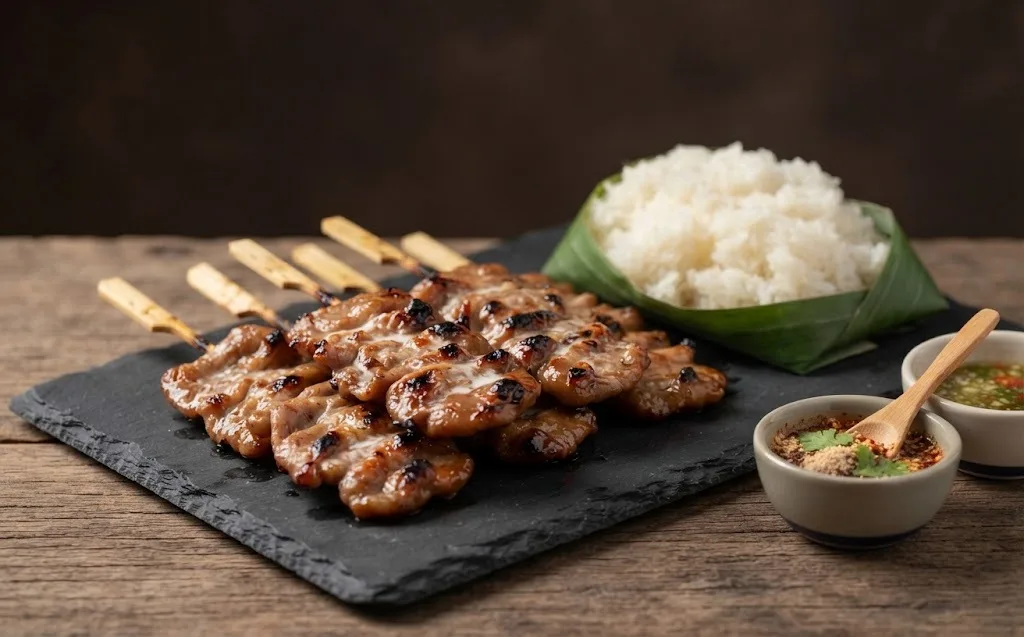
At the stall, ten skewers make a portion, served with peanut sauce, kecap manis, sliced shallot, cucumber and lontong or ketupat — compressed rice cakes. Fried shallots over the top. It is street food eaten in the evening, and the vendor's cart is often carried on a shoulder pole.
Common mistakes
Cutting the meat too large
Satay uses small pieces so the ratio of char and glaze to meat stays high. Large cubes make it a different dish.
Peanut butter for the sauce
Grind your own roasted peanuts, coarsely. Peanut butter is too smooth and too sweet.
A static fire
Vendors fan the coals constantly. It keeps the heat responsive as the basting drips and flares.
Skipping the kecap manis
It is the flavour signature of the whole family. Soy with palm sugar is the workaround.
Satay: questions and answers
Where does satay come from?
Java, most likely, adapted from the skewered meat of Arab and Indian Muslim traders. Indonesia and Malaysia both have deep satay traditions.
Can I use peanut butter for the sauce?
You can, but it is too smooth and too sweet. Roasting and coarsely grinding your own peanuts gives a far better sauce.
What is kecap manis?
Indonesian sweet soy sauce, thick and molasses-like. It is central to the flavour of most satay and is worth buying rather than approximating.
Sources and further reading
- Satay — Wikipedia
- Sweet soy sauce — Wikipedia
- Delicious Satay, Indonesia's Most Famous Dish! — Indonesia.travel (Indonesian Ministry of Tourism)
- Satay — Singapore Infopedia (National Library Board Singapore)