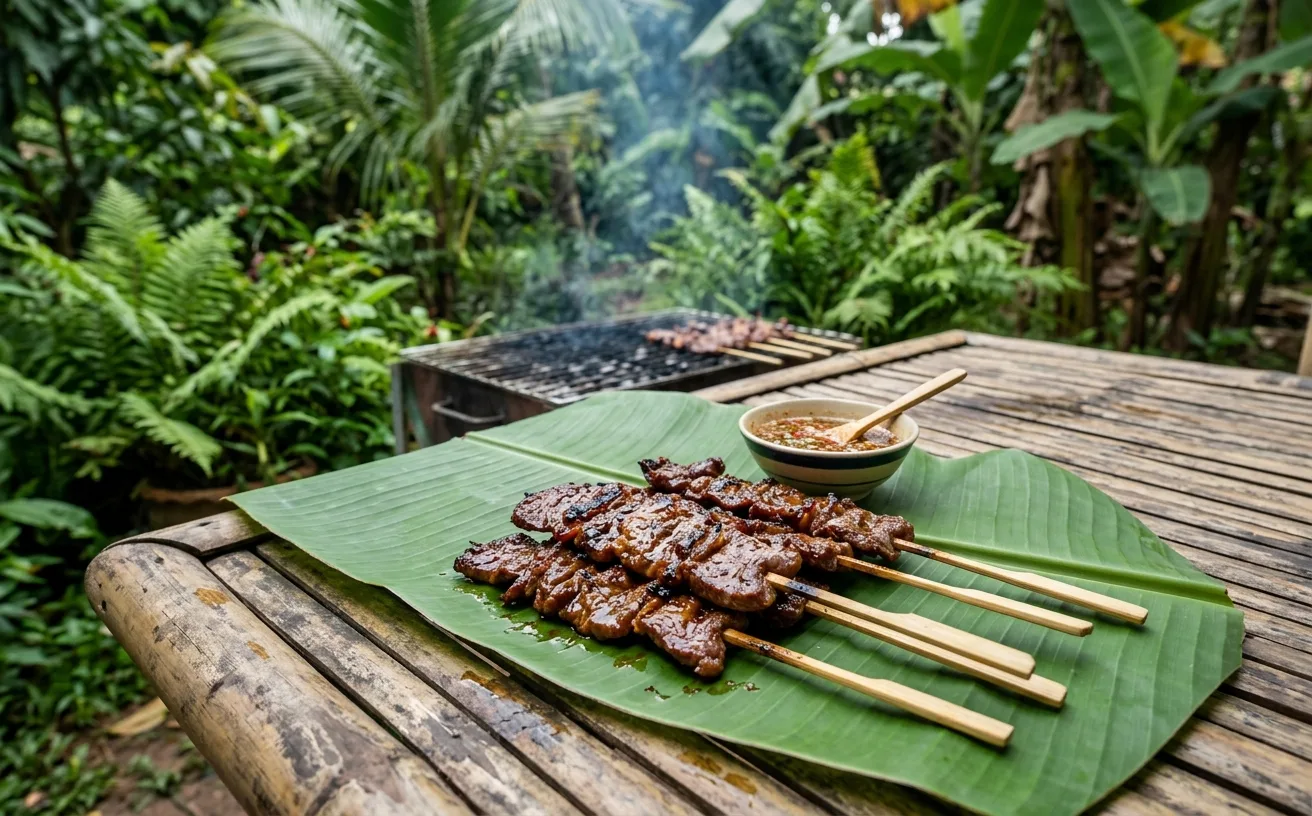
A modern Jakarta street phenomenon born in the 2010s around Senayan: pale, unmarinated chicken satay grilled without sweet soy or peanut sauce and served instead with fiery sambal and a squeeze of lime. Its stripped-down 'white satay' look and pure chili heat made it a viral youth favorite.
Also known as satay taichan, taichan satay, sate taichan senayan.
Reference video
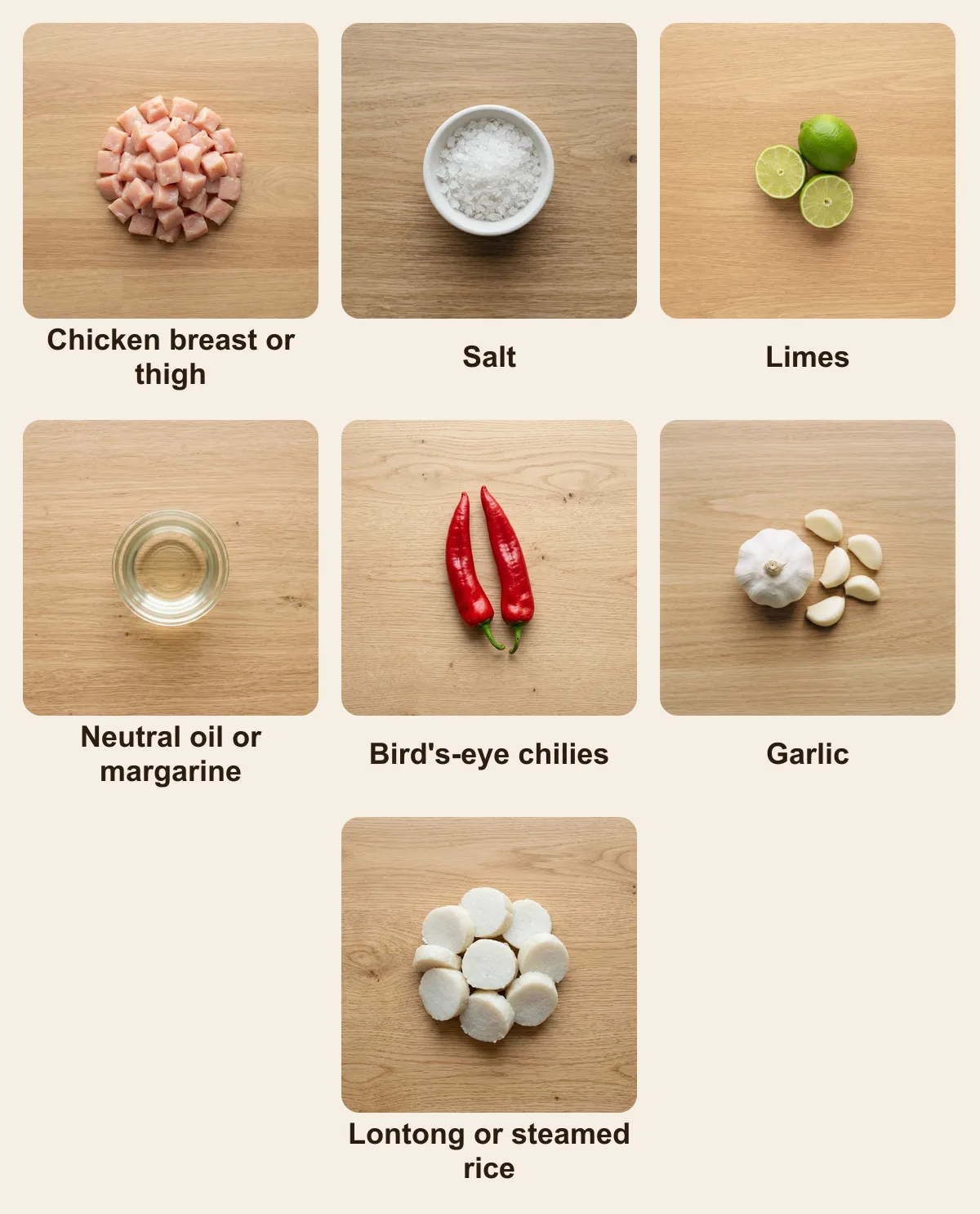
Ingredients
- 600 g chicken breast or skinless thigh, in 2 cm cubes
- 1.5 tsp salt
- juice of 2 limes, divided
- 1 tbsp neutral oil or melted margarine
- 15 bird's-eye chilies
- 4 garlic cloves
- lontong or steamed rice, to serve
How to make it
- 1
Season the chicken with salt, half the lime juice and the oil — no kecap, no turmeric, nothing that colours.
- 2
Skewer and grill hot and fast, 6-8 minutes, pulling them while still pale gold with only freckles of char.
- 3
Blanch the chilies and garlic in boiling water 2 minutes, then grind with salt and the remaining lime into a rough, fiery sambal.
- 4
Serve the blond skewers with sambal heaped on top and lontong alongside.
Pro tip: Resist the urge to brown deeply — taichan's shock value is snow-pale chicken hiding behind a sambal that does all the shouting.
Where Sate Taichan comes from
It is a very young dish by satay standards, and its rise was documented in real time on Indonesian social media. The origin story usually credits a Japanese customer asking for satay without the sweet sauce, which is where the name is thought to come from.
Pale chicken and pure chilli: Jakarta's stripped-down sate
Strip the sweetness out of Sate Ayam and you arrive at Sate Taichan: small chicken cubes with no marinade, no kecap manis glaze and no peanut sauce, seasoned with salt and lime just before a fast, hot grilling, so they come off pale. All the heat sits in a sambal of bird's-eye chillies, garlic, salt and lime. Sate Klathak shares the bare-seasoning idea, using little more than salt and pepper, but applies it to young goat on iron spokes with a curry gravy alongside. Sate Kambing is often grilled unmarinated as well, though its sambal kecap is sweet where Taichan's is pure chilli. Having appeared around Senayan in the 2010s, Taichan is a newcomer among Indonesian sates.
Compare: Sate Ayam · Sate Klathak · Sate Kambing
How Sate Taichan is cooked
Removing the marinade removes the protection, and this is the whole technical consequence. Unmarinated chicken over charcoal has no sugar to caramelise and no paste to shield it, so it must be cooked fast and pulled early, and salt and lime are applied just before the fire and again at the end, never as a long marinade.
The result is deliberately pale — no kecap manis means no browning — and the visual is part of the appeal. The sambal carries everything: fresh chillies and garlic, often with shallot and tomato, blended raw or lightly cooked, hot enough that Jakarta's youth market treats finishing a portion as a small achievement.
Ingredients and shopping
Chicken thigh or breast in small cubes. Because there is no marinade, freshness and quality matter more than usual — this is one satay where a poor bird cannot be disguised.
For the sambal: bird's-eye chillies in quantity, garlic, salt and lime, blended — many stalls add shallot and tomato. Some versions cook it briefly in oil. Lime wedges, and rice or lontong. Nothing else on the plate.
How Sate Taichan is served
With sambal in a bowl, lime wedges, and rice or lontong. Nothing else — no peanut sauce, no kecap manis. It is eaten in the evening at outdoor stalls and it is squarely a young person's food in Jakarta. Newer stalls sell sate taichan mentai — the same skewers buried under torched mentaiko mayonnaise — but the Senayan original stays exactly this austere.
Common mistakes
Marinating it
The whole point is unmarinated pale chicken. A marinade makes it sate ayam, which is a different and older dish.
Salting in advance
Salt left to sit draws moisture out of unprotected chicken. Season just before skewering and grilling, not hours ahead.
A weak sambal
It is the entire flavour of the dish. A mild sambal leaves you with plain grilled chicken.
Overcooking
With no marinade there is nothing keeping it moist. Fast and hot, pulled early.
Sate Taichan: questions and answers
Why is it white?
There is no kecap manis in the marinade — in fact there is no marinade at all — so nothing browns. The pale look is deliberate and is part of the appeal.
What does 'taichan' mean?
In the usual telling, 'Taichan' was the nickname of a Japanese regular at a Senayan stall — 'Tai' plus '-chan', the affectionate Japanese diminutive — whose plain-grilled order became the dish. The Jakarta Post has told the same story of a Japanese man giving Indonesian satay a twist, and the nickname stuck, and no Indonesian word is hiding inside it.
Is it really that spicy?
Yes. The sambal carries the entire dish and Jakarta stalls make it genuinely hot.
How old is it?
It emerged around Senayan in Jakarta in the 2010s, which makes it a newcomer among Indonesia's satay styles.
Sources and further reading
- Sate taichan — Wikipedia
- How a Japanese man gave Indonesian satay a twist — The Jakarta Post