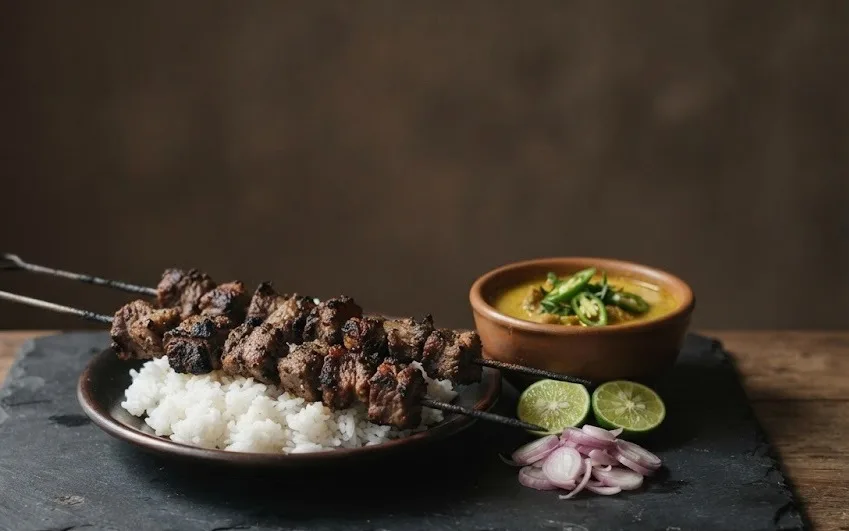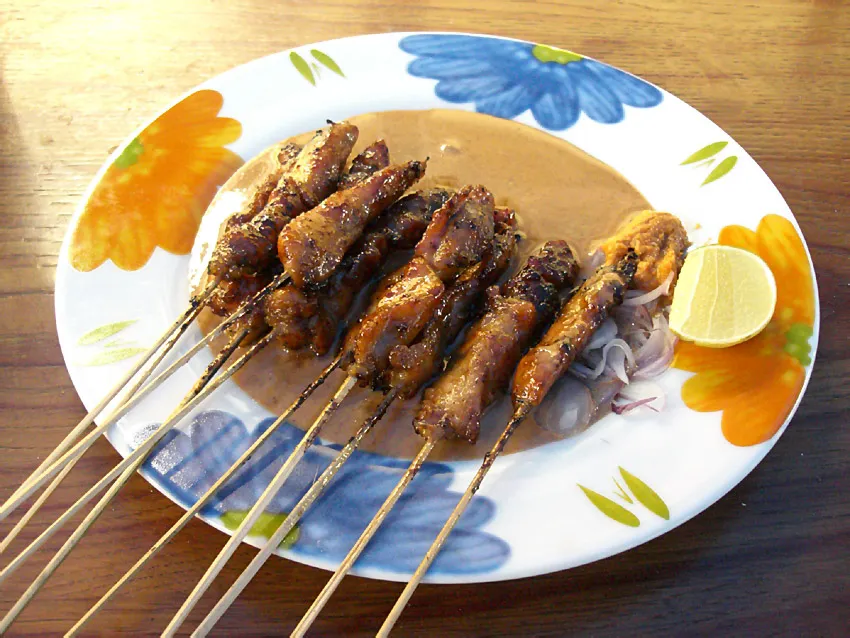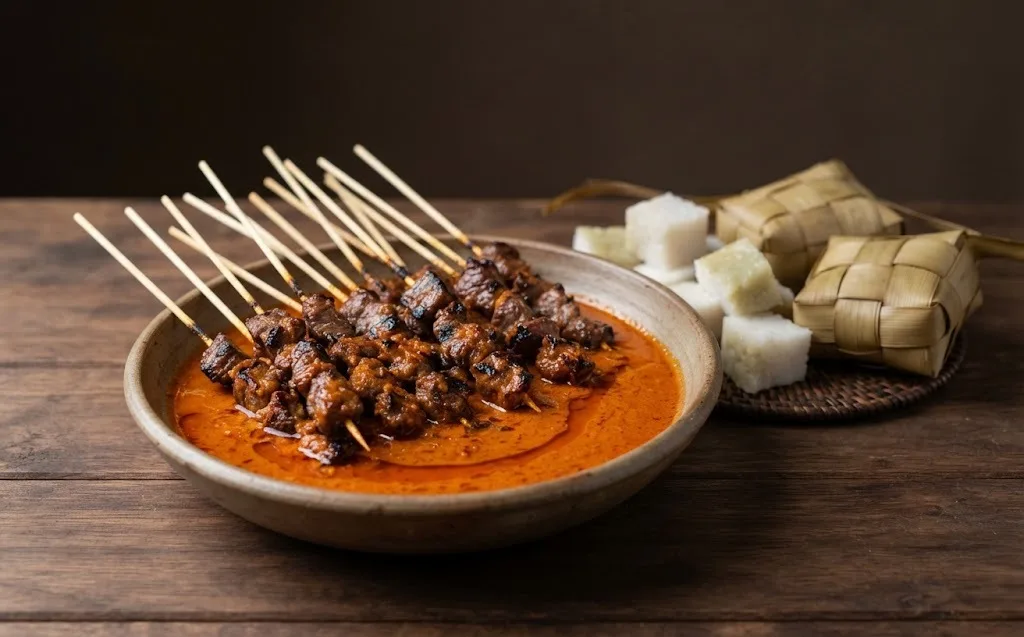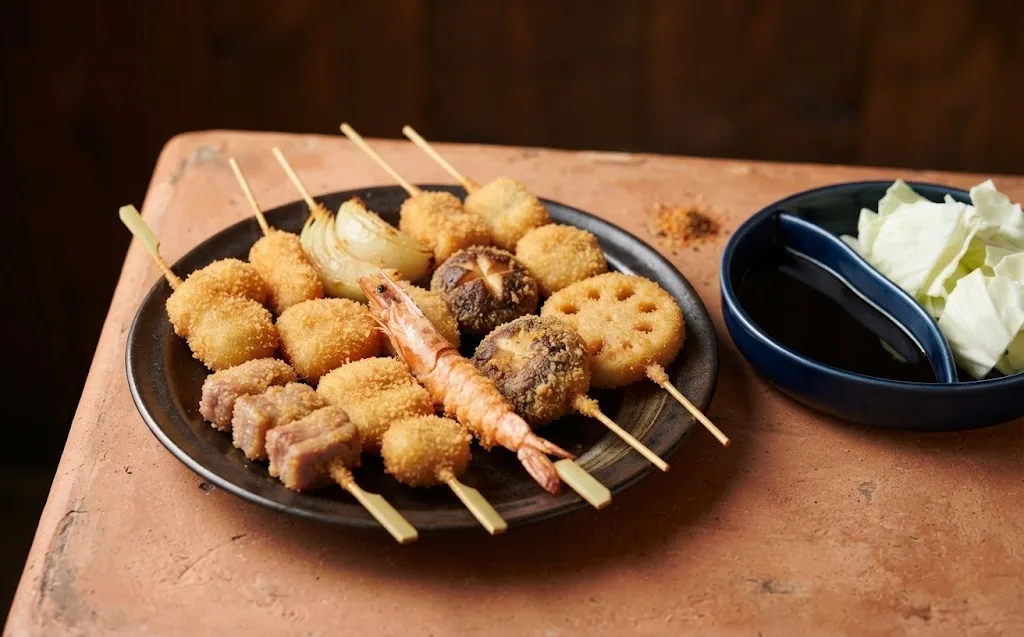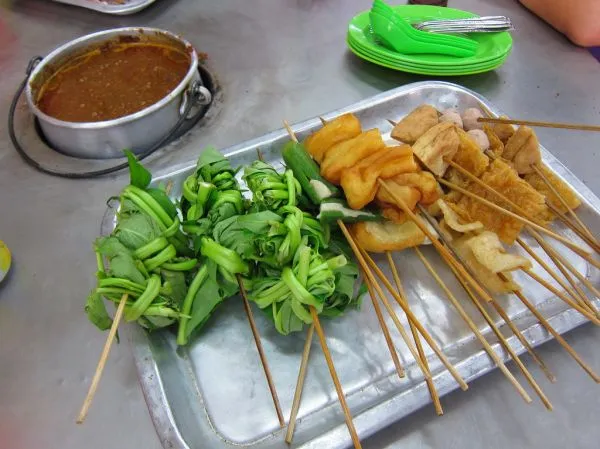
Melaka's inversion of satay: raw skewers of meat, seafood, and tofu are cooked at the table in a bubbling cauldron of the peanut satay sauce itself, so the dip becomes the cooking medium. Invented in mid-20th-century Melaka (Capitol Satay is the storied name), it turns the satay lineage into a communal simmer-pot experience.
Also known as sate celup, satay celup melaka, malacca satay celup.
Reference video
Ingredients
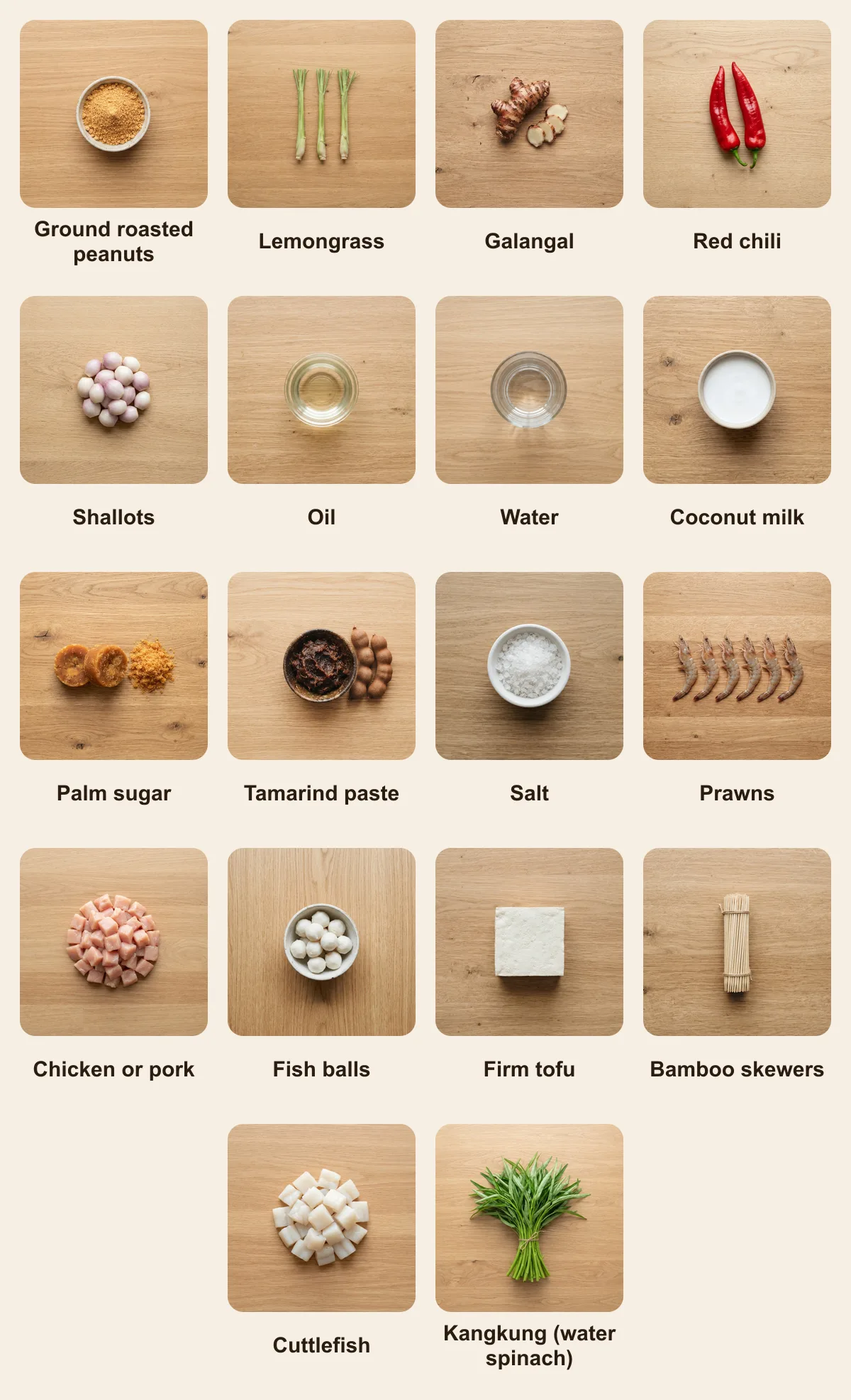
- 200 g ground roasted peanuts (sauce base)
- 3 tbsp satay spice paste (lemongrass, galangal, chili, shallot) and 3 tbsp oil to fry it
- 1.2 l water plus 200 ml coconut milk
- 2 tbsp palm sugar, 1 tbsp tamarind paste and 1 tsp salt
- 300 g prawns, shelled
- 300 g chicken or pork, thin slices
- 200 g fish balls and cuttlefish pieces
- 150 g firm tofu and 1 bunch kangkung (water spinach)
- bamboo skewers
How to make it
- 1
Fry the spice paste in a pot until it splits its oil, add ground peanuts, water, coconut milk, palm sugar, tamarind and salt, and simmer 20 minutes into a thick, bubbling gravy.
- 2
Skewer all the raw items and arrange them around the pot — in Melaka the cauldron sits in the table's center and never stops bubbling.
- 3
Keep the sauce at a gentle volcanic blip over a burner; too hard a boil catches the peanuts on the pot base.
- 4
Dip skewers straight into the gravy to cook: seafood and slices 2-3 minutes, tofu and greens under a minute.
- 5
Stir the pot between rounds and loosen with hot water as the sauce thickens on itself.
Pro tip: Unlike satay with sauce on the side, the sauce IS the cooking pot — stir from the bottom every few dunks or the peanut layer scorches and turns the whole cauldron bitter.
Where Satay Celup comes from
It turns the satay lineage into a communal simmer-pot experience, and it is one of the few dishes in the kebab family that reverses its own tradition. Where satay grills the meat and dips it in sauce, satay celup abolishes the grill entirely and puts everything into the sauce from the start.
When the peanut sauce becomes the cooking pot
A pot of simmering peanut gravy replaces the grill in Satay Celup. Raw prawns, cockles, fish balls, sliced meat, tofu and greens are dunked into it at the table and cooked there, whereas Satay and Satay Kajang grill their meat over charcoal and serve the sauce beneath it or in a bowl beside it. Satti also sets its skewers in sauce, but they are charcoal-grilled beforehand and the gravy is annatto-red rather than peanut. Celup is priced by counting coloured skewer handles, runs as a long communal evening in Melaka, and ends with rice or bread mopping up the concentrated sauce.
Compare: Satay · Satay Kajang · Satti
How Satay Celup is cooked
The sauce has to work as a cooking liquid, which changes its formulation. It is made in large volume, thick and aromatic, and it is kept at a steady simmer rather than a boil — a hard boil would break the peanut emulsion and scorch the bottom of the pot.
Because everything cooks in the same pot, the sauce concentrates and evolves through the meal, picking up flavour from the seafood and meat that pass through it. Regulars regard the end of the meal as the best part of the sauce, which is the same logic as a long-running hotpot broth.
Ingredients and shopping
Raw prawns, squid, fish balls, cockles, sliced chicken and beef, tofu puffs, quail eggs, okra, and leafy vegetables — the same range as lok-lok. Skewers with colour-coded handles for pricing.
The sauce is a peanut satay base thinned with stock or water and coconut milk, with chilli, tamarind, palm sugar, lemongrass and galangal. It needs to be made in volume and kept at a gentle simmer. A tabletop burner and a wide pot.
How Satay Celup is served
Around the pot, skewers added and retrieved continuously, with rice or bread to mop the sauce at the end. Paid by counting the coloured handles. It is communal, messy and long, and Melaka treats it as an evening out rather than a meal.
Common mistakes
Not stirring the pot
The gravy is thick and the peanuts settle; skip the stirring and the bottom scorches. Keep it moving every few dunks.
A hard boil
It breaks the peanut emulsion and burns the bottom. Keep it at a gentle simmer.
Overcrowding the pot
It drops the temperature and things cook unevenly. Add a few skewers at a time.
Overcooking seafood
Prawns and cuttlefish are done in two or three minutes and toughen fast after that. Watch them rather than leaving them in.
Satay Celup: questions and answers
Why is the sauce so thick?
It's made in a big batch and reduces as it cooks everything that passes through it. Regulars stir it often so the peanut solids don't scorch on the bottom.
How is it priced?
By the colour of the skewer handles, counted at the end, as with lok-lok.
Sources and further reading
- Satay celup — Wikipedia
- Satay Celup — Tourism Melaka (official portal)