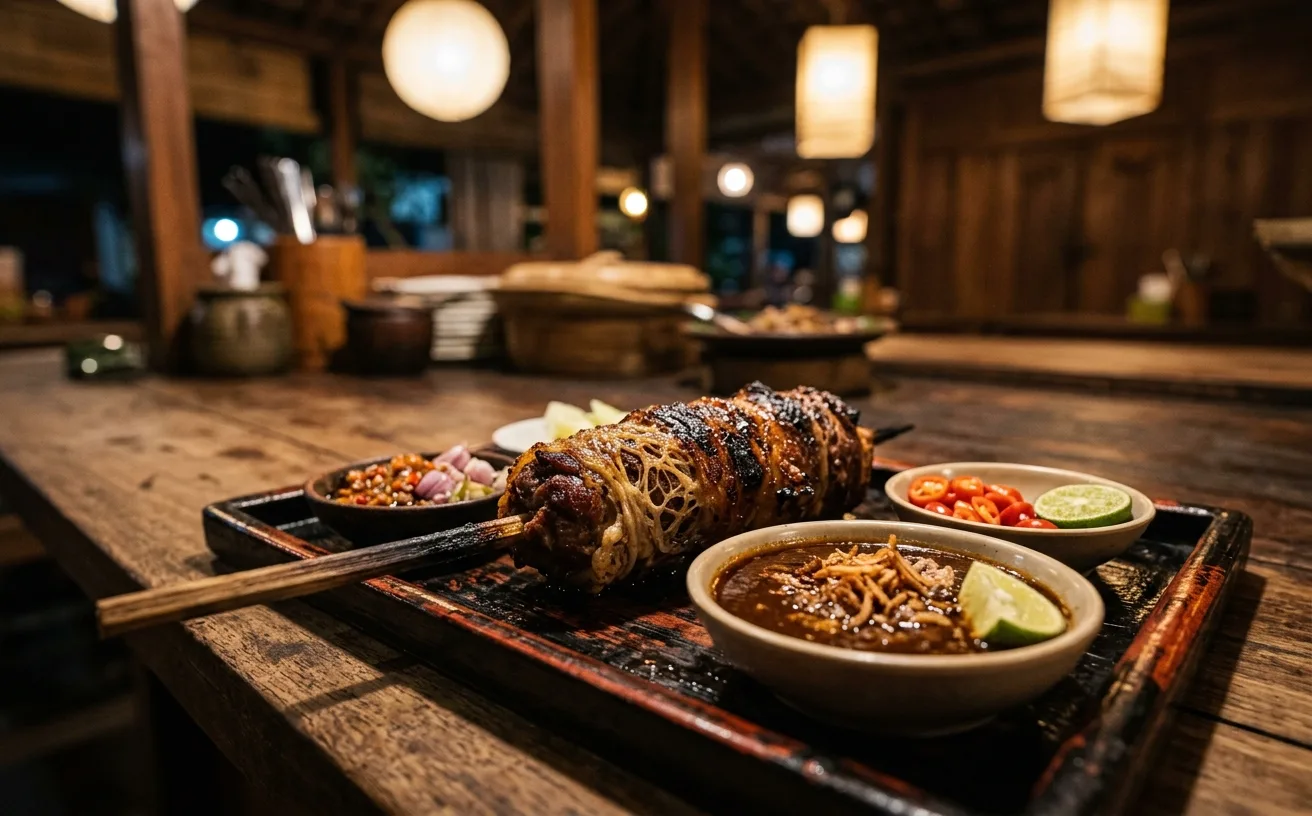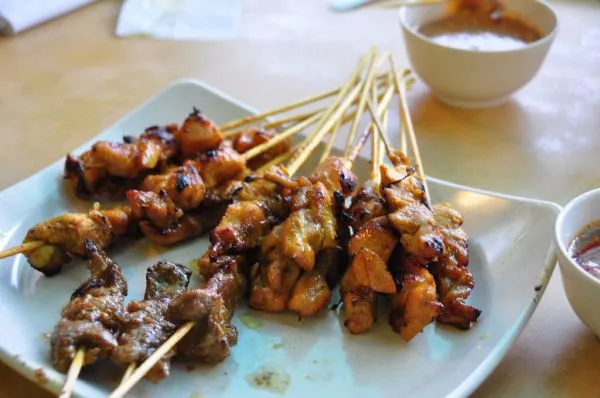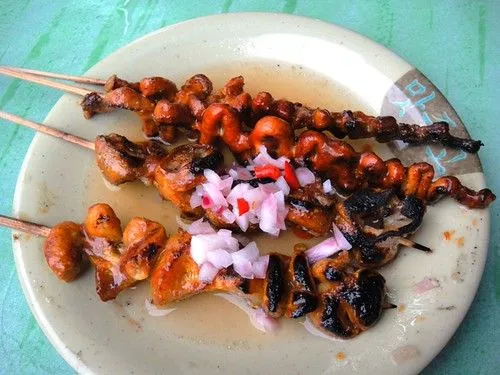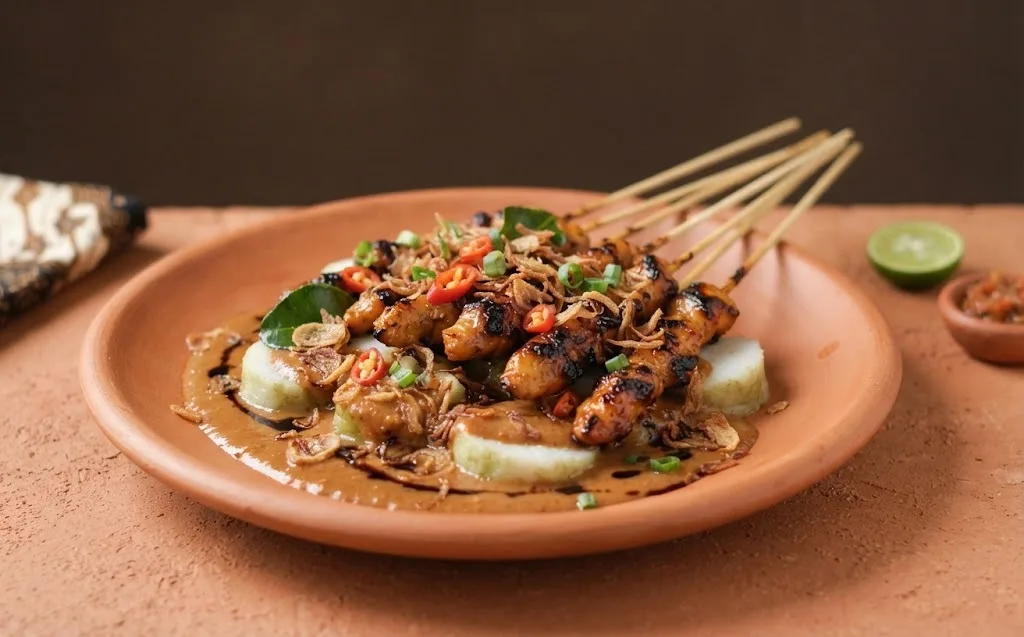
The satay style that conquered Indonesia's streets, exported by vendors from Madura island: small chicken or goat skewers with a distinctly sweet, dark peanut-and-kecap-manis sauce, classically sold from shoulder-pole carts. Its trademark is the fine, almost pourable peanut sauce blended with petis or fried shallots.
Also known as satay madura, Madura satay, sate ayam madura.
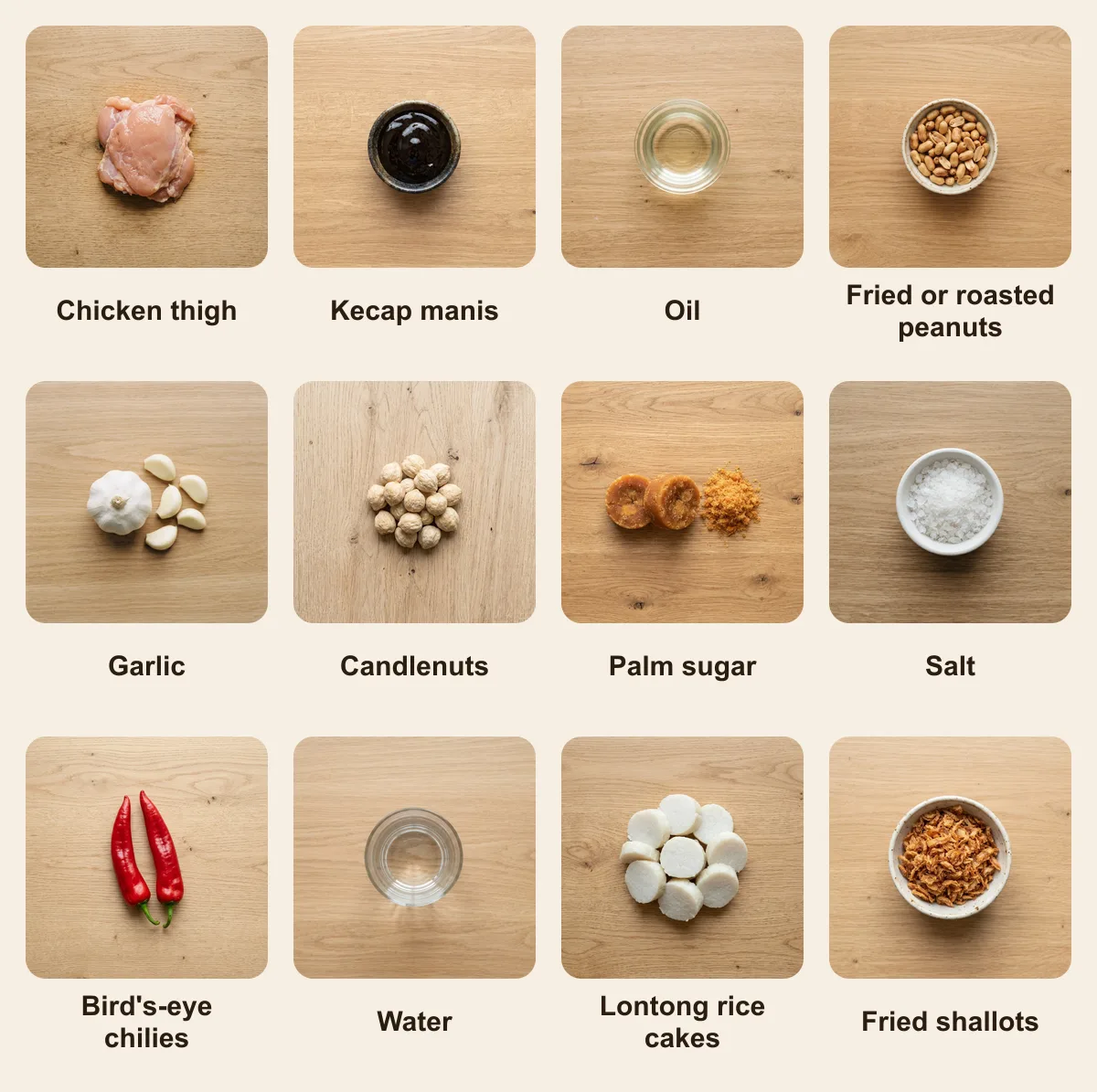
Ingredients
- 600 g chicken thigh, in small 2 cm pieces
- 5 tbsp kecap manis, divided
- 1 tbsp oil
- 150 g fried or dry-roasted peanuts
- 3 garlic cloves
- 2 candlenuts (optional)
- 1 tbsp palm sugar and a pinch of salt
- 2 bird's-eye chilies
- 250 ml water
- lontong rice cakes and fried shallots, to serve
How to make it
- 1
Grind the peanuts, garlic, candlenuts, chilies and a handful of the fried shallots to a fine paste, then simmer with the water, palm sugar, 2 tablespoons of the kecap manis and a pinch of salt 10 minutes until thick but pourable — the fried shallots supply savoury depth behind the sweetness.
- 2
Toss the chicken with 1 tablespoon of the kecap manis and the oil, then skewer it, four or five small pieces per stick, and grill over charcoal 6-7 minutes until three-quarters done.
- 3
Spoon a coat of the peanut sauce over each skewer, return it to the grill and finish 2-3 minutes until the coating catches in spots.
- 4
Plate over sliced lontong, flood with the remaining sauce, streak with kecap manis and shower with fried shallots.
Pro tip: Madura vendors cook the satay twice — naked first, sauced second — so the peanut coat toasts on the fire instead of burning raw.
Where Sate Madura comes from
Madurese migration made it national. Vendors carried the style to Jakarta, Surabaya and beyond, and the shoulder-pole cart — a portable kitchen balanced across the shoulders — became such a fixture that it is now the visual shorthand for satay in Indonesia. Its trademark is the fine, almost pourable sauce.
A sauce-led satay from Madura island, and its opposites
Everything in Sate Madura points at the sauce: fried peanuts ground very fine, thinned until it pours, darkened with kecap manis and deepened by petis or a heap of fried shallots. The chicken or goat gets only a light marinade, is grilled most of the way, dipped through that sauce and returned to the coals. Sate Maranggi is its philosophical opposite, loading beef or lamb with a coriander-heavy marinade of several hours and serving no peanut sauce. Sate Ayam grinds its fried peanuts coarse, where Madura grinds them fine. Anyone choosing goat should know that Sate Kambing turns down peanut altogether in favour of sambal kecap.
Compare: Sate Maranggi · Sate Ayam · Sate Kambing
How Sate Madura is cooked
The sauce is what defines the style, and its distinguishing feature is texture: it is ground finer and thinned further than a Javanese peanut sauce, to the point of being pourable, and it is blended with kecap manis and often petis — the dark fermented shrimp or fish paste of East Java — or a generous quantity of fried shallots.
Because the sauce is thin, it coats rather than clings, and the skewers are drenched rather than dipped. The meat is correspondingly small and lightly marinated, since it is going to be covered; a heavy marinade would fight the sauce that is doing the work.
Ingredients and shopping
Chicken thigh or young goat in small cubes. The chicken version is the more common outside Madura. Bamboo skewers, four or five pieces each.
For the sauce: fried peanuts ground very fine, kecap manis, garlic, chilli, tamarind and either petis or a large quantity of fried shallots. Thin it with water until it pours. Lontong, sliced shallot, and more fried shallots on top.
How Sate Madura is served
Ten skewers drenched in sauce, with lontong, sliced shallot and a heap of fried shallots, from a cart in the evening. Krupuk alongside. The shoulder-pole vendor calling out as he walks is a genuine Indonesian street sound and it usually means Madura satay.
Common mistakes
A thick sauce
Madura style is thin and pourable. A thick paste is a Javanese sauce and gives a different dish.
Grinding the peanuts coarse
Madura grinds them fine. Coarse grinding belongs to other regional styles.
Heavy marinating
The sauce is the flavour. A strongly marinated meat fights it.
Skipping the petis or the fried shallots
One or the other supplies the savoury depth behind the sweetness. Without either the sauce is simply sweet.
Sate Madura: questions and answers
What is petis?
A dark fermented shrimp or fish paste from East Java, used to give savoury depth behind the sweetness of the sauce.
Why is the sauce so thin?
So it coats the skewers rather than clinging in a blob. Madura satay is drenched rather than dipped.
Why did this style spread nationally?
Madurese vendors migrated across Indonesia with their shoulder-pole carts, and the style travelled with them until it became the default.
Sources and further reading
- Sate Madura: Kuliner Legendaris dari Pulau Garam — Indonesia.travel (Indonesian Ministry of Tourism)
- Madurese cuisine — Wikipedia