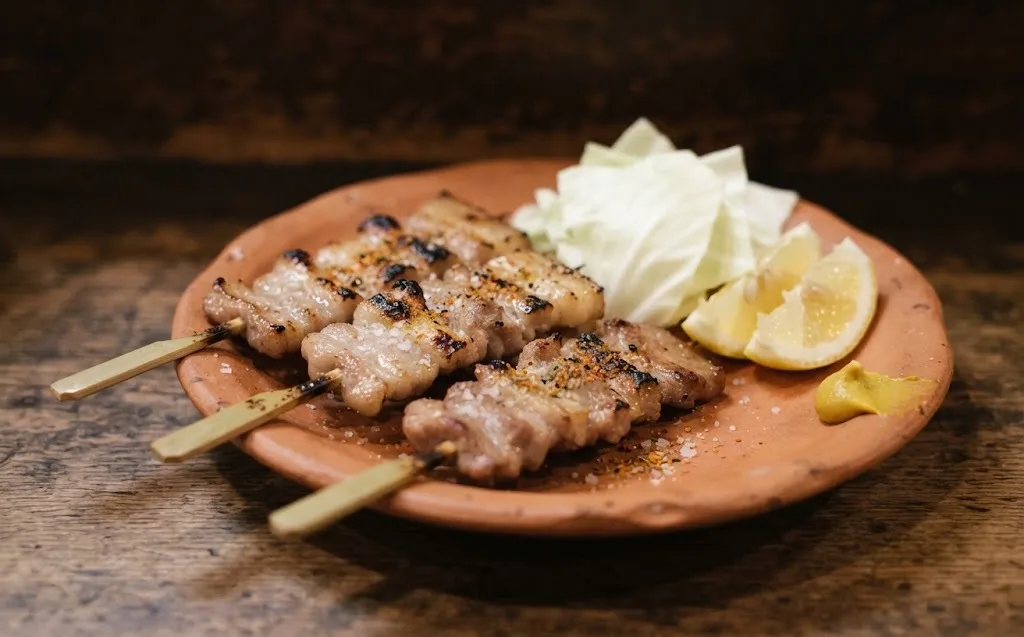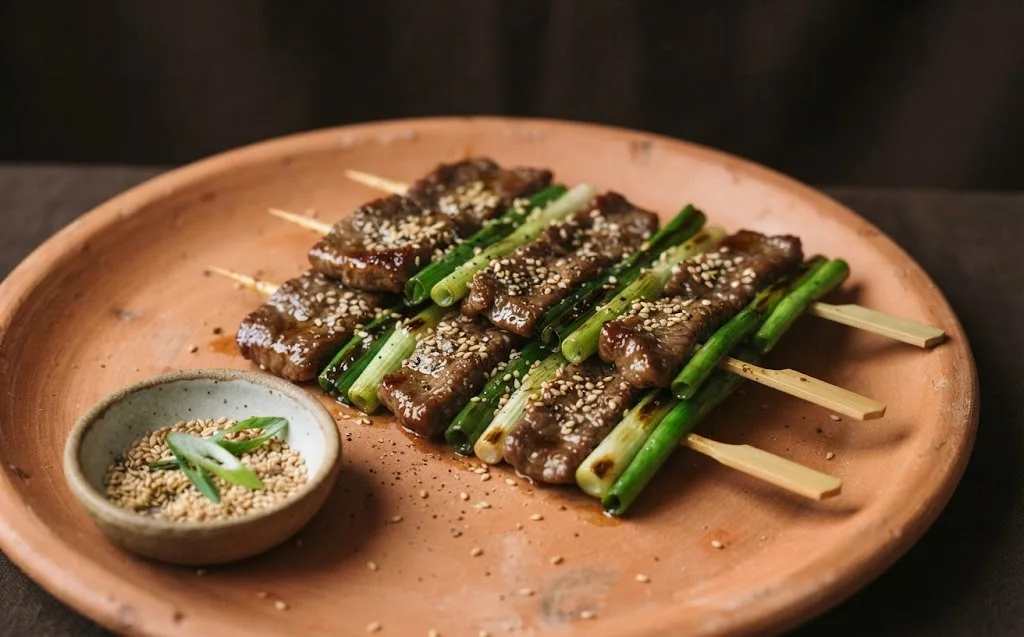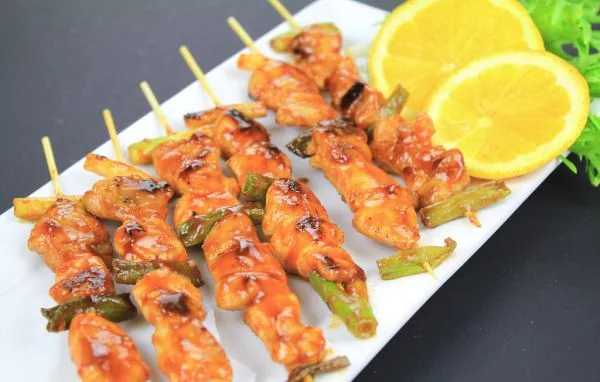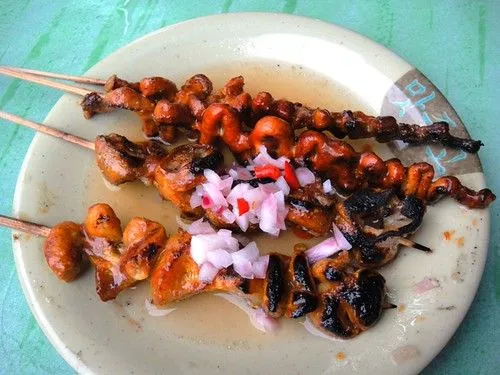
Iconic Filipino street food of chicken or pig intestines, thoroughly cleaned, boiled, then folded accordion-style onto skewers and char-grilled. Dunked into communal spiced vinegar, it is the flagship of the Philippines' after-work streetside grilling culture.
Also known as isaw manok, isaw baboy, grilled chicken intestines.
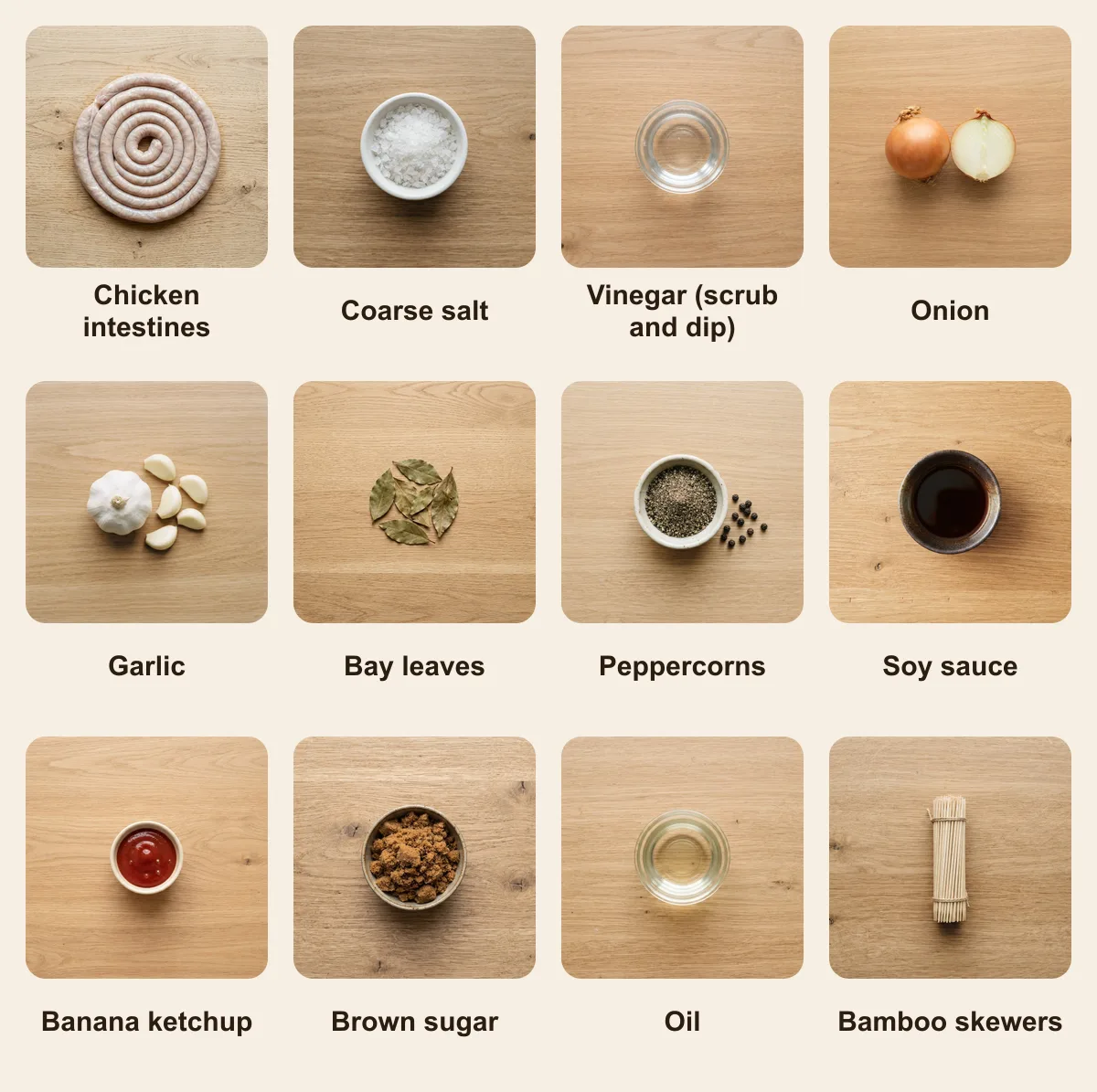
Ingredients
- 800 g chicken intestines
- 3 tbsp coarse salt and 120 ml vinegar, for scrubbing
- 1 onion, 6 garlic cloves, 2 bay leaves and 1 tsp peppercorns, for the boil
- 60 ml soy sauce
- 60 ml banana ketchup
- 20 g brown sugar and 30 ml oil
- Bamboo skewers
- Sawsawan: cane vinegar with garlic, chili and onion
How to make it
- 1
Strip the intestines of their contents, then scrub with coarse salt, rinse, scrub again with vinegar, and rinse until the water runs perfectly clear.
- 2
Boil with onion, garlic, bay and peppercorns 20-40 minutes until tender, then drain and pat dry.
- 3
Fold each length accordion-style onto a skewer, packing the pleats tight.
- 4
Whisk soy, banana ketchup, sugar and oil, and grill the skewers over hot coals 5-6 minutes, basting and turning until the edges char and bubble.
- 5
Dunk in the spiced vinegar and eat immediately, standing up if possible.
Pro tip: Clean, then clean again: two full scrub cycles, salt then vinegar, before anything touches heat. Every shortcut in the sink announces itself in the first bite, which is why respected isaw vendors are famous for their washing, not their glaze.
Where Isaw comes from
It belongs to a whole family of Filipino offal skewers with affectionate nicknames — adidas for chicken feet, betamax for cubes of coagulated blood, helmet for chicken head — and the naming culture is part of the appeal. Isaw stands cluster outside schools, offices and markets in the late afternoon.
How Isaw is cooked
Cleaning dominates the preparation and it cannot be shortened. Intestines are turned inside out, scraped, washed repeatedly with salt and vinegar or with flour, and rinsed until no smell remains at all. Filipino vendors who cut this stage short are quickly known for it.
They are then boiled until tender — twenty to forty minutes depending on the animal — before being folded onto skewers in an accordion so the surface area is maximised. The grilling is short and hot, purely for char and glaze, since the cooking has already been done. Basting with a soy-and-banana-ketchup mixture builds the lacquer.
Ingredients and shopping
Chicken intestines are milder and more common; pig intestines are larger and richer. Both are sold cleaned in Filipino markets, though a second cleaning at home is prudent. Bamboo skewers, soaked.
For the baste: soy sauce, banana ketchup, brown sugar and a little oil. For the dip: cane vinegar with chopped onion, garlic, chilli and black pepper. The vinegar is communal at a street stall and is the essential counterweight to the fat.
How Isaw is served
Off the skewer, dipped in a shared cup of spiced vinegar, standing at a street stall in the late afternoon or evening. Rice in a bag if you want a meal. It is cheap, social food and it is ordered by the stick.
Common mistakes
Insufficient cleaning
This is the entire dish. Turn them inside out, scrub with salt and vinegar, and rinse until there is no smell at all.
Skipping the boil
Grilling alone will not tenderise intestines. Boil them first, then grill for char only.
Threading them flat
Fold them accordion-style so more surface meets the fire and the skewer holds together.
No vinegar dip
The skewers are fatty and sweet from the glaze. The spiced vinegar is what makes them eatable in quantity.
Isaw: questions and answers
How are the intestines cleaned?
Turned inside out, scraped, washed repeatedly with salt and vinegar or flour, and rinsed until no smell remains. It is the most important step.
Do they need to be boiled first?
Yes — twenty to forty minutes until tender. The grilling is only for char and glaze.
Sources and further reading
- Isaw — Wikipedia
- Philippine cuisine — Wikipedia
- Sizzle never stops for famed UP campus spot — Philippine Daily Inquirer
- Isaw ng Manok (Grilled Chicken Intestine) — Panlasang Pinoy (Vanjo Merano)