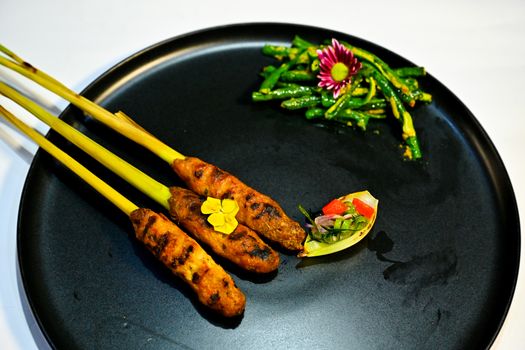
West Java's marinade-forward satay from Purwakarta: beef or lamb steeped in coriander, galangal, and sweet soy before grilling, so it needs no sauce at all. It is eaten with a fresh tomato-chili sambal and fermented-cassava tang in the marinade sets it apart.
Also known as: sate maranggi, satay maranggi, maranggi satay, sate maranggi purwakarta
Watch it made
Ingredients
- 700 g beef (or lamb), in 2.5 cm cubes
- 2 tbsp coriander seeds, toasted and ground
- 5 shallots and 3 garlic cloves, pounded
- 3 cm ginger and 2 cm galangal, pounded
- 60 ml kecap manis
- 20 g palm sugar and 1 tbsp tamarind water
- Salt
- 2 tomatoes, 4 bird's-eye chilies, 2 shallots and a pinch of sugar, chopped raw (sambal tomat)
- Bamboo skewers, soaked
How to make it
- 1
Combine the pounded aromatics with coriander, kecap manis, palm sugar, tamarind and salt into a thick marinade.
- 2
Massage it into the beef and leave at least 3 hours; Maranggi is a marinade-forward satay and this is where the flavor happens.
- 3
Skewer 4 cubes per stick, straight from the bowl without wiping.
- 4
Grill over medium-hot coals 6-8 minutes, turning as the sugars char to a dark lacquer.
- 5
Rest 2 minutes and serve with the raw tomato sambal spooned over.
Pro tip: No peanut sauce, and that is the point: Purwakarta vendors let the coriander-sweet-soy cure speak, with only bright raw tomato-chili sambal beside it. If you find yourself reaching for peanut sauce, you have made a different satay.
The story of Sate Maranggi
Sate maranggi is West Java's marinade-forward satay, from Purwakarta and the surrounding area: beef or lamb steeped in coriander, galangal and sweet soy before grilling, so thoroughly seasoned that it needs no sauce at all. It is eaten with a fresh tomato-chilli sambal instead.
The absence of peanut sauce is the point and it makes maranggi the philosophical opposite of Madura satay. Where Madura puts the flavour in the sauce and keeps the meat plain, maranggi puts everything into the marinade. Purwakarta's roadside warungs have built a genuine regional reputation on it.
The technique that defines it
The marinade is long — several hours, often overnight — and contains a fermented element: traditionally the tang comes from fermented cassava (tape) or a little vinegar, which both tenderises and gives the sour undertone that distinguishes maranggi from a straightforwardly sweet soy marinade.
Coriander seed, toasted and ground, is used far more heavily than in other satay styles and is the dominant aroma. Grilling is over charcoal with basting from the marinade, and because there is no sauce to follow, the glaze that builds on the surface has to carry the whole dish.
Choosing your ingredients
Beef — sirloin or a well-marbled cut — or lamb, in cubes slightly larger than sate ayam's. Fat should be present in the cut or threaded between.
Toasted coriander seed in quantity, galangal, garlic, shallot, kecap manis, palm sugar, and tape (fermented cassava) or a splash of vinegar for the sour note. The sambal is fresh: chopped tomato, chilli, shallot, lime, salt — uncooked and made shortly before serving.
Mistakes that ruin it
A short marinade
Maranggi depends entirely on its marinade and needs several hours or overnight. A quick soak leaves it tasting like a plain soy skewer.
Skimping on coriander
Toasted ground coriander is the dominant aroma and is used far more heavily than in other satay styles.
Adding peanut sauce
Maranggi is designed to need none. Sauce buries the marinade that is the whole dish.
Omitting the sour element
Tape or vinegar gives the tang that distinguishes it from a simply sweet marinade.
How it is served
With fresh tomato-chilli sambal, ketan bakar (grilled sticky rice cakes) or plain rice, and nothing else. Purwakarta warungs serve it with the sambal in a small bowl and no peanut sauce anywhere on the table, which visitors from Jakarta occasionally find alarming.
Questions about Sate Maranggi
Why is there no peanut sauce?
Sate maranggi puts all its flavour into a long marinade, so it needs none. It is served with a fresh tomato-chilli sambal instead.
What gives it its sour note?
Traditionally tape — fermented cassava — or a splash of vinegar in the marinade, which both tenderises and adds tang.
How long should it marinate?
Several hours at minimum, and overnight is common. The marinade is the dish.
Where is it from?
Purwakarta and the surrounding area of West Java, where roadside warungs have built a regional reputation on it.