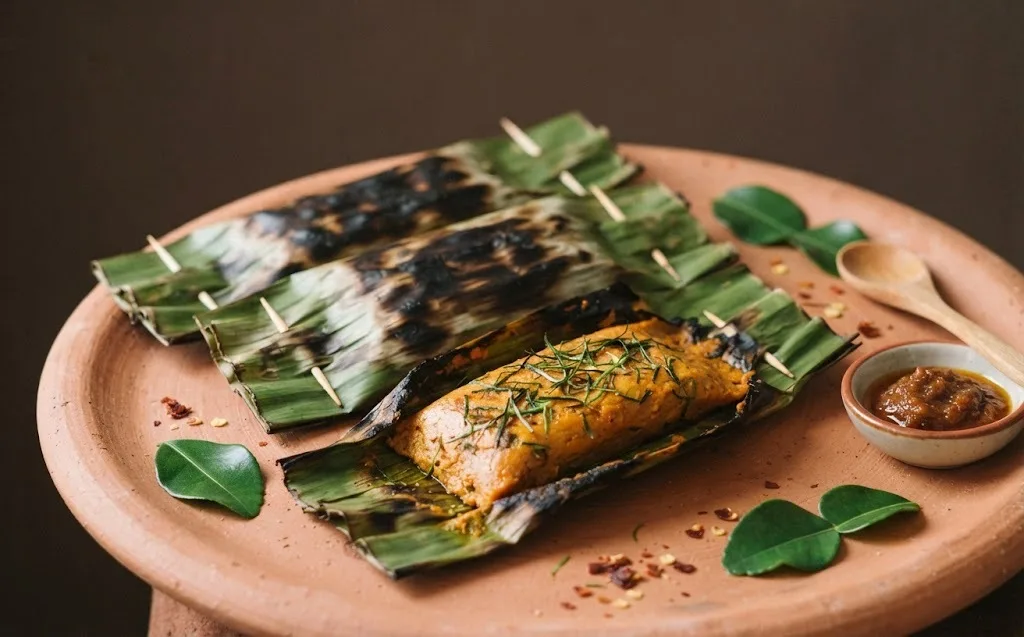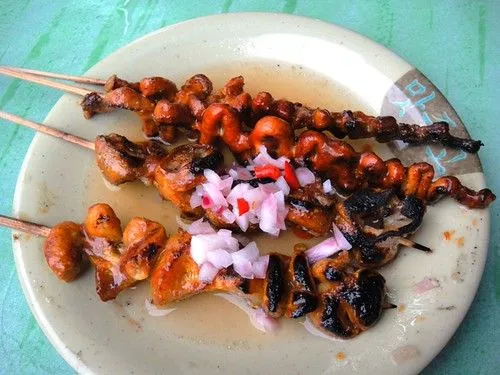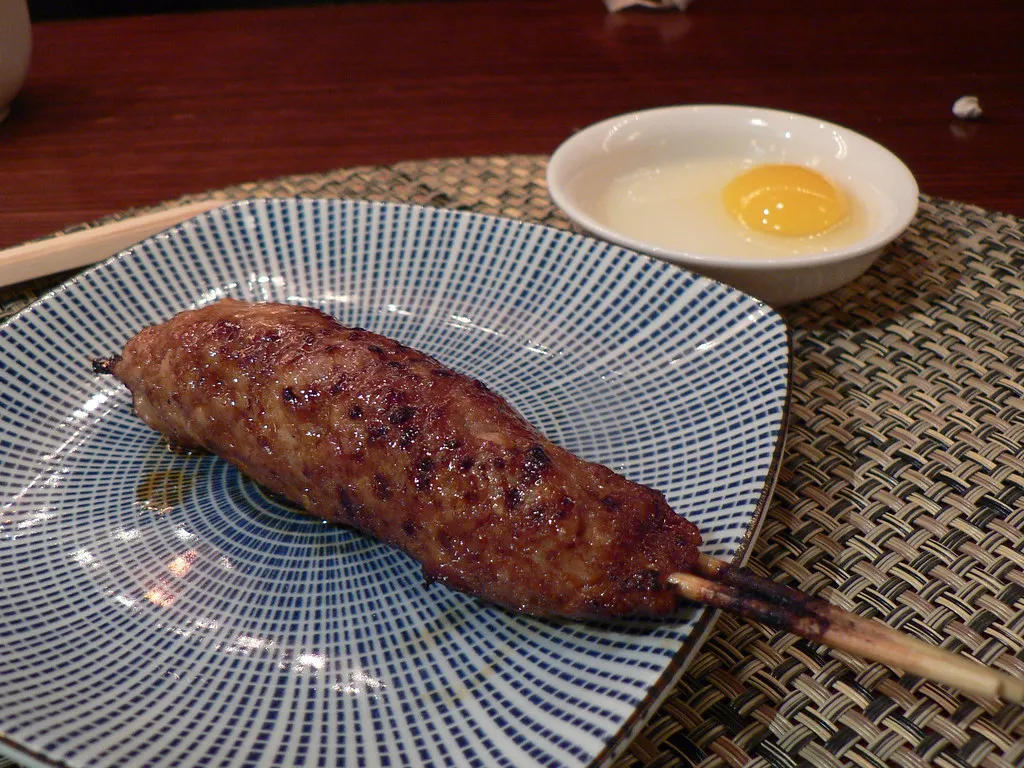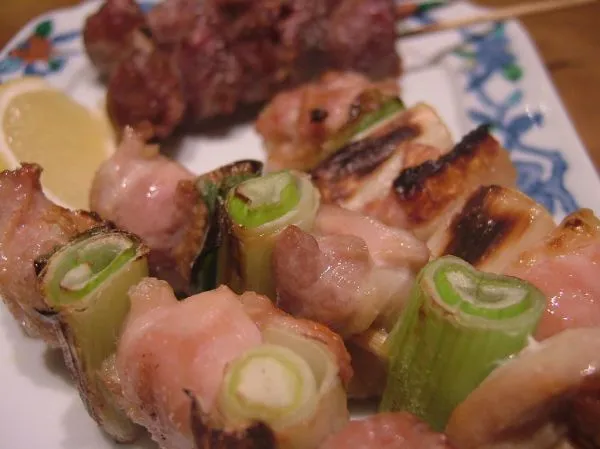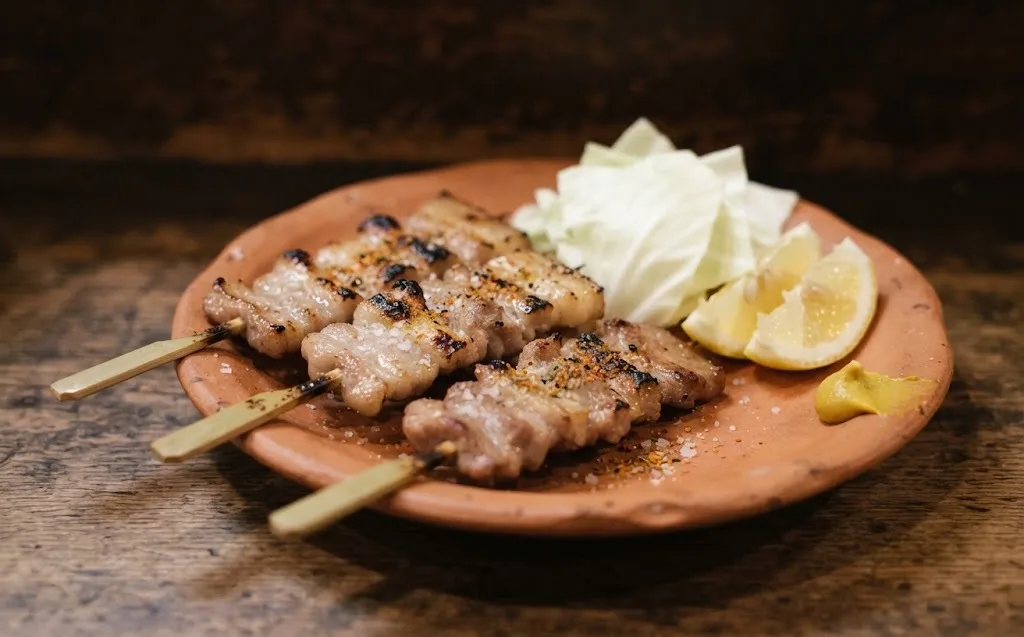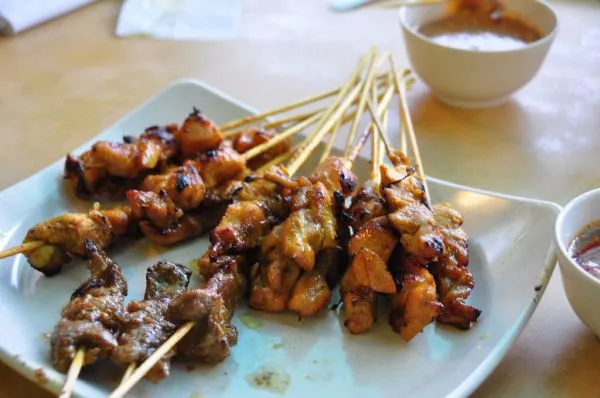
Malaysia's most famous satay style, named after the town of Kajang in Selangor: larger, well-marinated chunks of chicken or beef with a peanut sauce served alongside a spoonful of fried chili paste you stir in to taste. Eaten with ketupat, cucumber and raw onion, it turned Kajang into a satay pilgrimage town.
Also known as sate kajang, Kajang satay, Malaysian satay kajang.
Reference video
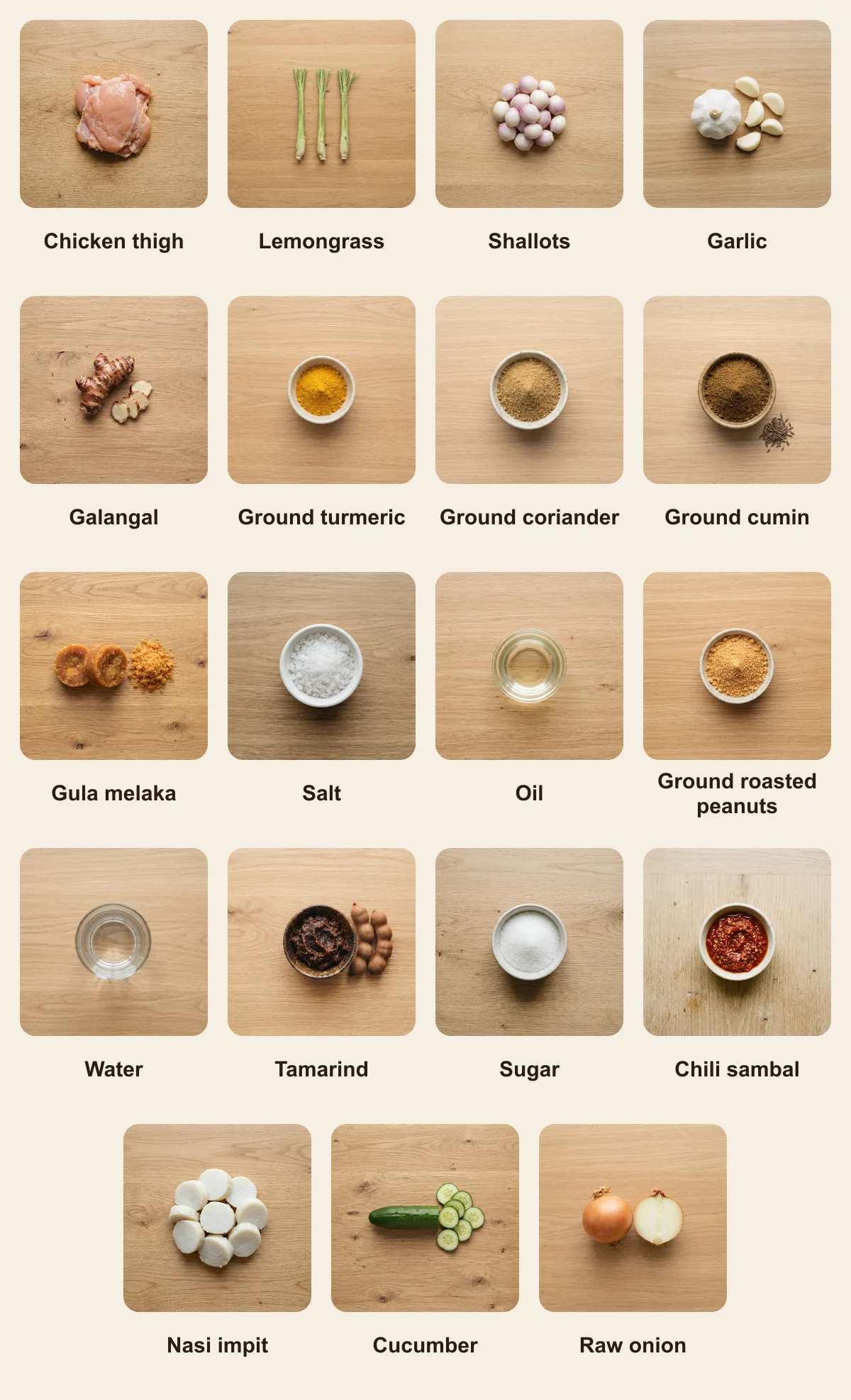
Ingredients
- 800 g chicken thigh, in 2.5 cm chunks
- 4 lemongrass stalks, soft cores only, plus 1 whole stalk for basting
- 6 shallots and 4 garlic cloves
- 3 cm galangal and 2 tsp ground turmeric
- 1.5 tbsp ground coriander and 2 tsp ground cumin
- 40 g gula melaka
- 1 tsp salt and 45 ml oil, plus more for basting
- 200 g ground roasted peanuts, 300 ml water, 2 tbsp tamarind and sugar (gravy)
- Chili sambal (softened dried chilies and shallots, blended), served separately
- Nasi impit, cucumber and raw onion
How to make it
- 1
Blitz lemongrass, shallots, garlic, galangal, turmeric, coriander, cumin, gula melaka, salt and oil, and marinate the chicken overnight; the deep cure is the Kajang signature.
- 2
Simmer the peanut gravy ingredients 15 minutes until thick, sweet and rough-textured.
- 3
Thread the big chunks, two or three per stick.
- 4
Grill over medium-hot charcoal, fanning constantly, 10-12 minutes for the larger cut, basting with oil as you turn, using the whole lemongrass stalk, bashed at one end, as the brush.
- 5
Serve with the peanut gravy in one bowl and the chili sambal in another, plus nasi impit, cucumber and raw onion.
Pro tip: In Kajang the sambal arrives separate from the peanut gravy so every eater stirs in their own heat. Keep the two apart at the table; premixing flattens the ritual and locks everyone into one chili level.
Where Satay Kajang comes from
Letting each diner adjust the heat is Kajang's distinguishing feature and it is a genuinely thoughtful piece of design. Rather than making the sauce hot and losing the customers who want it mild, Kajang vendors serve a mild peanut sauce with a separate spoon of sambal, letting each diner set their own level.
Kajang's bigger chunks and do-it-yourself chilli heat
Compared with Sate Ayam, whose thigh pieces stay around a centimetre and a half and marinate for an hour or two, Satay Kajang cuts chicken or beef to roughly two and a half centimetres and cures it for several hours or overnight in a turmeric-forward paste with lemongrass, galangal and cumin. Those bigger pieces need a gentler fire and are basted with a bashed lemongrass stalk dipped in oil. Heat is handed to the diner: mild peanut sauce in one bowl, fried chilli paste in another. Satay Celup, from Melaka, keeps the peanut sauce but drops the grill, cooking raw skewers in a simmering pot of it at the table.
Compare: Sate Ayam · Satay Celup
How Satay Kajang is cooked
The chunks are larger than Indonesian satay — closer to two and a half centimetres — which changes the cooking. Bigger pieces need a longer marinade to season through and a slightly gentler fire so the centre catches up, and the ratio of char to meat drops, which is why the marinade has to be stronger.
The marinade is turmeric-forward with lemongrass, galangal, shallot, garlic, coriander and cumin, blended into a paste, several hours or overnight. Basting is with a lemongrass stalk crushed at one end and dipped in oil, which is a Malaysian habit that also perfumes the meat.
Ingredients and shopping
Chicken thigh or beef in two-and-a-half-centimetre cubes. Turmeric, lemongrass, galangal, shallot, garlic, coriander seed, cumin and a little sugar for the marinade paste.
For the sauce: fried peanuts ground medium-coarse, with a rempah of shallot, garlic, chilli, lemongrass and galangal, tamarind and palm sugar. Separately, a fried chilli paste (sambal) served in a spoon on the side. Ketupat, cucumber and raw onion to serve.
How Satay Kajang is served
With mild peanut sauce, a spoon of fried chilli paste to stir in, ketupat rice cakes, cucumber and raw onion. Ordered by the skewer in tens and twenties for a table. Kajang's satay restaurants seat hundreds and the format is a sit-down meal rather than a street snack.
Common mistakes
A short marinade on large chunks
Bigger pieces need several hours or overnight to season through. A quick marinade leaves the centre bland.
A fierce fire
Larger chunks need moderate heat so the centre cooks before the outside burns.
Making the sauce hot
Kajang style keeps the peanut sauce mild and serves chilli paste separately so each diner adjusts. That is the whole design.
Skipping the lemongrass baster
Crushing a lemongrass stalk and using it as a brush perfumes the meat as it bastes. It is a small thing that matters.
Satay Kajang: questions and answers
How is Malaysian satay different from Indonesian?
Malaysian chunks are generally larger and the marinade is turmeric-forward and stronger, since there is less char per gram of meat.
What is the lemongrass baster?
A stalk of lemongrass crushed at one end and used as a brush, dipped in oil. It bastes and perfumes the meat at the same time.
Sources and further reading
- Sate Kajang Haji Samuri — Wikipedia
- Kajang Satay declared Selangor heritage food — The Star (Malaysia)
- Satay Kajang Gallery — Tourism Selangor