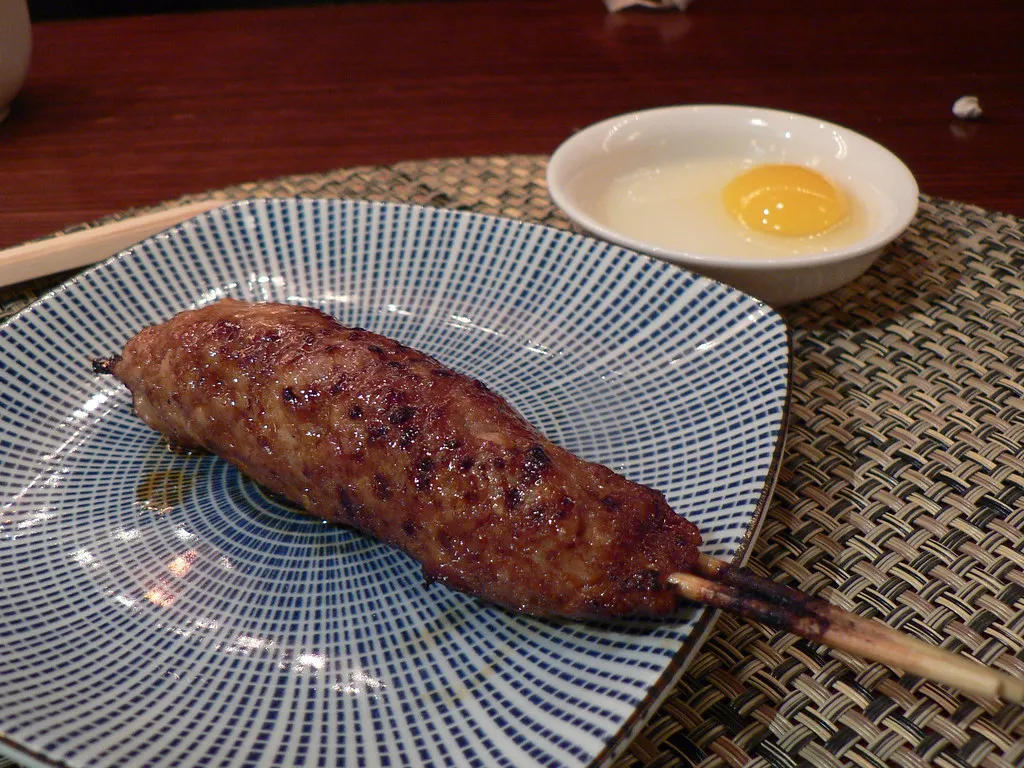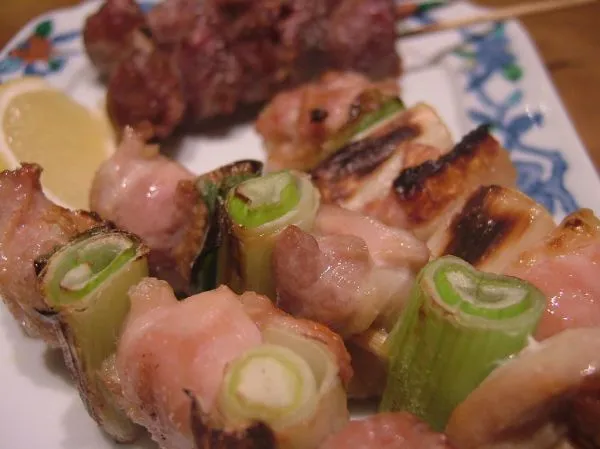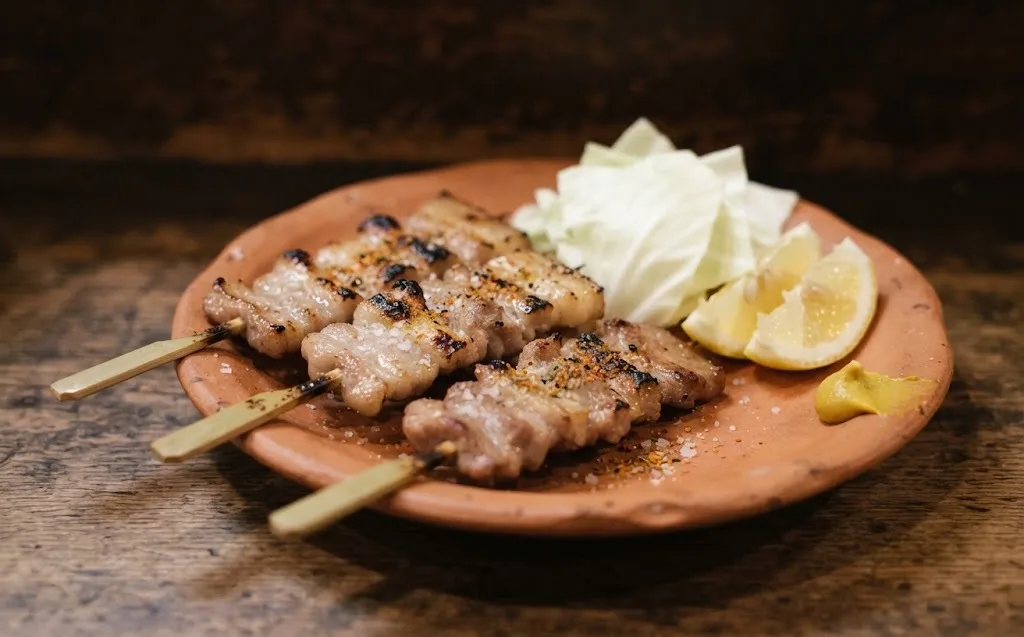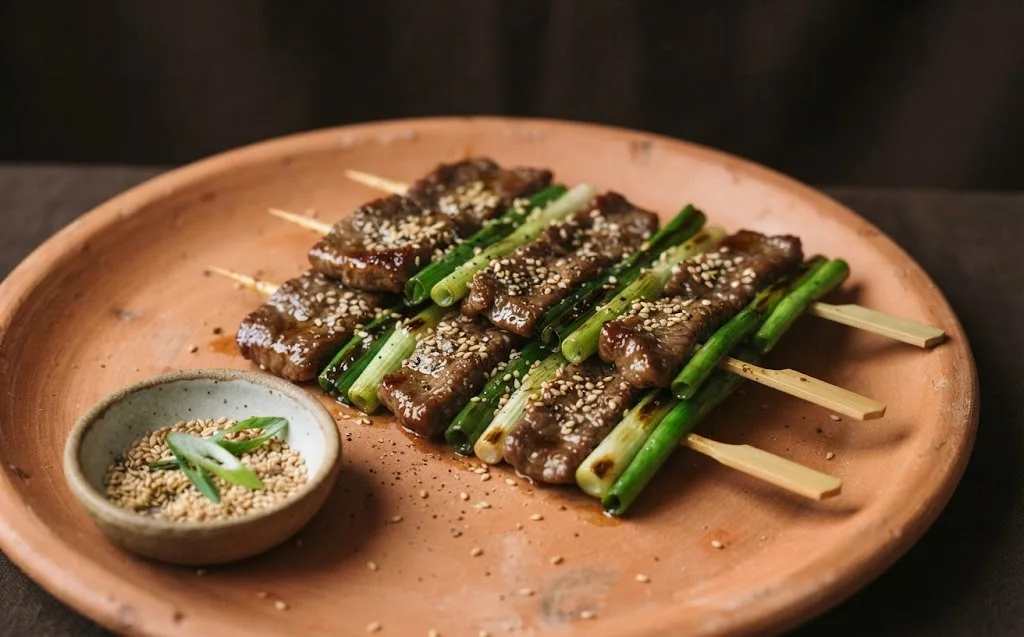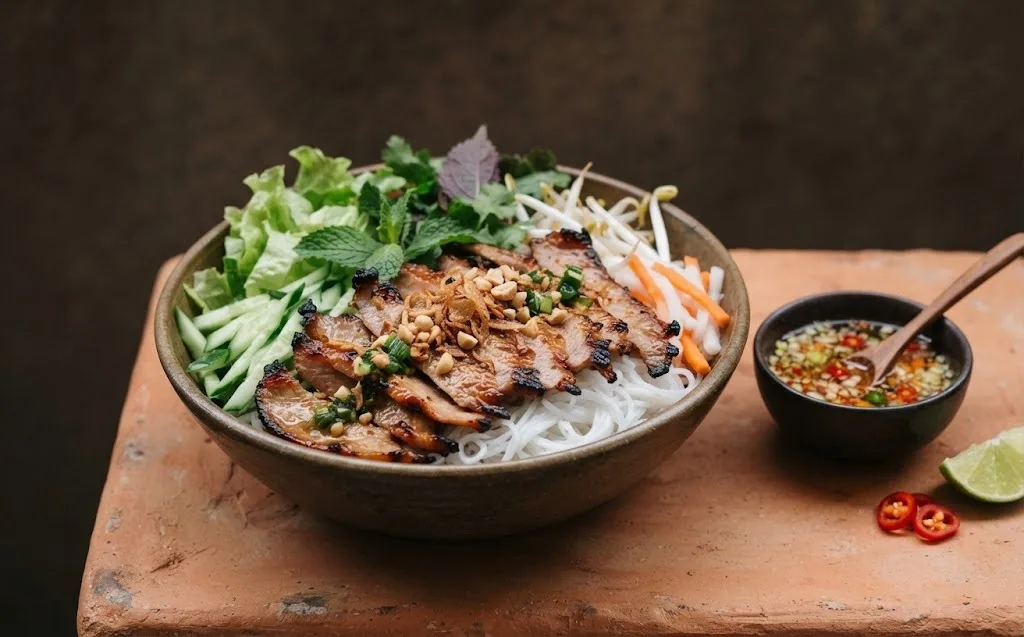
Vietnamese charcoal-grilled pork sliced thin and marinated in fish sauce, lemongrass, garlic, sugar and often honey, grilled until the edges char and caramelize. It headlines bun thit nuong (over rice noodles with herbs and nuoc cham) and banh mi, prized for its sweet-smoky balance rather than heavy spice.
Also known as Vietnamese grilled pork, bun thit nuong pork, Vietnamese BBQ pork.
Ingredients
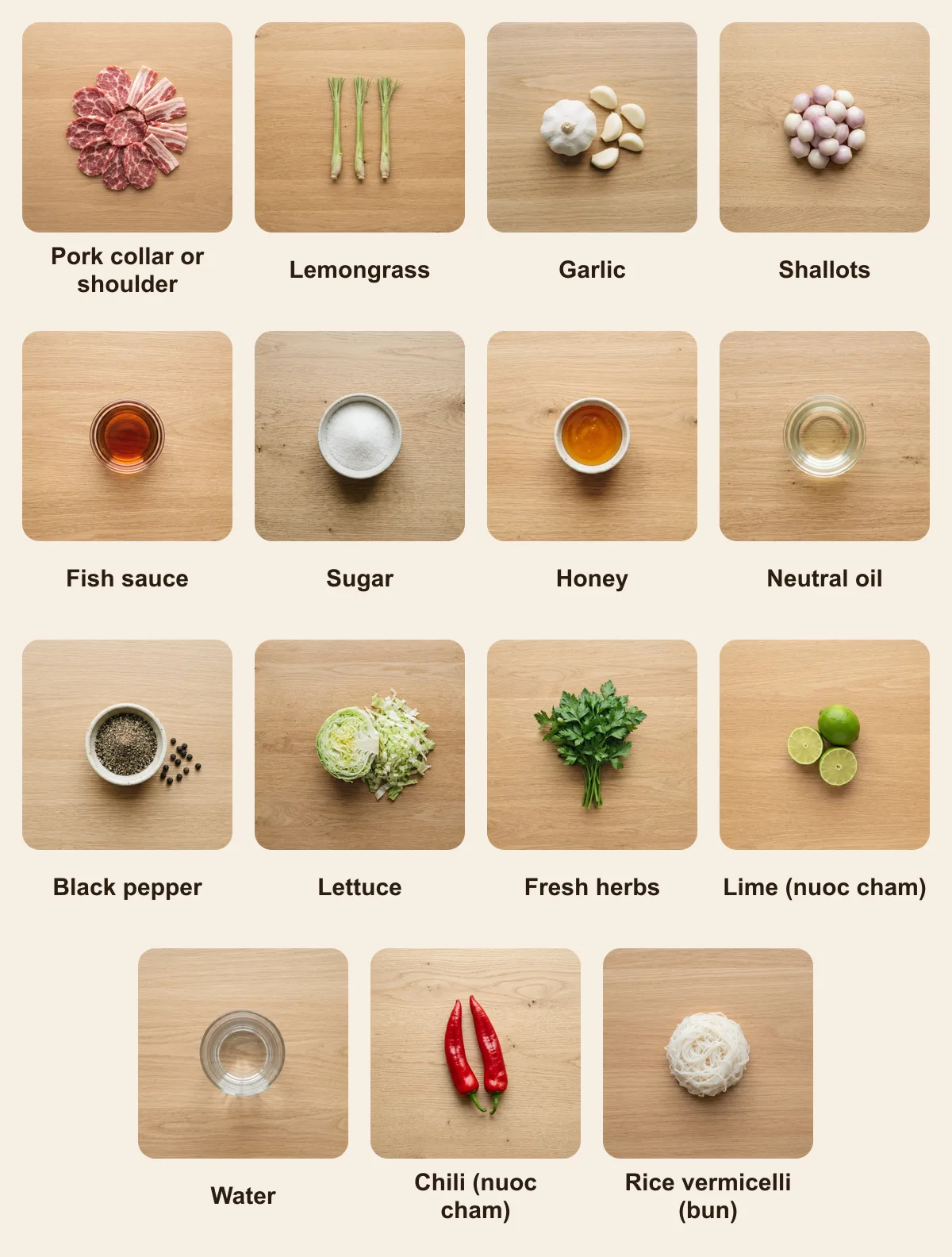
- 700 g pork collar or shoulder, sliced 5 mm thick
- 3 lemongrass stalks, minced fine
- 3 garlic cloves and 2 shallots, minced
- 45 ml fish sauce
- 30 g sugar and 15 ml honey
- 15 ml neutral oil and 0.5 tsp black pepper
- Bun (rice vermicelli), lettuce and herbs
- Nuoc cham (fish sauce, lime, sugar, water, chili, garlic)
How to make it
- 1
Pound the lemongrass, garlic and shallots to a rough paste and mix with fish sauce, sugar, oil and pepper.
- 2
Coat the pork slices and marinate 3 hours or overnight.
- 3
Grill over medium charcoal (a grill basket helps with thin slices), about 2-3 minutes per side, brushing with honey in the final minute.
- 4
Look for lacquered amber edges with small charred tips, never full blackening.
- 5
Serve draped over bun with herbs, lettuce and a generous pour of nuoc cham.
Pro tip: Buy pork collar (coppa) if you possibly can: its internal web of fat self-bastes over charcoal, which is why street thit nuong stays juicy. Lean loin cooked the same way turns to cardboard by the second batch.
Where Thit Nuong comes from
It is prized for sweet-smoky balance rather than heavy spice, and that balance is the Vietnamese signature: fish sauce for salt and umami, sugar for caramelisation, lemongrass for aroma, and nothing that would overwhelm the herbs and the dipping sauce it is served with.
How Thit Nuong is cooked
Fish sauce and sugar together are the engine. Fish sauce brings salt, amino acids and umami; sugar brings the Maillard and caramelisation reactions that produce the charred edges. Together they create far more browning than either would alone, which is why thịt nướng chars so readily even on thin slices.
Lemongrass must be minced very fine — almost to a paste — or it stays fibrous and unpleasant in the mouth. The pork is sliced thin, marinated for several hours, and grilled fast over charcoal with the pieces laid flat rather than threaded, so both faces take colour.
Ingredients and shopping
Pork shoulder or belly, sliced about half a centimetre thick with fat included. Lean pork loin dries out and does not caramelise as well.
Fish sauce, sugar or honey, minced lemongrass, garlic, shallot, black pepper, and often a little five-spice or annatto oil for colour. Nước chấm — fish sauce, lime, sugar, water, garlic and chilli — for serving, and a large plate of herbs.
How Thit Nuong is served
Over rice vermicelli with lettuce, mint, perilla, coriander, pickled carrot and daikon, crushed peanuts and nước chấm poured over — that is bún thịt nướng. Or in a bánh mì with pâté, pickles and coriander. Both are complete meals.
Common mistakes
Coarsely chopped lemongrass
It stays fibrous. Mince it almost to a paste, or blend it.
Lean pork
Shoulder or belly with fat. Loin dries and does not caramelise properly.
A fierce fire
The sugar burns before the pork cooks. Moderate coals and constant attention.
Skipping the nước chấm
It is not optional — the sweetness and smoke of the pork are built to be balanced by that sharp, thin dipping sauce.
Thit Nuong: questions and answers
Why does thịt nướng char so well?
Fish sauce and sugar together drive browning far more than either alone — the fish sauce supplies amino acids and the sugar supplies the caramelisation.
How finely should lemongrass be minced?
Almost to a paste. Coarsely chopped lemongrass stays fibrous and unpleasant in the mouth.
Sources and further reading
- Bún thịt nướng — Wikipedia
- Vietnamese cuisine — Wikipedia
- Vietnamese Restaurant-Style Grilled Lemongrass Pork (Thit Heo Nuong Sa) — Viet World Kitchen (Andrea Nguyen)
- Grilled Lemongrass Pork — The Splendid Table