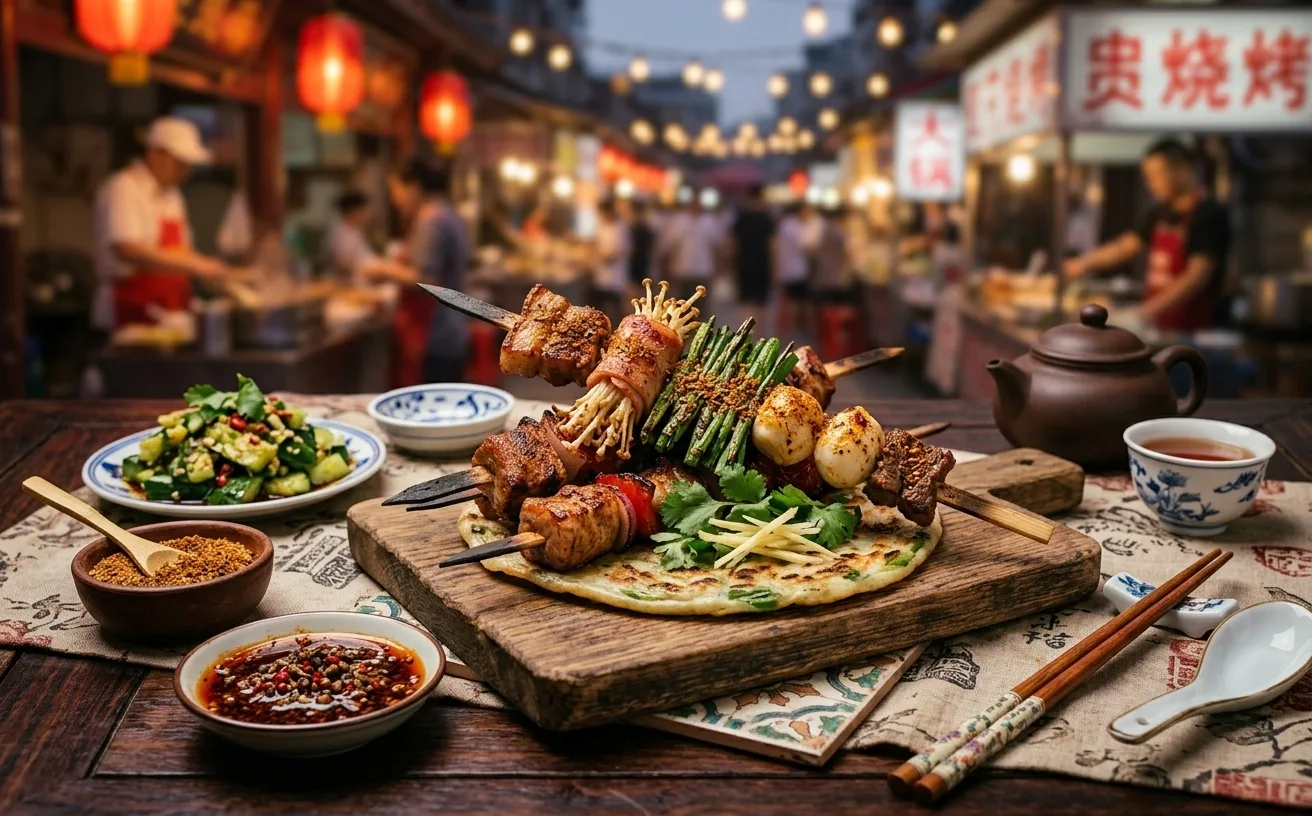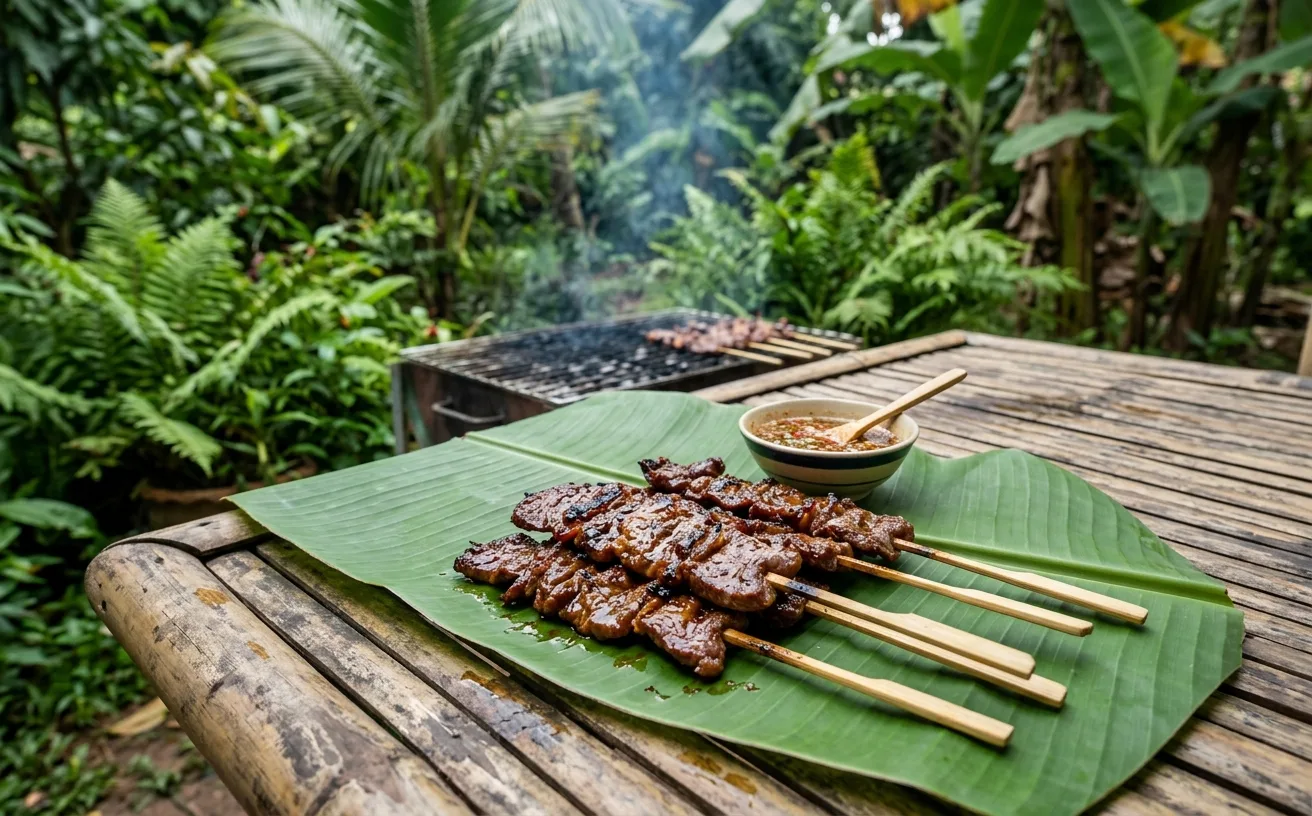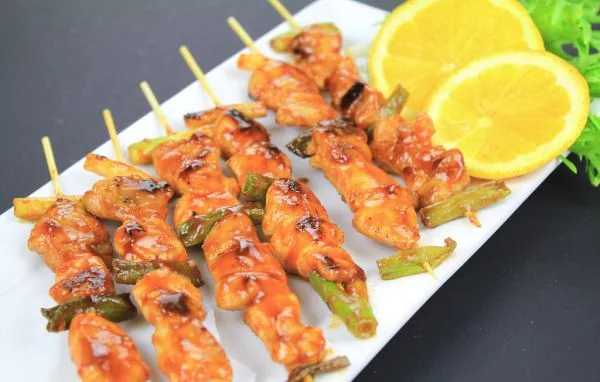
Korea's flagship street-food skewer: chicken chunks (often with scallion or rice cake) grilled on carts and brushed heavily with a choice of glazes, from sweet soy to fiery gochujang. Vendors re-grill after each saucing so the coating chars into a sticky lacquer.
Also known as dak-kkochi, Korean chicken skewers, Korean street chicken skewers.
Ingredients
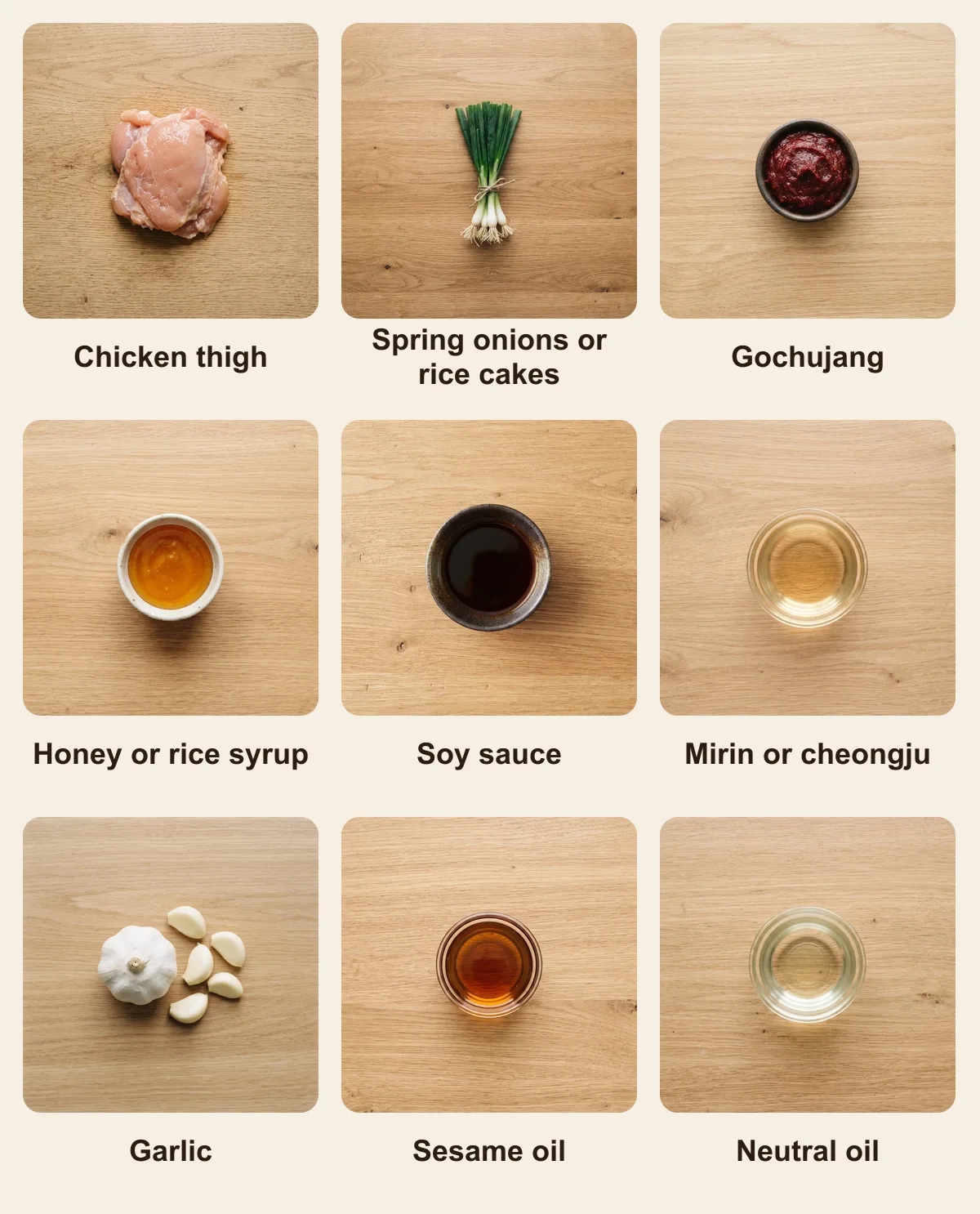
- 600 g chicken thigh, in 3 cm chunks
- 8 spring onion whites, in 4 cm batons (or 150 g rice cakes, soaked)
- 3 tbsp gochujang
- 2 tbsp honey or rice syrup
- 1 tbsp soy sauce
- 1 tbsp mirin or cheongju
- 2 garlic cloves, minced
- 1 tsp sesame oil
- 1 tbsp neutral oil, for brushing
How to make it
- 1
Alternate chicken and spring-onion batons on sturdy skewers and brush with the neutral oil.
- 2
Grill or griddle over medium-high heat about 10 minutes, turning, until the chicken is cooked through but only lightly coloured.
- 3
Bubble the gochujang, honey, soy, mirin, garlic and sesame oil in a small pan 2 minutes, until the glaze ribbons off the spoon.
- 4
Paint the skewers and return them to the heat in 30-second passes, glazing two or three times, until sticky, lacquered and scorched at the tips.
Pro tip: Cook first, glaze last: gochujang and honey blacken in under a minute over direct heat — that is why Seoul carts keep a gentle 'finishing' zone.
Where Dakkochi comes from
It is a modern street food rather than a traditional dish, and it belongs to the same wave as tteokbokki carts and Korean fried chicken — a post-war urban snack culture that has since become a major export. The gochujang version in particular has travelled well and is now sold in Korean districts worldwide.
How Dakkochi is cooked
The re-grilling between saucings is the technique and it is what separates dakkochi from chicken with sauce on it. Each coat of glaze goes back over the heat and caramelises before the next, and two or three cycles build a lacquer that is dark, sticky and slightly bitter at the edges.
Because the glaze is sugar-heavy — gochujang, honey or rice syrup, and soy — the chicken is cooked through first over medium-high heat, then glazed in short passes over gentler heat with the skewers kept moving. Burnt glaze is bitter rather than caramelised and it is the standard failure of a distracted cook.
Ingredients and shopping
Chicken thigh in three-centimetre chunks, with spring onion whites or garaetteok rice cake threaded between. Thigh over breast, as always with a glazed skewer.
For the glaze: gochujang, honey or rice syrup, soy sauce, mirin, garlic and sesame oil, bubbled briefly. A sweet-soy version without the chilli is the mild alternative. A scatter of sesame seeds at the end is optional.
How Dakkochi is served
Off the skewer, from a cart, hot, with sesame seeds and sometimes a dusting of cheese powder in the modern versions. It is walking food and it is eaten immediately — the lacquer stiffens as it cools.
Common mistakes
Saucing once at the end
The lacquer is built by repeated saucing and re-grilling. One coat gives you sauce on chicken, not dakkochi.
Glazing over high heat
Cook the chicken through over medium-high heat first; the sugar-heavy glaze goes on last, in short passes over gentler heat, because it burns bitter.
Chicken breast
Thigh has the fat to survive repeated returns to the heat. Breast dries out across the glazing cycles.
Rice cake added at the start
It hardens over a long cook. Thread it on but pull the skewers before it toughens, or add it partway through.
Dakkochi: questions and answers
What glazes are used?
Sweet soy for the mild version, gochujang-based for the spicy one. Vendors typically offer both.
Why does my glaze taste bitter?
It burned. The sauce is sugar-heavy and needs moderate heat with the skewers kept moving.
Sources and further reading
- Dak-kkochi — Wikipedia
- Dakkochi (Korean Chicken Skewers) — Beyond Kimchee