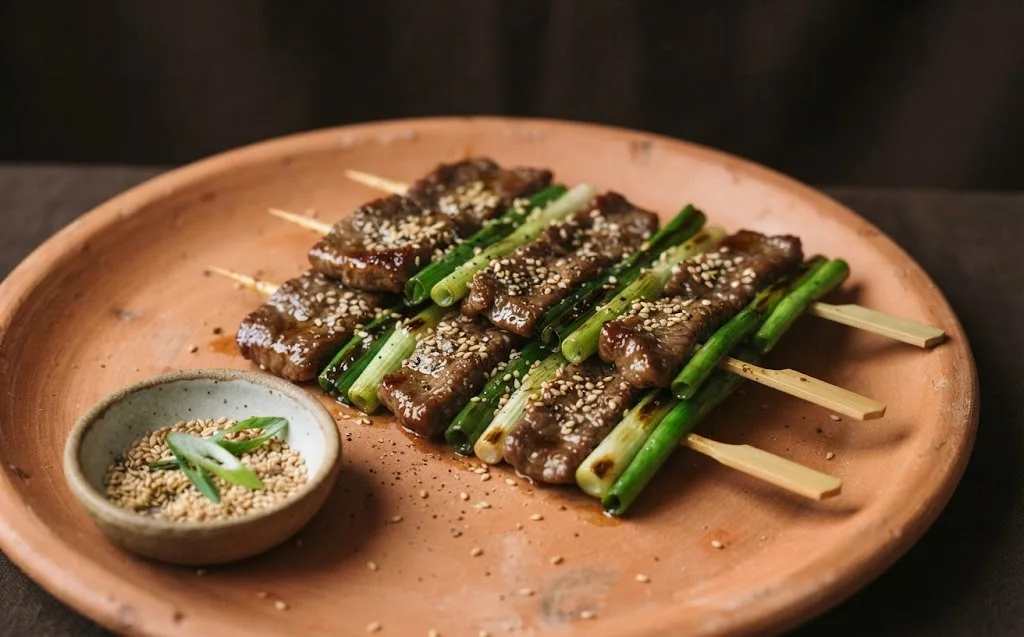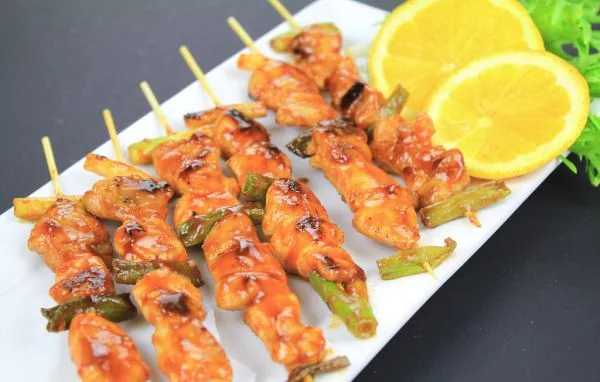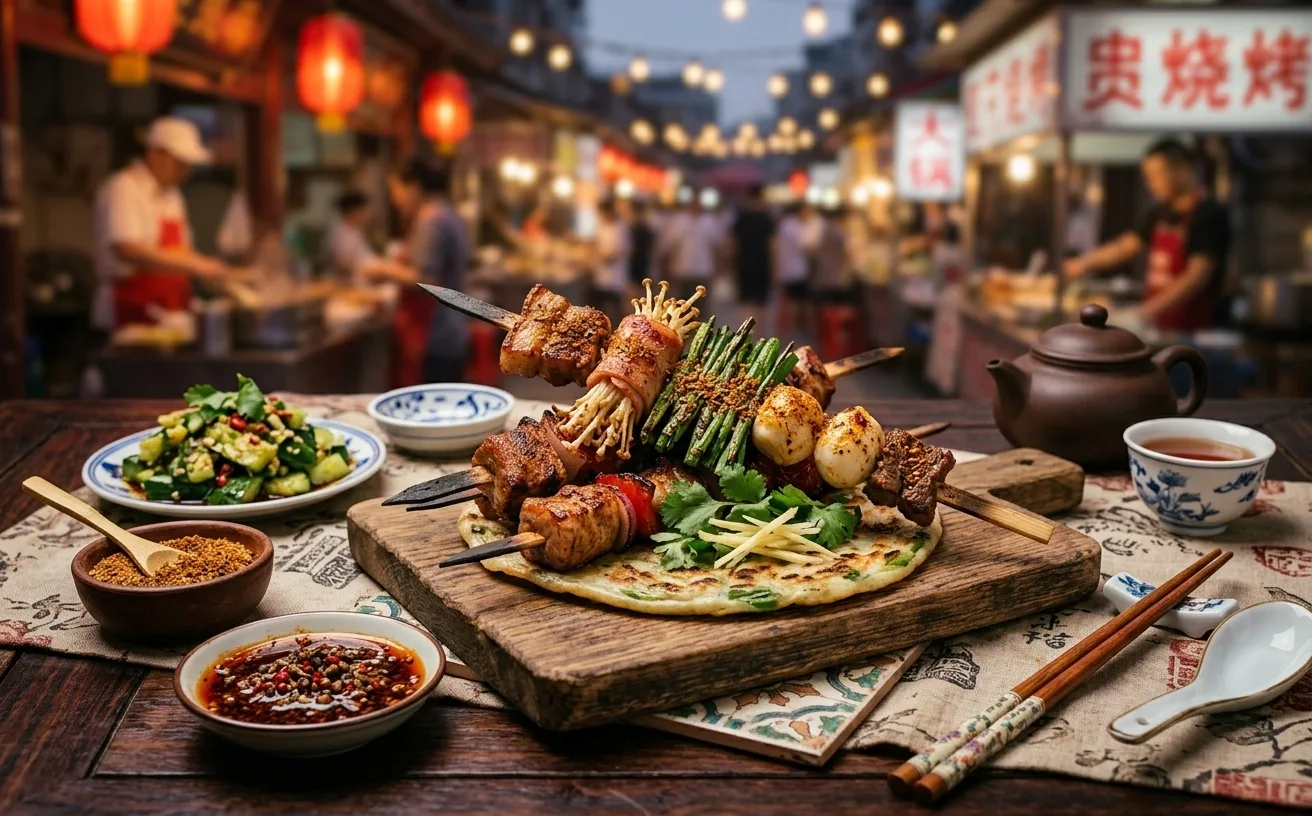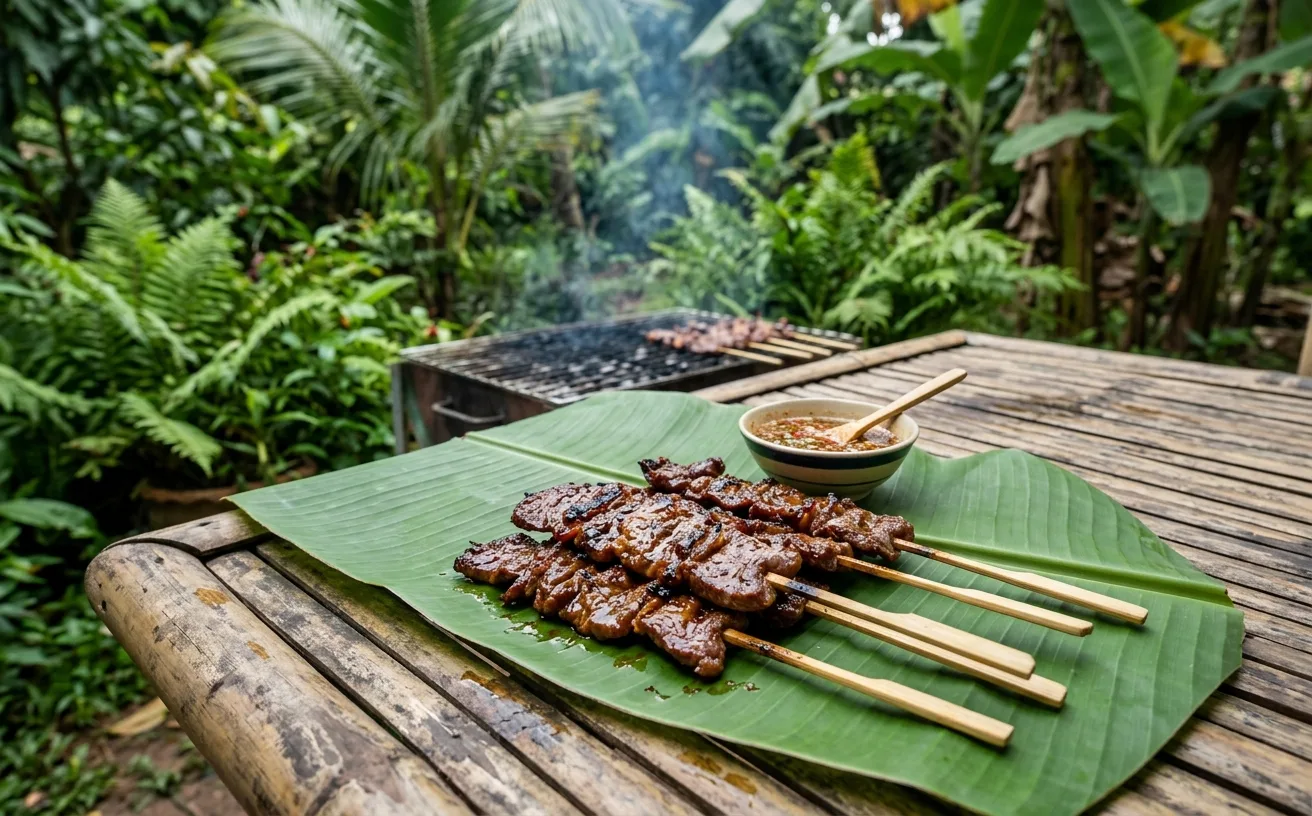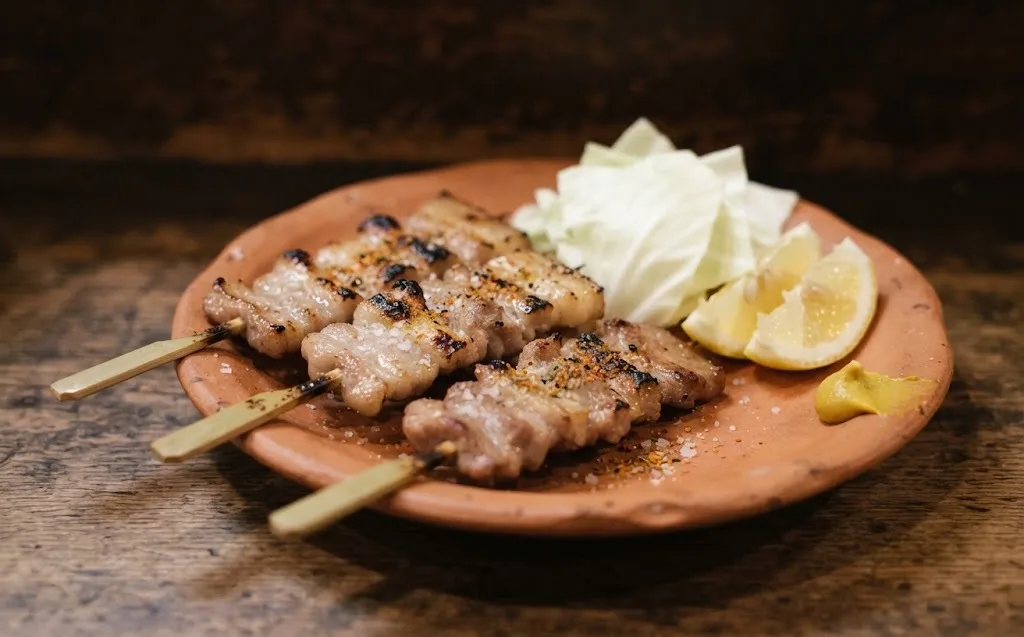
Yakitori's working-class pork cousin, born in Tokyo's post-war stall culture: skewers running the whole pig from cheek (kashira) and belly to tongue, heart and intestine, grilled over charcoal with salt or miso-tinged tare. It defines the smoky standing bars of neighborhoods like Shimbashi and Akabane.
Also known as kushiyaki, Japanese pork skewers, yakiton skewers.
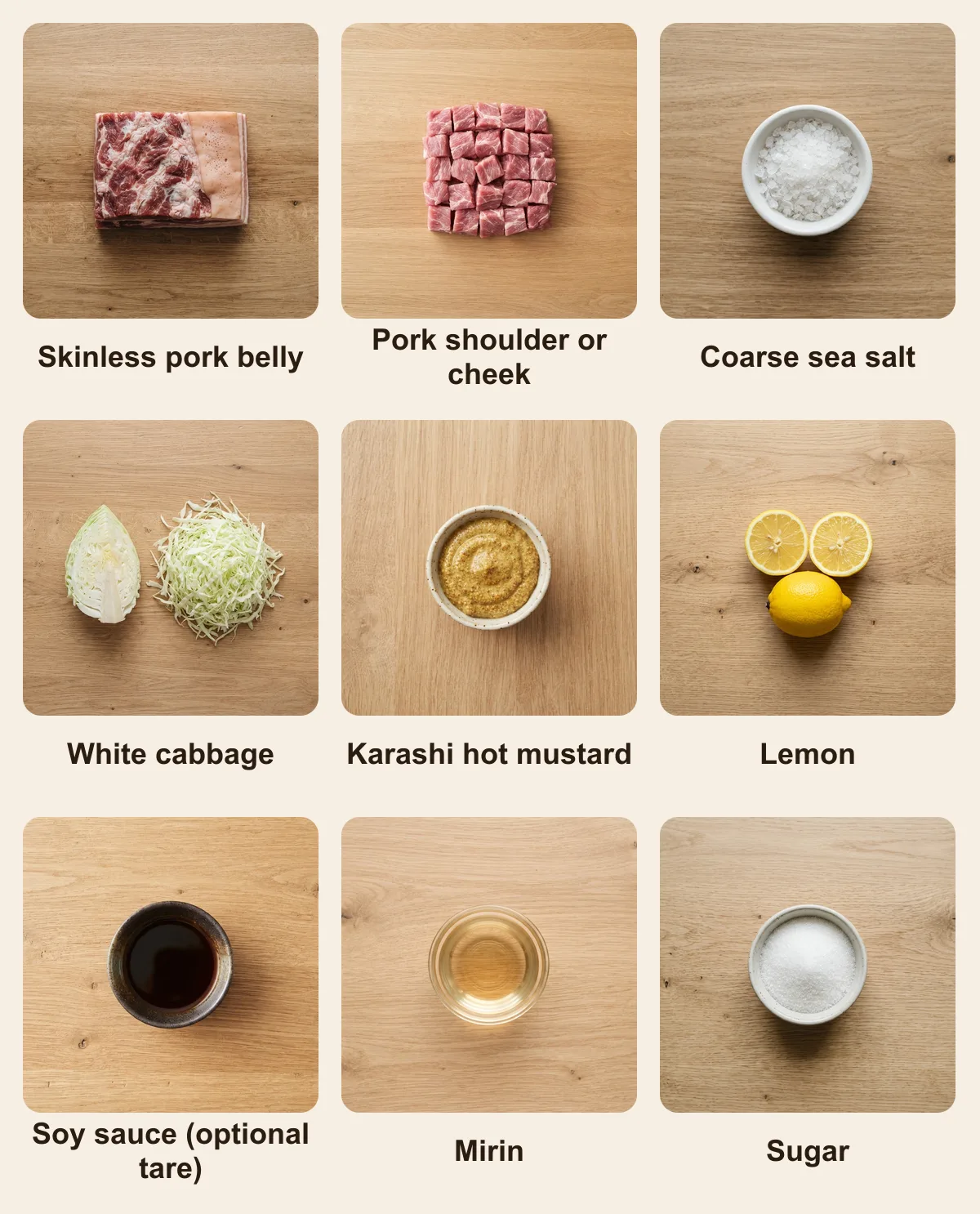
Ingredients
- 350 g skinless pork belly
- 350 g pork shoulder or cheek (kashira)
- 1.5 tsp coarse sea salt
- 1/4 white cabbage, in wedges
- karashi (Japanese hot mustard)
- 1 lemon, in wedges
- optional miso tare: 3 tbsp miso, 2 tbsp mirin, 1 tbsp sake, 1 tsp sugar, a little soy sauce, simmered thick
How to make it
- 1
Cut both cuts of pork into 2.5 cm pieces, keeping belly and shoulder strictly separate.
- 2
Build single-cut skewers — all belly or all shoulder per stick, four pieces each — and season with coarse salt just before cooking.
- 3
Grill close over high heat 8-10 minutes, shifting the sticks whenever dripping fat flares; if using the miso tare, brush it on in the last minute only.
- 4
Serve shio-style with lemon, a dab of karashi and raw cabbage wedges to crunch between skewers, Tokyo standing-bar fashion.
Pro tip: Never mix cuts on one stick: belly finishes 2 minutes before shoulder, and a mixed skewer always sacrifices one of them.
Where Yakiton comes from
The class distinction between yakiton and yakitori is real and is part of the culture. Yakitori shops can be refined and expensive; yakiton bars are cheap, loud, standing-room, and open early for shift workers. Both are Tokyo institutions and neither wants to be mistaken for the other.
How Yakiton is cooked
Pork offal needs preparation that chicken does not. Intestines (shirokoro) are cleaned and boiled at length before grilling; tongue is trimmed of its rough skin; heart is cleaned of vessels. Skipping these steps produces skewers that are tough or unpleasant, and the good bars are known for their preparation as much as their grilling.
Miso in the tare is the yakiton signature and it distinguishes the seasoning from yakitori's soy-mirin glaze. Miso browns fast and can catch, so it is applied late, and many cuts — particularly the fattier ones like cheek and belly — are served with salt and mustard instead.
Ingredients and shopping
Pork cheek (kashira), belly, tongue (tan), heart (hatsu), liver (reba), diaphragm (harami) and intestine (shirokoro). Offal from a butcher who handles it properly, and be prepared to boil the intestine for an hour or more.
Salt for the fatty cuts. Miso tare — miso, mirin, sake, sugar and a little soy — for the leaner and offal cuts. Karashi, the sharp Japanese mustard, is the standard condiment with yakiton and is much sharper than European mustard.
How Yakiton is served
At a standing bar with a beer or a highball, ordered a few skewers at a time, with karashi and shichimi on the counter. Raw cabbage wedges and a bowl of motsuni (offal stew) alongside. The atmosphere is loud, smoky and cheap by design.
Common mistakes
Not boiling the intestine
It stays tough and unpleasant. An hour or more of simmering before grilling is standard.
Applying miso tare early
Miso browns fast and catches. It goes on late, in the last minute.
Using soy tare instead of miso
That is yakitori's glaze. Miso is the yakiton signature.
Skipping the karashi
Sharp Japanese mustard with fatty pork is the standard pairing and it cuts through in a way nothing else does.
Yakiton: questions and answers
How is yakiton different from yakitori?
Yakiton is pork rather than chicken, uses a miso-tinged tare rather than a soy-mirin one, and belongs to a cheaper standing-bar culture.
Does the intestine need special preparation?
Yes — cleaning and an hour or more of simmering before it goes near the grill, or it stays tough.
Which cuts take salt and which take tare?
Fatty cuts like cheek and belly usually take salt and mustard; leaner and offal cuts take the miso tare.
Sources and further reading
- Kushiyaki — Wikipedia
- Where to enjoy yakitori and yakiton under the tracks at Shinbashi — grape Japan