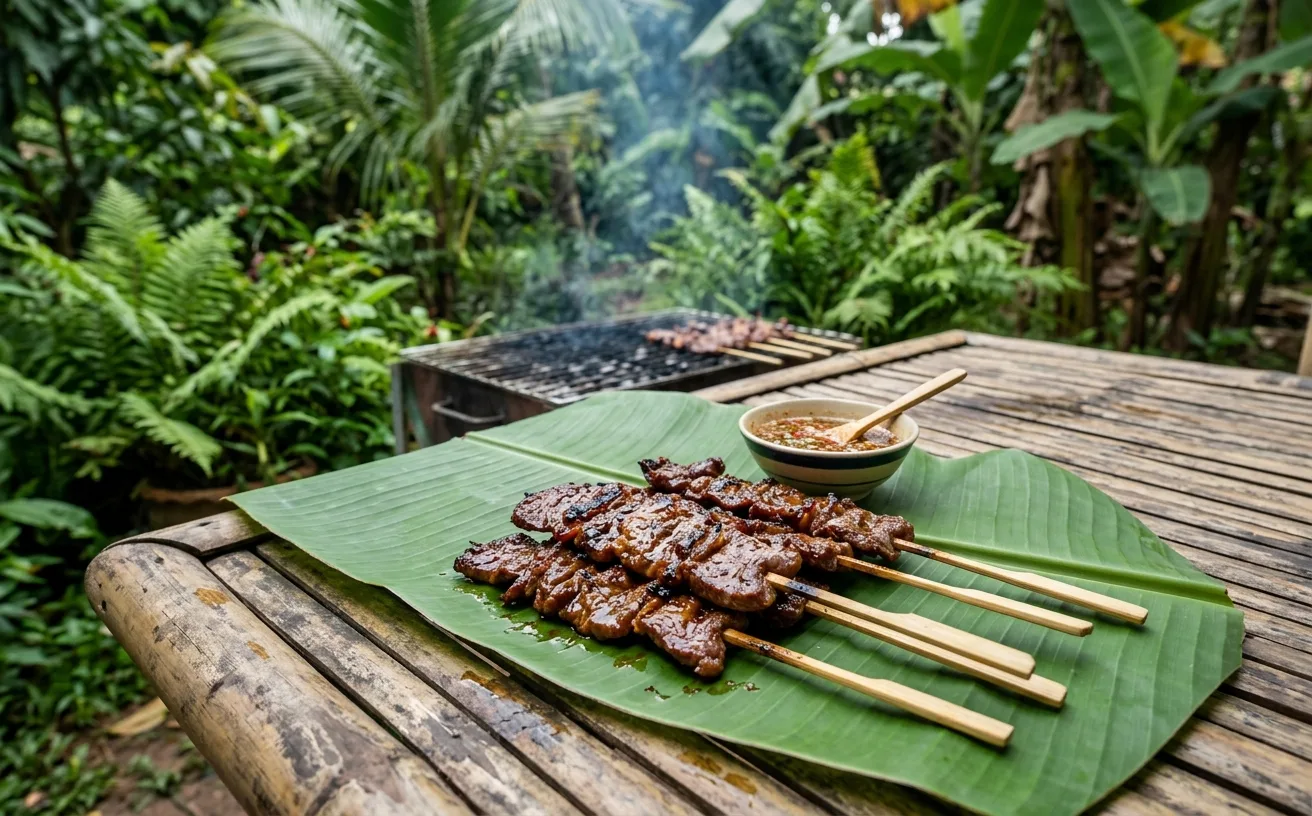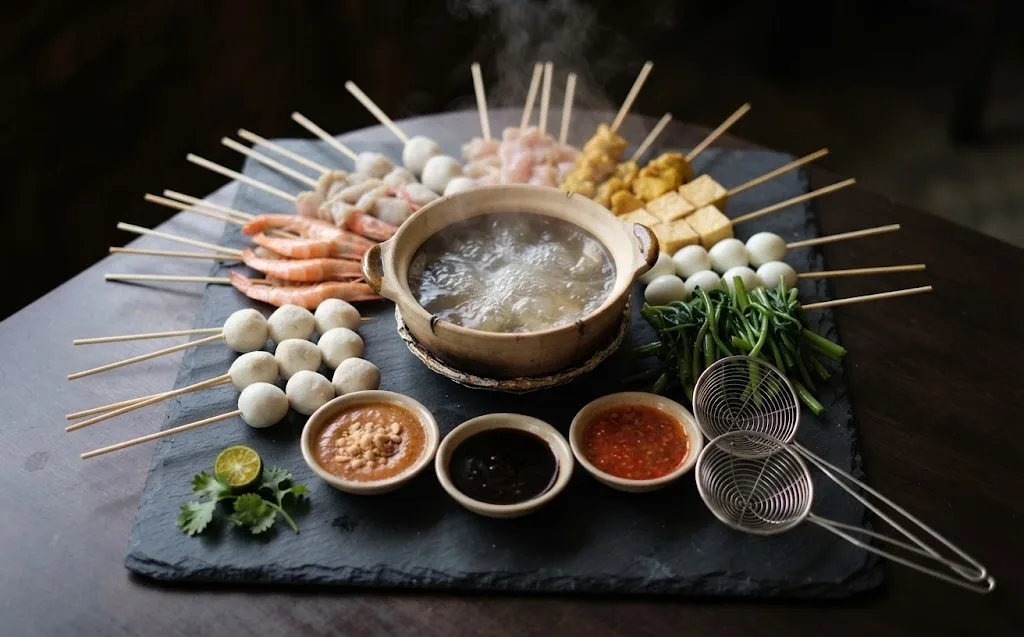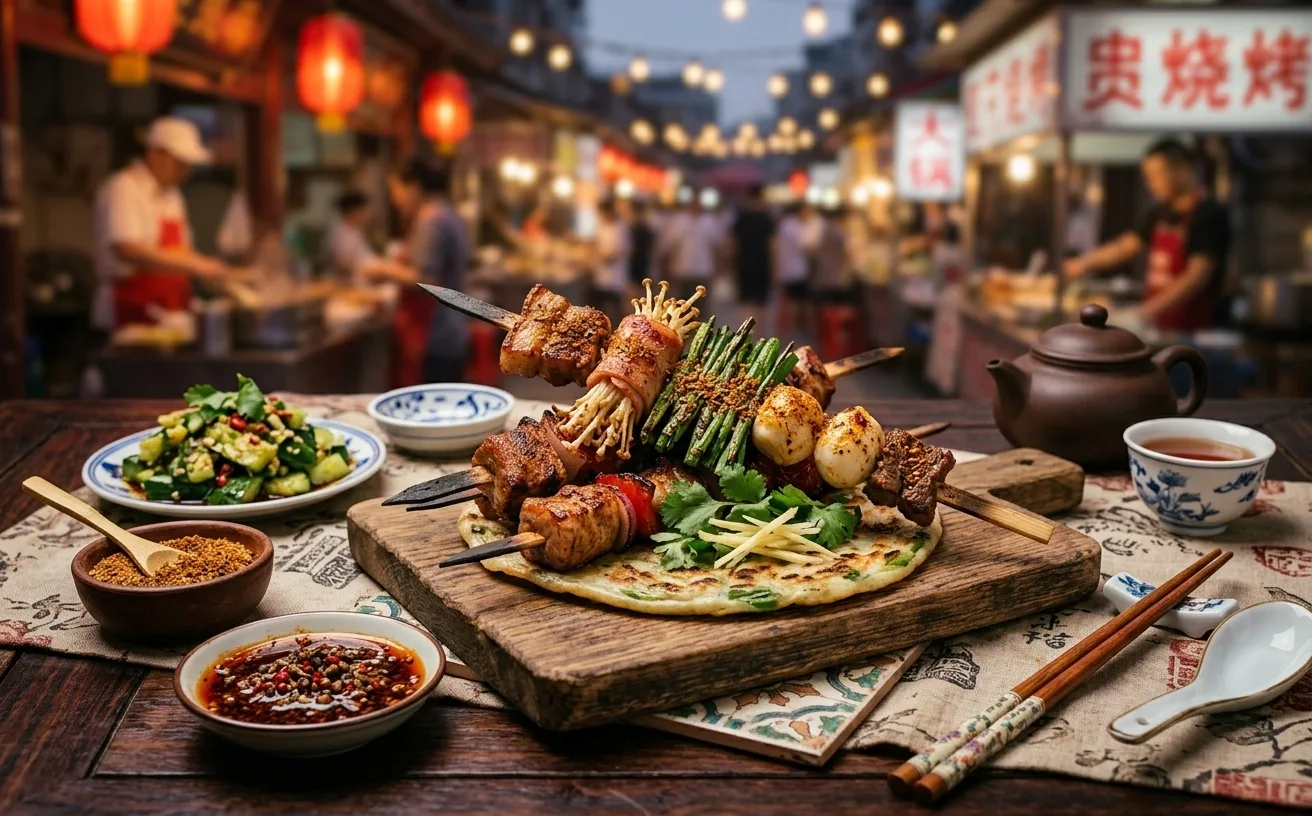
Shao kao (烧烤) is simply the Mandarin word for barbecue, and the name of China's sprawling night-market grill culture: nearly anything — lamb, chicken wings, beef tendon, tofu skin, eggplant, whole leeks — is skewered and grilled over long narrow charcoal troughs. The unifying signature is the dry spice dusting of cumin, chili flakes and sesame, with fierce regional scenes from Northeast China to Yunnan.
Also known as 烧烤, Chinese street BBQ, Chinese barbecue skewers.
Ingredients
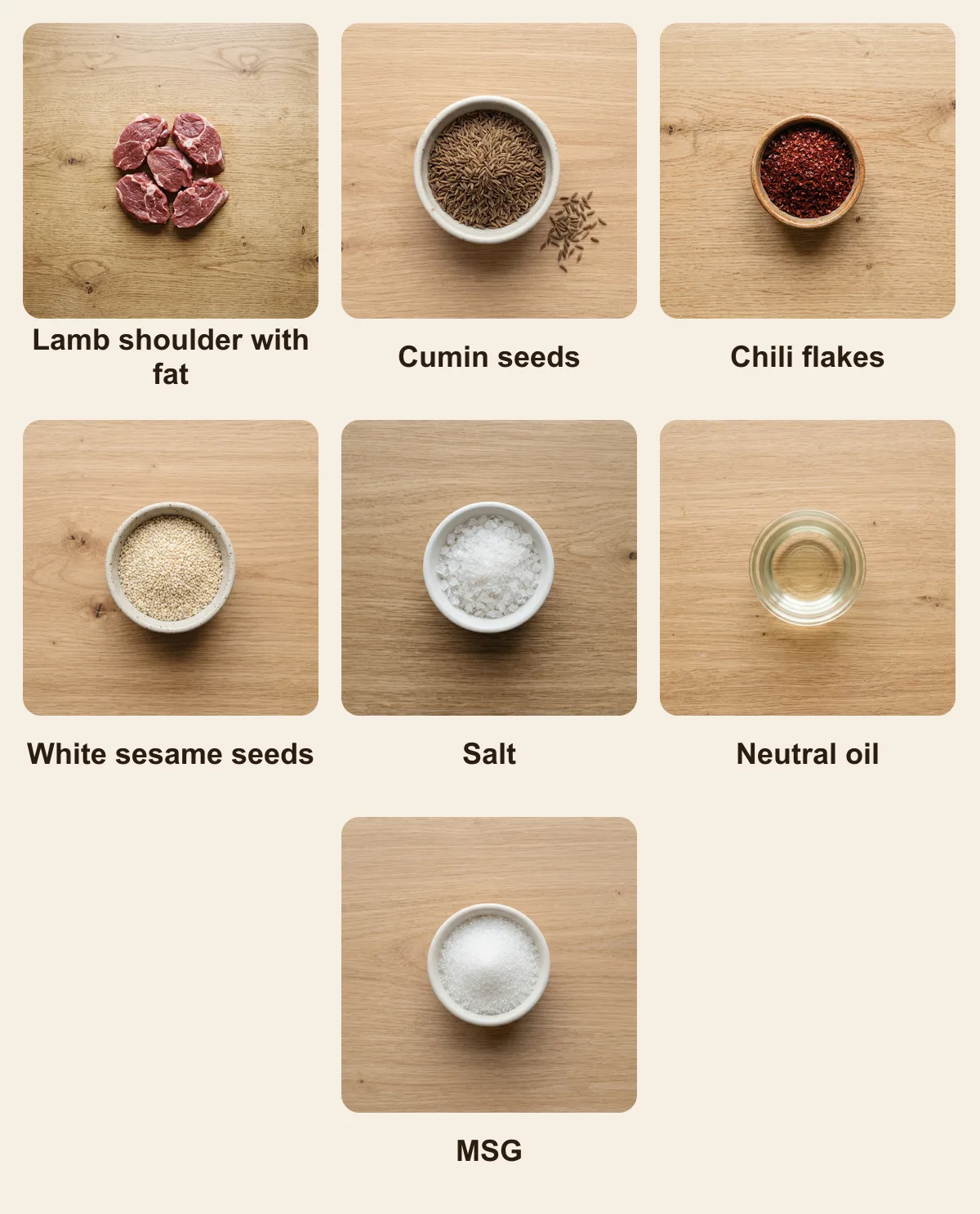
- 600 g lamb shoulder with its fat, in small thin 1.5 cm pieces
- 2 tbsp cumin seeds, coarsely crushed
- 1 tbsp coarse chili flakes
- 1 tbsp white sesame seeds
- 1.5 tsp salt
- 1/2 tsp MSG (optional but true to the street)
- 2 tbsp neutral oil
How to make it
- 1
Mix the cumin, chili flakes, sesame, salt and MSG into a dry shower and set it beside the grill.
- 2
Thread the lamb thinly along flat skewers — two small pieces per bite, a sliver of fat riding every lean piece.
- 3
Grill over narrow, fierce coals, flipping every 20-30 seconds like a night-market vendor and brushing with oil as you go.
- 4
When the fat starts to sizzle and drip, around minute four, dust both sides heavily with the spice mix and keep flipping 2 minutes more.
- 5
Re-dust lightly and hand them over in a fistful, sticks up.
Pro tip: Spice mid-cook, never in a marinade: cumin toasting in dripping lamb fat is the entire smell of a Chinese night market.
Where Shao Kao comes from
It grew out of the Xinjiang chuanr trade that spread nationwide in the 1980s and 1990s, and then absorbed everything local. A shao kao stall in Harbin, one in Chengdu and one in Kunming share a spice profile and a grill design and almost nothing else on the menu, which is the point.
How Shao Kao is cooked
The long narrow trough is the design that makes the whole culture work. Only twelve or fifteen centimetres wide, it holds a shallow bed of coals so skewers rest across it with handles overhanging in cool air, and dozens can be worked at once with constant rotation.
The dry dusting is applied at the end and often between turns — cumin seed, coarse chilli flakes, sesame, salt and MSG — so it toasts on the surface without burning. Vegetables get the same treatment as meat, which is what makes shao kao a genuinely omnivorous format rather than a meat grill with side dishes.
Ingredients and shopping
Almost anything: lamb cubes with fat, chicken wings, chicken hearts, beef tendon (which needs pre-cooking), whole king oyster mushrooms, aubergine halves, garlic scapes, leeks, tofu skin, enoki bundles wrapped in bacon.
The dusting is whole cumin seed coarsely crushed, coarse chilli flakes, sesame seed, salt and, honestly, a little MSG — Chinese stalls use it and the flavour is noticeably flatter without. Brushing oil is standard, especially on vegetables.
How Shao Kao is served
By the handful at a plastic table on the pavement, with cold beer, in summer, late. Skewers arrive continuously rather than as a course. Shao kao is as much a season and a social format as a food, and in northern cities the tables spill across whole streets.
Common mistakes
A wide grill
Skewer handles burn. The narrow trough is a functional design, not an aesthetic one.
Fine ground cumin
It burns bitter. Coarsely crushed whole seed toasts properly.
Not oiling the vegetables
Aubergine and mushroom dry out and stick without a brush of oil. Meat provides its own fat; vegetables do not.
Grilling tendon without pre-cooking
Beef tendon needs long simmering before it goes near a grill or it is inedible.
Shao Kao: questions and answers
Where did shao kao come from?
It grew out of Uyghur chuanr from Xinjiang, which spread nationwide in the 1980s and 1990s and then absorbed local ingredients everywhere it went.
Is shao kao the same as chuanr?
Chuanr is one dish — the cumin-dusted Xinjiang lamb skewer shao kao descends from. Shao kao is the whole stall: a menu of a hundred different sticks, vegetables and offal included, plus the cold beer and the pavement tables.
Sources and further reading
- Shaokao — Wikipedia
- Sichuan-Style Shaokao (Chinese BBQ) — The Mala Market