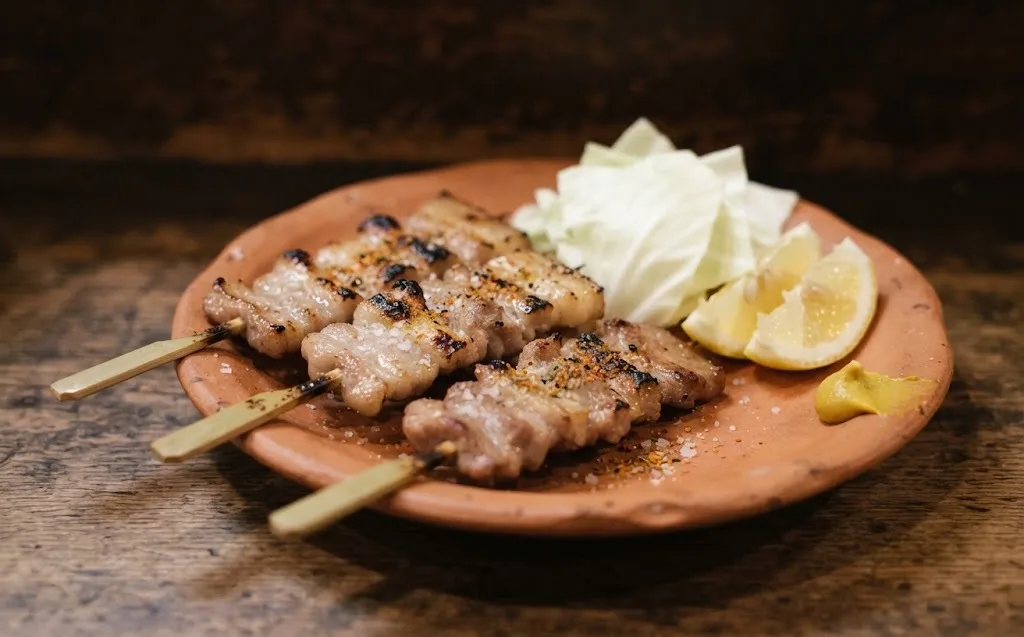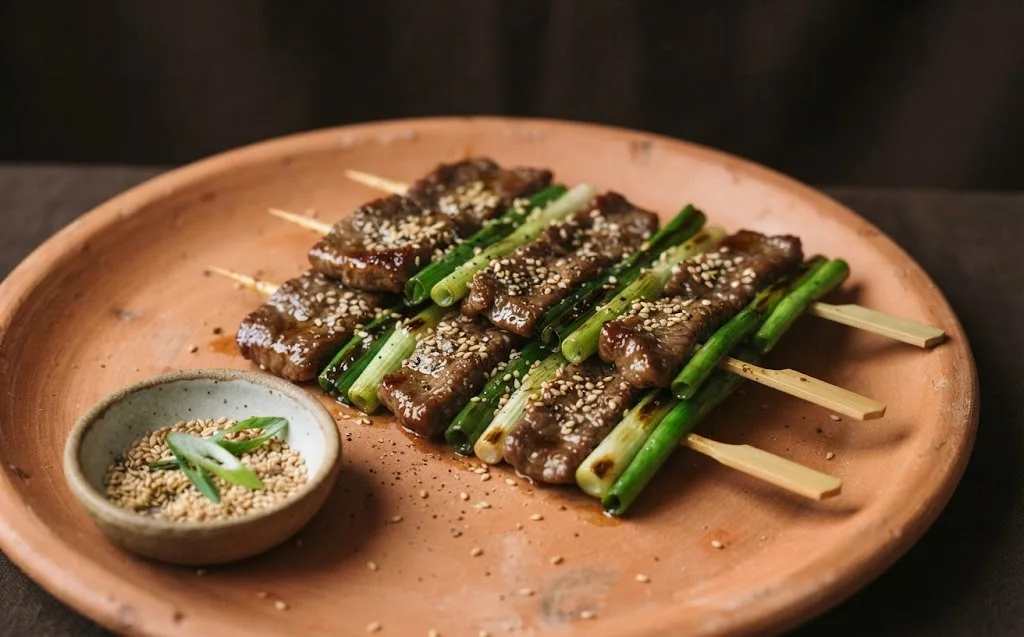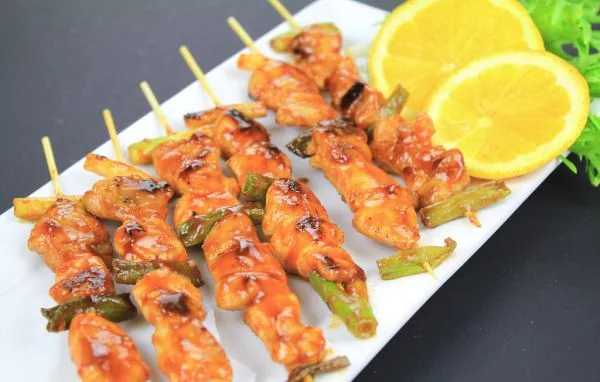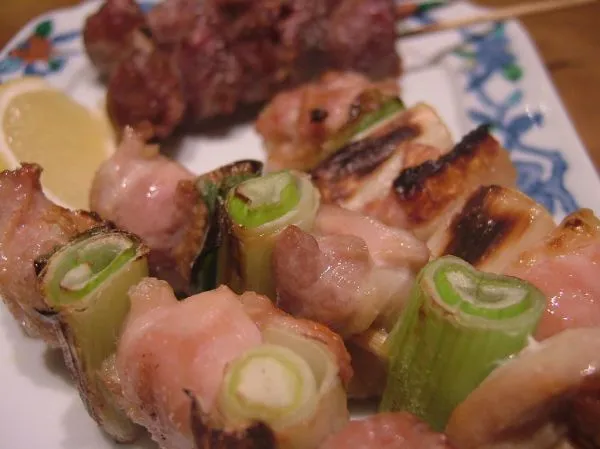
The definitive yakitori cut: chicken thigh alternated with segments of Japanese long onion (negi), grilled over binchotan charcoal and finished either with tare glaze or just salt (shio). The onion steams sweet inside while the thigh crisps, making it the benchmark by which yakitori shops are judged.
Also known as negima yakitori, chicken and scallion skewers, negima skewer.
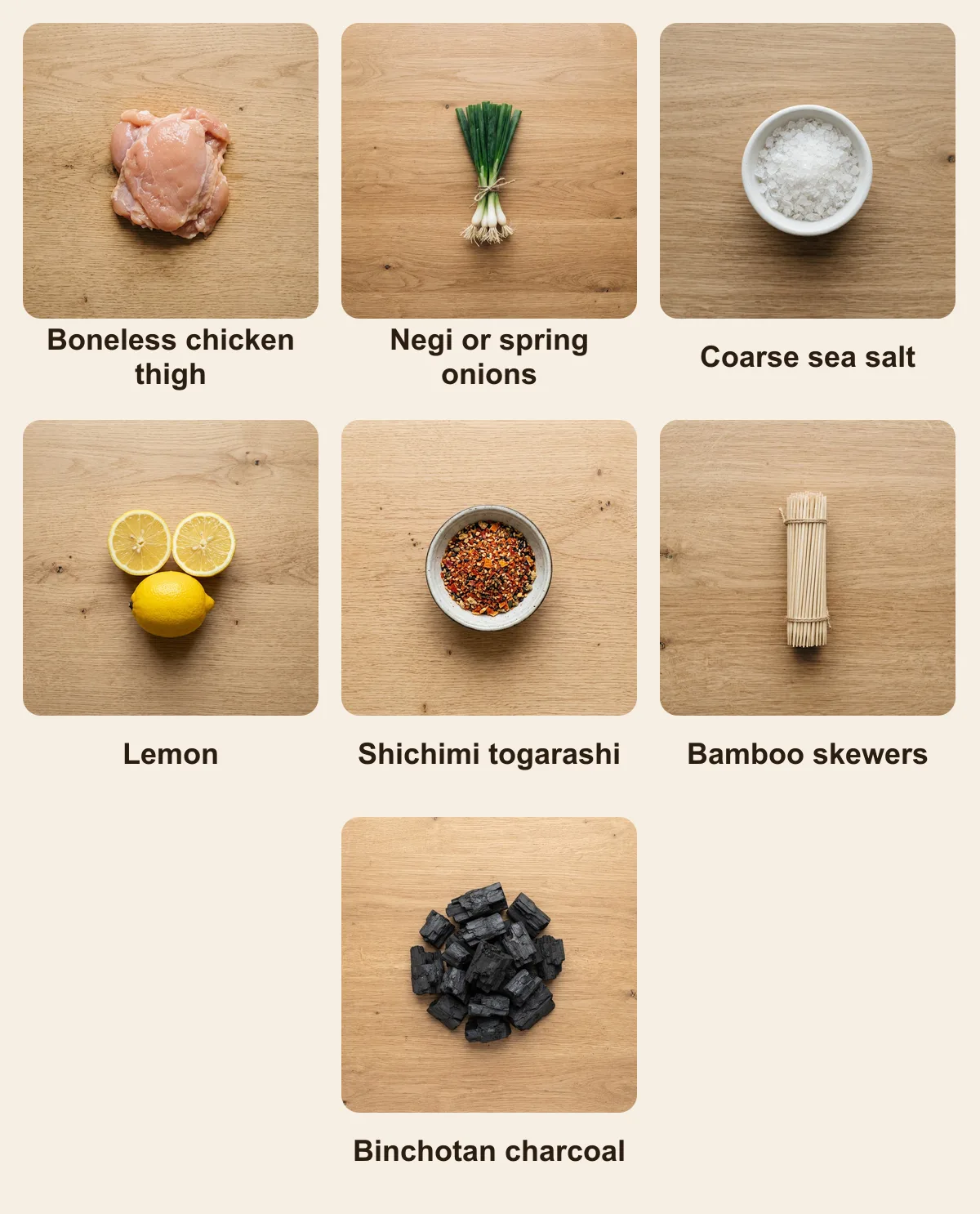
Ingredients
- 600 g boneless chicken thigh
- 3 negi (Japanese long onions) or the fattest spring onions you can find, white and pale-green parts
- Coarse sea salt (shio style)
- Half a lemon
- Shichimi togarashi
- 12 bamboo skewers, soaked
- Charcoal, ideally binchotan
How to make it
- 1
Cut the thigh into 2.5 cm pieces and the negi into 2 cm logs.
- 2
Thread meat and negi alternately, piercing the onion crosswise through its layers so it cannot telescope apart.
- 3
Salt evenly from 30 cm above the skewers; height gives an even fall.
- 4
Grill over hot coals, turning every 40 seconds or so, 8-10 minutes, until the chicken is burnished and the negi edges blacken sweetly.
- 5
Serve with a small squeeze of lemon and shichimi on the side.
Pro tip: Skewer the negi across its rings, not down the core: pierced crosswise it grips the stick and steams sweet inside its own layers, while a core-threaded piece spins loose and falls into the fire at the first turn.
Where Negima comes from
The name is a contraction of negi (long onion) and ma (interval), describing the alternation of meat and onion on the skewer. Historically the dish used tuna rather than chicken — negima was a tuna-and-onion skewer in the Edo period — and the switch to chicken happened as tuna became expensive and chicken cheap, which is the reverse of the usual story.
How Negima is cooked
The onion is the technical problem. Negi segments need longer than chicken thigh to soften and sweeten, so they are cut slightly shorter than the chicken pieces are thick, and the skewer is positioned so the onion sits nearer the hotter part of the grill. A shop that gets this right serves onion that is sweet and yielding, not raw in the centre.
Thigh is used skin-on or skin-off depending on the shop; skin-on renders and bastes but flares. The finish — tare or shio — is a real choice rather than a default, and many shops recommend shio for negima specifically because the salt lets the sweetness of the onion come through where tare would cover it.
Ingredients and shopping
Chicken thigh in two-and-a-half-centimetre pieces. Japanese negi if you can get it — it is thicker, milder and sweeter than a European spring onion; the white part of a large leek is the closest common substitute. Cut into two-centimetre segments.
For shio, good salt and nothing else. For tare, the standard soy-mirin-sake reduction. Short bamboo skewers, soaked. Lump charcoal with the flames burnt down, or binchotan.
How Negima is served
One or two skewers at a counter, early in a yakitori sequence since it is the benchmark cut. Shichimi togarashi available. Beer to start, sake later. Shops often serve it first precisely so you can judge them by it.
Common mistakes
Using thin spring onions
They burn away to nothing. Japanese negi or the white of a large leek is what the dish needs.
Onion segments cut too long
They will not cook through in the time the chicken needs. Cut them a little shorter than the chicken pieces are thick.
Choosing tare by default
Many shops prefer shio for negima because salt lets the onion's sweetness come through. It is worth trying both.
Skin-on thigh over a flaring fire
Rendering skin causes flare-ups. Either remove it or manage the fire carefully.
Negima: questions and answers
What onion should I use?
Japanese negi, or the white part of a large leek. Thin spring onions burn away.
Tare or shio?
Both are offered, but many shops recommend shio for negima so the sweetness of the onion is not covered by the glaze.
Sources and further reading
- Yakitori — Wikipedia
- Yakitori Recipe (Japanese Grilled Chicken Skewers) — Just One Cookbook