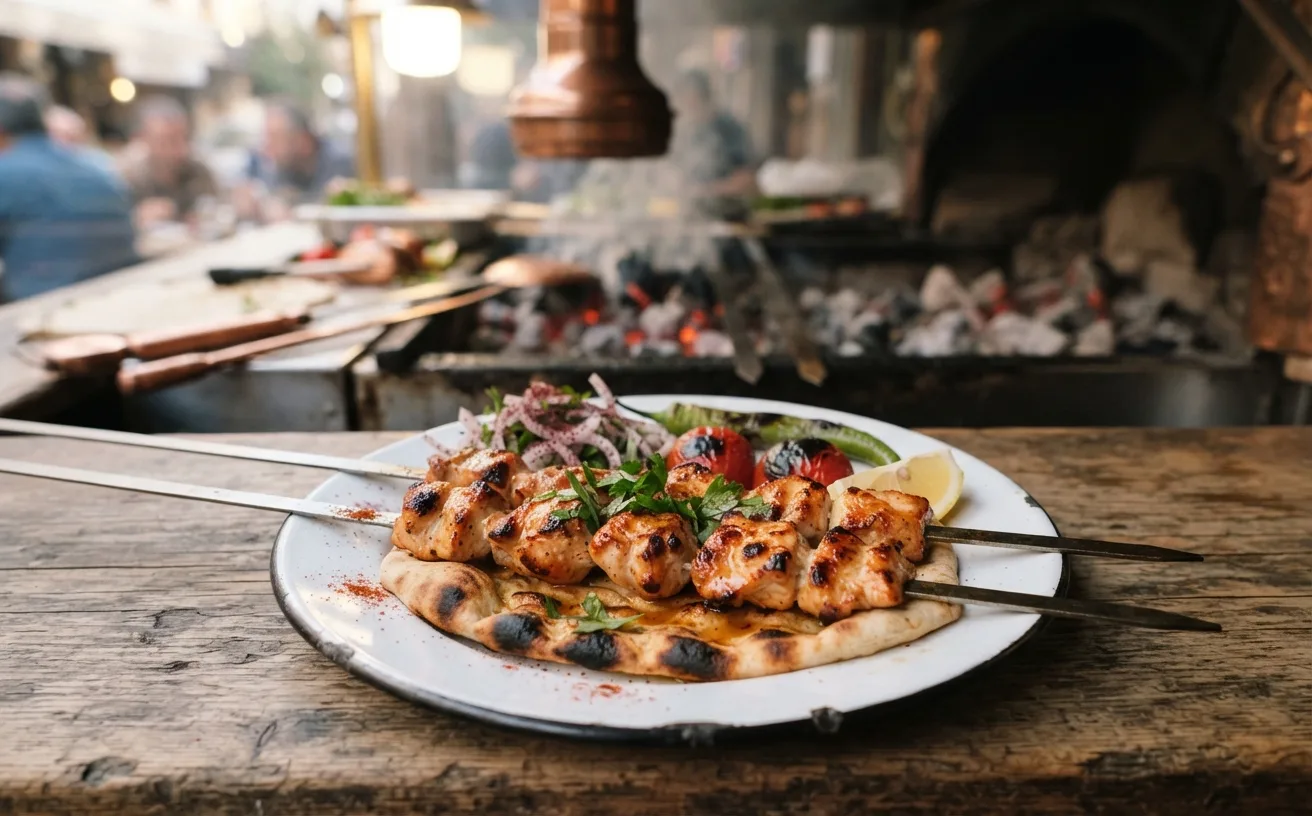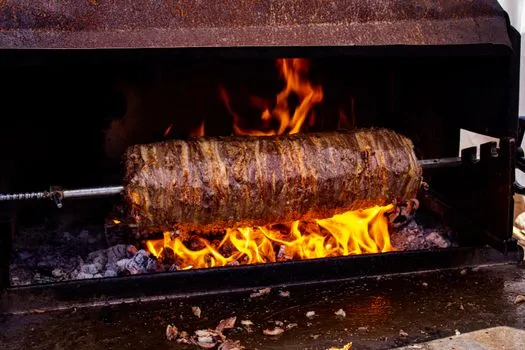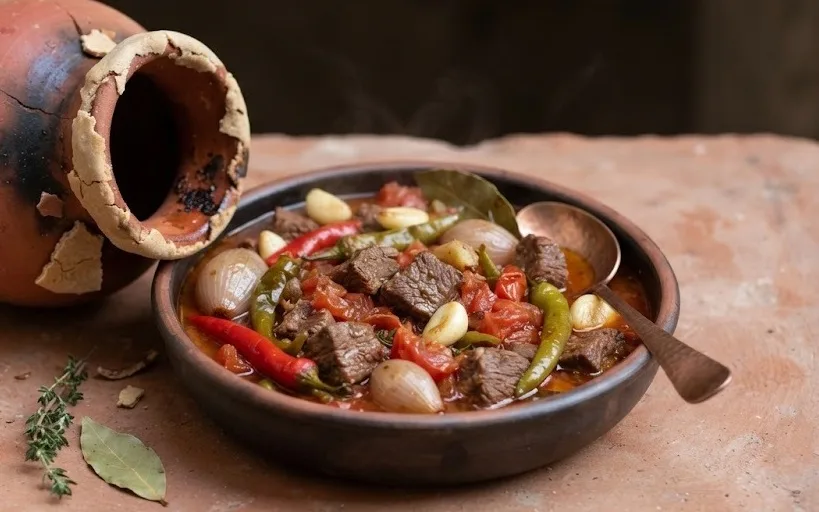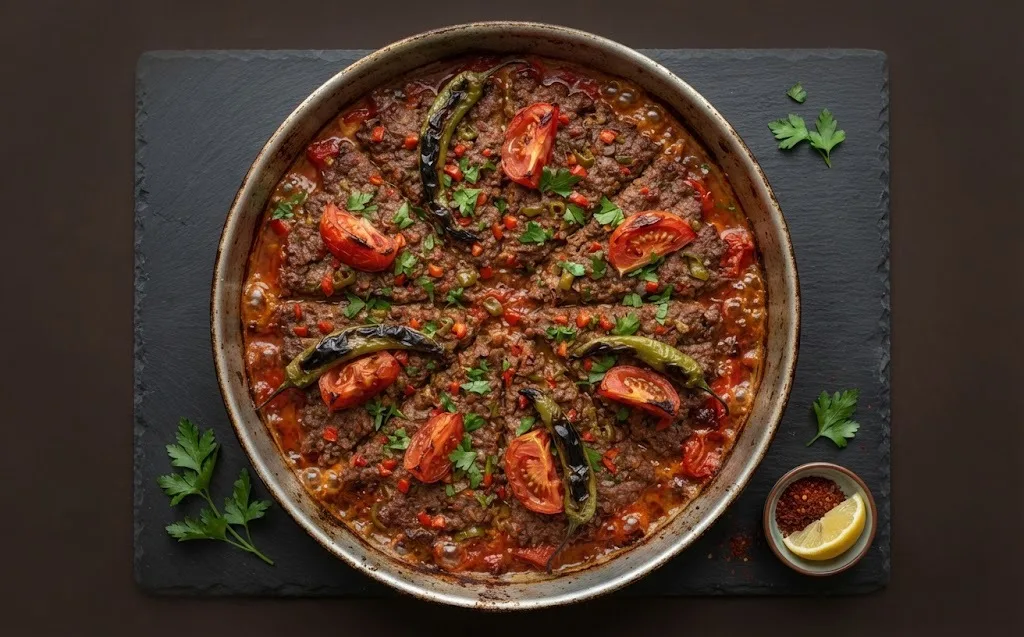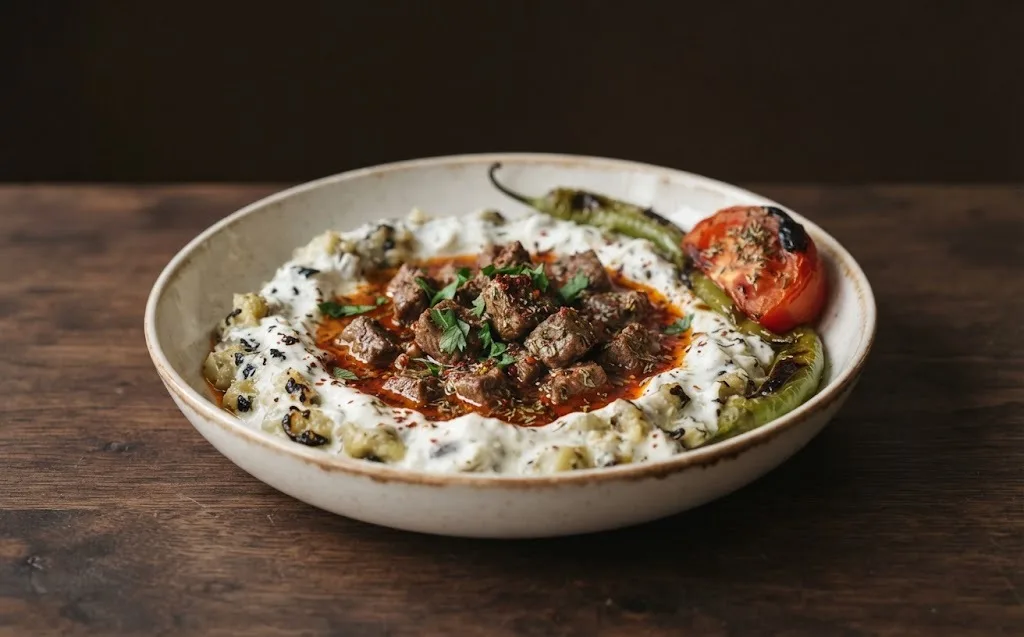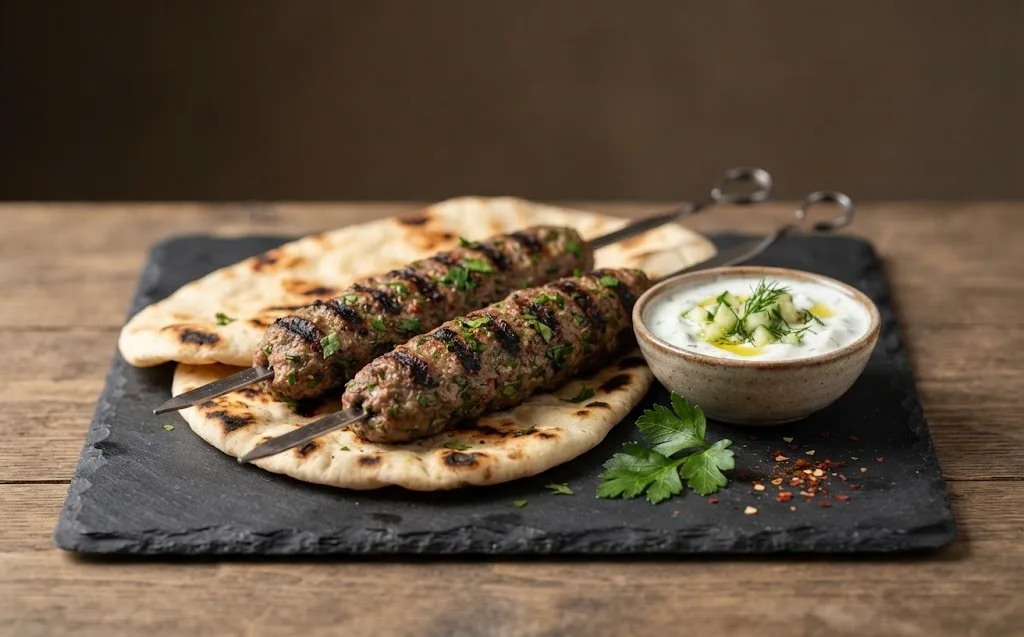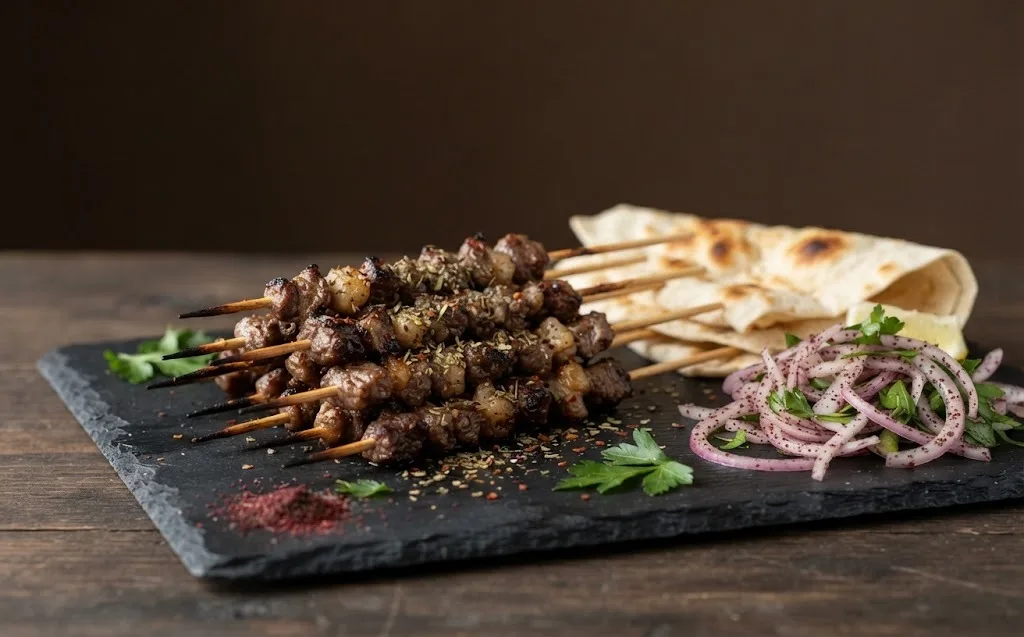
Aegean 'trash skewer' from around Selçuk and Ephesus: tiny nuggets of lamb and fat — originally butcher's trimmings — packed on thin wooden skewers and grilled fast. Diners typically order them by the dozen and slide the meat off into fresh pide.
Also known as çöp şiş, cop sis, çöp kebabı.
Reference video
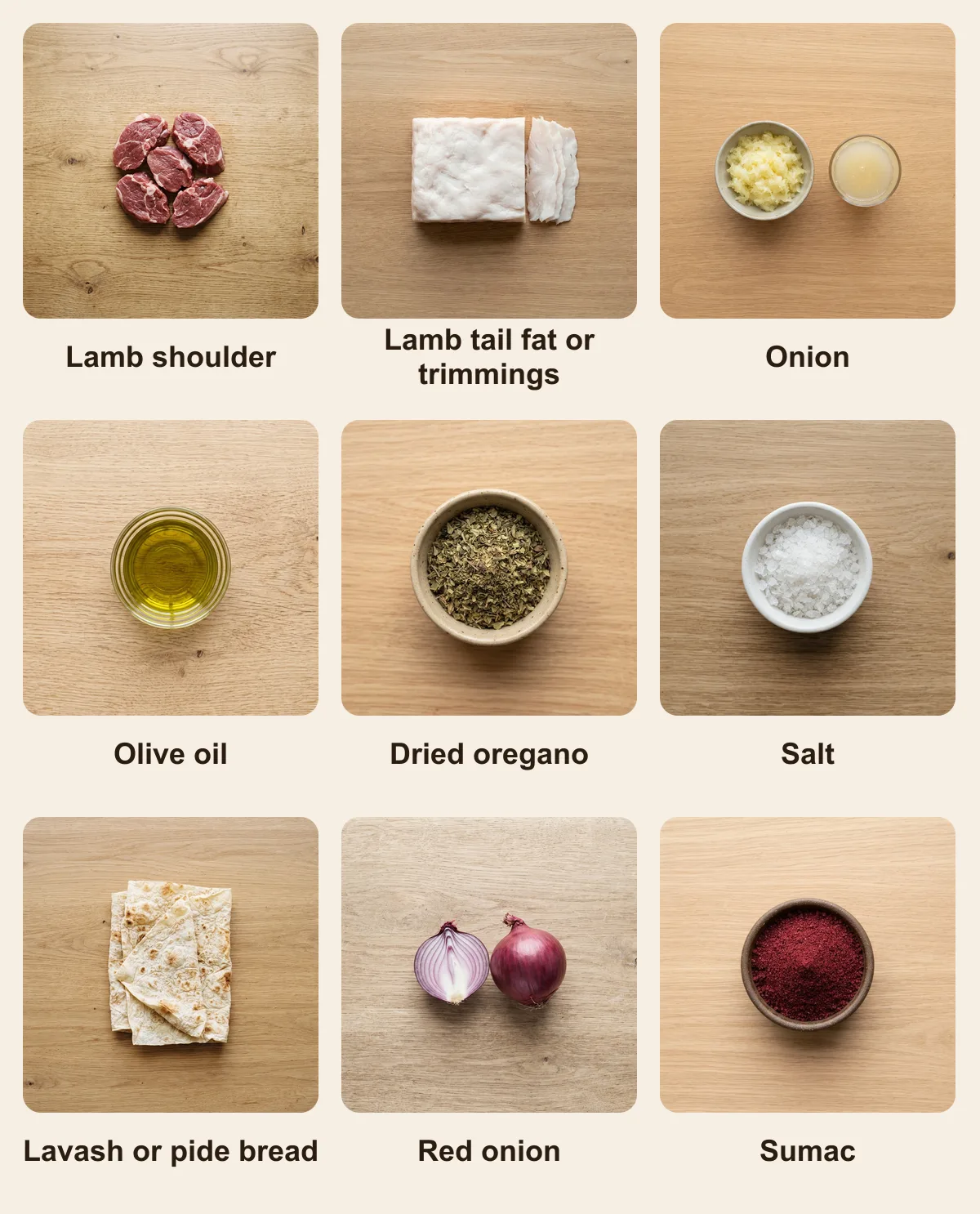
Ingredients
- 600 g lamb shoulder, cut into 1.5 cm nuggets
- 150 g lamb tail fat or fatty trimmings, in small dice
- 1 onion, grated to a pulp
- 30 ml olive oil
- 1 tsp dried oregano
- 1 tsp salt
- 2 lavash or pide breads
- 1 red onion, sliced, tossed with 1 tsp sumac
How to make it
- 1
Toss the lamb nuggets and fat through the onion pulp and oil; rest 2 h in the fridge.
- 2
Thread tightly onto thin wooden skewers (soaked 30 min), slipping a piece of fat after every third nugget.
- 3
Grill over very hot coals 6-8 min, giving a quarter turn every minute so each face just chars.
- 4
Season with salt and oregano the moment they leave the fire.
- 5
Slide the meat off into warm lavash and eat with the sumac onions.
Pro tip: Keep every piece under 2 cm; the whole point of cop shish is maximum charred surface per bite.
Where Cop Shish comes from
Çöp şiş means, bluntly, rubbish skewer — çöp being the word for scrap. It comes from the villages around Selçuk in the Aegean, in the shadow of Ephesus, and the name is a piece of honest history: it was built from the trimmings left after a butcher had cut the good joints, the small nuggets of lamb and fat too irregular to sell.
Germencik and Selçuk still compete over the original, and what was once a frugal dish is now a regional speciality that visitors detour for. The economics have inverted completely — trimmings are no longer cheap when a restaurant needs kilos of them — but the format has not changed, and the wooden skewers remain a defining detail.
Why çöp şiş is tiny, fatty and threaded on wood
Scale is the whole difference. Shish Kebab spaces three-centimetre lamb cubes a finger's width apart on metal; Cop Shish packs nuggets under two centimetres, lamb mixed with fat trimmings, tightly onto thin soaked wooden skewers that hold only a few bites each. Wood conducts almost no heat, so these tiny pieces cook from the outside, three or four minutes over a ferocious restaurant fire. Oregano is scattered on after grilling rather than worked into a yogurt marinade as with Chicken Shish (Tavuk Shish). Shishcheta goes on wooden sticks as well, but with pork or chicken and vegetables. Diners order it by the dozen and pull the meat off into pide.
Compare: Shish Kebab · Chicken Shish (Tavuk Shish) · Shishcheta
How Cop Shish is cooked
Everything about çöp şiş is small and fast. The meat is cut into pieces the size of a thumbnail, marinated in onion juice and olive oil — the oregano goes on after the fire — and packed tightly onto thin wooden skewers so that each skewer carries only a few bites. Wooden skewers are not a rustic affectation: they conduct almost no heat, so the meat cooks entirely from the outside and the tiny pieces do not overcook from within.
Cooking takes three or four minutes over a ferocious restaurant fire — six to eight over home coals, as in the recipe — with constant turning. Because the portions are so small, they are ordered by the dozen and grilled continuously, arriving at the table in waves rather than all at once. Diners slide the meat off with a piece of pide rather than with a fork, which is part of the ritual.
Ingredients and shopping
Lamb shoulder with its fat left on is ideal, and the mix should be roughly four parts meat to one part fat by eye. This is a rare kebab where slightly gristly trimmings are genuinely better than a clean cut, because the connective tissue crisps at this size instead of turning chewy.
Soak wooden skewers for at least half an hour so they do not catch. Dried oregano is the signature herb — the Aegean uses it where the south-east would use pepper — and the marinade should be short, an hour or two at most, because the pieces are so small that acid penetrates fast.
How Cop Shish is served
It comes in stacks of skewers with warm pide, sliced raw onion with sumac, tomatoes, long green peppers and a heap of parsley. The correct method is to lay a skewer on an open piece of bread, close the bread over it, and pull the skewer out, so the meat lands in the pocket with its juices. Şalgam or ayran to drink; raki if the meal has stopped being a lunch.
Common mistakes
Cutting the meat too big
The whole point is thumbnail-sized nuggets that cook in minutes. Bigger pieces need a different technique entirely.
Metal skewers
They conduct heat into the centre of tiny pieces and overcook them from the inside. Wood is correct here.
Trimming off all the fat
The fat scraps are the flavour. A lean çöp şiş is dry within seconds of leaving the grill.
Grilling too slowly
Small pieces over a weak fire dry out before they colour. The coals must be hot and the cook short.
Cop Shish: questions and answers
Why is it called rubbish kebab?
Çöp means scrap. It was originally made from butcher's trimmings too small or irregular to sell as joints. The name stuck even though the dish is now a sought-after speciality.
Why wooden skewers?
Wood does not conduct heat into the meat, so very small pieces cook from the outside only. Metal skewers overcook them from within.
Where is çöp şiş from?
The Aegean region around Selçuk (Izmir province) and Germencik (Aydın province), near Ephesus. Both towns claim the original.
How is it eaten?
You lay the skewer inside a piece of pide, fold the bread over it and pull the skewer out, leaving the meat and its juices in the bread. Ordered by the dozen, not by the portion.
Sources and further reading
- Çöp şiş — Wikipedia
- Çöp Şiş: "Trash" Kebap! — Turkey Travel Planner