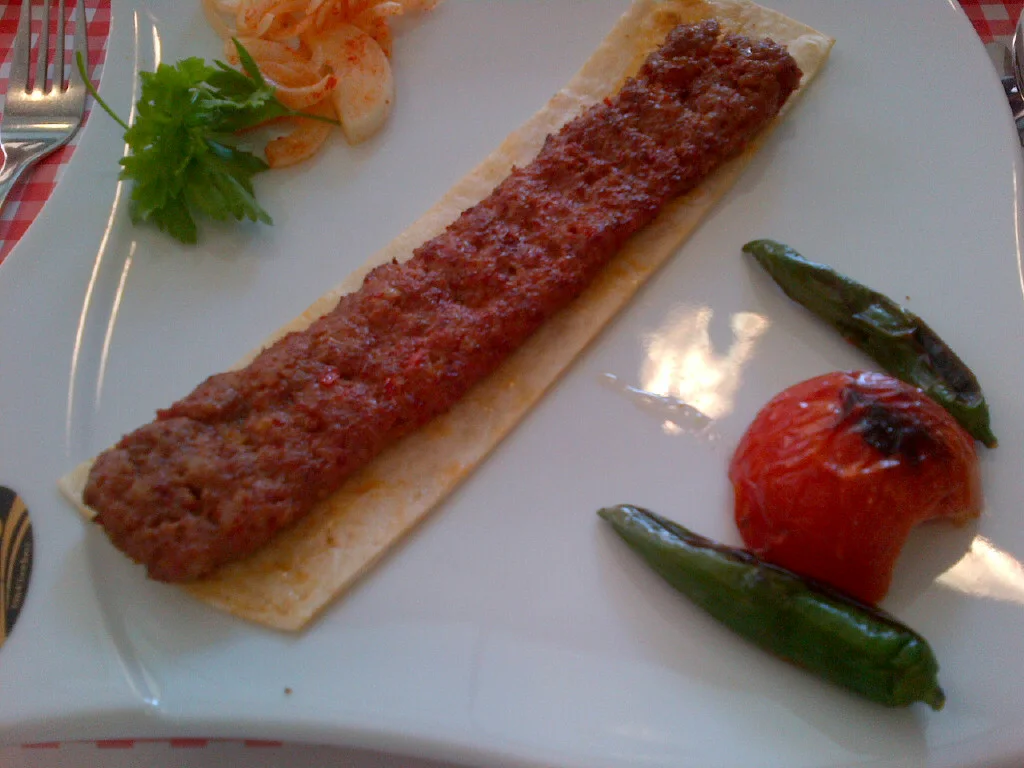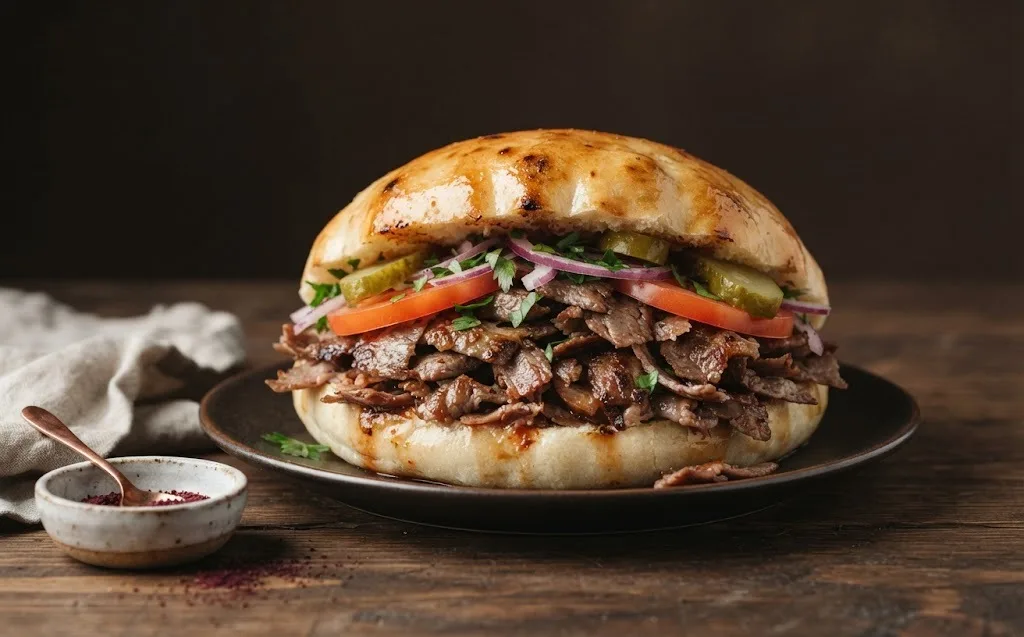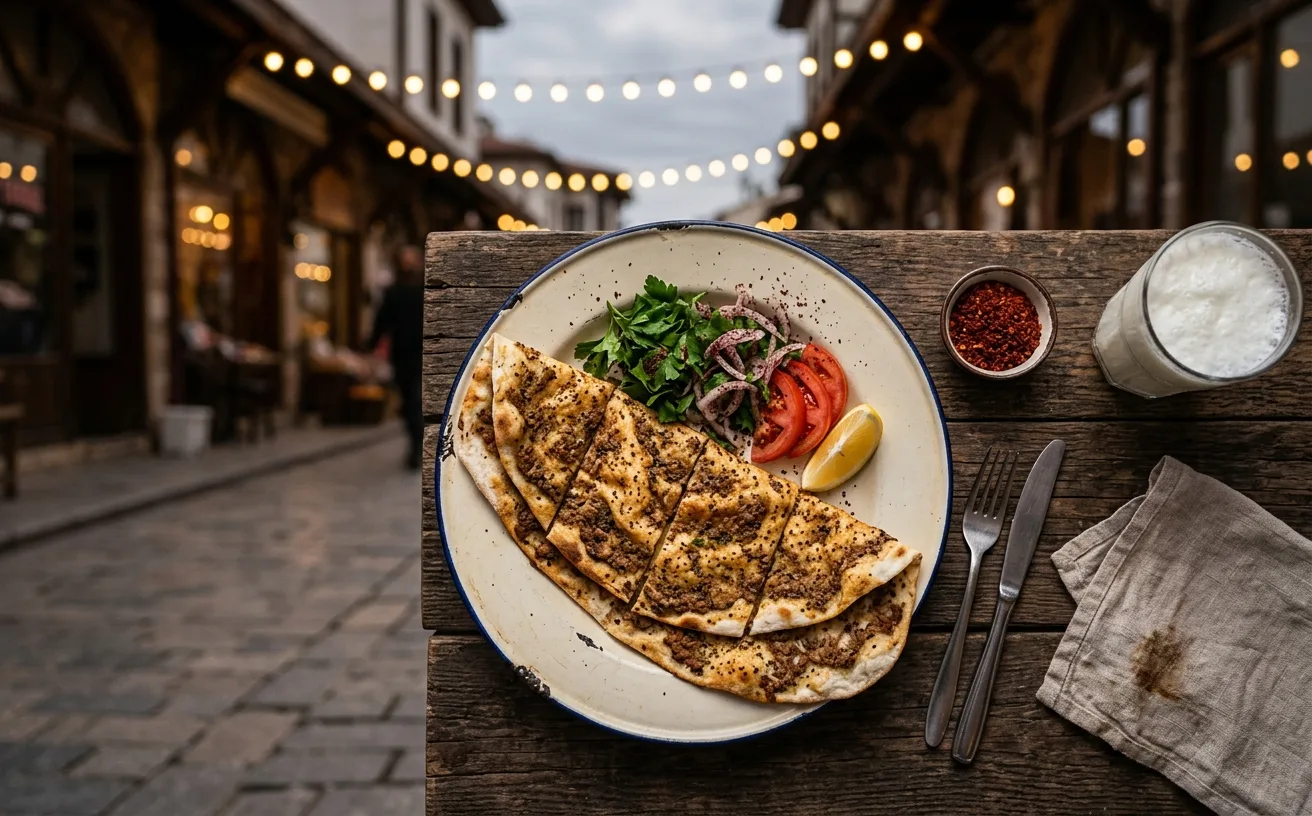
A geographical-indication-registered specialty of Birecik, Şanlıurfa: zırh-minced İvesi lamb, seasoned with nothing but salt in its official recipe, packed onto forged-iron skewers and grilled over charcoal. Despite the name, no poppy of any kind goes into it — haşhaş kebabı is simply its established local name.
Also known as haşhaş kebabı, hashas kebabı, Urfa haşhaş kebabı.
Reference video
Ingredients
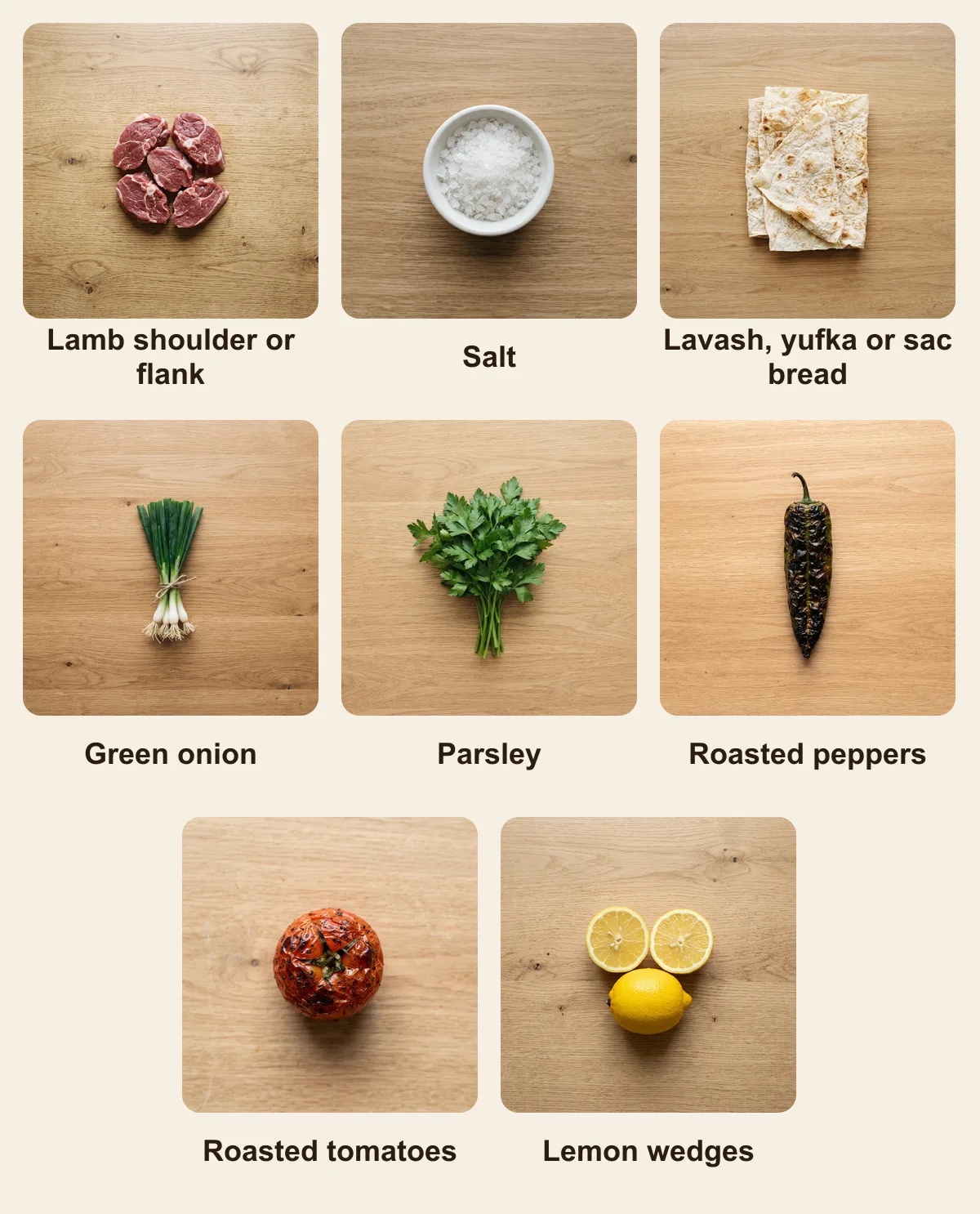
- 800 g lamb shoulder or flank, very finely hand-chopped (or coarsely minced)
- 1.5-2 tsp salt (about 1-2% of the meat's weight)
- To serve: flatbread (lavash, yufka or sac bread)
- Sliced or fresh green onion
- Parsley
- Charcoal-roasted peppers and tomatoes
- Lemon wedges
How to make it
- 1
Hand-chop the lamb as finely as possible with a large sharp knife rather than a food processor, which pastes the meat instead of cutting it.
- 2
Work the salt through the chopped meat by hand until it feels slightly tacky and holds together.
- 3
Chill the salted meat at least 30 min — it must be cold, not warm, to grip a skewer.
- 4
Press the meat onto flat metal skewers in a long, even ribbon and set over hot charcoal, turning frequently at first so all sides set before the fat renders.
- 5
Grill 6-8 min total, turning regularly, until charred in patches and cooked through, then slide off the skewer onto warm flatbread with the roasted peppers, tomatoes, onion, parsley and a squeeze of lemon.
Pro tip: The registered recipe is lamb and salt only — resist adding onion, garlic or spice to the mince itself; despite the name, there is no poppy in it at all.
Where Hashas Kebab comes from
The name is the dish's one real mystery: haşhaş literally means poppy in Turkish, yet no poppy seed, poppy paste or anything derived from poppy appears in the registered recipe or in the practice of the Birecik kebab masters who have made it for decades. Informal local explanations for the name circulate, but none is confirmed by the geographical-indication record — it is best understood as the dish's established name rather than a description of an ingredient.
How Hashas Kebab is cooked
The meat comes from the boşluk, a cut local to the flank/abdominal area of a male İvesi (Awassi) lamb raised on Şanlıurfa's pastures. It is minced entirely by hand with a zırh, a large crescent-shaped, two-handled knife rocked repeatedly over the meat on a board — a coarse, springy texture a machine grinder cannot reproduce, since the zırh cuts the fibres rather than tearing and pasting them.
Salt, at roughly one to two percent of the meat's weight, is the only seasoning the registered recipe allows — no onion, garlic, pepper paste or spice mix. The salted mince is chilled before shaping, since warm meat will not hold to a skewer, then pressed onto square-sectioned forged-iron skewers about 50-60cm long and grilled over glowing hardwood charcoal, turned frequently at the start so all four sides set and grip the metal before the fat begins to render.
Ingredients and shopping
There is no substitute recipe worth improvising here: the identity of this kebab is the İvesi lamb, the boşluk cut, the zırh-mincing and the salt-only seasoning, in that order. Without a zırh, a very sharp knife hand-chopping lamb shoulder or flank as finely as possible gets closer than any food processor, which pastes the meat instead of cutting it into a controlled, coarse texture. Skip anything that adds onion, garlic or spice to the mince itself — those flavours belong in what is served alongside, not in the meat.
How Hashas Kebab is served
It is eaten off the skewer with open flatbread — lavash, yufka or sac bread — sliced or fresh green onion, parsley, charcoal-roasted peppers and tomatoes, and a squeeze of lemon over the onion and parsley. Cold ayran is the traditional drink alongside it.
Common mistakes
Adding onion, garlic or spice to the mince
The registered recipe is meat and salt, nothing else. Any seasoning beyond salt turns it into a different kebab, however good it tastes.
Mincing it in a machine grinder
A grinder tears and pastes the meat. The zırh's rocking chop cuts it into the coarser, springier texture the dish depends on.
Shaping it warm
Warm minced meat will not grip a skewer and falls into the coals. It is salted and chilled first, then shaped cold.
Expecting poppy seeds
Despite the name, none are in the dish. Judging it by a poppy-based flavour means judging it by the wrong recipe entirely.
Hashas Kebab: questions and answers
Does haşhaş kebabı contain poppy seeds?
No. Despite haşhaş meaning poppy in Turkish, the officially registered recipe contains only İvesi lamb and salt. The name is the dish's established local name, not a description of an ingredient.
Why is it seasoned with only salt?
That is what the geographical-indication registration specifies as the authentic recipe — the flavour is meant to come from the lamb and the zırh-mincing, not from added spices.
Sources and further reading
- Haşhaş Kebabı — Sanliurfa Buyuksehir Belediyesi (Sanliurfa Metropolitan Municipality)
- Urfa Poppy Kebab - Complete Guide to Sanliurfa Haşhaş Kebabı — Wow Cappadocia