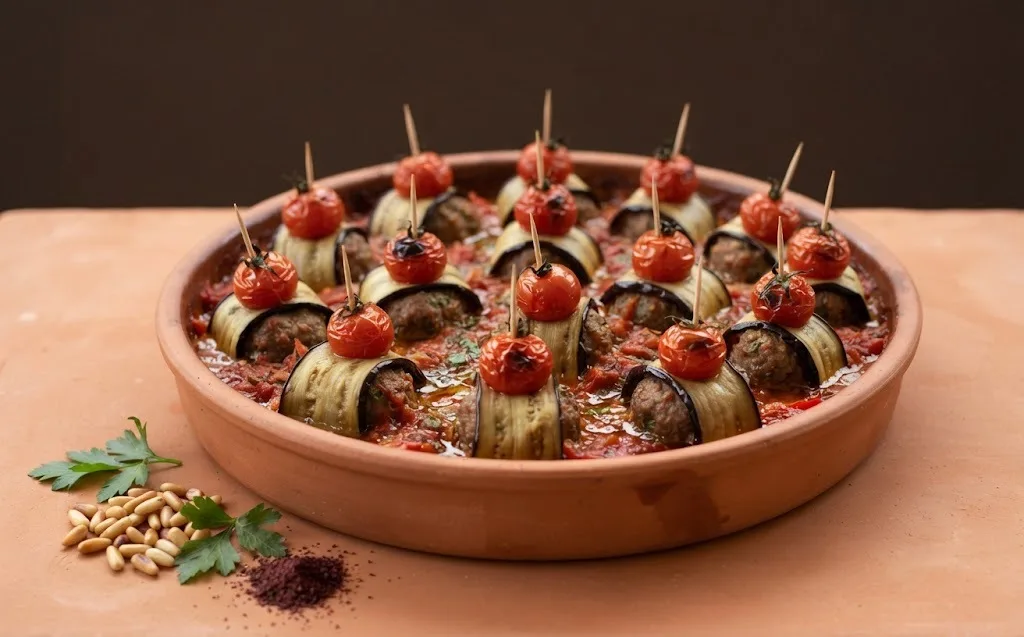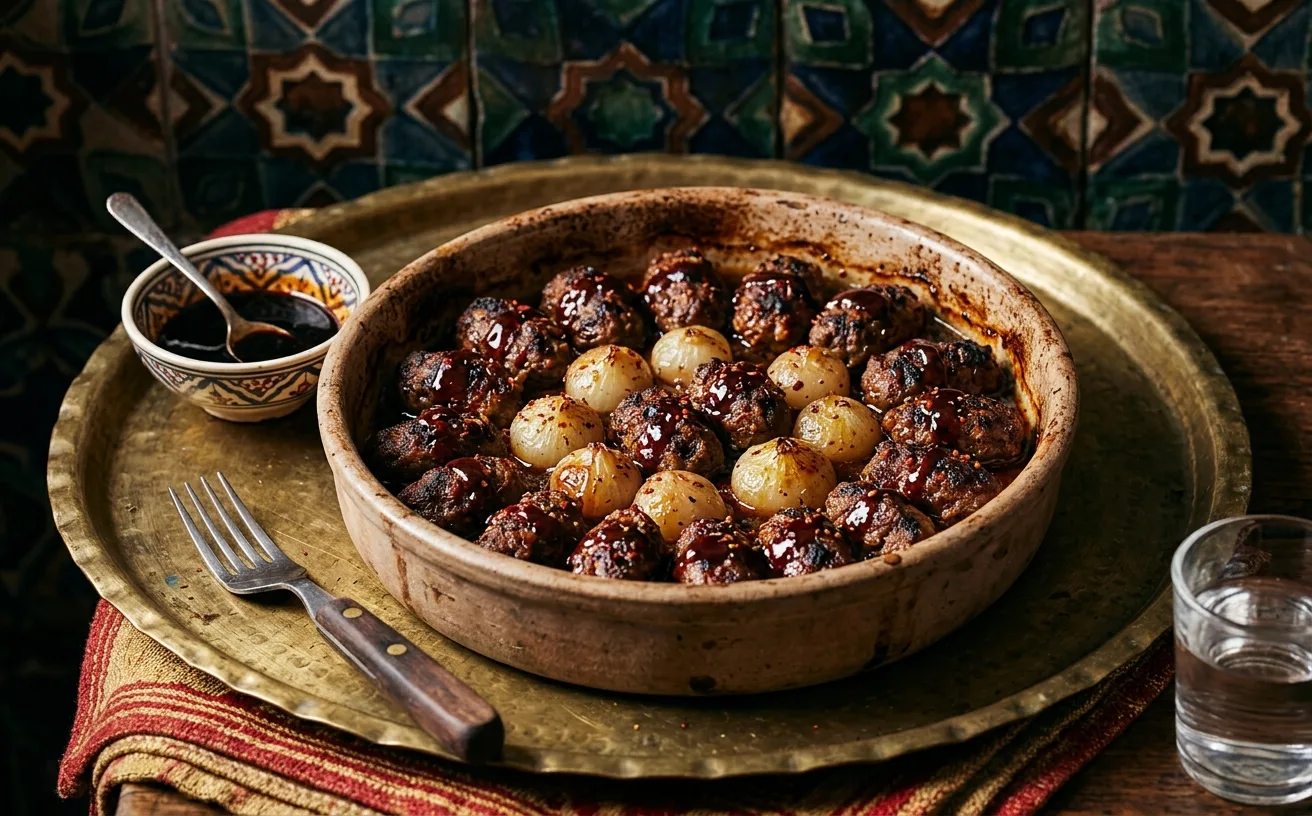
A Şanlıurfa home dish that the city's own recipe archive files under vegetables, not meat: long eggplants are slit and packed with seasoned minced meat, set tight in a wide pan with a little tomato water, covered and cooked low until the liquid is gone. Also called tava kebabı ('pan kebab') for the same reason kazan kebabı means 'pot kebab'.
Also known as tava kebabı, Urfa kazan kebabı, patlıcanlı kazan kebabı.
Reference video
Ingredients
- 1.5 kg long thin eggplants (aubergines)
- 500 g lean minced meat
- 4-5 tomatoes
- 1 large onion, finely chopped
- 3-4 green or red peppers, chopped
- 2 tbsp tomato paste
- 3-4 garlic cloves, crushed
- 1 tbsp pul biber (Turkish red pepper flakes)
- 1 tsp mixed spice
- 1/2 tea-glass (about 60 ml) clarified butter or oil
- Salt, to taste
How to make it
- 1
Wash the eggplants and peel them in alternating stripes, then slit each one lengthwise into a deep pocket without cutting it in two.
- 2
Knead the minced meat with the onion, peppers, two diced tomatoes, garlic, pul biber, mixed spice, salt and a spoonful of tomato paste until it holds together.
- 3
Press a ball of the mixture into each eggplant's slit and arrange the stuffed eggplants tightly in a wide pan, tucking the remaining chopped tomato between them.
- 4
Dissolve the rest of the tomato paste in a glass of water with a little salt and the clarified butter, and pour it around — not over — the eggplants.
- 5
Cover, cook 10 min on high heat, then lower the heat and simmer gently about an hour until the eggplants are soft and the liquid has been absorbed.
Pro tip: Şanlıurfa's own municipality files this as a vegetable dish, not a meat one — the eggplant, not the mince, is what kazan kebabı is really about.
Where Kazan Kebab comes from
Kazan kebabı, as the Şanlıurfa Metropolitan Municipality's own recipe archive records it, is not the browned-lamb dish its name suggests to outsiders — the city files it among its vegetable dishes (sebze yemekleri), not its meat dishes. Long, thin eggplants are the base: peeled in alternating stripes, split most of the way through without being cut apart, and packed with a hand-worked mixture of lean minced meat, onion, green pepper, tomato, garlic and pul biber. It sits closer to a Turkish stuffed-eggplant dish than to anything skewered or fried in its own fat.
The name simply describes the vessel: kazan is the wide, heavy pot the stuffed eggplants are packed into, and the same Şanlıurfa sources give tava kebabı ('pan kebab') as another name for the identical dish. It has no connection to a lamb-browned-in-fat dish from Konya or Kayseri — Urfa's kazan kebabı is a pot of stuffed eggplant, and the meat is there to season the vegetable, not the other way round.
Stuffed eggplant from Şanlıurfa, not the Uzbek lamb pot
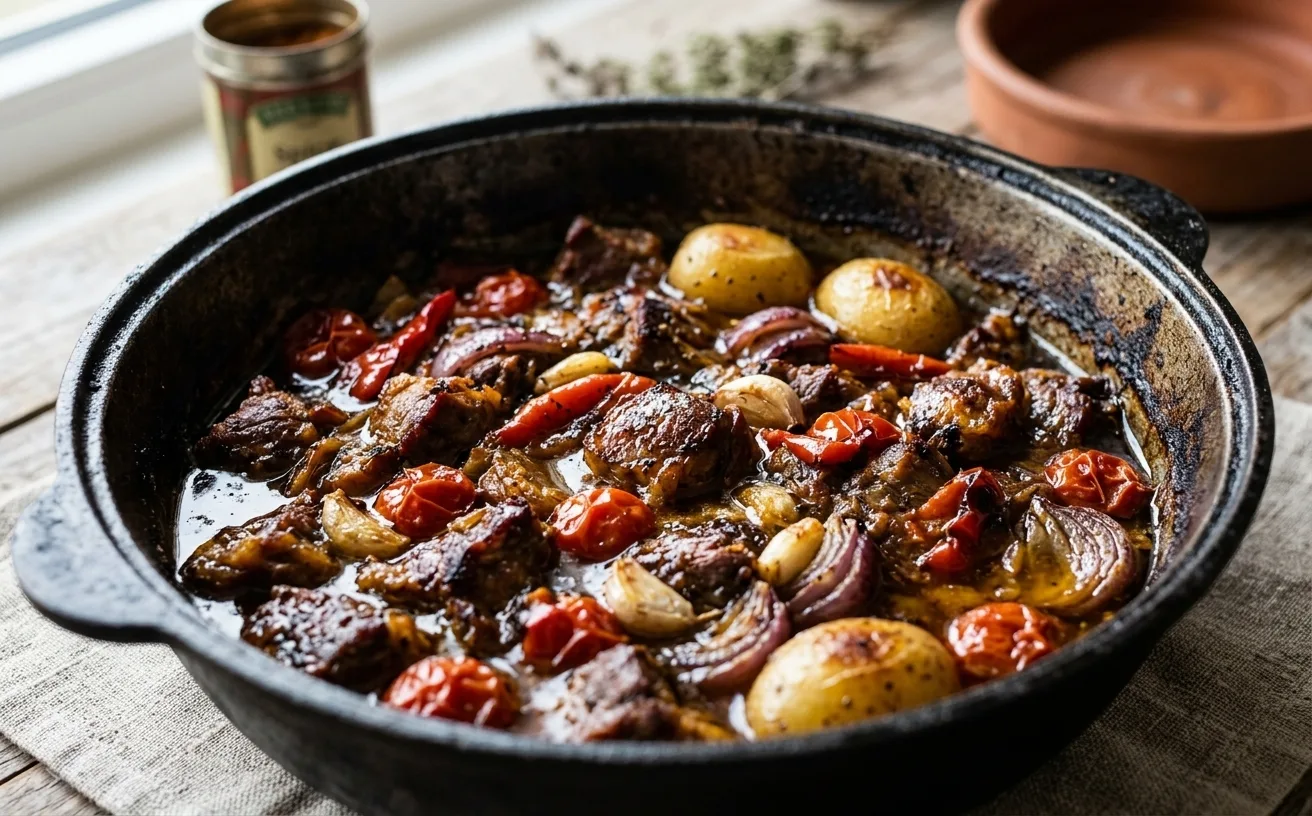
Looking for lamb and potatoes cooked in a cauldron? That is Kazan Kabob, the Uzbek dish. Kazan Kebab is Turkish, from Şanlıurfa, also called tava kebabı, and the city files it under vegetable dishes: long thin eggplants peeled in stripes, slit into a pocket and stuffed with lean mince, onion, pepper, tomato, garlic and pul biber. Packed tight in a wide pan with a thin tomato-paste water, they cook covered on low heat with no browning stage. Kazan Kabob instead fries potatoes and bone-in lamb in hot fat in a cast-iron kazan. The two share only the word for the pot. Rice or bulgur pilaf soaks up the pan juices here.
Compare: Kazan Kabob
How Kazan Kebab is cooked
The eggplants do the structural work. They are peeled in alternating strips rather than stripped bare, which keeps the flesh from collapsing during a long covered cook, then slit lengthwise into a pocket without separating into two halves. The stuffing is a well-kneaded mix of minced meat, finely chopped onion and green pepper, diced tomato, crushed garlic, a spoon of tomato paste, pul biber, mixed spice and salt, pressed by hand into the slit of each eggplant.
The stuffed eggplants go into a wide pan in a single snug layer, packed close enough to hold each other upright, with the leftover chopped tomato tucked between them. A thin mixture of water, a little tomato paste, salt and oil is poured around them, not over the stuffing, and the pan is covered and cooked on low heat until the liquid is fully absorbed and the eggplant yields to a fork. There is no browning stage and no frying of the meat first — the covered pot and the eggplant itself supply all the moisture the dish needs.
Ingredients and shopping
Use the long, narrow eggplant sold at Turkish and Middle Eastern grocers rather than the large globe kind, since it holds its shape stuffed where a rounder eggplant would collapse. The mince should be lean, not fatty — this dish does not rely on rendered fat the way Urfa's grilled kebabs do. In winter, Şanlıurfa households make it with dried eggplant instead, boiling it briefly to rehydrate before stuffing, which is worth knowing before assuming fresh eggplant is the only correct base.
How Kazan Kebab is served
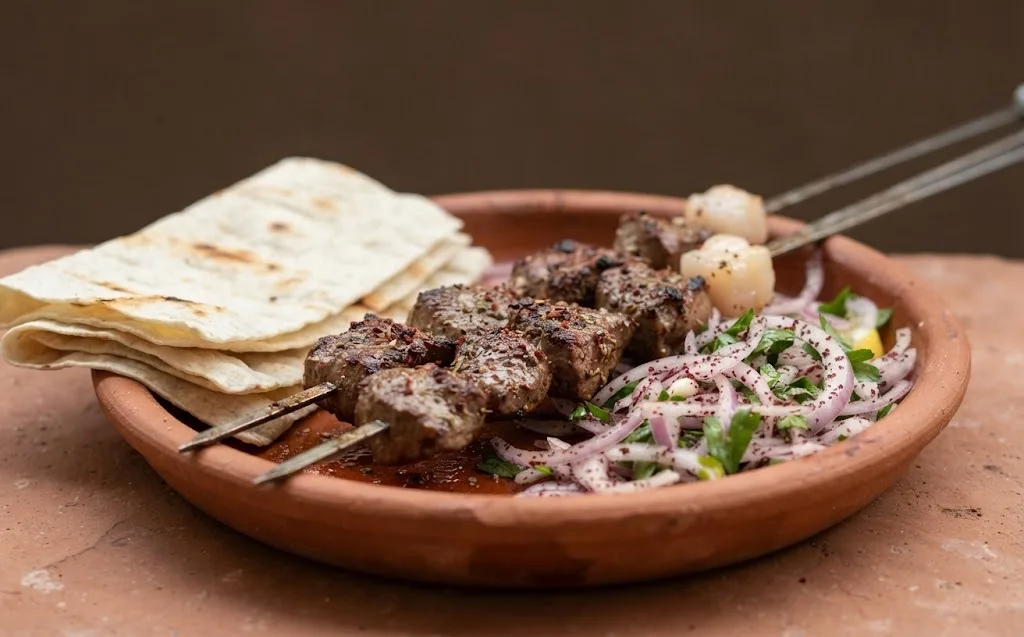
It comes to the table straight from the pan, spooned over plain rice or a buttery bulgur pilaf, with raw sliced onion and a whole green pepper alongside rather than a dressed salad. Şanlıurfa's own recipe write-up calls for nothing more elaborate than that — the rice does the work of soaking up the pan juices.
Common mistakes
Cutting the eggplant all the way through
The slit is meant to be a pocket, not two halves. Cut too deep and the stuffing spills into the pan instead of staying wrapped in eggplant as it cooks.
Skipping the striped peel
Leaving the full skin on stops the flesh cooking through evenly; peeling it away completely lets the eggplant collapse. The traditional alternating-strip peel is the balance between the two.
Drowning the pan in water
The sauce is a thin wash of water, tomato paste, salt and a little oil, just enough to steam the eggplant — not a stew. Too much liquid and the dish never reduces to the thick, spoonable finish it is served at.
Treating it as a grilled kebab
There is no skewer, no charcoal and no frying stage here. It is a covered, low-heat pan dish, and pushing it over high heat scorches the stuffing before the eggplant has softened.
Kazan Kebab: questions and answers
What does kazan mean?
It is the cast pot or cauldron the eggplants are cooked in — the same logic that names Uzbek kazan kabob after its pot. The Turkish and Uzbek dishes share only the name and the vessel; the Uzbek version cooks lamb on the bone with potatoes fried in deep oil, a different recipe entirely.
Can it be made without fresh eggplant?
Yes. The winter version uses dried eggplant, briefly boiled to rehydrate before stuffing, so the dish is not limited to eggplant season.
Sources and further reading
- Kazan Kebabı — Kültür Portalı (Turkish Ministry of Culture and Tourism)
- Kazan Kebabı — Şanlıurfa Metropolitan Municipality