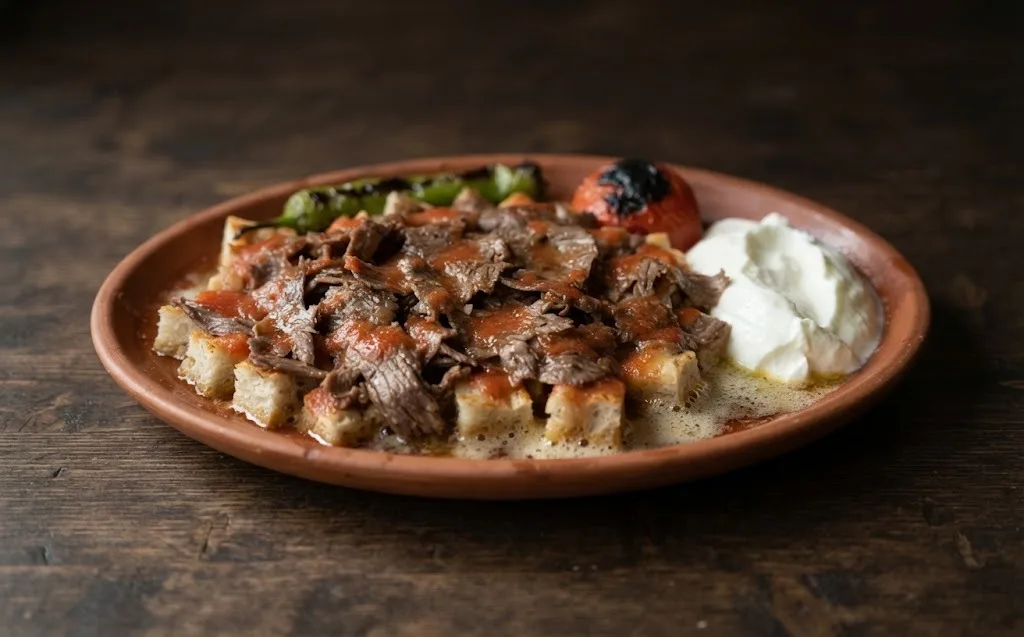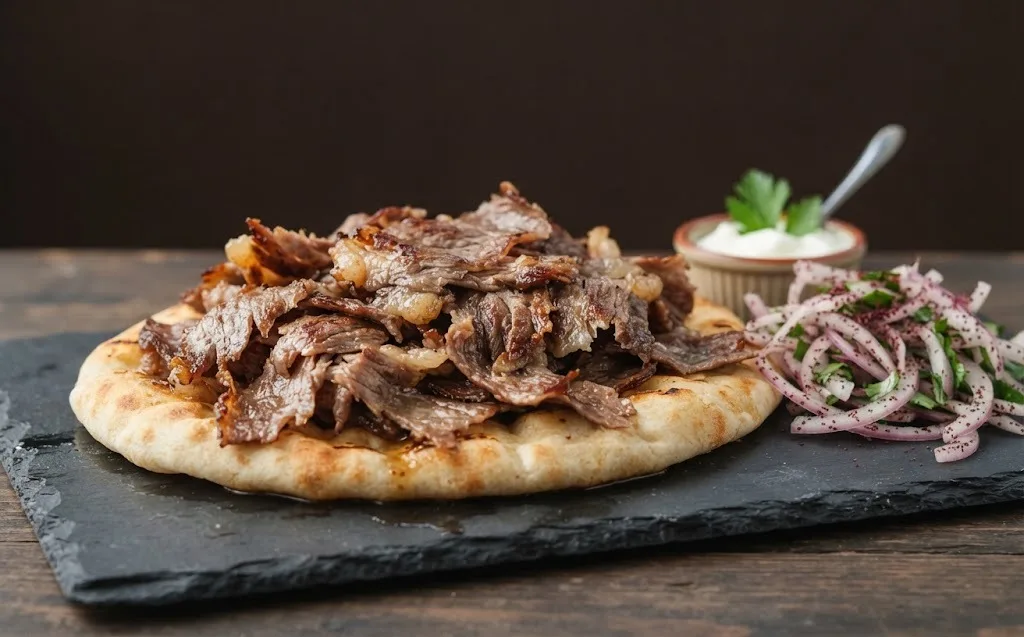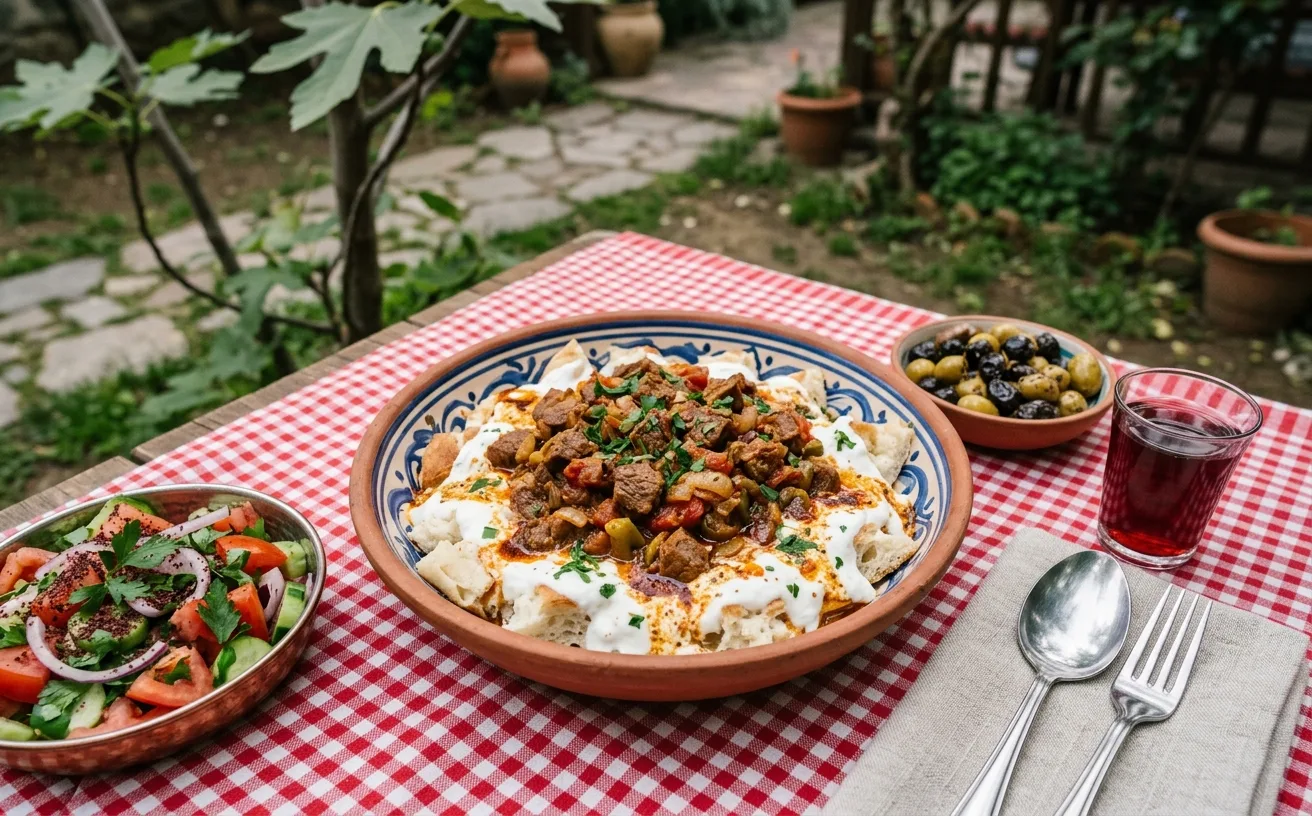
An Istanbul iftar dish of sautéed lamb and onions spooned over torn fresh pide and yogurt, finished with hot butter. It borrows İskender's architecture but uses pan-cooked meat, suited to home kitchens breaking the fast.
Reference video
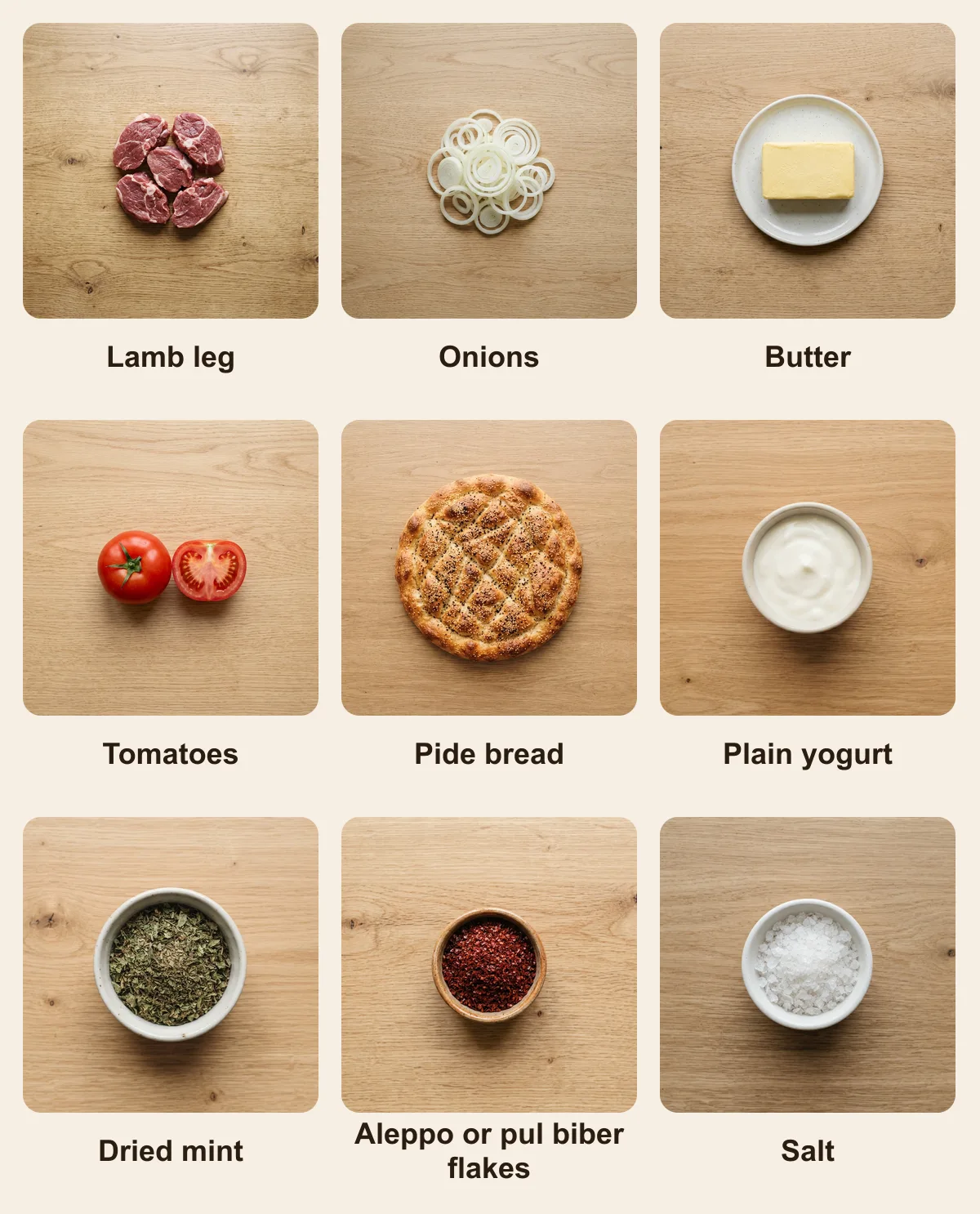
Ingredients
- 500 g lamb leg, in small 1.5 cm cubes
- 2 onions, sliced
- 60 g butter, divided
- 2 ripe tomatoes, grated
- 2 pide breads, torn
- 300 g plain yogurt, at room temperature
- 1 tsp dried mint
- 1 tsp Aleppo/pul biber pepper flakes
- 1 tsp salt
How to make it
- 1
Sear the lamb hard in 40 g of the butter, then lower the heat and cook the onions with it for 10 min.
- 2
Add the grated tomato and salt and simmer about 15 min until the juices cling to the meat rather than pool.
- 3
Line a warm dish with the torn pide and moisten it with a spoonful of the pan juices.
- 4
Blanket the bread generously with yogurt, then spoon the hot lamb over the top.
- 5
Sizzle the remaining 20 g butter with mint and pepper flakes and pour it, foaming, over the top.
Pro tip: Keep the braise almost dry; the pide should be perfumed by juices, not drowned, or the layers collapse into porridge.
Where Ramazan Kebab comes from
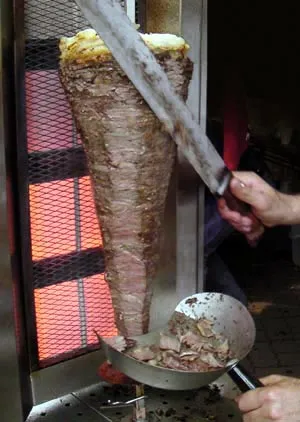
Ramazan kebabı borrows İskender's layers but swaps the vertical spit for a pan, and that swap is the point. A household cannot run a döner spit, and iftar is cooked at home for a table of people arriving hungry at a fixed minute. Ramazan kebabı gives the same layered, buttery, yoghurt-and-bread satisfaction using equipment every kitchen has, which is why it became the fasting month's signature restaurant-quality home dish.
How Ramazan Kebab is cooked
The lamb is cut small and sautéed hard with onion until browned and slightly caramelised, then a little tomato goes in and the whole thing is left to reduce to a glaze rather than a sauce. It should be intensely savoury, because it will be spread thin across a lot of bread and yoghurt.
The assembly is the dish. Ramazan pide — the round, soft, sesame-topped bread baked only during the fasting month — is torn rather than cut into a wide dish, yoghurt is spread over it, the hot meat goes on top, and butter heated until it foams and just begins to colour is poured over the lot. The sound and the smell of that pour is, for many Turkish households, the sound of the fast ending.
Ingredients and shopping
Lamb leg or shoulder cut into small dice is best; it browns well and stays tender in a short sauté. Ramazan pide is the correct bread and is worth buying if you can, but any soft flat white bread, slightly stale and torn, works. The yoghurt must be thick and at room temperature — cold yoghurt straight from the fridge chills the plate.
Real butter for the pour, and enough of it that it visibly coats. Some households add a little pul biber to the butter as it foams, which stains it red and adds a gentle heat. Tomato should be a background note, not a sauce base.
How Ramazan Kebab is served
It goes to the table in one wide dish and is served onto plates with grilled long peppers and tomatoes, pickles, and often a soup beforehand as iftar convention requires. It is eaten immediately — the contrast between hot butter, warm meat and cool yoghurt lasts only a few minutes, and everyone at the table knows it.
Common mistakes
Making it saucy
The meat should be a concentrated glaze, not a stew. Excess liquid soaks the bread into paste.
Cold yoghurt
Straight from the fridge it drops the temperature of the whole dish. Let it come to room temperature.
Cutting the bread instead of tearing it
Torn edges catch butter and juices. Neat cubes do not.
Skipping the butter pour
It is the finishing step and the defining one. Without it the dish is simply meat on bread.
Ramazan Kebab: questions and answers
What is Ramazan pide?
A soft, round, sesame-topped flatbread baked in Turkey only during Ramadan. It is the traditional bread for this dish, though any soft flat white bread works.
How is Ramazan kebab different from İskender?
The layout is the same — bread, yoghurt, meat, hot butter — but İskender uses sliced döner from a vertical spit while Ramazan kebabı uses lamb sautéed in a pan.
Can I make it outside Ramadan?
Yes. The name is about when it is traditionally eaten, not a restriction. Only the specific Ramazan pide is seasonal.
Why pour hot butter over the top?
It melts into the yoghurt and bread and ties the layers together. It is the finishing step that defines the dish.
Sources and further reading
- Ramazan pidesi — Wikipedia
- Ramazan Kebabı — Arda'nin Mutfagi (chef Arda Turkmen)