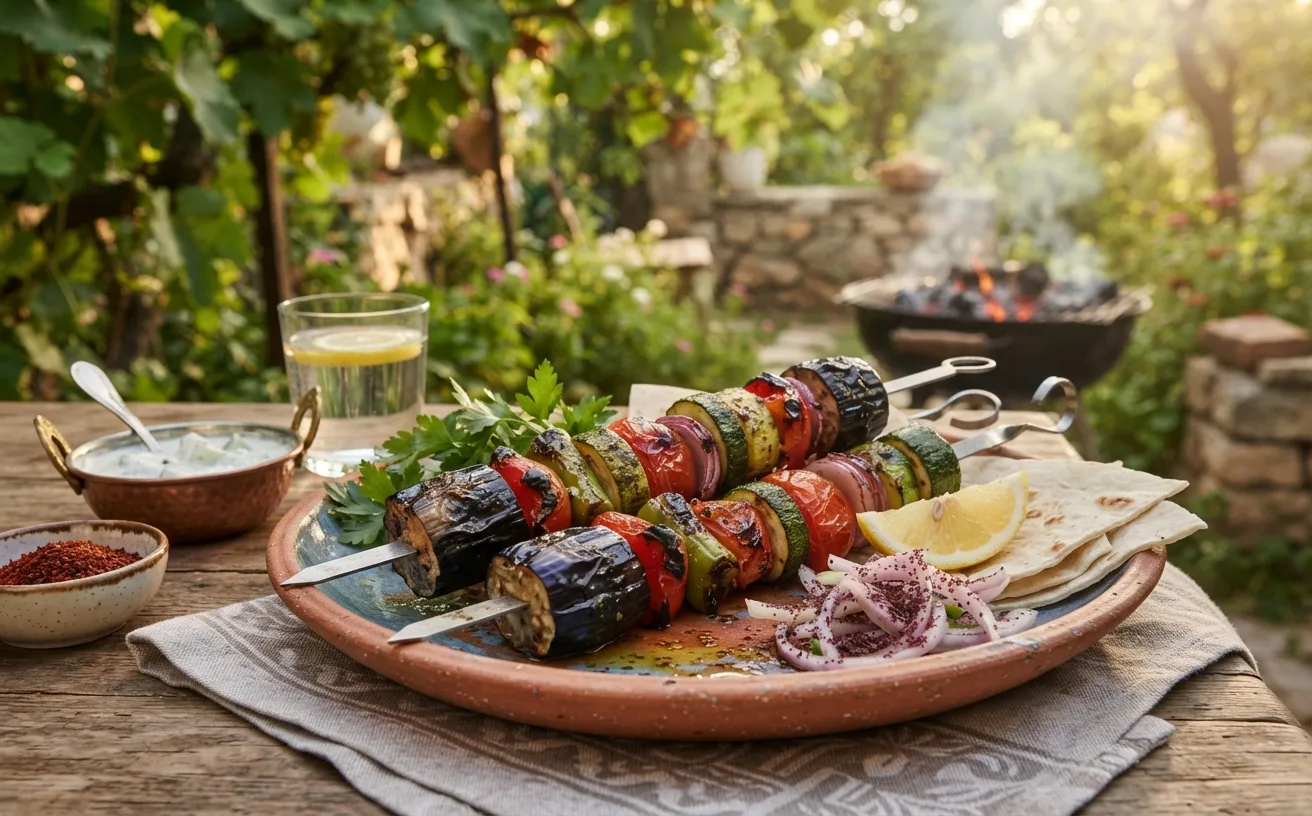
Chunks of eggplant, pepper, zucchini, onion, and mushroom marinated in olive oil and Turkish spices, skewered and char-grilled. The meat-free member of the mangal table, built on the same fire-and-skewer technique as şiş.
Also known as sebze kebabı, sebzeli kebap, vegetable kebab.
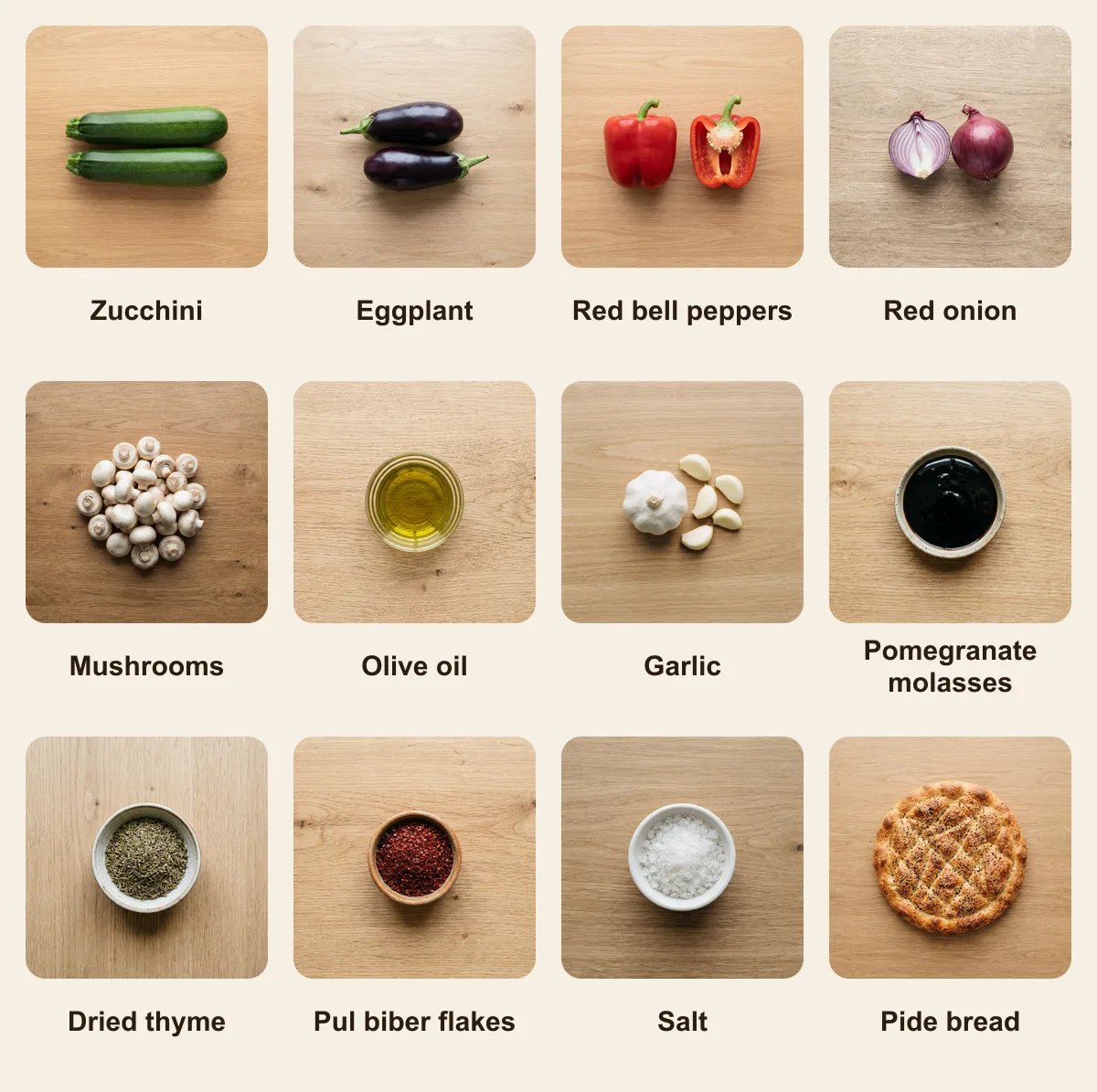
Ingredients
- 2 zucchini, thick rounds
- 1 eggplant, large chunks, salted 20 min
- 4 long green peppers (sivri biber), or 2 red bell peppers in big pieces
- 1 red onion, in big petals
- 8 firm, slightly under-ripe cherry tomatoes
- 250 g mushrooms, whole
- 80 ml olive oil
- 2 garlic cloves, grated
- 1 tbsp pomegranate molasses
- 1 tsp dried thyme, 1 tsp pul biber, 0.5 tsp salt
- Warm pide, to serve
How to make it
- 1
Salt the eggplant chunks 20 min, then pat dry — this stops them drinking all the oil.
- 2
Toss all vegetables with oil, garlic, thyme, pepper and salt.
- 3
Skewer each vegetable on its own rather than mixing them, so every piece meets the coals at its own timing.
- 4
Grill over medium-hot coals, giving the eggplant, pepper and onion skewers the full 12-15 min and pulling the courgette and tomato skewers out a few minutes earlier, until charred at the corners, the eggplant soft right through and the courgette still firm inside.
- 5
Brush with pomegranate molasses in the last 2 min and serve on warm pide.
Pro tip: Cut every vegetable to the same thickness as the slowest one (the eggplant) — uniform size, not clever ordering, is what prevents half-raw skewers.
Where Sebze Kebab comes from
What has changed is that they are now ordered as a dish in their own right rather than as a garnish.
It sits alongside a long Anatolian tradition of vegetable cooking: patlıcan salatası, közlenmiş biber, and the whole family of smoked-aubergine preparations. The kebab format simply applies the skewer to the same ingredients, which is why it feels native rather than borrowed.
How Sebze Kebab is cooked
The problem with vegetable skewers is that different vegetables cook at wildly different speeds, and stringing them together on one skewer guarantees that something will be raw and something burnt. The Turkish solution is separate skewers per vegetable, grilled to their own timing and combined on the plate — the same logic grill houses apply to meat and vegetables.
Aubergine and pepper are the two that reward the fire most, because both develop a smoky, collapsed sweetness that no oven reproduces. They want direct contact with hot coals and a fair amount of time. Courgette and tomato are quick and should be pulled early. Onion wants the middle heat and a longer cook than most people give it.
Ingredients and shopping
Small aubergines hold up better than large ones; long thin peppers (sivri biber) are more characterful than bell peppers; firm courgettes and slightly under-ripe tomatoes survive the skewer where soft ones fall apart. Marinade is olive oil, garlic, salt, dried thyme and pul biber, with pomegranate molasses or lemon brushed on at the end — restraint is better here than a complicated dressing.
If you want the plate to eat like a meal rather than a side, add halloumi or firm smoked cheese on its own skewer, and serve with a bulgur pilav. Antep-style pepper paste brushed on in the last minutes gives depth without meat.
How Sebze Kebab is served
On flatbread with sumac onions, parsley, a bowl of thick yoghurt or a tahini sauce, and bulgur pilav. It works as a course in a mixed grill or as the whole meal, and it improves with a squeeze of lemon and a spoon of pomegranate molasses at the table. Everything about the plate is the same as a meat kebab except the skewers.
Common mistakes
Mixing vegetables on one skewer
They cook at different rates. One skewer per vegetable, combined on the plate — that is how Turkish grill houses do it.
Under-cooking the aubergine
Aubergine needs to collapse completely to be good. Firm, squeaky aubergine is the most common failure of this dish.
Marinating in acid for hours
Lemon or vinegar left on vegetables draws water out and makes them limp before they reach the fire. Dress them shortly before grilling.
Grilling over flames
Flames char the skins black without cooking through. Grey glowing coals are correct here too.
Sebze Kebab: questions and answers
Can vegetables really be a kebab?
Yes — kebab describes the technique, meat on a skewer over fire being only its most common form. Grilled vegetables have always been part of the Turkish mangal.
Which vegetables work best?
Aubergine and long green peppers above all, then onion, courgette and firm tomato. Aubergine and pepper gain the most from live fire.
How do I stop vegetable kebabs going soggy?
Dress them with oil and salt shortly before grilling rather than marinating in acid for hours, and use firm, slightly under-ripe produce.
Sources and further reading
- Kebab — Wikipedia
- Izgara Sebze Tarifi — Yemek.com
- Acı Marinasyonlu Sebze Şiş Bowl Tarifi — Yemek.com