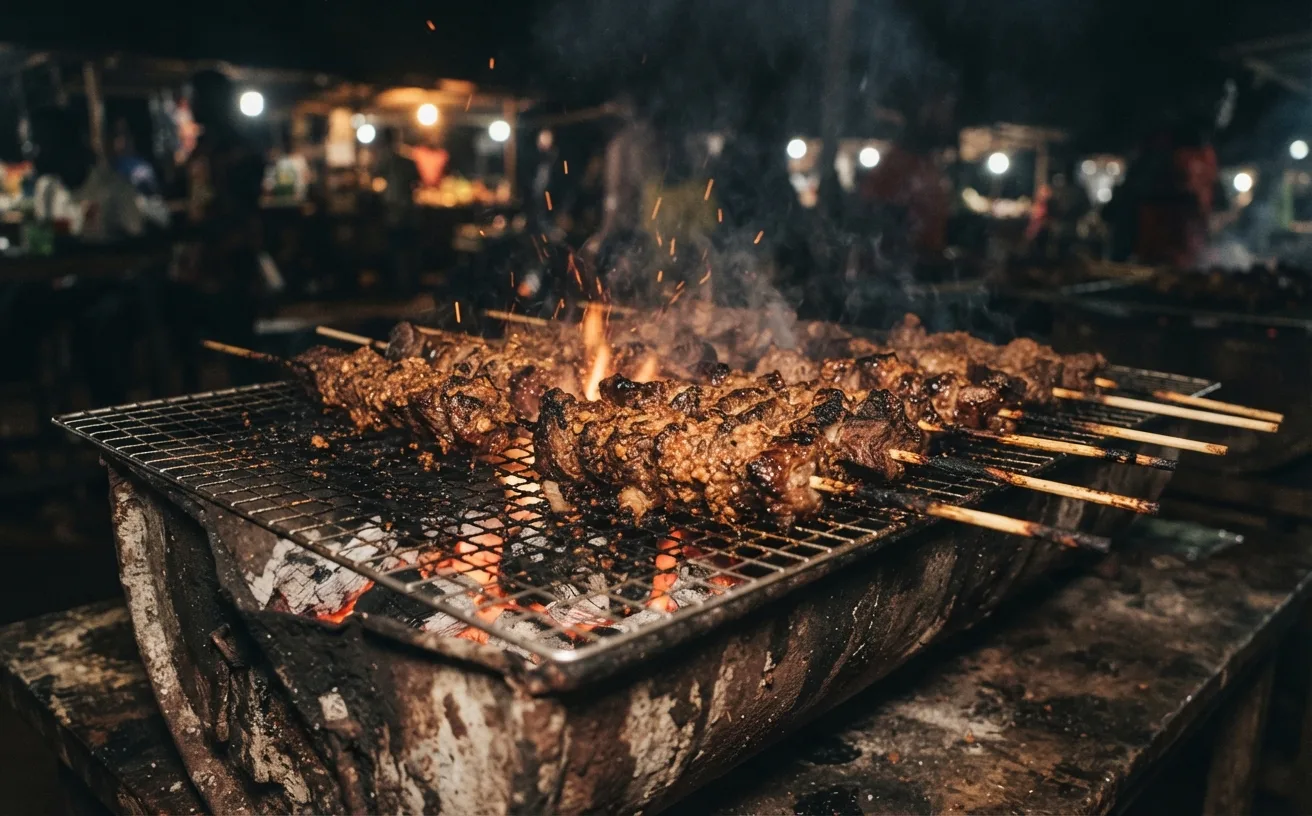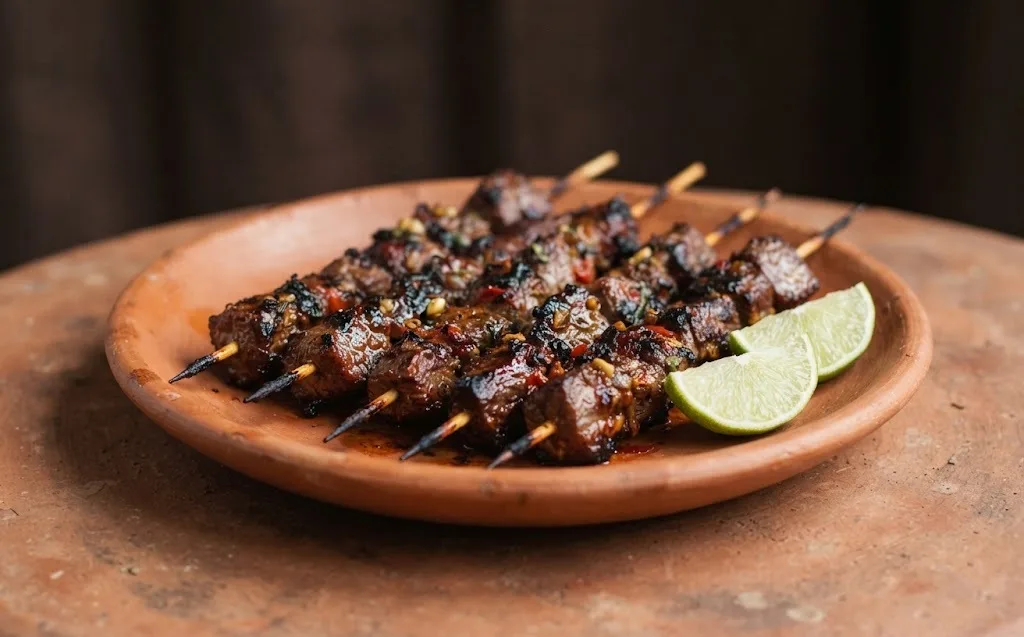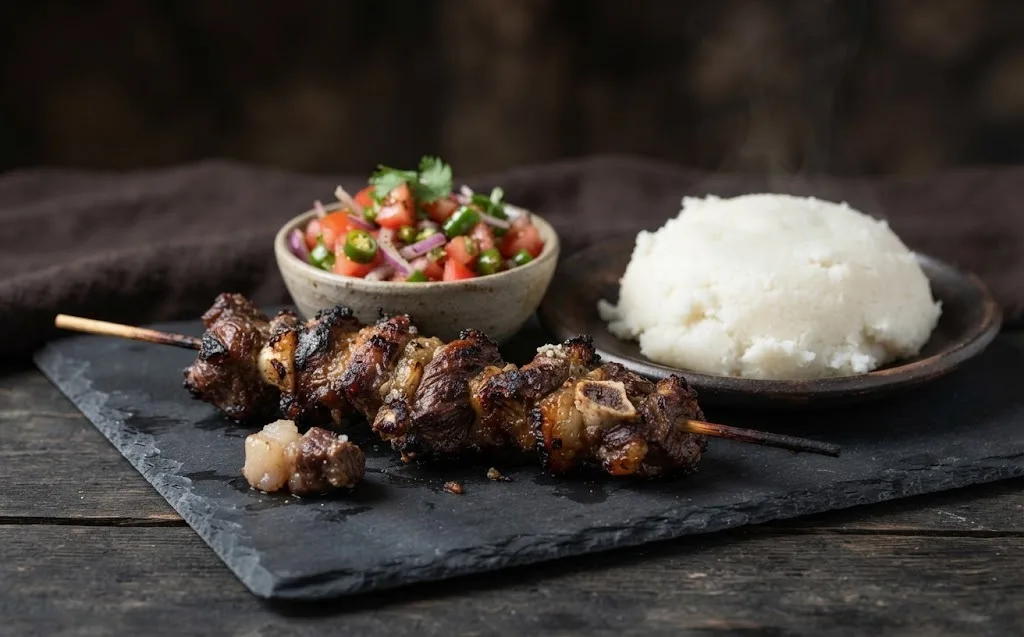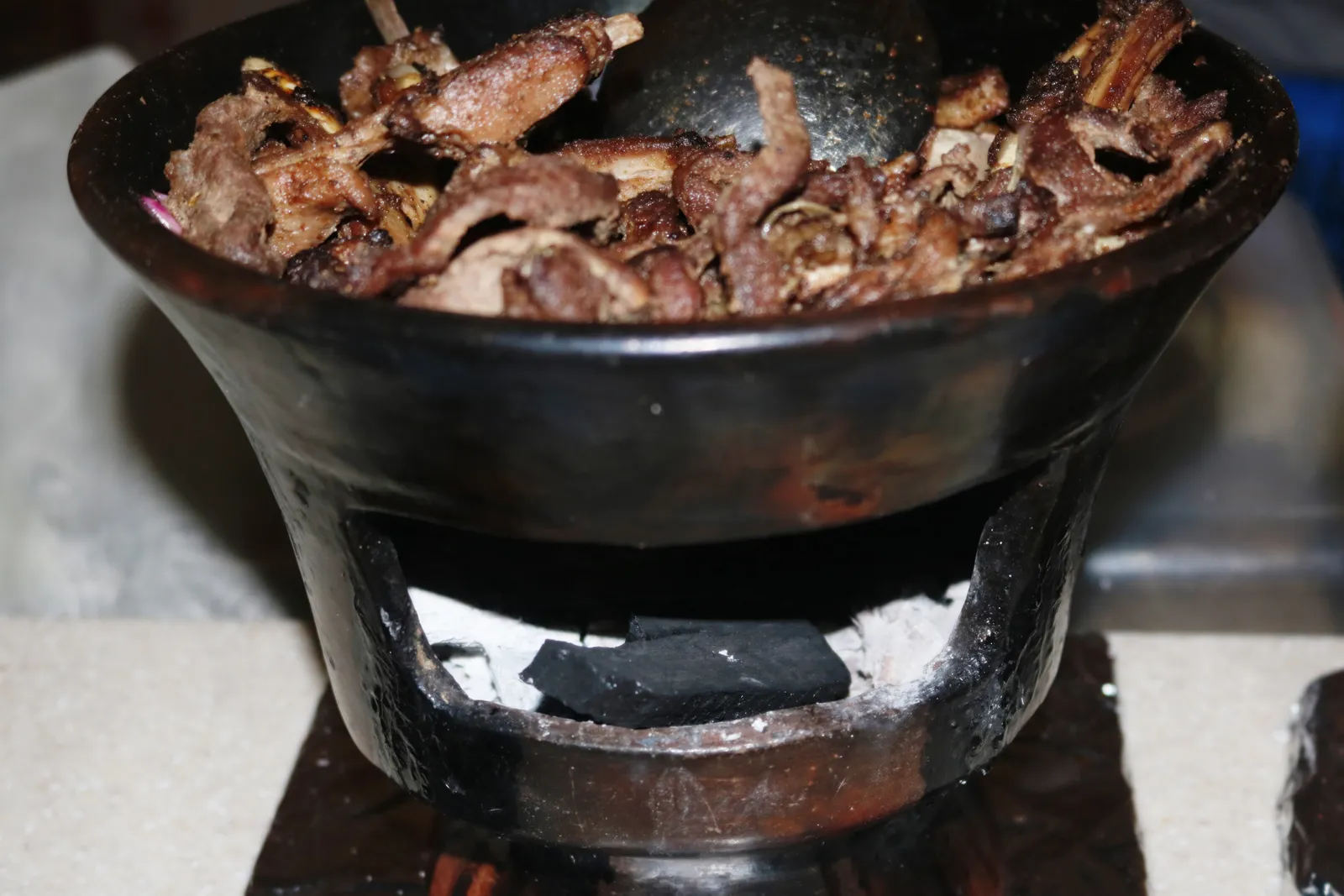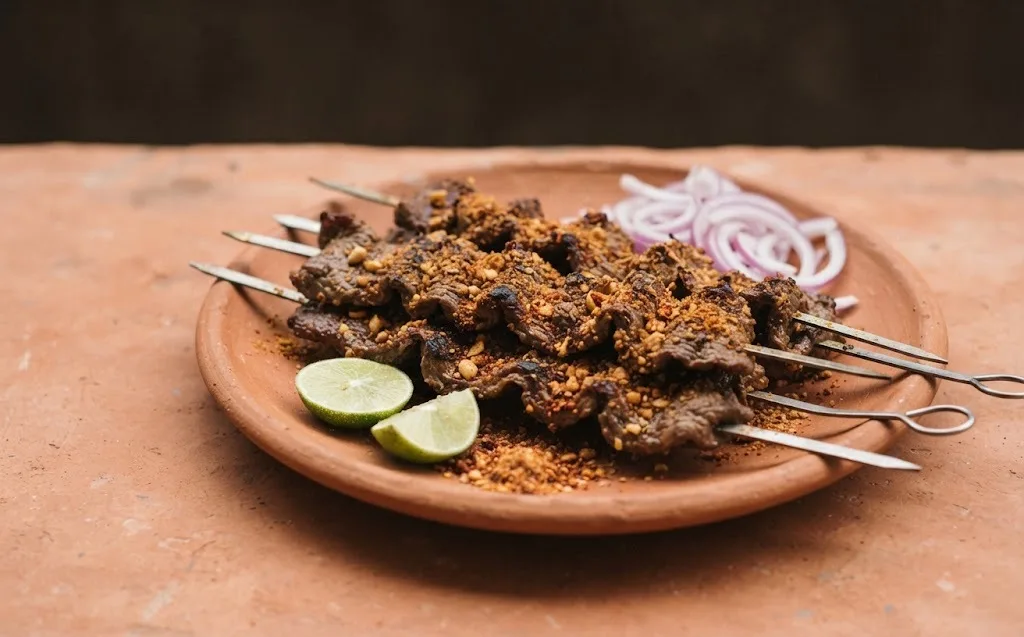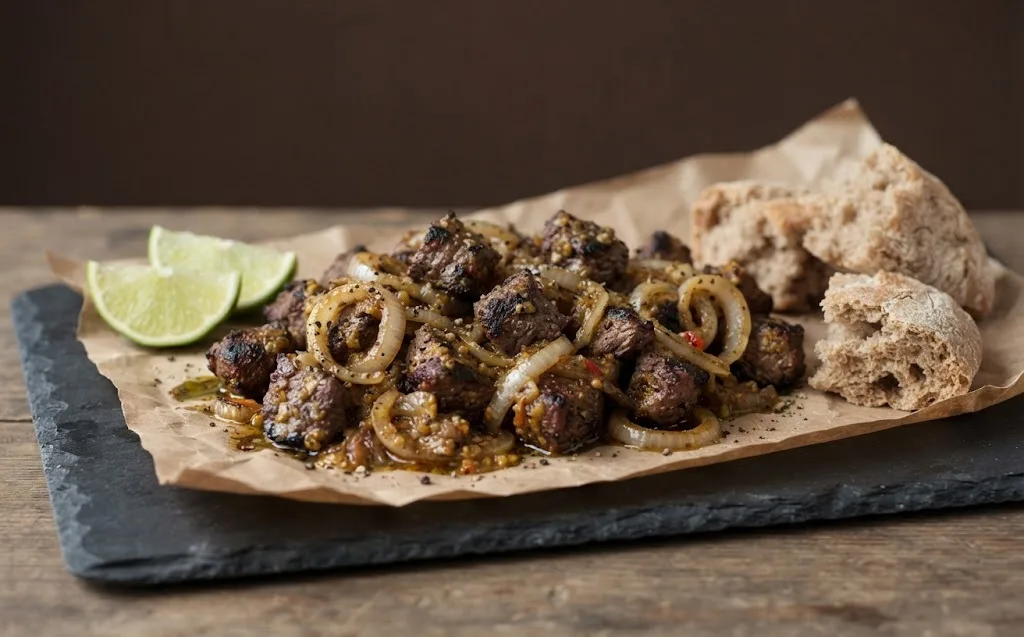
The Gambia's answer to Senegalese dibi: chopped lamb or beef seasoned simply, grilled in dedicated afra shops, and wrapped in paper with onions, black pepper, and mustard sauce. A late-night institution, typically scooped up with tapalapa bread.
Also known as Gambian afra, afra grilled meat, afra shop lamb.
Ingredients
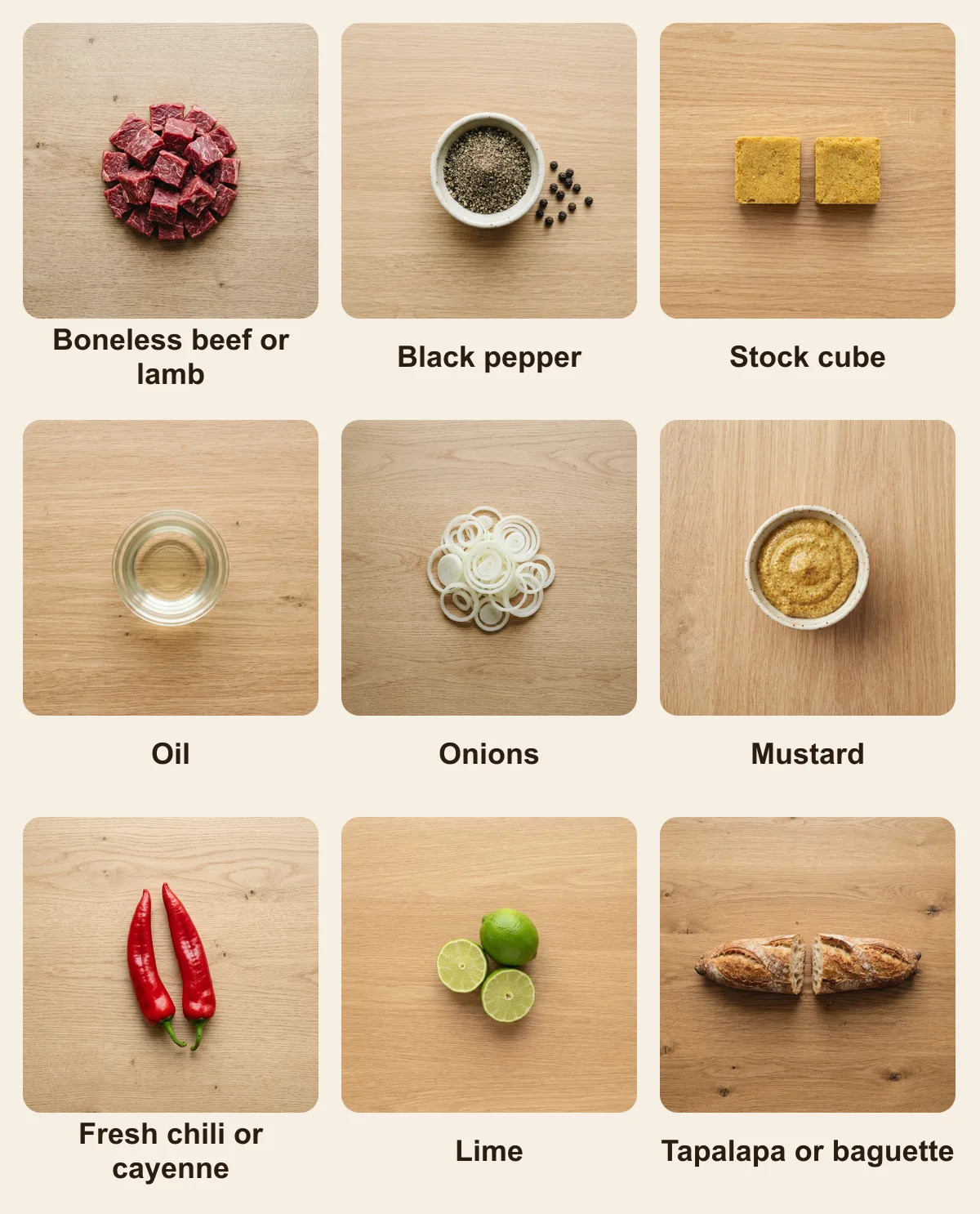
- 800 g boneless beef or lamb, in 3 cm pieces
- 2 tsp black pepper
- 1 stock cube, crushed
- 1 tbsp oil
- 2 onions, sliced into rings
- 2 tbsp mustard
- 1 fresh chili, minced (or 1/2 tsp cayenne)
- 1 lime
- tapalapa bread or baguette
How to make it
- 1
Work the black pepper, stock cube and oil over the meat and rest it 15 minutes while the charcoal turns grey.
- 2
Grill over glowing coals 15-20 minutes, turning, until the outside is dark and the inside just done.
- 3
While the meat rests, simmer the onion rings with the mustard, chili and a splash of water in a small pan 8-10 minutes until soft and lightly browned, then chop the meat small and toss it through the onions with a hard squeeze of lime.
- 4
Wrap in brown paper Serrekunda-style, or heap on a plate, and scoop up with hunks of bread.
Pro tip: Simmer the onion-mustard relish while the meat is still on the grill so both finish together; add the lime only at the very end or its acidity turns the onions mushy.
Where Afra comes from
The Gambia and Senegal share a border, a language group and most of a food culture, so afra and dibi are close relatives; the differences are in the seasoning and the bread. Tapalapa — the dense, chewy Gambian baguette-descendant — is a genuinely distinct product and it changes how the meal eats.
How Afra is cooked
The meat is cut into bite-sized pieces before it goes over the wood or charcoal, unlike the grill-whole-then-chop approach of dibi and choukouya. Gambian afra shops season more simply than Senegalese dibiteries: salt or a crushed stock cube, black pepper and often nothing else on the meat itself, with everything else happening on the paper.
Onions are the second component and are cooked separately in a pan with mustard and a splash of water into a soft, sharp relish. The chopped meat and the onion relish are combined on the paper at serving, and the customer scoops with tapalapa rather than eating with cutlery.
Ingredients and shopping
Lamb, mutton or beef in bite-sized pieces with fat left on. Boneless cuts are standard and it is sold by weight. Tapalapa bread if you can get it; a dense chewy baguette is the substitute, and a light airy one is not.
A crushed stock cube and a great deal of black pepper on the meat. For the onion relish: onions, Dijon mustard, fresh chilli and a squeeze of lime at the end.
How Afra is served
On paper with the onion relish, extra black pepper, and tapalapa bread torn to scoop it up. Eaten with the hands, late, standing or on a bench outside the shop. It is shared and ordered by weight.
Common mistakes
Over-seasoning the meat
Gambian practice is salt or a stock cube, and black pepper. The flavour comes from the smoke and the onion relish.
A light airy bread
Tapalapa is dense and chewy and holds up to the fat and sauce. A soft baguette disintegrates.
Cutting the pieces oversized
Afra is cut into bite-size chunks before it hits the coals, not grilled whole like dibi. Pieces much bigger than that just take longer to char through.
Skipping the mustard
The onion-mustard relish is the sharp counterweight to the fat. Without it the plate is heavy.
Afra: questions and answers
What is tapalapa?
A dense, chewy Gambian bread descended from the French baguette but far heavier. It holds up to fat and sauce where a light baguette collapses.
How is afra different from dibi?
They are close relatives across the Senegal-Gambia border. Afra is seasoned more simply and served with tapalapa; dibi uses a slightly more elaborate onion-mustard sauce and French bread.
Sources and further reading
- Gambian Afra — AccessGambia
- Afra or Dibi (A West African Street Food) — International Cuisine