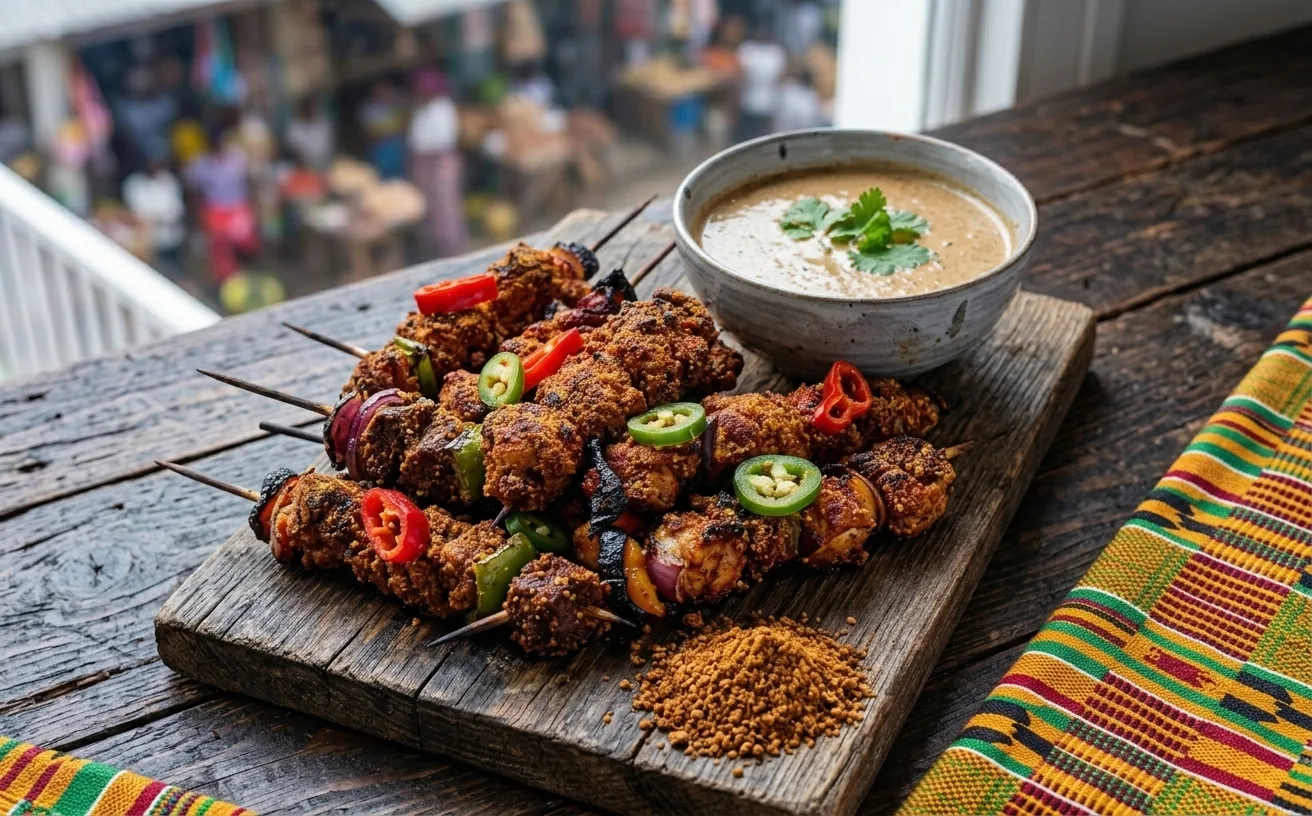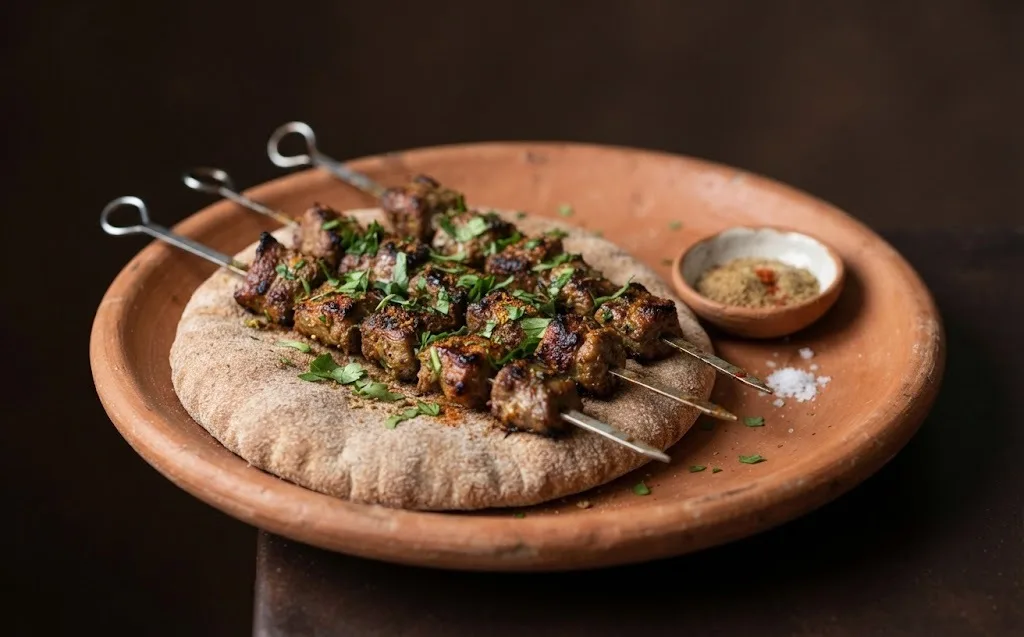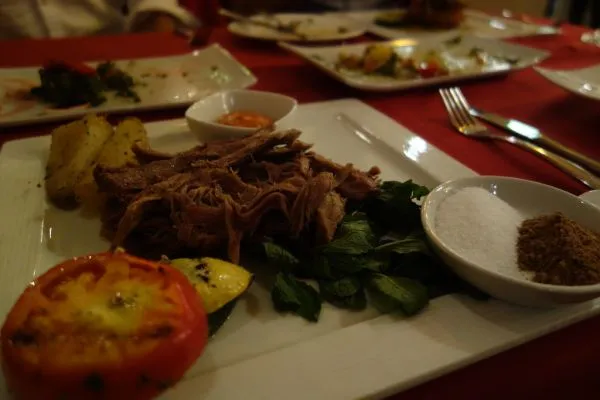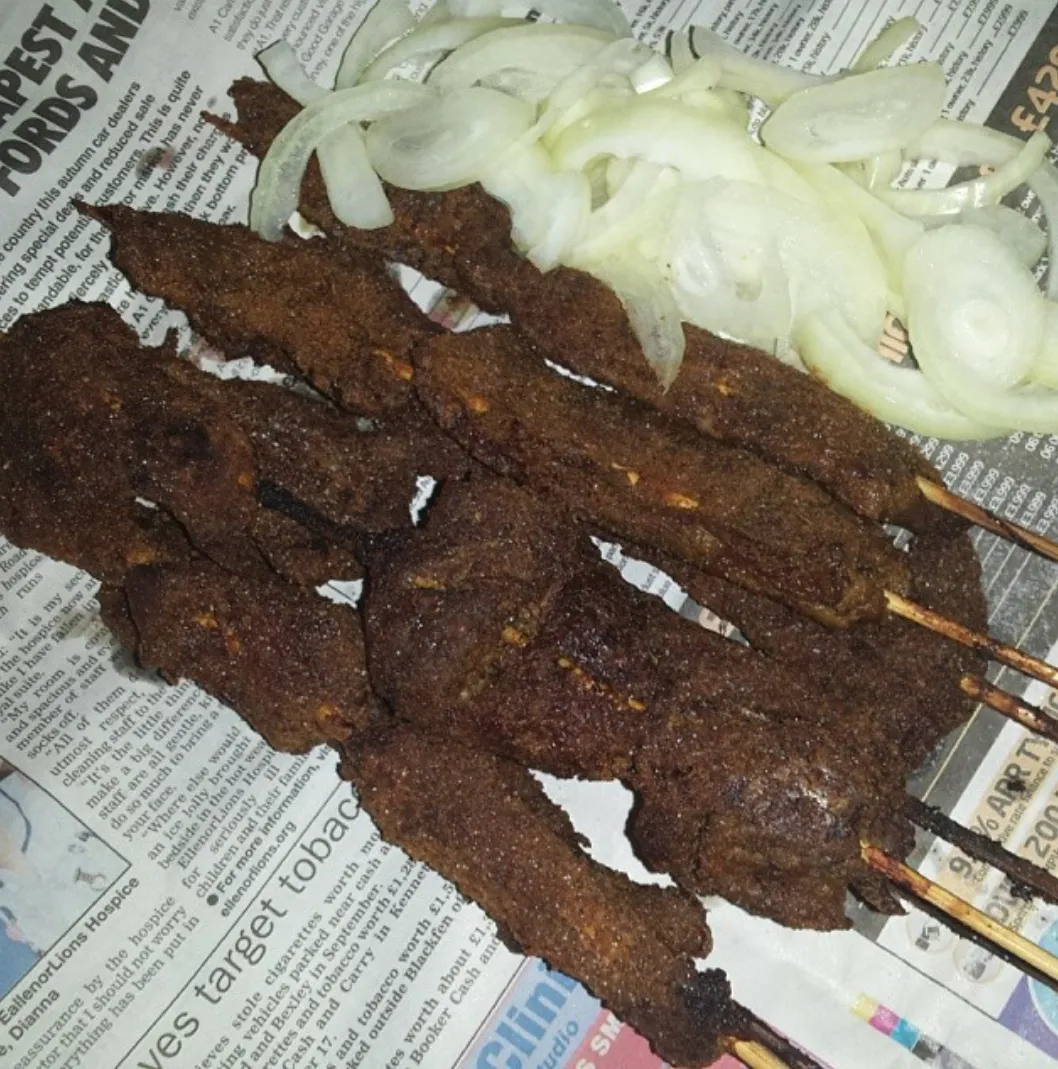
West Africa's night-market kebab, created by Hausa butchers: thin-sliced beef coated in yaji — a rub of ground peanuts, ginger, and hot pepper — then fanned out on skewers over open flame. Sold wrapped in newspaper with raw onion and extra yaji for dipping.
Also known as tsire, tsinge, suya spice kebab.
Reference video
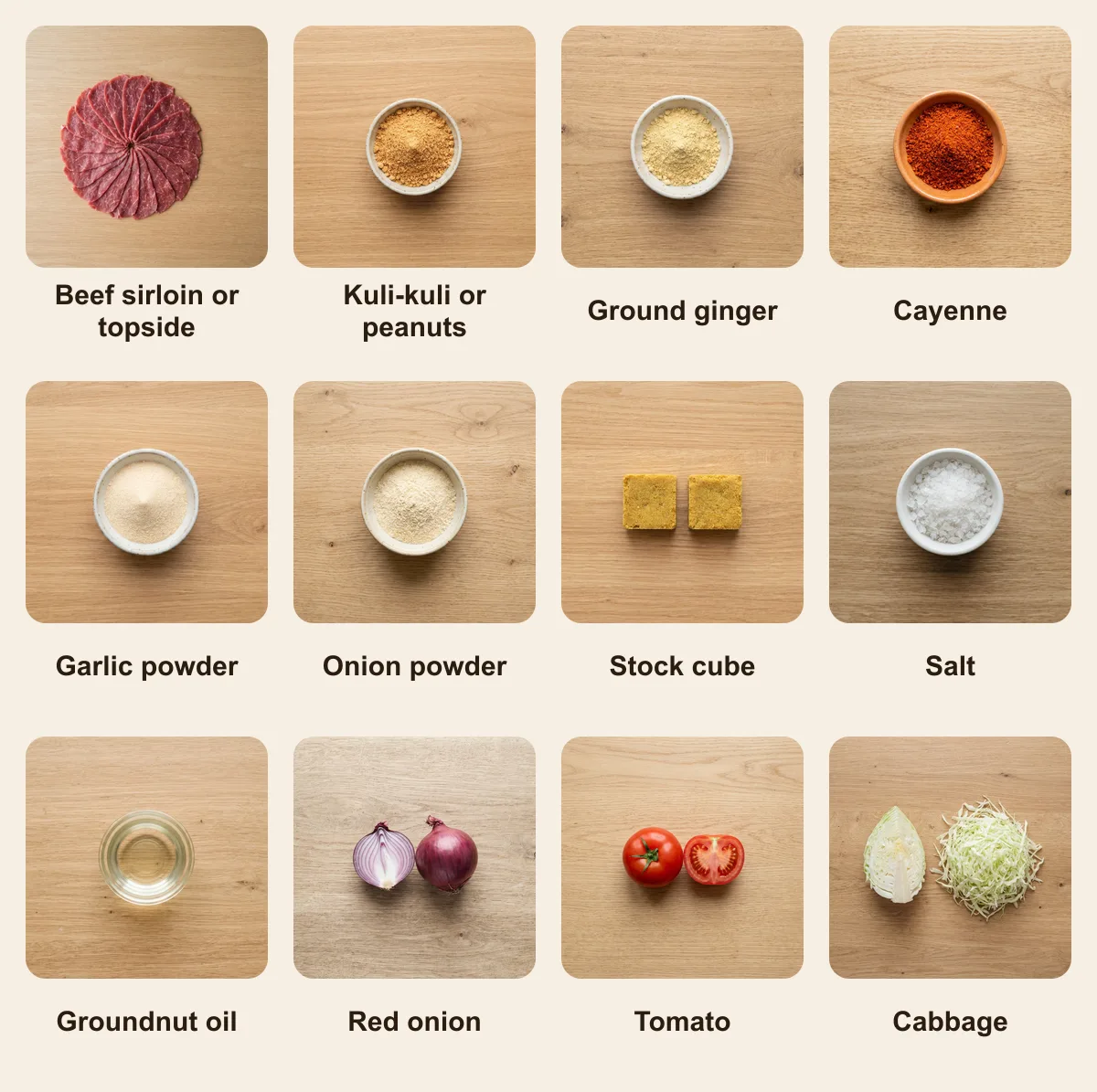
Ingredients
- 600 g beef sirloin or topside, sliced 5 mm thin across the grain
- 80 g kuli-kuli (defatted peanut cake) or roasted peanuts, ground and pressed dry
- 1 tbsp ground ginger
- 2 tsp cayenne
- 1 tsp garlic powder and 1 tsp onion powder
- 1 stock cube, crushed
- 0.5 tsp salt
- 30 ml groundnut oil
- Red onion, tomato and cabbage, sliced, to serve
How to make it
- 1
Pound or blitz the peanuts, then press the powder between paper towels until it feels like dry sand; mix with ginger, cayenne, garlic, onion, stock cube and salt to make yaji.
- 2
Brush the beef ribbons with oil and dredge through two-thirds of the yaji, patting it on. Rest 1 hour uncovered.
- 3
Weave the ribbons onto skewers in loose folds.
- 4
Grill over hot coals 3-4 minutes per side until the crust darkens and the edges frill.
- 5
Dust with the reserved yaji and serve heaped with raw onion, tomato and cabbage.
Pro tip: Yaji stands or falls on dryness. Oily ground peanuts clump, slide off and scorch; kuli-kuli exists precisely because Hausa suya men press the oil out first. Paper towels and patience get you 90% of the way.
Where Suya comes from
The mai suya, the suya man, is a recognised trade with its own apprenticeship, and the spread of suya southward through Nigeria and outward across West Africa followed Hausa trading and cattle-droving routes. It is one of the very few kebab traditions in the world built around a nut rather than a spice as its defining ingredient.
Suya and its cousins: one peanut crust, many cuts
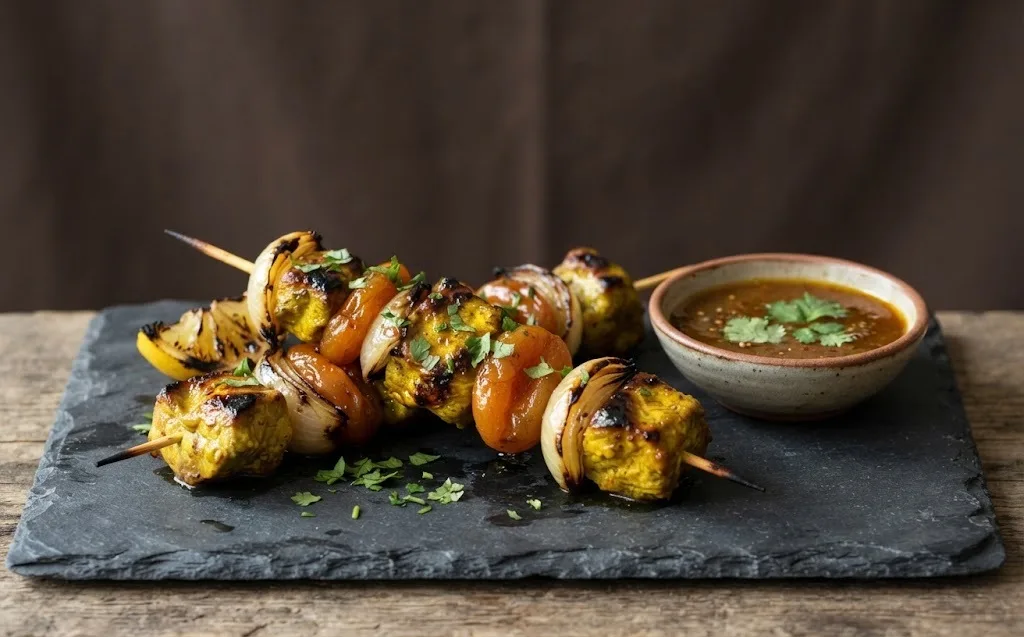
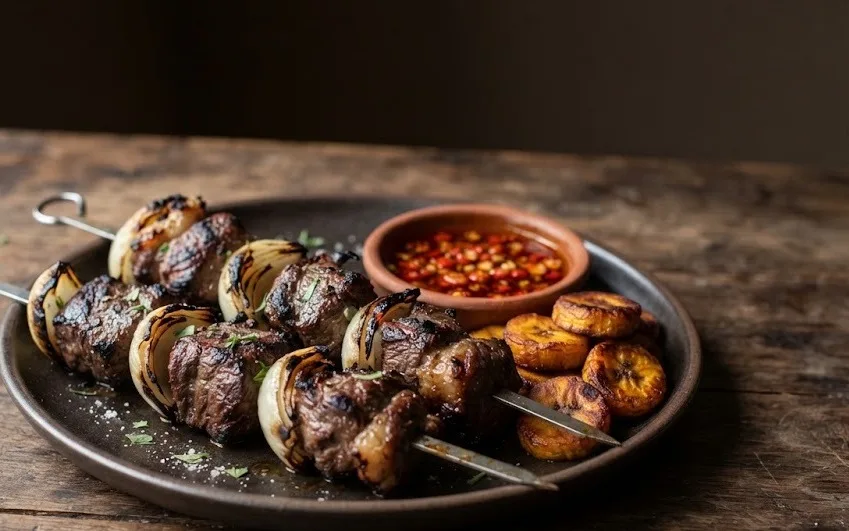
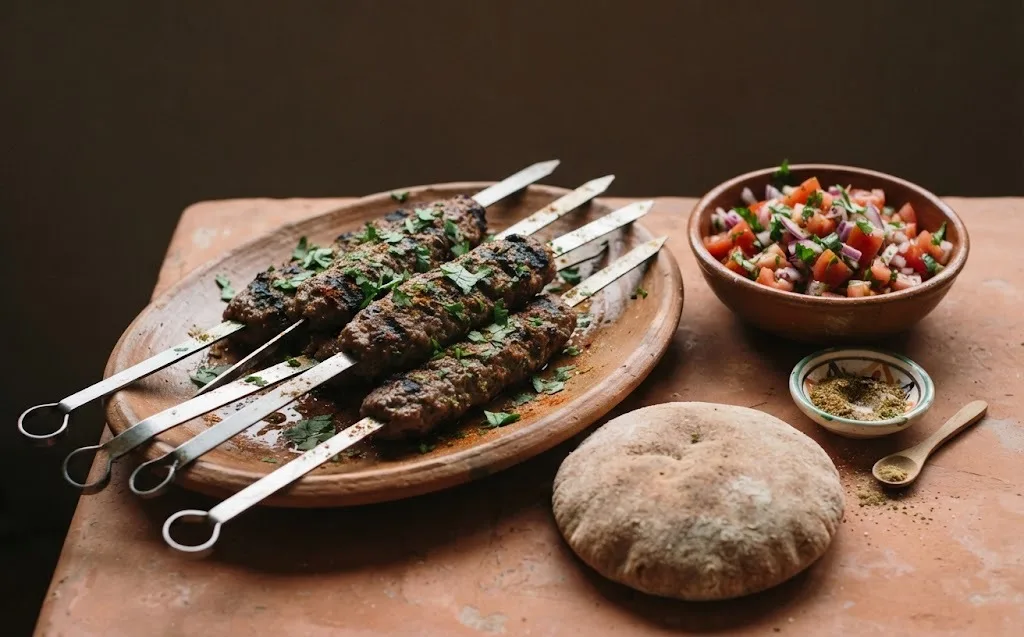
Suya is the thin-sliced, loosely fanned member of a Hausa family that stretches across the Sahel. Tsire is the same beef ribbon woven tightly onto slender sticks, and in Sudan the trade goes by agashe, with coarsely crushed peanuts and a pinch of cardamom. Ghana's kyinkyinga switches to 2 cm cubes rolled twice in tankora, while Cameroon's soya uses thicker strips or chunks that need 12 to 15 minutes over medium coals. Balangu drops the crust and serves the yaji as a dip, and kilishi dries the beef into shelf-stable, peanut-coated sheets.
Compare: Tsire · Agashe · Kyinkyinga · Soya (Cameroonian Suya) · Balangu · Kilishi
How Suya is cooked
Yaji is the dish and its base is kuli-kuli — groundnut cake left after peanut oil is pressed out — ground to a powder with dried chilli, ginger, garlic powder, onion powder and often cloves or negro pepper. Using the defatted cake rather than whole peanuts matters: whole peanuts have too much oil and the rub goes greasy and burns.
The meat is sliced very thin and threaded onto flat skewers in a ribbon, then fanned open so both faces are exposed. It is oiled, coated in yaji, grilled fast, and then coated again after cooking — the second application never sees the fire, which is why it stays bright and pungent while the first has toasted into a crust.
Ingredients and shopping
Beef is standard — a lean cut such as topside or sirloin, sliced very thin. Ram and offal versions exist and are popular. Kuli-kuli is sold in African groceries; if it is unavailable, roasted peanuts blitzed and then blotted hard to remove oil is the workaround, but the texture is never quite right.
The chilli should be a dried African bird's-eye or scotch bonnet, ground. Ginger powder in quantity, plus garlic powder, onion powder and salt. Groundnut oil for brushing. Raw onion and sliced tomato for serving, and newspaper or brown paper to wrap.
How Suya is served
Wrapped in newspaper with sliced raw onion, tomato and a heap of extra yaji for dipping. Eaten with the fingers standing at the stall, in the evening. A cold beer or a soft drink. It is night food and the stalls do not open until dark. In Nigerian cities the suya spot doubles as the after-work meeting point, and the unwrapping has its own ritual: paper opened flat on the counter, onions scattered over the hot meat, extra yaji shaken from a jar that never seems to empty.
Common mistakes
Using whole ground peanuts instead of kuli-kuli
The oil makes the rub greasy and it burns on the fire. Kuli-kuli is defatted, which is why it crusts.
Thick slices
Suya is thin — the whole point is a large surface area for the spice crust. Thick cuts are a different dish.
Only coating before grilling
A third of the yaji goes on after cooking, uncooked. That is where the pungency comes from.
Grilling slowly
Thin slices over a slow fire dry out. Fast, close to the flame, turned often.
Suya: questions and answers
What is yaji?
The suya spice rub — ground kuli-kuli (defatted peanut cake) with dried chilli, ginger, garlic and onion powder. It is applied both before and after grilling.
What is kuli-kuli?
The groundnut cake left after peanut oil is pressed out, ground into a powder. Its low oil content is why it forms a crust instead of burning.
Can I use peanut butter or ground peanuts?
Not really. The oil makes the rub greasy and it burns. Blitzed roasted peanuts blotted hard is the workaround, but kuli-kuli from an African grocery is far better.
Why is the meat sliced so thin?
To maximise the surface area for the spice crust, which is the entire point of the dish.
Sources and further reading
- Suya — Wikipedia
- Yaji (spice blend) — Wikipedia
- Suya: Street Food Like No Other — Pan-Atlantic University (Google Arts & Culture)
- Nigeria's No. 1 Street Food: Beef Suya — Christopher Kimball's Milk Street