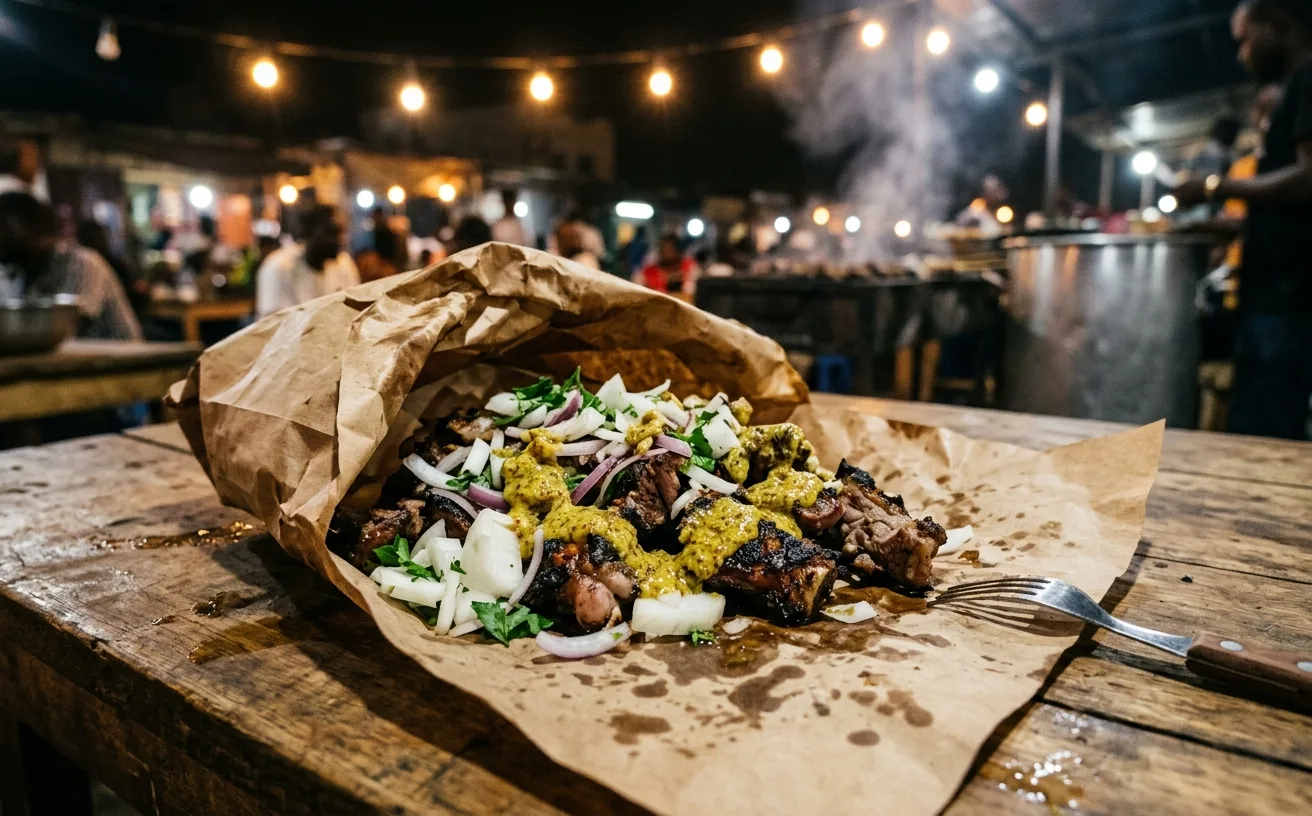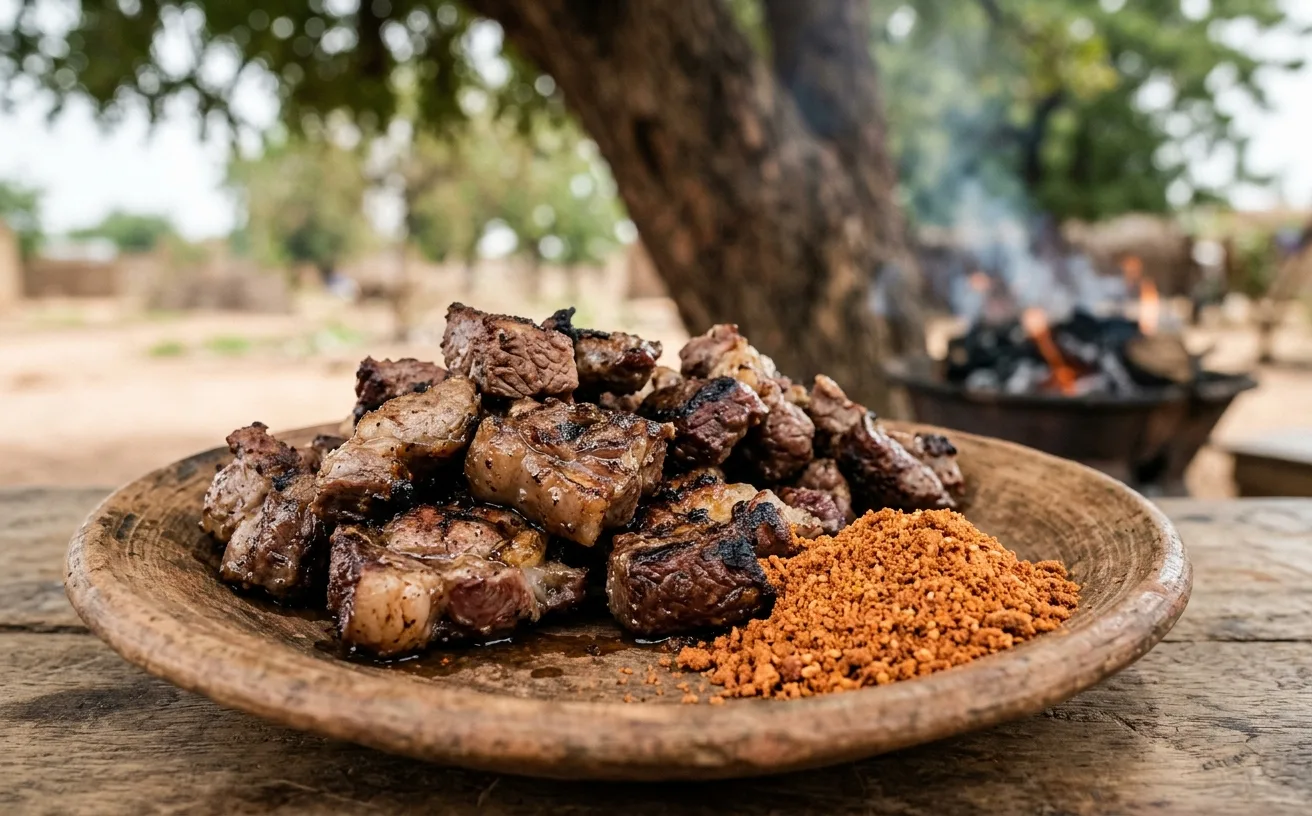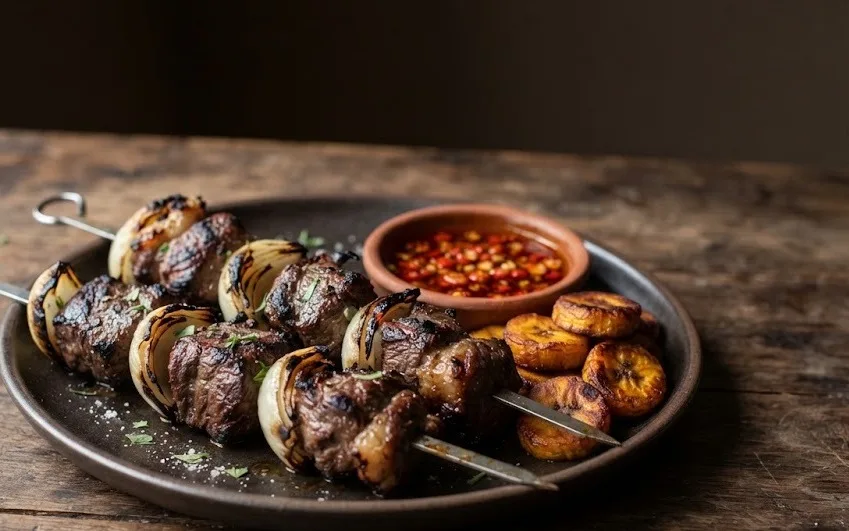
In the Great Lakes region the French word 'brochette' names a whole bar culture: goat meat (occasionally fish or beef) salted, skewered, and grilled over charcoal, served with grilled banana or fried potatoes and cold beer. Goat brochettes are effectively Rwanda's national dish.
Also known as brochette, goat brochettes, Rwandan brochettes.
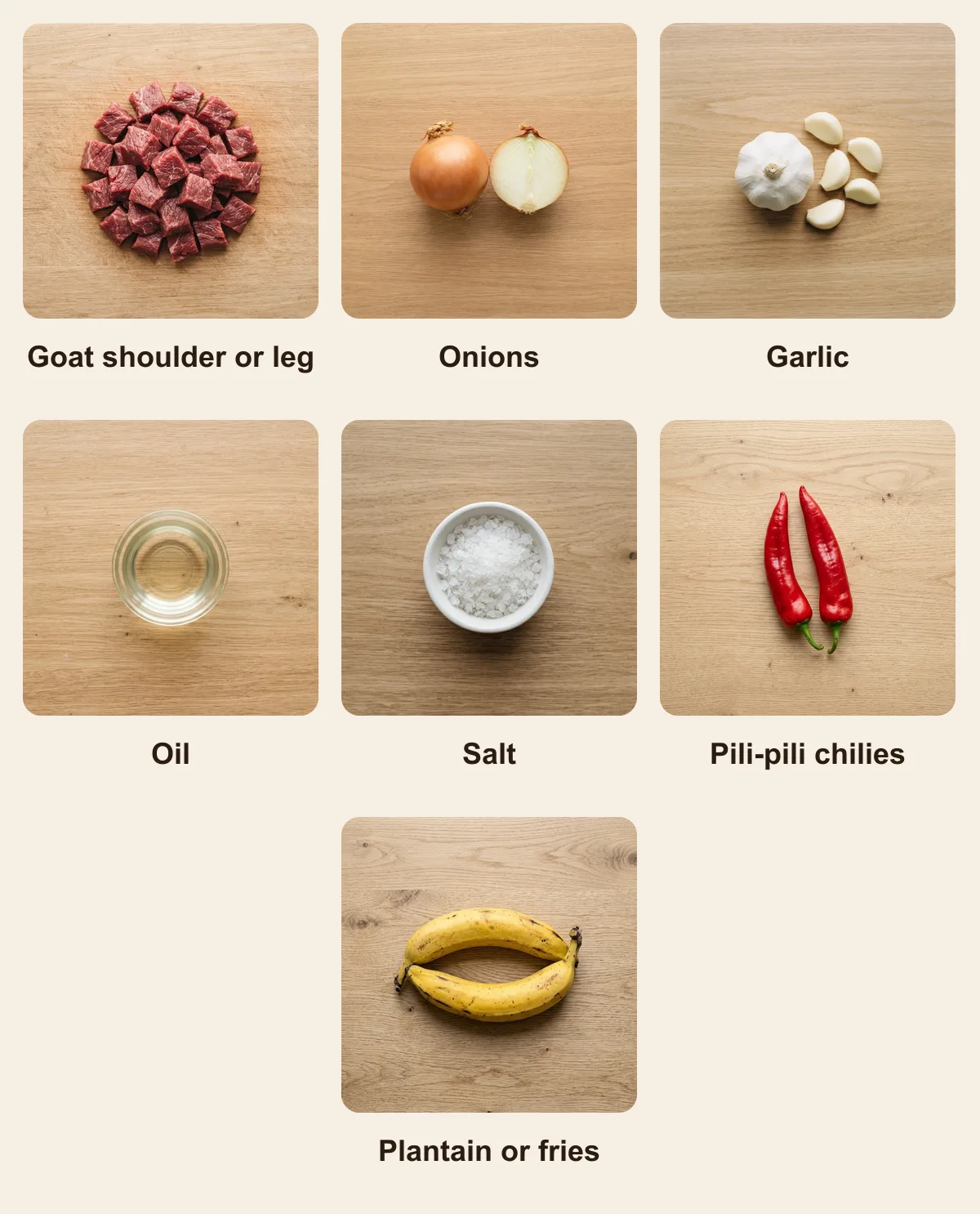
Ingredients
- 800 g goat shoulder or leg, in 3 cm pieces with some fat left on
- 1 onion, in petals for threading
- 3 garlic cloves, crushed
- 30 ml oil
- 1.5 tsp salt
- pili-pili: 4 bird's-eye chillies pounded with 1 garlic clove, 30 ml oil and a squeeze of lemon
- grilled plantain or fries, to serve
How to make it
- 1
Rub the goat with the garlic and oil — a light marinade, the bar-style way, never a heavy one — and leave it 1 h.
- 2
Skewer the pieces with onion petals between, keeping any fat edges outward.
- 3
Grill over medium coals 15-20 min, salting midway; goat is served well-done here but must still bead juice.
- 4
Rest the brochettes 5 min under foil or a plate.
- 5
Serve bar-style with pili-pili on the side and grilled plantain or a pile of fries.
Pro tip: Pull the skewers the moment the meat is firm with clear juice and rest them; goat has little fat to hide behind, and five extra minutes on the grill turns it to rope.
Where Brochettes come from
The word arrived with Belgian colonial administration and attached itself to grilling practices that long predated it. What makes the East African brochette distinctive is the pairing with ibitoke — the cooking banana grilled alongside on its own skewer — which is a genuinely local combination found nowhere in the French tradition the name came from.
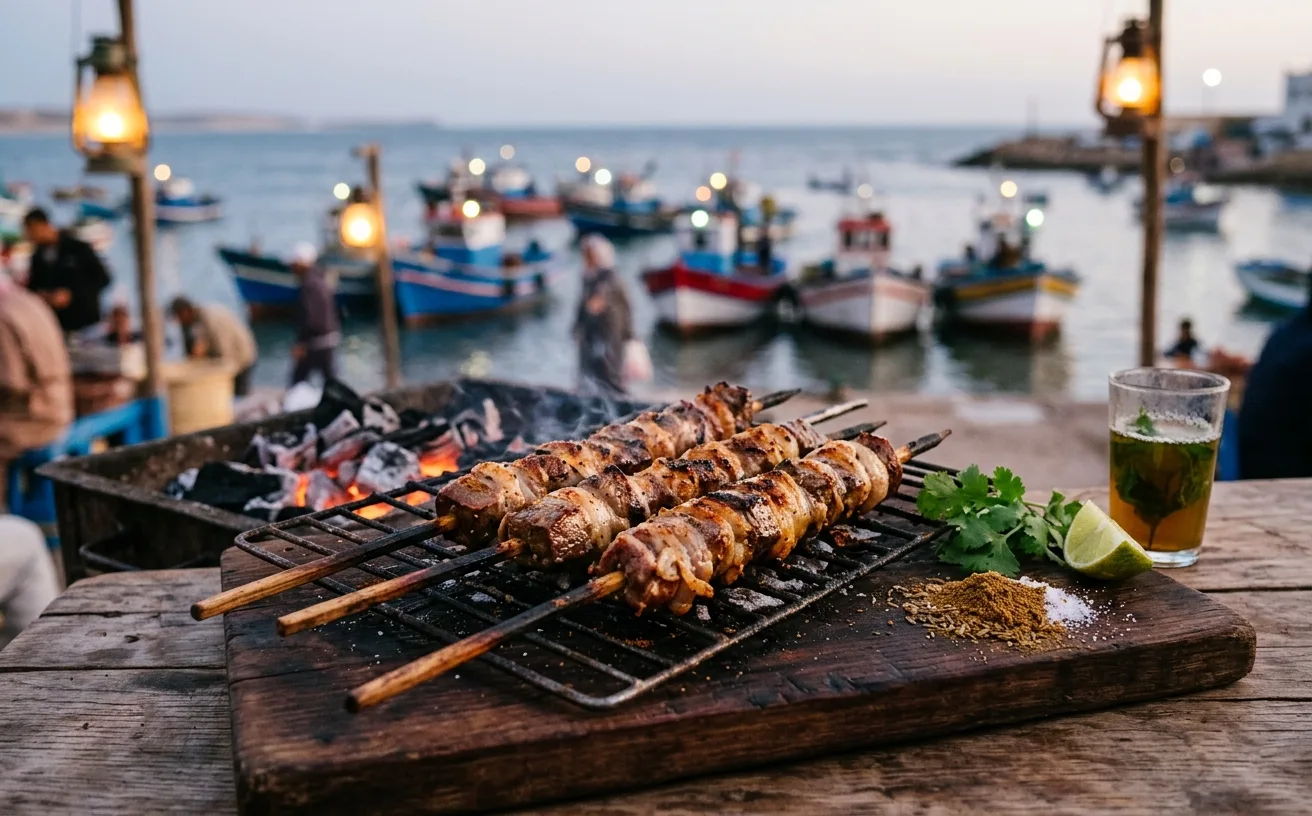
Salted goat and grilled banana at a Great Lakes bar
Goat links the Great Lakes brochette to Djibouti's, yet the seasoning could hardly be further apart. In Kigali and Bujumbura the meat gets salt, oil and often a little garlic, while Djiboutian brochettes sit for hours in a cumin-heavy xawaash-style paste. Lean goat gets a longer, gentler cook over moderate charcoal in both places, unlike Qotban's small lamb cubes that char in six to eight minutes over very hot coals. The real signature is ibitoke, cooking banana grilled on its own skewer alongside, with pili-pili on the side and a cold beer. Fried potatoes are the other common partner, matching the French fries served in Djibouti.
Compare: Djiboutian brochettes · Qotban (Moroccan Lamb Brochettes)
How Brochettes are cooked
The seasoning is minimal — salt, sometimes a little oil and garlic — and the technique is a slow grill over moderate charcoal rather than a fast sear. Goat is a lean, worked meat and it needs time; a Rwandan brochette typically spends fifteen to twenty minutes over the coals with regular turning.
The banana is grilled on its own skewer alongside, peeled and cut into thick rounds, until it softens and caramelises at the edges. It absorbs smoke and a little of the fat dripping around it, and eating the two together is the intended experience rather than a serving suggestion.
Ingredients and shopping
Goat, from a younger animal, in cubes of three centimetres with fat left on. Beef and tilapia are the alternatives. Cooking bananas — plantain-adjacent but starchier — for grilling alongside; green plantain is the nearest substitute.
Salt, oil, and often a little crushed garlic. Some bars add a light marinade of oil, garlic and salt. Pili-pili — the chilli condiment — on the side. Charcoal, and a grill that allows a moderate steady heat rather than a blast.
How Brochettes are served
By the skewer at a bar, with grilled banana or fried potatoes, pili-pili sauce and a large cold beer. It is evening and social food, ordered in rounds as the night goes on, and the brochette bar is a genuine institution in Kigali and Bujumbura.
Common mistakes
Grilling goat fast
It is lean and worked. Fifteen to twenty minutes over moderate coals with turning; a hard sear makes it tough.
Skipping the grilled banana
Fries are common at the bar too, but grilled banana is the local pairing. Grill it on its own skewer alongside so it takes the smoke.
Heavy marinades
The tradition is salt and smoke. Elaborate marinades are not the local idiom.
Old goat
A younger animal makes a large difference here, since there is no acid marinade to tenderise.
Brochettes: questions and answers
What meat is used?
Goat, most commonly, from a younger animal. Beef and tilapia are the usual alternatives.
What is served with brochettes?
Grilled cooking banana (ibitoke) on its own skewer, or fried potatoes, with pili-pili chilli sauce and beer.
Sources and further reading
- Rwandan Goat Brochettes (Grilled Goat on Skewers) — International Cuisine
- Lamb brochettes – Rwanda — African Bites