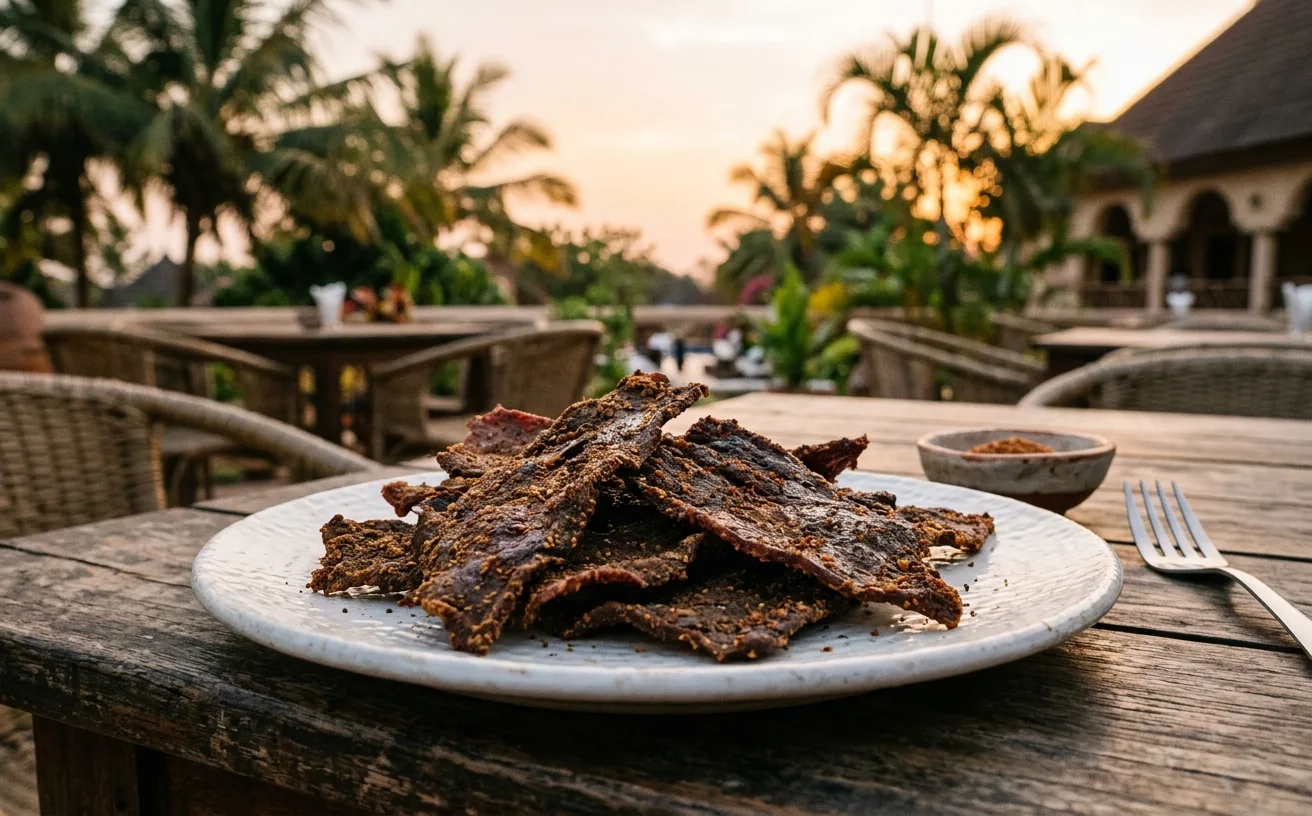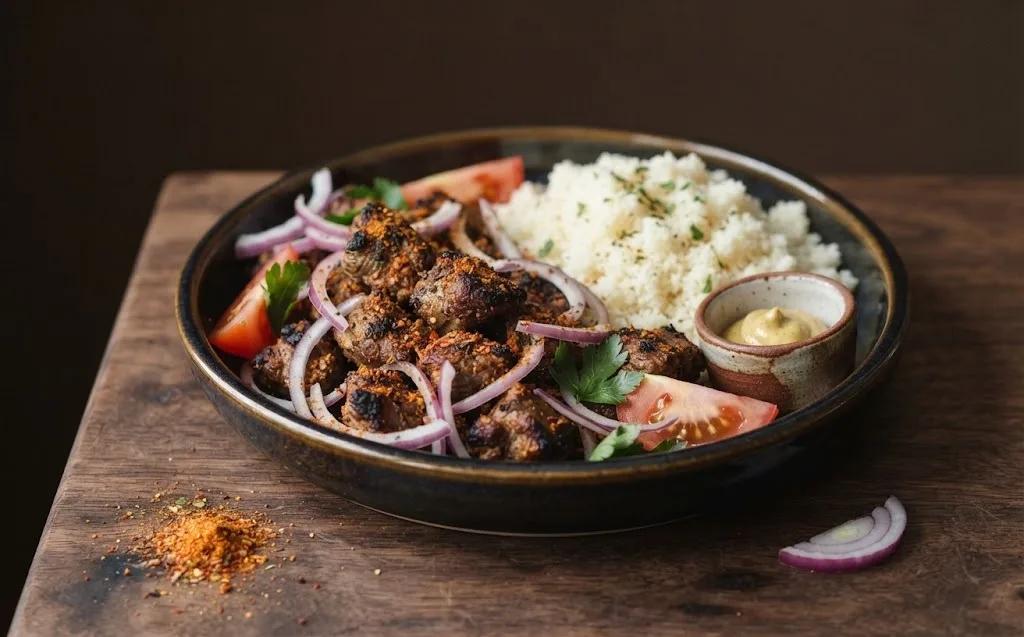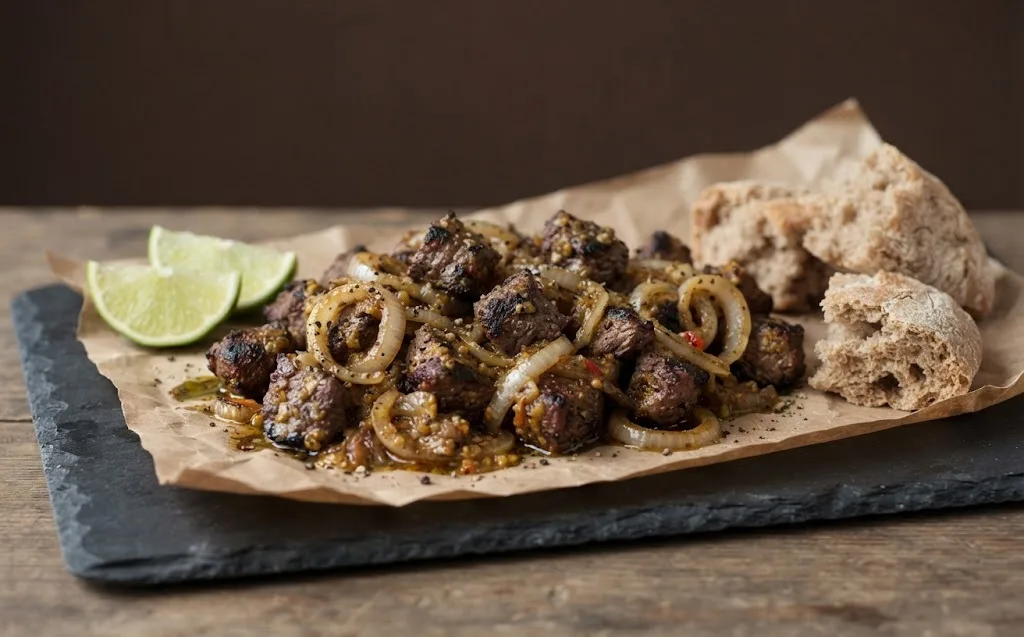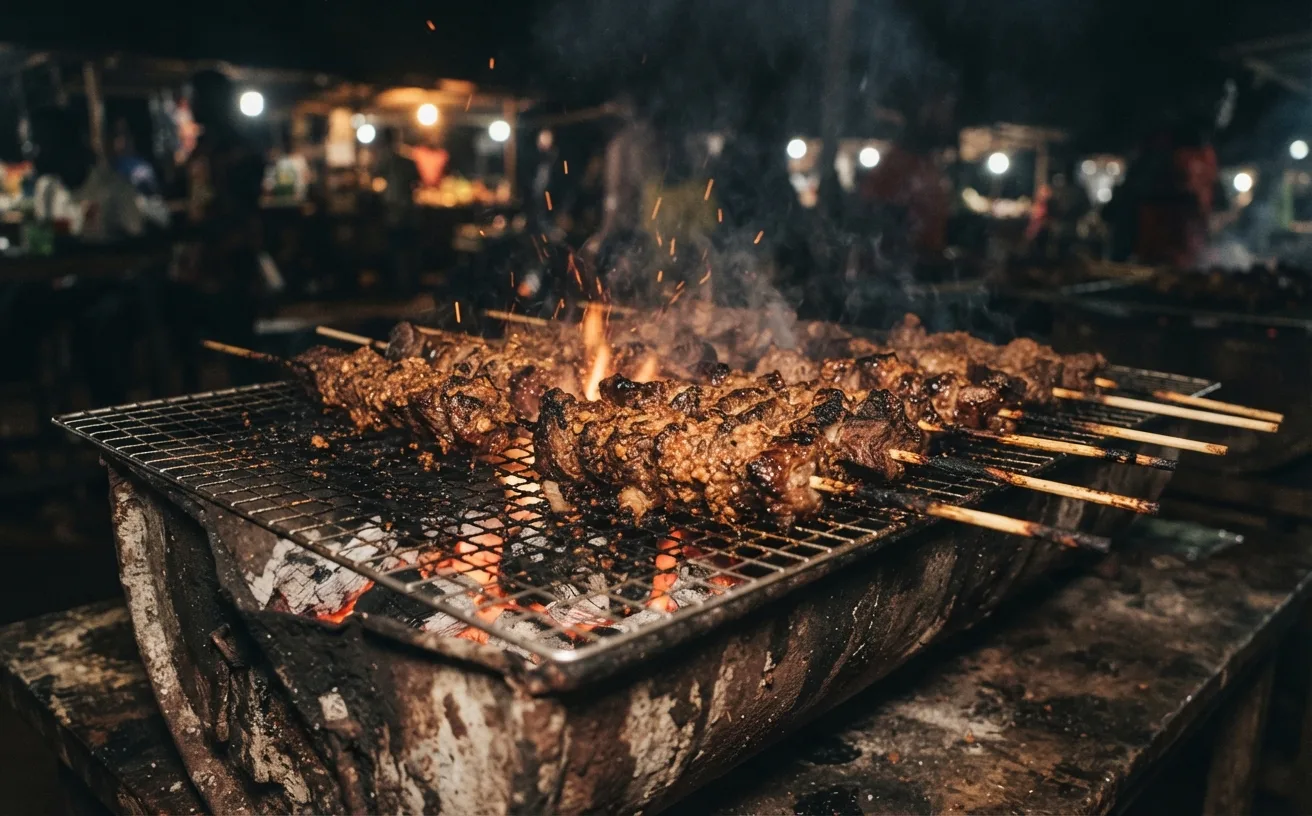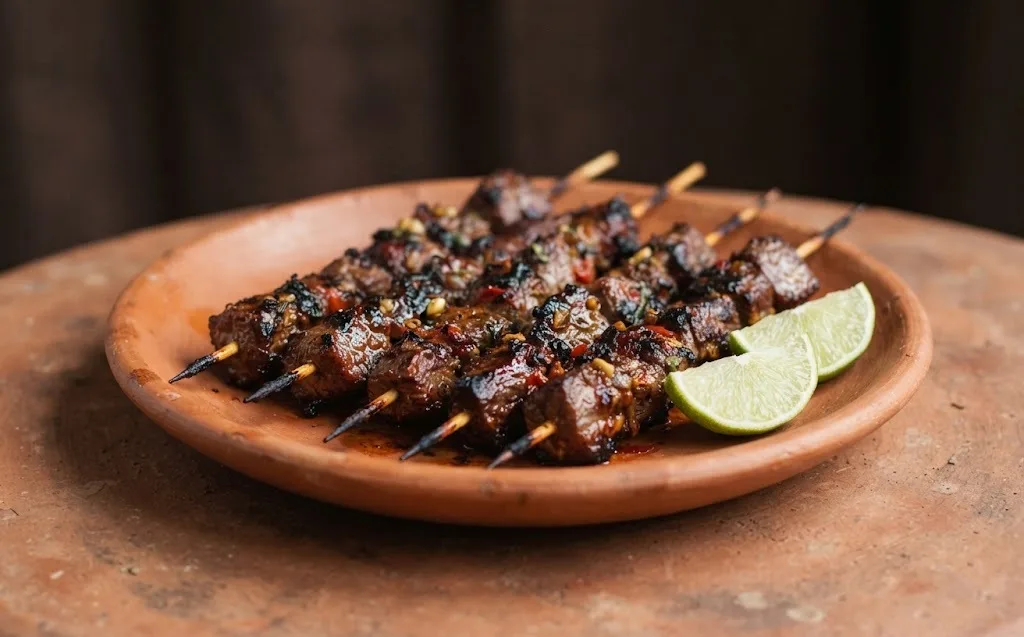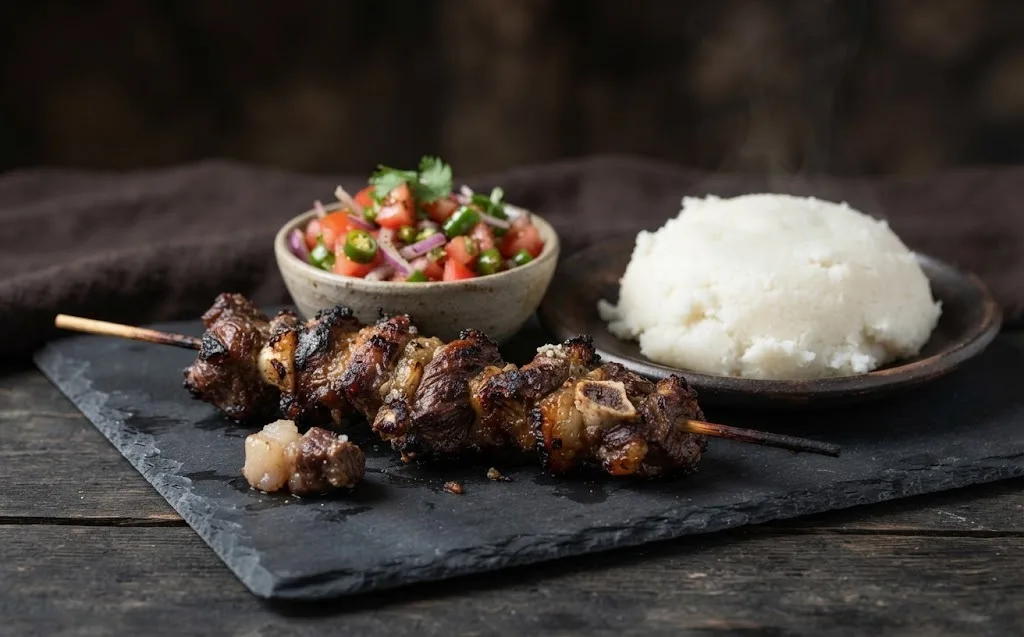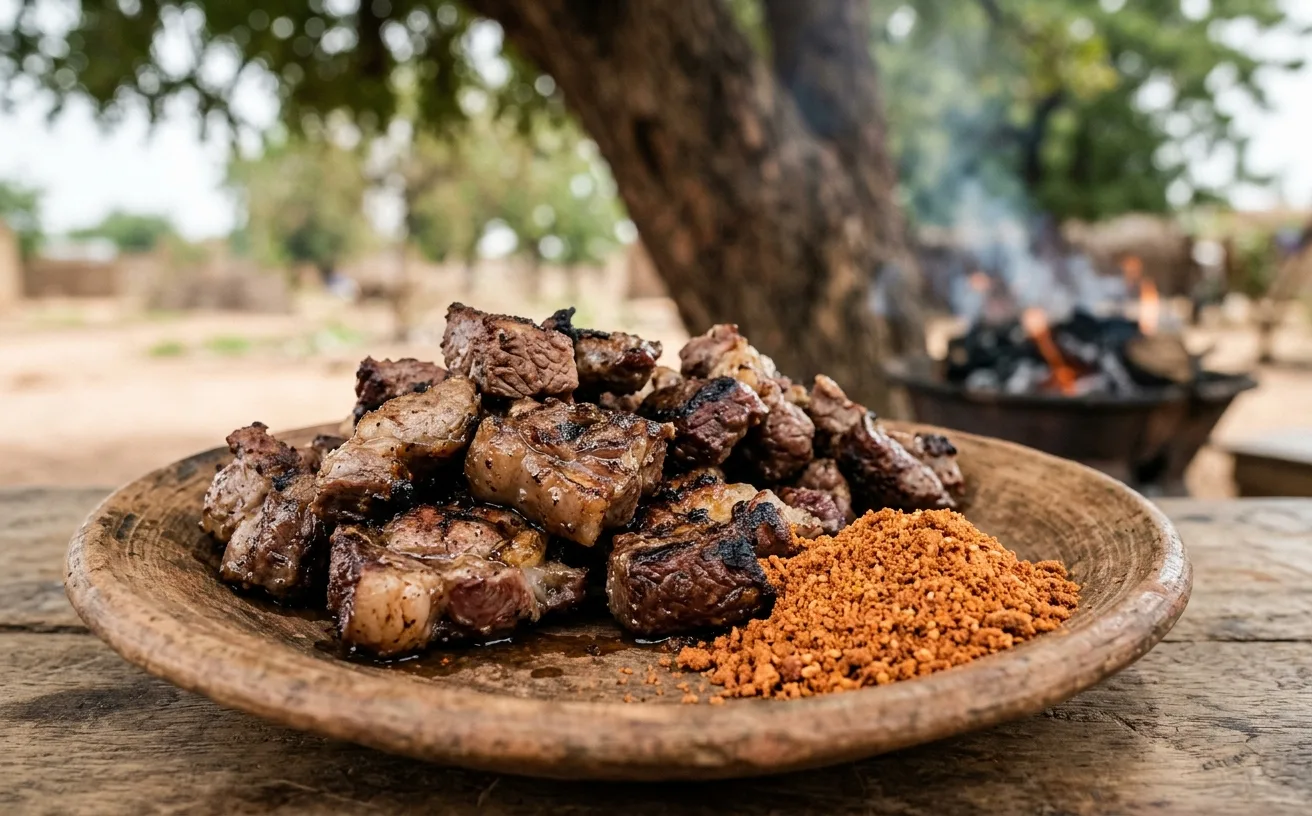
A Hausa grilled-meat specialty in the suya family, but where suya leans on its peanut-spice crust, balangu is lamb or beef grilled naked over fire so the flavor is pure meat, fat, and smoke. Yaji spice mix is served on the side for dipping rather than baked on.
Also known as labule, Hausa grilled meat, Nigerian balangu.
Reference video
Ingredients
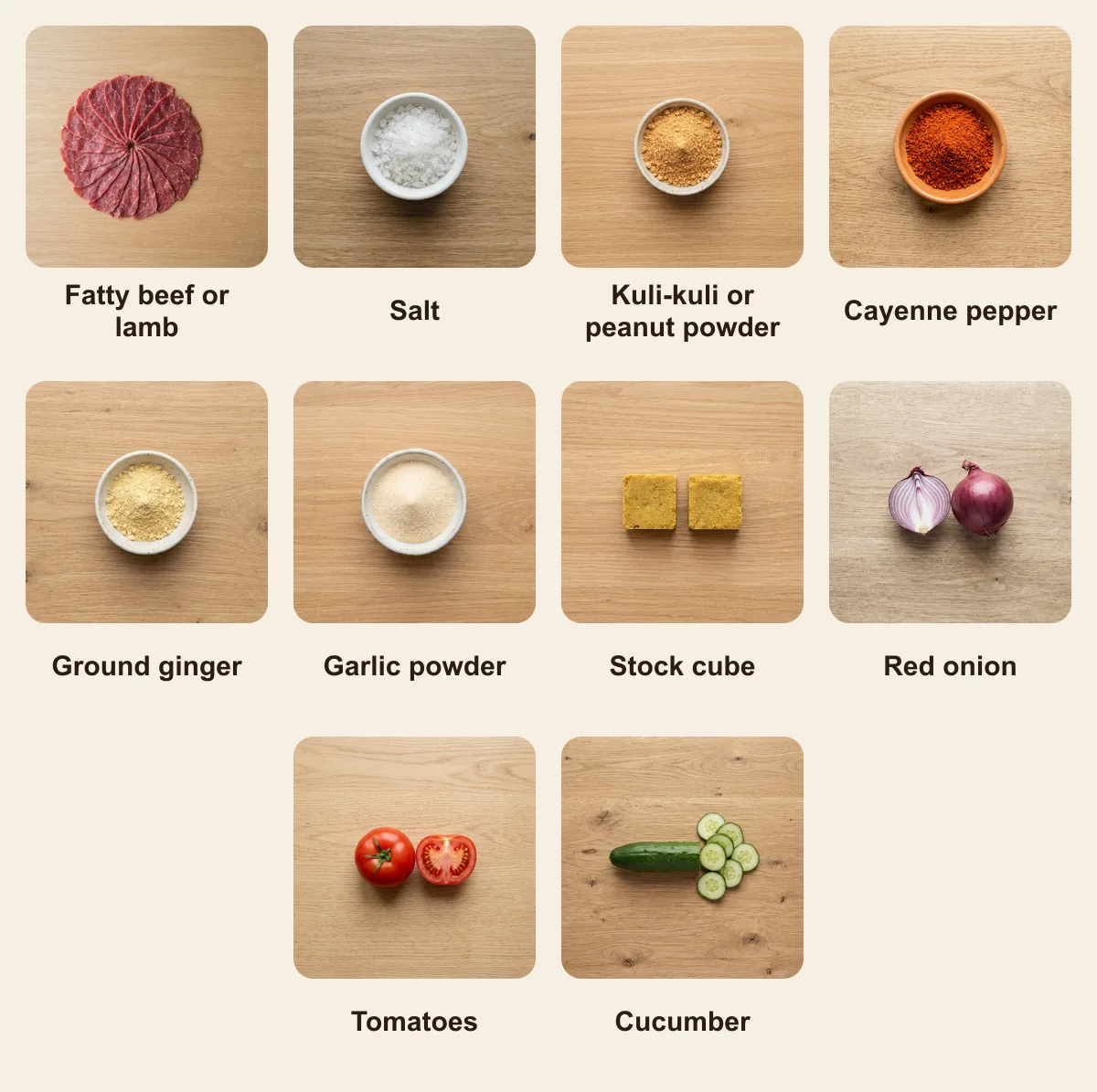
- 800 g fatty beef or lamb (rump cap or shoulder), in broad 1 cm slabs
- 1.5 tsp salt
- 4 tbsp ground kuli-kuli or roasted peanut powder
- 2 tsp cayenne pepper
- 1 tsp ground ginger
- 1/2 tsp garlic powder
- 1 stock cube, crushed
- 1 red onion, sliced
- 2 tomatoes and 1/2 cucumber, chopped
How to make it
- 1
Season the meat slabs with salt only — no oil, no marinade — and let the coals settle to a steady moderate heat.
- 2
Lay the slabs over the coals and cook 10-12 minutes, turning often, letting the fat render and blister at the edges.
- 3
Rest 5 minutes, then snip into bite-size pieces with kitchen shears.
- 4
Stir the peanut powder, cayenne, ginger, garlic powder and stock cube into a dry yaji and serve it as a dip beside the meat, onion, tomato and cucumber.
Pro tip: Balangu is suya's minimalist cousin: the spice never touches the fire, so keep the yaji as a table dip where its peanut base stays fresh instead of scorched.
Where Balangu comes from
Balangu, the plain-grilled relative of suya, is northern Nigerian and it is the connoisseur's order — the same logic as küşleme in Gaziantep or Shinwari tikka in Peshawar. Removing the spice crust removes the disguise, and balangu is bought from vendors whose meat is trusted. It is often sold in the daytime, unlike suya, which belongs to the night.
Balangu: the suya family without the crust
Balangu is the plain one of the Hausa grill. The meat is fattier, rump cap or shoulder in broad 1 cm slabs, seasoned with salt only and cooked 10 to 12 minutes so the fat renders and blisters. The yaji that suya bakes on as a crust is served beside balangu as a dry dip instead, with onion, tomato and cucumber. Where suya is about the toasted peanut coating, balangu is about meat, fat and smoke, and kilishi goes the other way, with a peanut slurry on beef dried into sheets.
How Balangu is cooked
Broad slabs are grilled over wood or charcoal, basted with nothing but their own rendering fat, and turned often. Because there is no rub to protect the surface, the fire is kept moderate so the fat renders and blisters without burning.
It is then chopped on a board and served by weight — the same grill-whole-then-chop approach used in Senegalese dibi and Ivorian choukouya, which links this family of West African dishes more closely to each other than to the skewer traditions further north and east.
Ingredients and shopping
Lamb, mutton or beef with good fat coverage, in broad slabs. Ram is the prestige choice in northern Nigeria. Bone-in cuts add flavour and the bones are sold with the meat.
Salt, and traditionally nothing else on the meat. Yaji — the peanut-chilli powder — is served in a small heap on the side for dipping. Raw onion and sometimes tomato. Wood rather than charcoal if you can manage it.
How Balangu is served
Chopped, on paper, by weight, with a heap of yaji for dipping and raw onion alongside. Eaten with the fingers. Unlike suya it is often a daytime purchase, and it is regarded as the more serious of the two.
Common mistakes
Rubbing it with spice
That makes it suya. The entire premise of balangu is naked meat with the spice on the side.
Lean cuts
With no rub and no marinade, fat is the only thing carrying the dish.
A fierce fire
Unprotected meat over hard heat dries and blackens. Moderate fire, patient turning.
Serving it in slices
It is chopped on the board and served by weight, in pieces, in the West African manner.
Balangu: questions and answers
How is balangu different from suya?
Suya carries a peanut-spice crust applied before and after grilling. Balangu is grilled plain, with yaji served on the side for dipping.
Why grill it without spice?
The same reasoning as küşleme in Turkey or Shinwari tikka in Pakistan — good meat needs no disguise, and the plainness is a statement about quality.
Is it eaten at night like suya?
Not necessarily — balangu is often a daytime purchase, which is one of several ways it differs from suya.
Sources and further reading
- Suya — Wikipedia
- The Arewa Kitchen: Specialty Meats (or Suya Plus) — Kitchen Butterfly