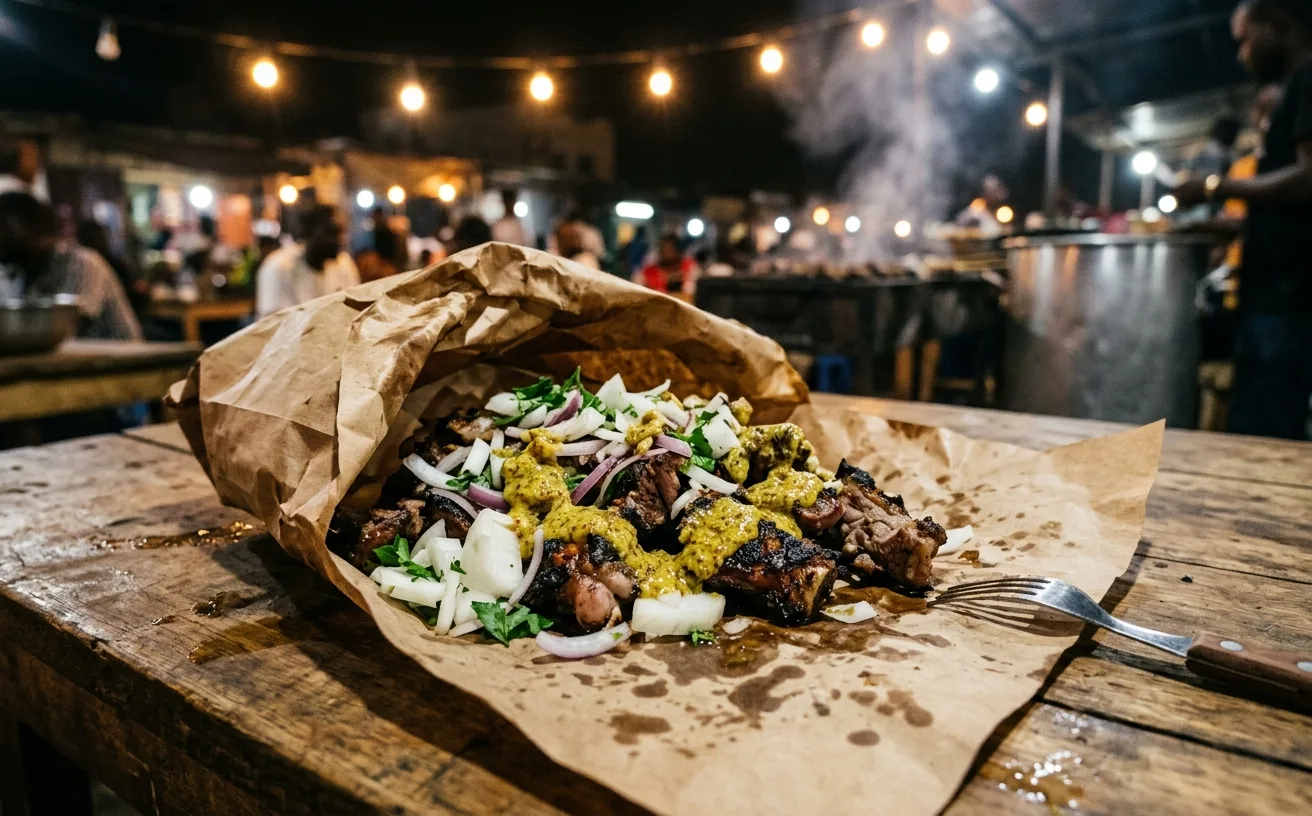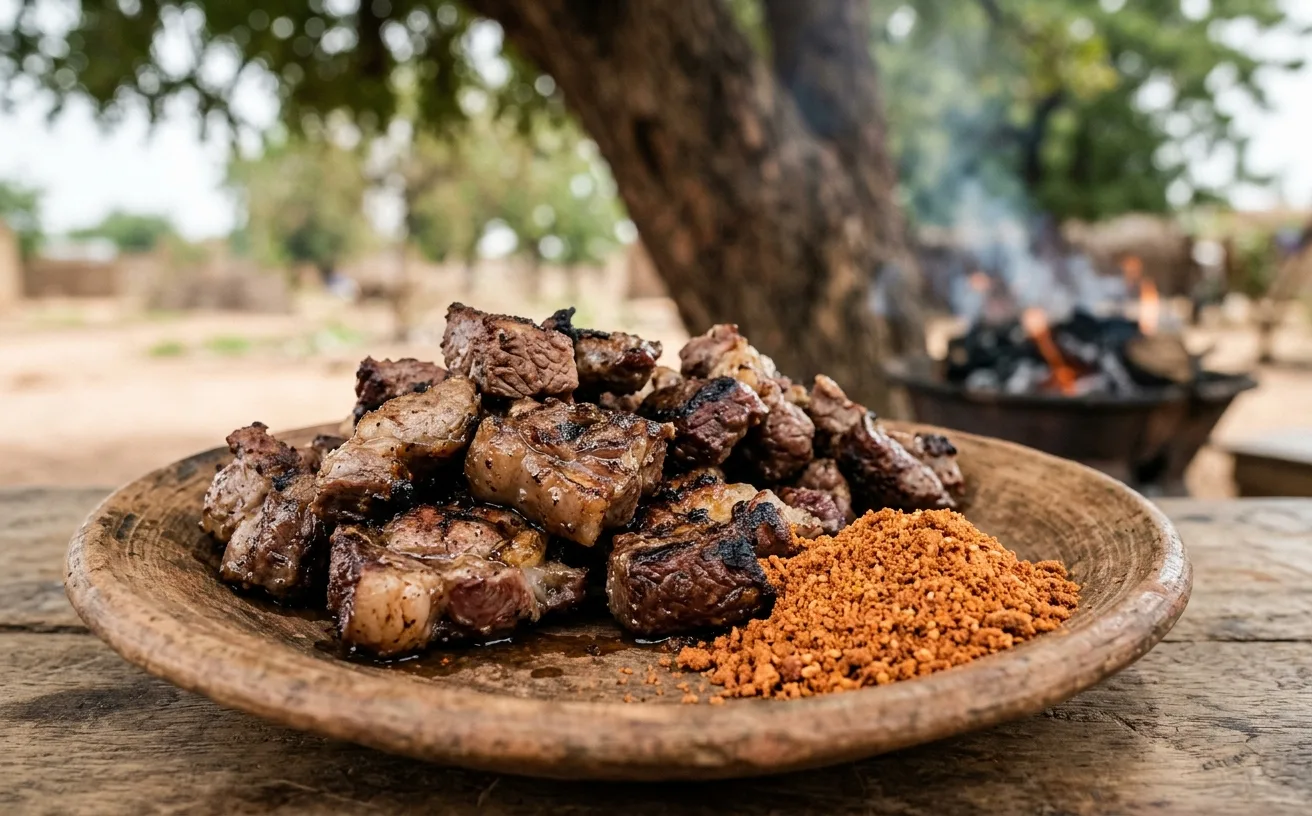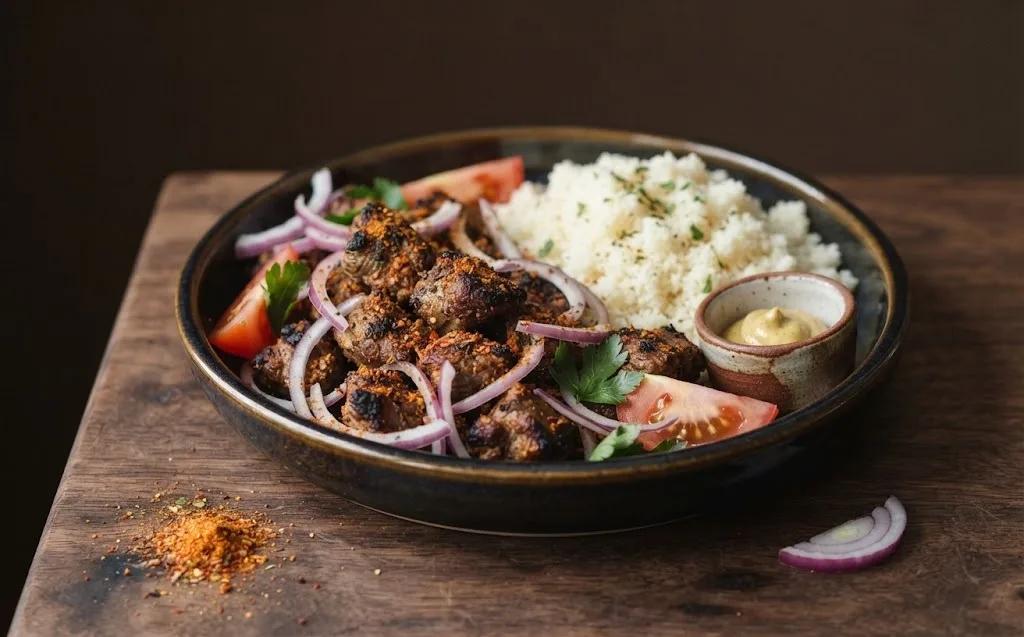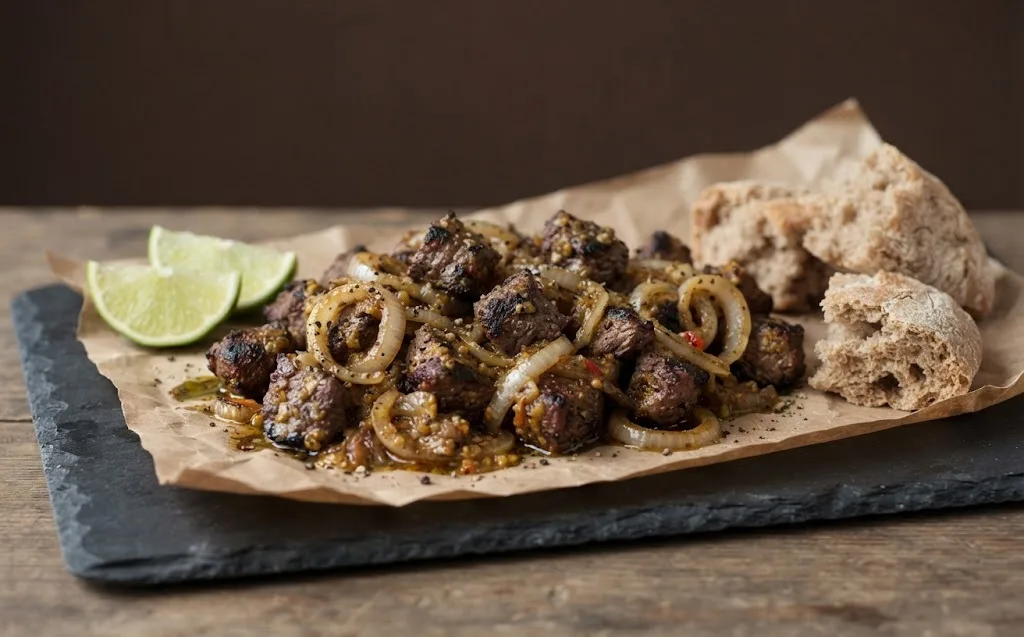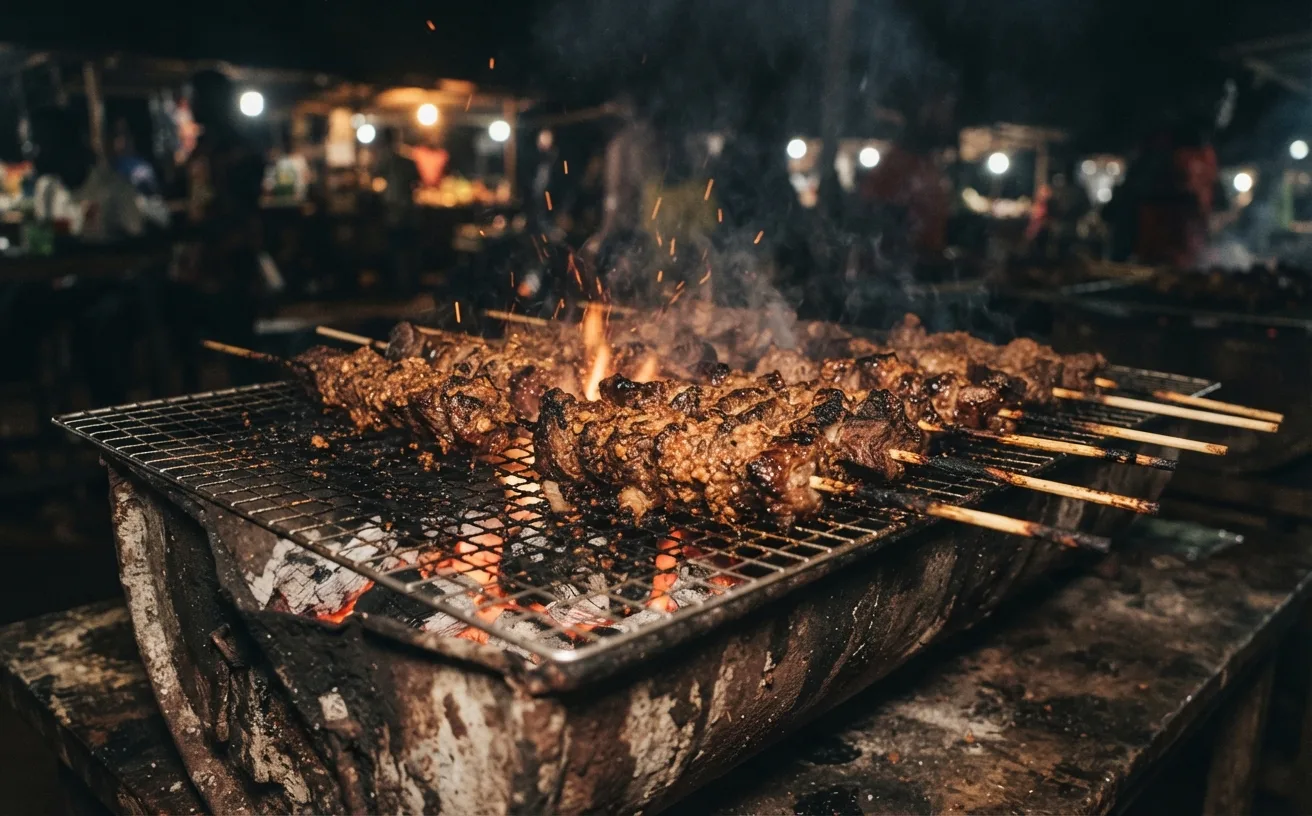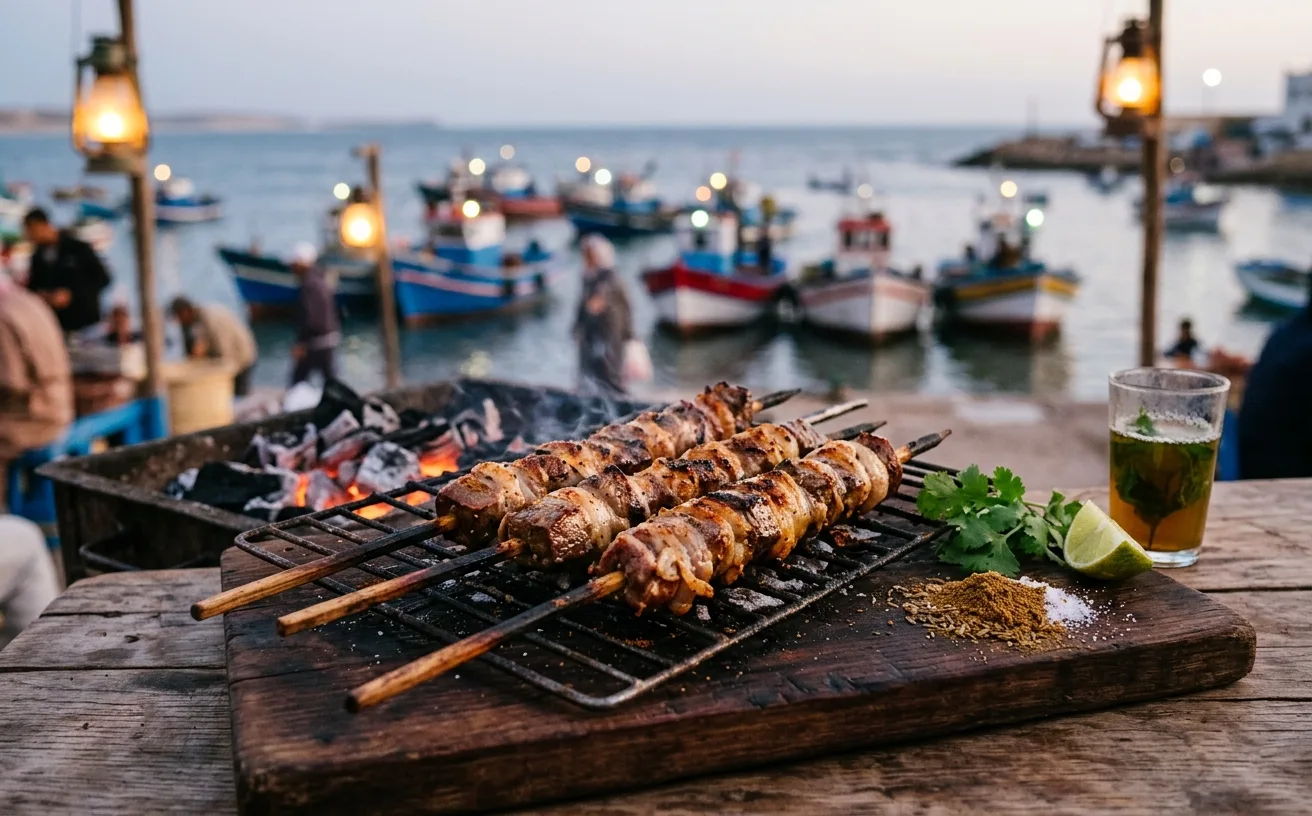
Cubes of lamb liver wrapped in caul fat, skewered, and grilled over embers, so the fat bastes the liver as it renders. It is the ritual first dish of Eid al-Adha in Morocco and Algeria (where a close cousin is called melfouf), made within hours of the sacrifice.
Also known as boulfaf, bulfaf, melfouf.
Reference video
Ingredients
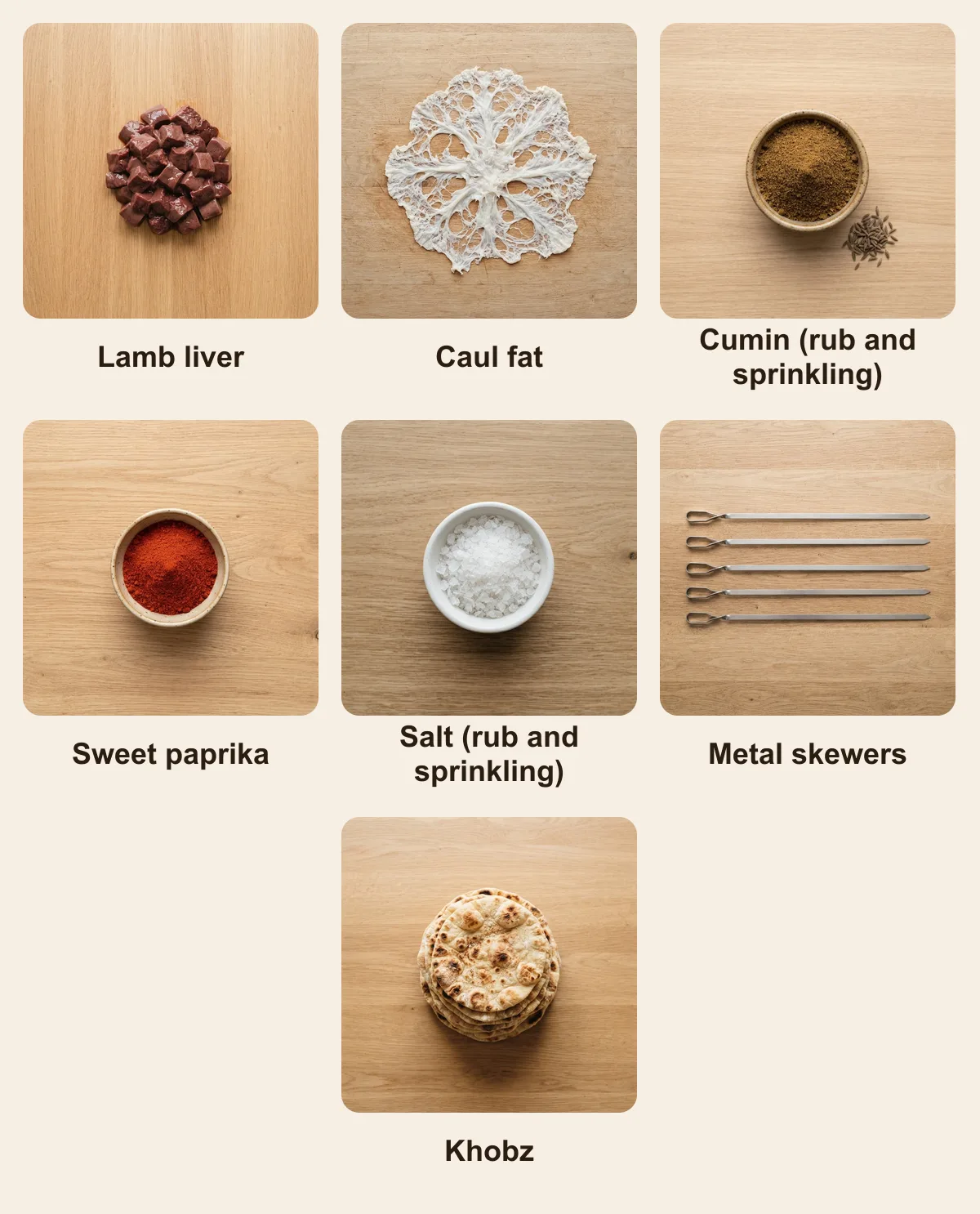
- 500 g lamb liver, in thick slices
- 200 g caul fat, soaked in warm water with a splash of vinegar
- 1.5 tsp ground cumin
- 1 tsp sweet paprika
- 1 tsp salt
- Metal skewers
- Khobz, to serve
- Extra cumin-salt, for sprinkling
How to make it
- 1
Sear the liver slices over embers or in a dry pan for barely a minute per side, just to firm the outside; the middle stays raw.
- 2
Cool briefly, cut into 3 cm cubes, and roll them in cumin, paprika and salt.
- 3
Unfold the caul fat and wrap each cube in a single translucent square.
- 4
Skewer snugly and grill over glowing coals 6-8 minutes, turning, until the lacy fat crisps golden and bastes the liver as it melts.
- 5
Sprinkle with cumin-salt and eat hot off the skewer with bread.
Pro tip: The two-stage cook is the Eid al-Adha secret: firming the liver first stops it crumbling when you wrap it, and the caul then gets its own uninterrupted time over the coals to render crisp instead of flabby.
Where Boulfaf comes from
Boulfaf is cooked within hours of the Eid al-Adha sacrifice, and the timing is the point. Liver deteriorates quickly, so it is cooked first while the rest of the animal is prepared for the days ahead, and the whole household eats boulfaf on the morning of Eid before anything else. Algeria has a close cousin called melfouf, and the practice is shared across the Maghreb.
How Boulfaf is cooked
Caul fat — the lacy membrane from around the stomach — is the technique and it is genuinely ingenious. Wrapped around a cube of liver, it holds the piece together, seasons it, and melts away over the fire, basting the liver from every side at once. Nothing else does this job as well, and liver is the ingredient that most needs it.
The liver is seared briefly to firm it, then seasoned with cumin, salt and paprika before wrapping, and the cook is short — six to eight minutes total over hot embers, turning once. Liver has a very narrow window between silky and grainy, and the caul fat buys a little grace but not much.
Ingredients and shopping
Fresh lamb liver, membrane peeled and larger tubes removed, seared briefly in thick slices and then cut into three-centimetre cubes. Caul fat from a butcher, soaked in warm water so it becomes pliable and can be stretched thin. Both are sold specifically around Eid in Moroccan and Middle Eastern butchers.
Cumin, sweet paprika and salt, with a little cayenne if you want heat. Some households add a pinch of ras el hanout. Metal skewers. If caul fat is unavailable, thin strips of lamb fat wrapped around each cube is the substitute, though it does not melt as evenly.
How Boulfaf is served
Straight off the skewer with khobz, cumin-salt, and a glass of mint tea, on the morning of Eid. Raw onion and a squeeze of lemon. It is eaten standing, communally, while the rest of the animal is still being butchered.
Common mistakes
Not soaking the caul fat
It tears when dry. Soak it in warm water until it is pliable and can be stretched over the liver.
Overcooking
Six to eight minutes, wrapped in caul fat and turned once. Liver goes from silky to grainy fast once unprotected, and there is no recovery.
Salting hours ahead
Salt firms liver. Season shortly before it goes on the fire.
Frozen liver
Freezing damages the texture irreversibly. Boulfaf is a fresh-liver dish by definition.
Boulfaf: questions and answers
What is caul fat?
The lacy membrane of fat from around an animal's stomach. Wrapped around liver, it holds the piece together and melts away over the fire, basting it from all sides.
When is boulfaf eaten?
On the morning of Eid al-Adha, within hours of the sacrifice. Liver deteriorates fast, so it is cooked first.
Sources and further reading
- Boulfaf — Wikipedia
- Moroccan Liver Brochettes with Caul Fat - Boulfaf — Taste of Maroc
- Boulfaf: The Traditions of Morocco's Eid al-Adha Delicacy — Morocco World News