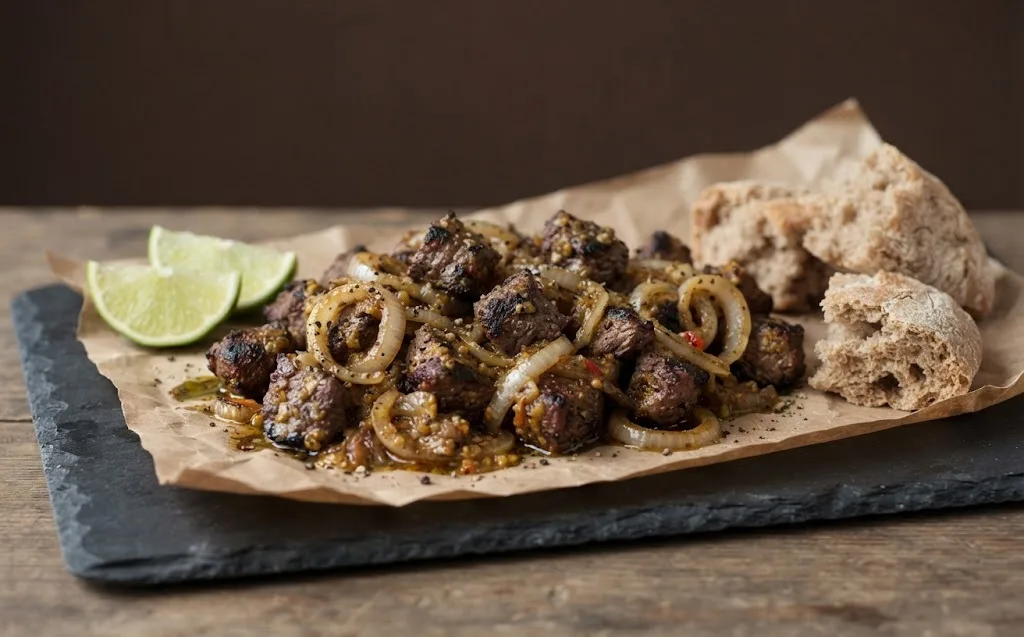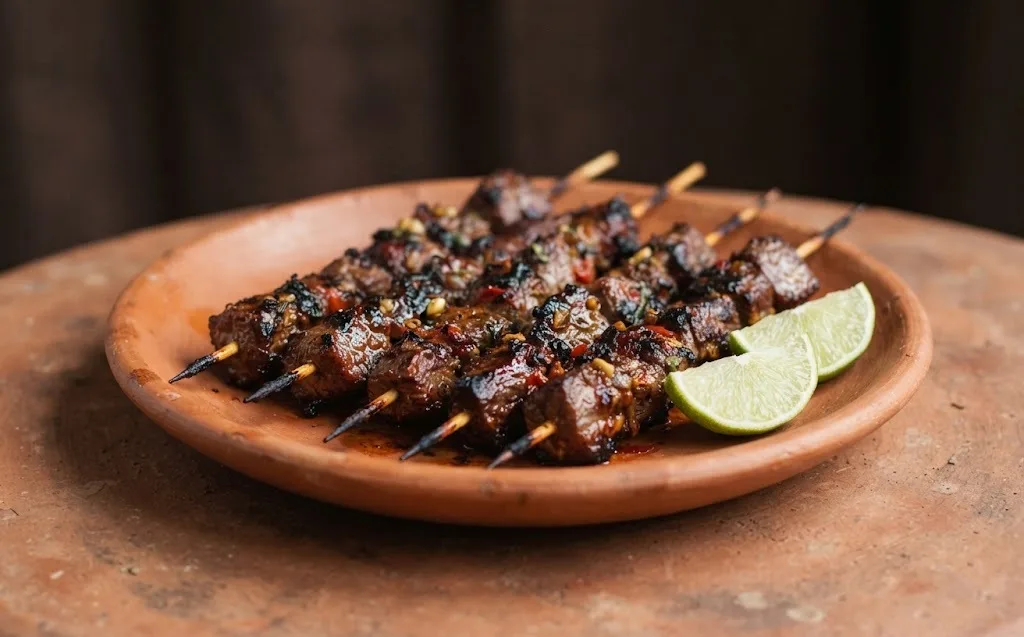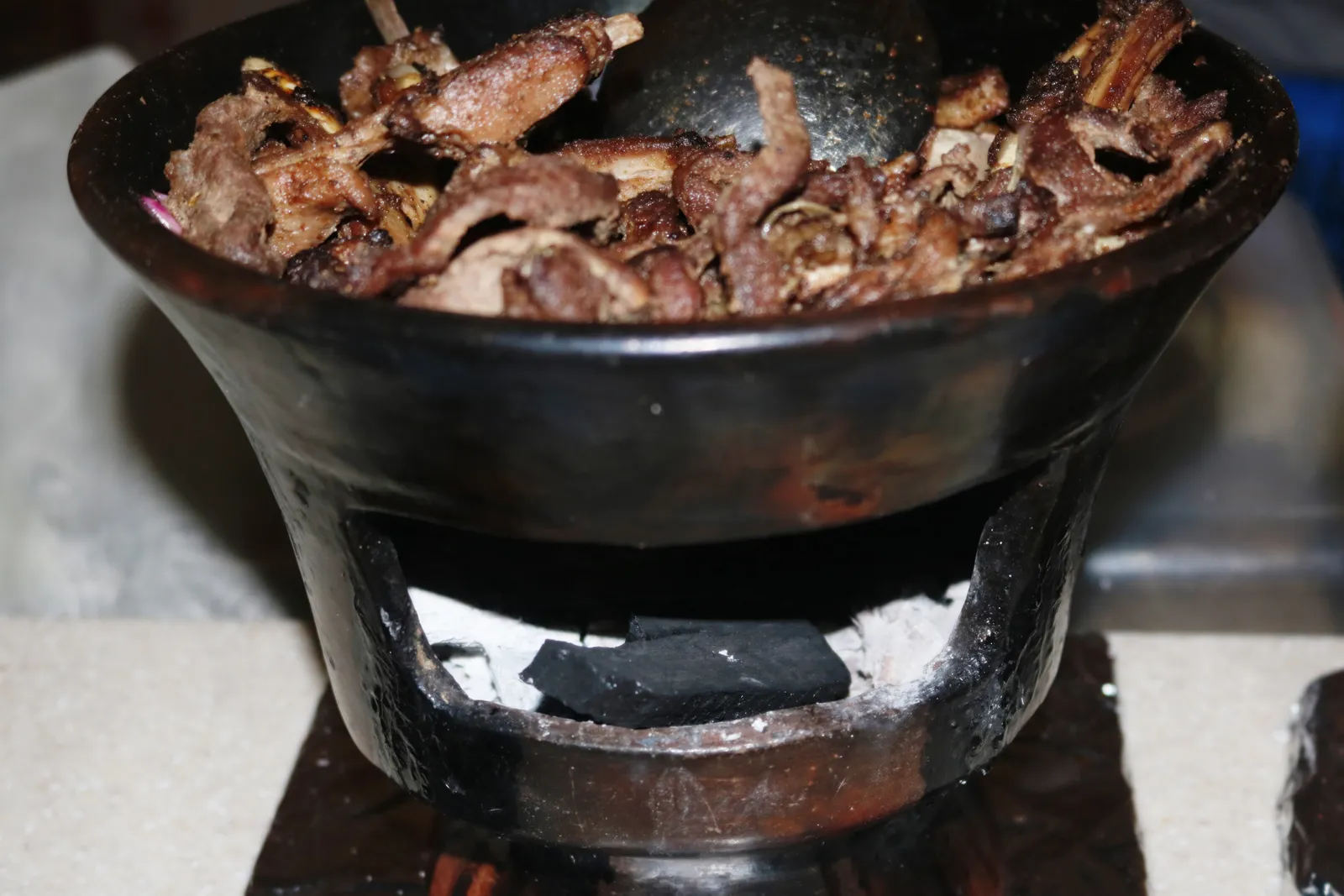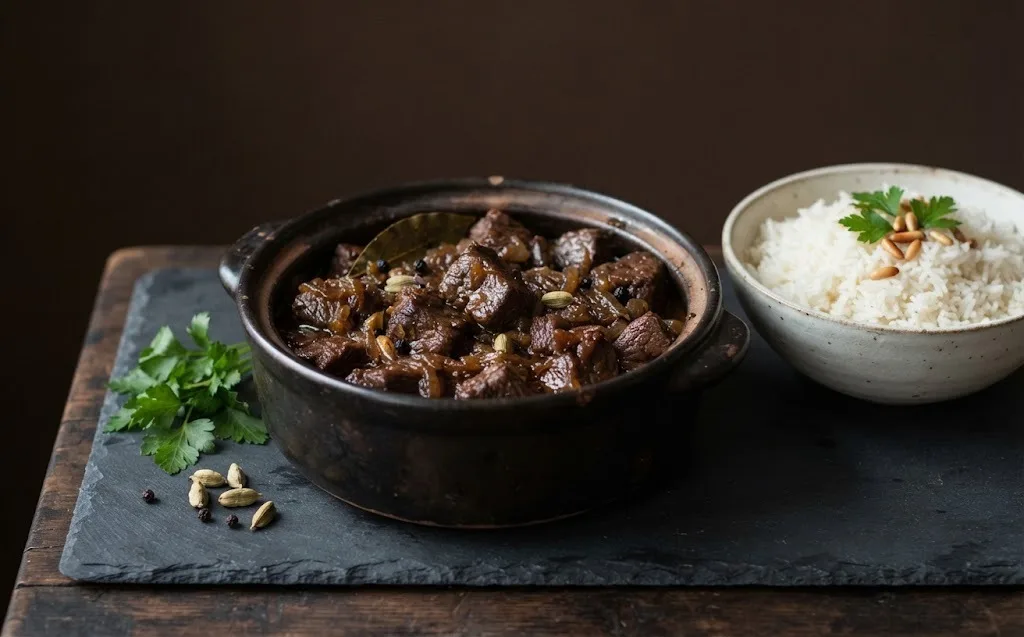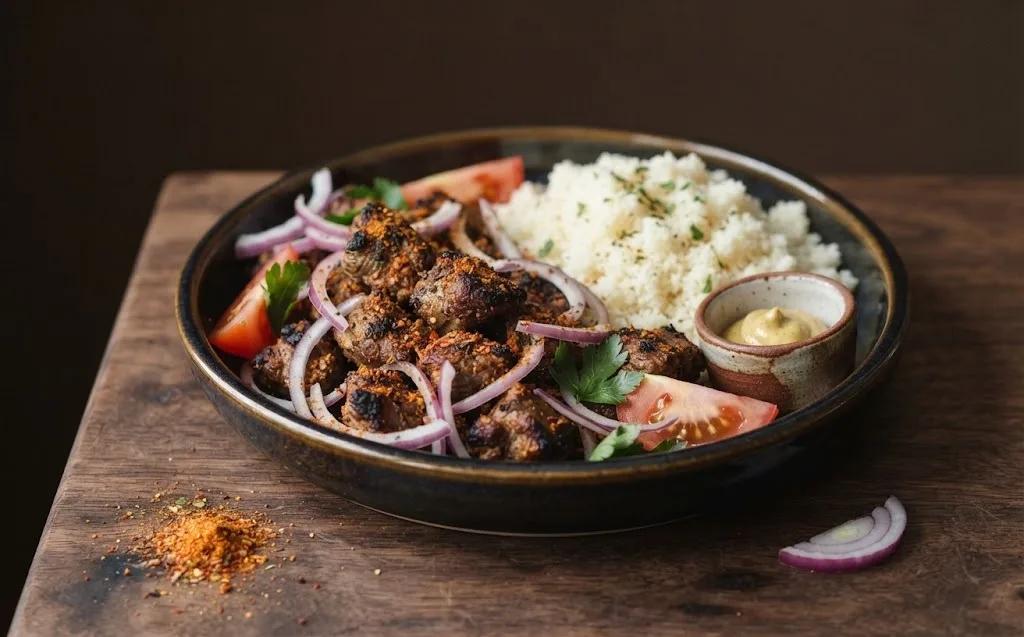
Ivorian grill-shack lamb or beef, slow-grilled then chopped and tossed with a dry chili-onion spice mix, served with raw onion, mustard, and attieke or bread. A West African relative of suya and dibi, it anchors the open-air maquis dining culture of Abidjan.
Also known as chukuya, soukouya, braised meat Ivory Coast.
Ingredients
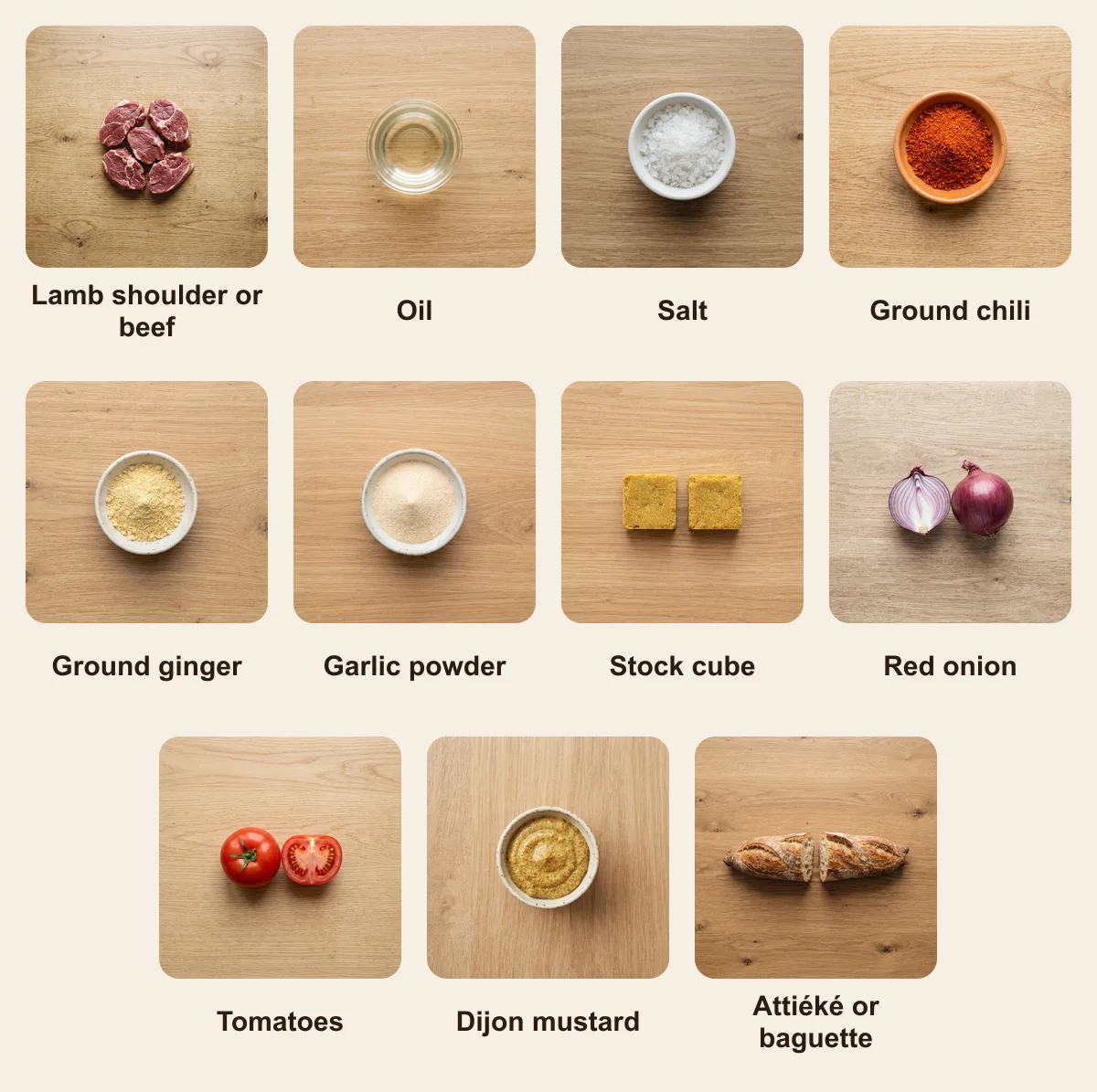
- 800 g lamb shoulder or beef, in large chunks
- 2 tbsp oil
- 1 tsp salt
- 1 tbsp ground chili
- 1 tbsp ground ginger
- 1 tsp garlic powder
- 1 stock cube, crushed
- 1 red onion, thinly sliced
- 2 tomatoes, in wedges
- Dijon mustard, to serve
- attiéké or baguette, to serve
How to make it
- 1
Oil and salt the meat, then set it over medium coals and grill slowly 20-25 minutes, turning every 5, until well done and crusted.
- 2
Chop the hot meat into small chunks on a board.
- 3
Tip the chunks into a bowl with the chili, ginger, garlic powder and stock cube and shake hard so the rendering fat glues the powder on.
- 4
Fold in the raw onion and serve on paper with tomato wedges, Dijon mustard and attiéké or bread.
Pro tip: Toss while the meat is still spitting hot — once choukouya cools it sheds its spice coat.
Where Choukouya comes from
It is a West African relative of Senegalese dibi and Nigerian suya, sharing the grill-whole-then-chop technique with the former and the dry spice dusting with the latter. What makes it Ivorian is attiéké, the fermented cassava couscous that accompanies it, and the maquis setting that frames the whole meal.
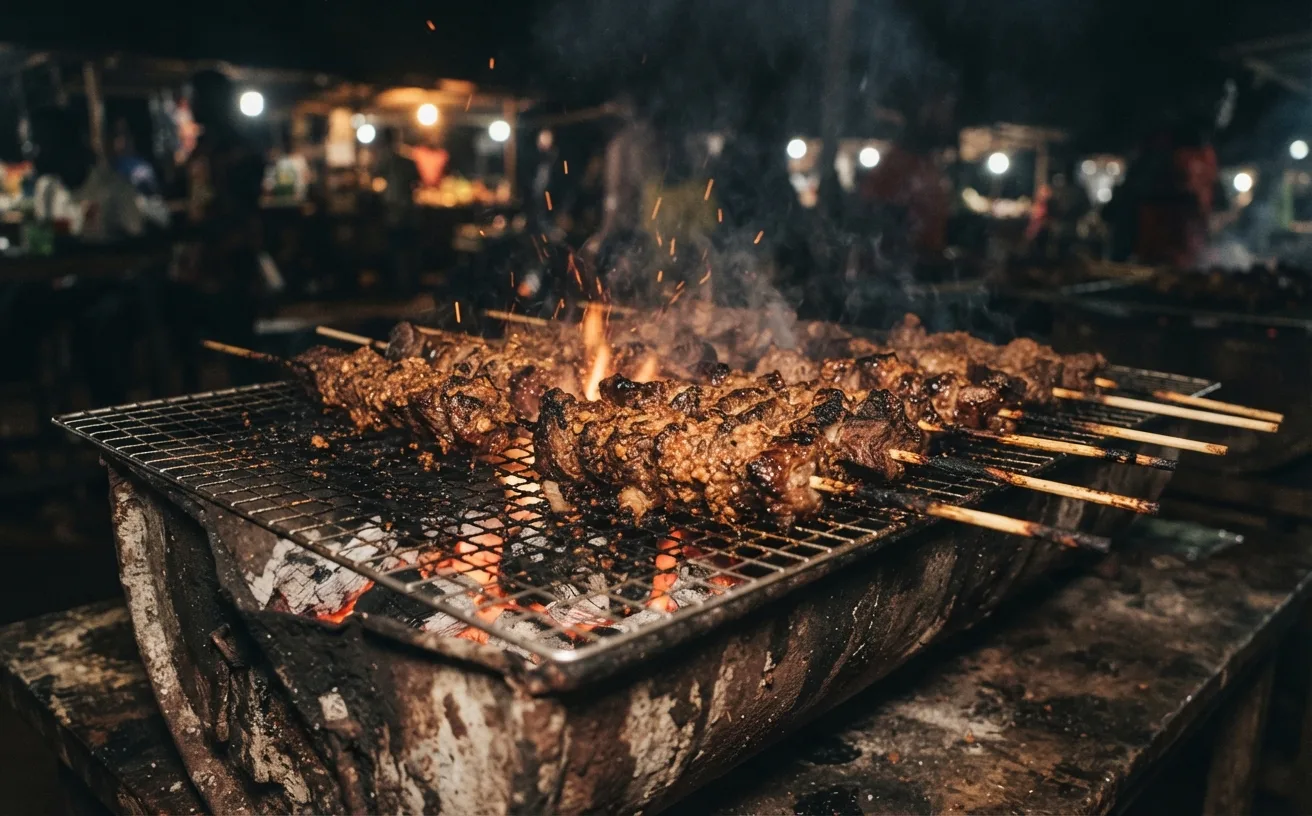
How Choukouya is cooked
Slow grilling of whole pieces over charcoal, then chopping on the board and tossing with the spice mix, is the sequence. The tossing stage is where the seasoning happens, so the spice never sees direct fire and stays sharp — the same principle as the second coat of yaji on suya, applied differently.
The spice mix is dry: ground dried chilli, ground ginger, garlic powder, a stock cube crumbled in, and sometimes onion powder, black pepper or ground peanut. Because it is applied to hot chopped meat, the fat carries it and the heat blooms the aromatics without cooking them away.
Ingredients and shopping
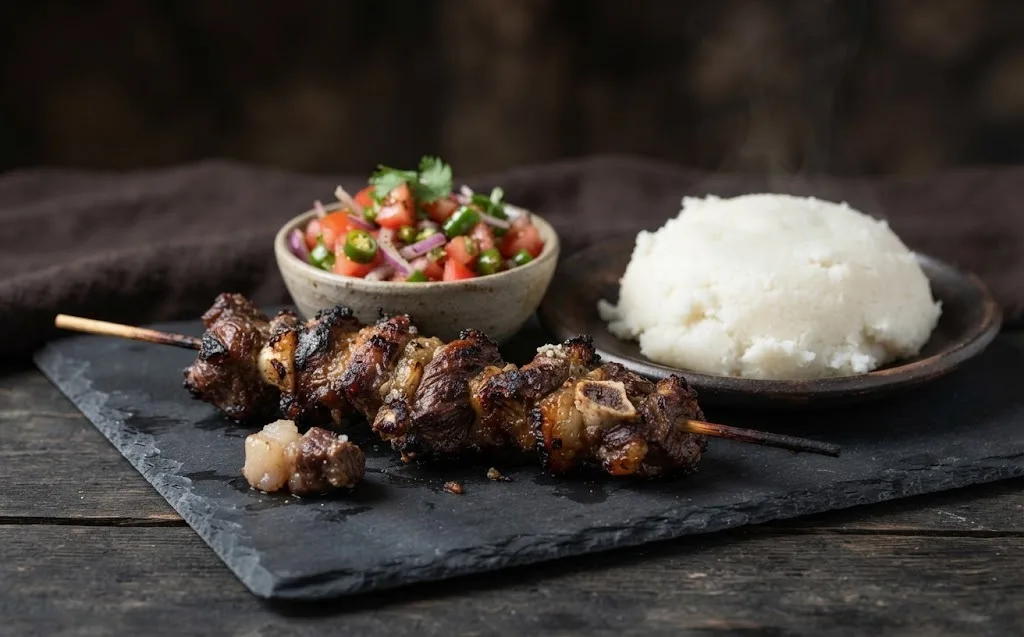
Lamb or beef in large pieces with fat left on, grilled whole. Ivorian maquis use mutton frequently and it suits the long slow grill. Attiéké — fermented grated cassava, steamed — is sold frozen or dried in African groceries and is the correct accompaniment.
The spice mix is dried chilli, ground ginger, garlic powder and a stock cube, often extended with onion powder, black pepper or ground peanut. Dijon mustard on the side, raw onion, and a tomato-and-onion salad. Charcoal, and a grill that allows slow moderate heat.
How Choukouya is served
Chopped on paper with the spice dusted over, raw onion, mustard and attiéké alongside, at a maquis in the evening. A cold beer. It is shared food ordered by weight, and the maquis is as much a social institution as a restaurant.
Common mistakes
Seasoning before grilling
The spice goes on after chopping so it stays sharp. Applied before, it burns and turns bitter.
Grilling fast
Large pieces need slow moderate heat. A hard sear leaves the interior raw.
Skipping the attiéké
It is what makes the plate Ivorian. Bread works but the fermented cassava is the real accompaniment.
Lean cuts
The fat carries the spice mix when the meat is tossed. Trimmed lean, the seasoning does not adhere.
Choukouya: questions and answers
What is a maquis?
An informal open-air Ivorian restaurant, usually a courtyard with a grill, central to night life in Abidjan and across Côte d'Ivoire.
What is attiéké?
Fermented grated cassava, steamed into a couscous-like side. It is the standard Ivorian accompaniment to grilled meat.
When is the spice applied?
After grilling and chopping, tossed through the hot meat. Applied before, it burns.
How is it different from Senegalese dibi?
Both grill whole and chop after, but choukouya is tossed with a dry chilli-onion spice mix while dibi is dressed with a wet onion-mustard sauce.
Sources and further reading
- African Cuisine Part 18: West Africa – Ivory Coast — ProAgri
- Eating Abidjan: 16 Foods To Try On Your Visit To Cote d'Ivoire — Bren on The Road