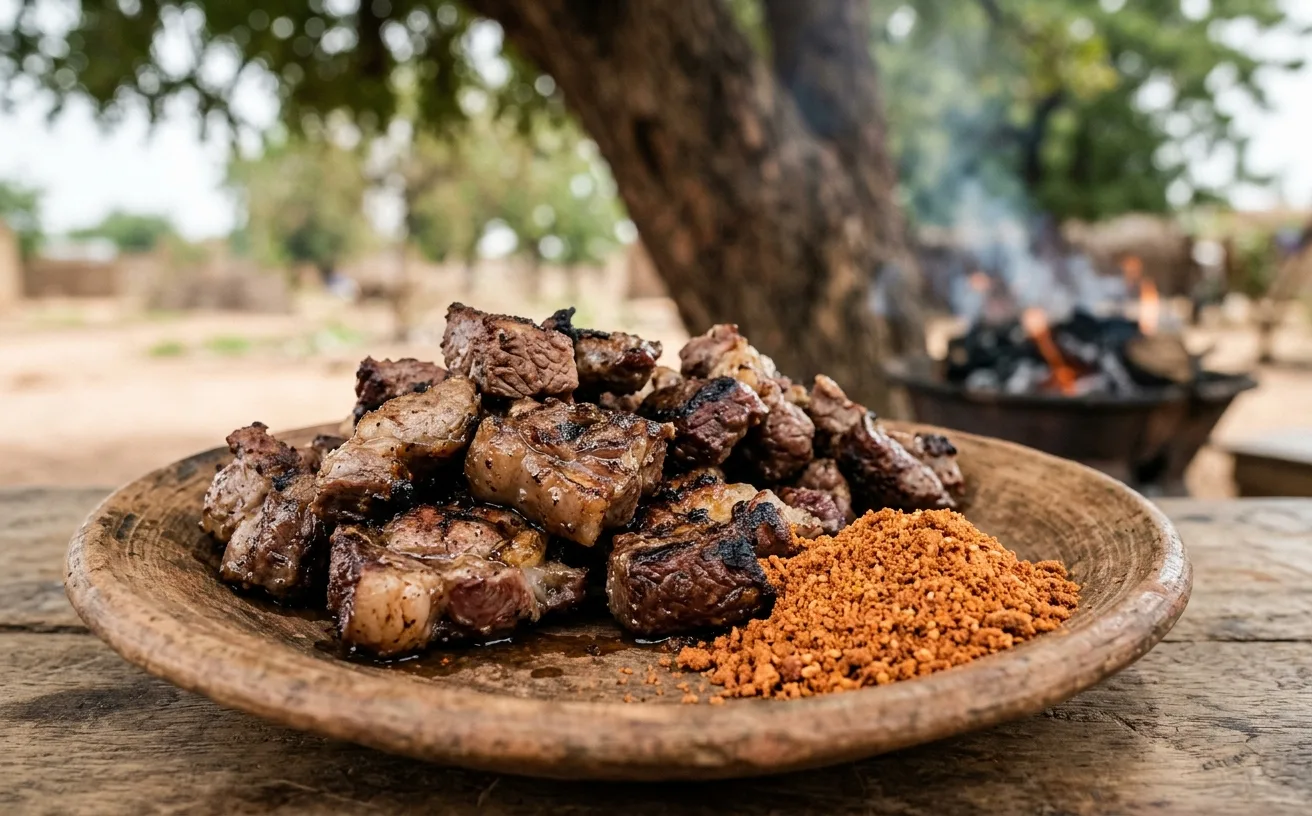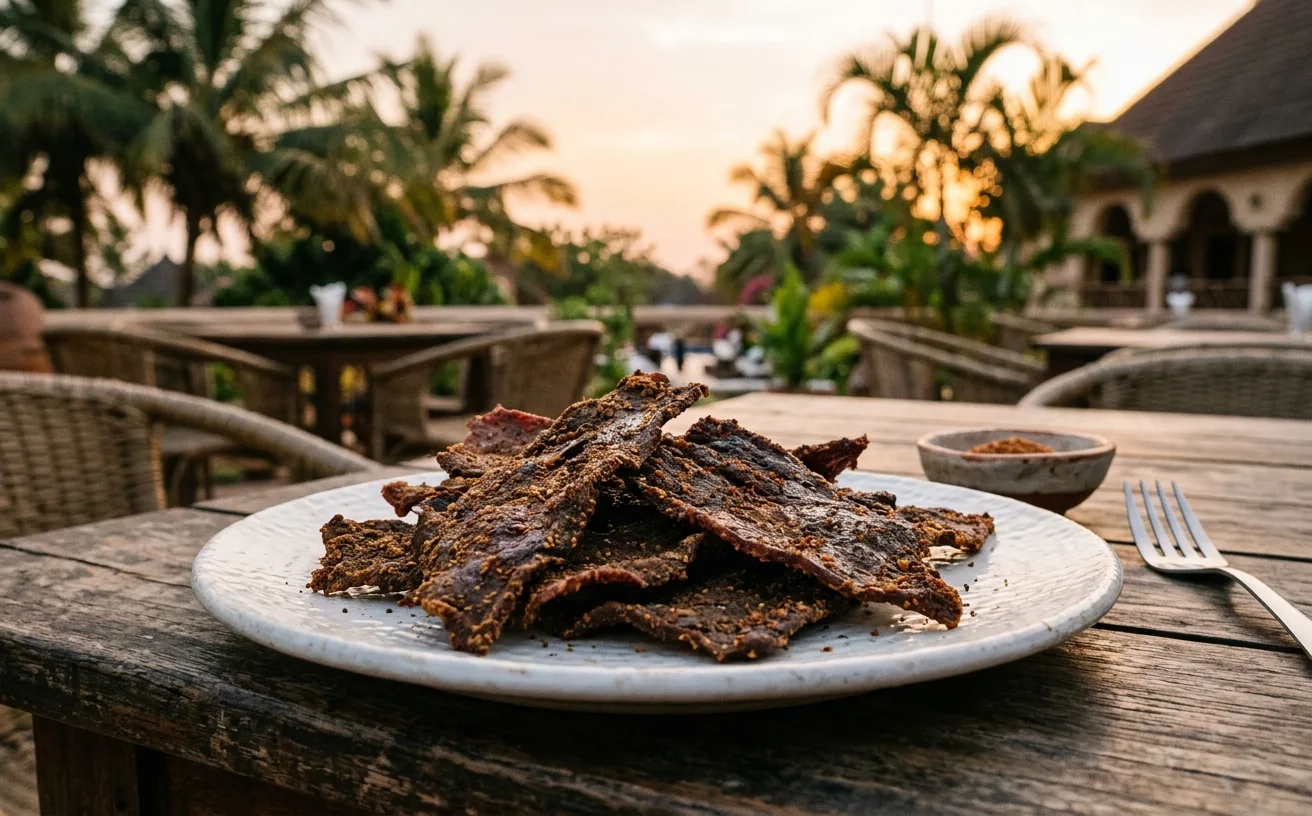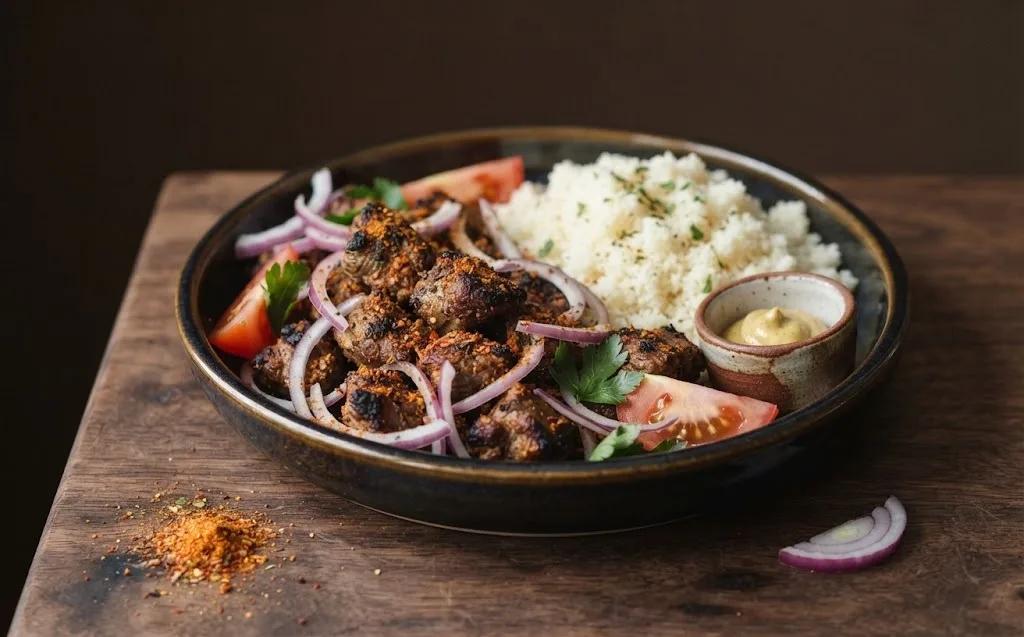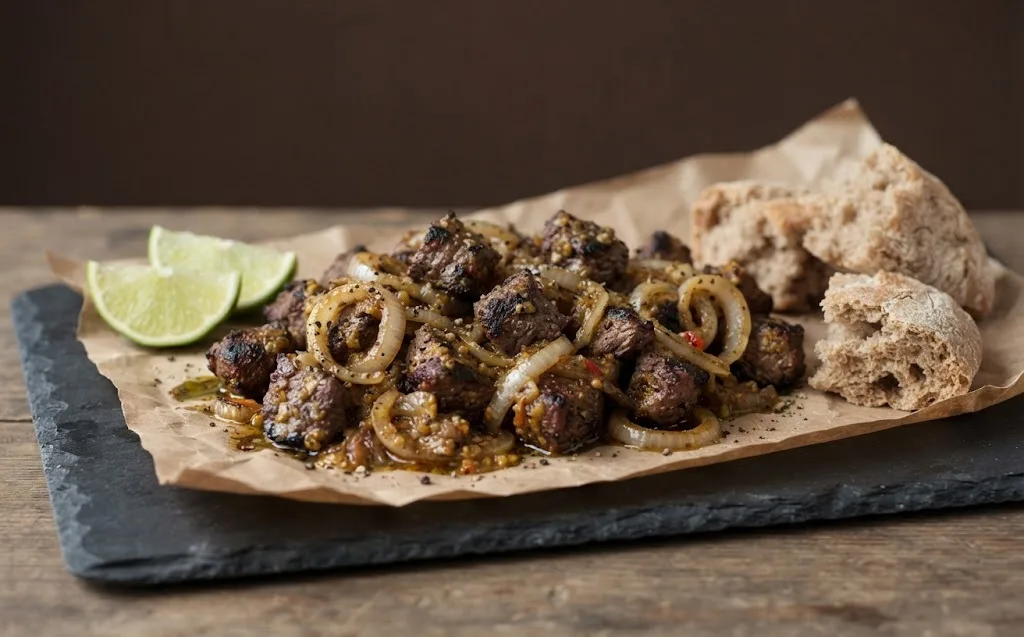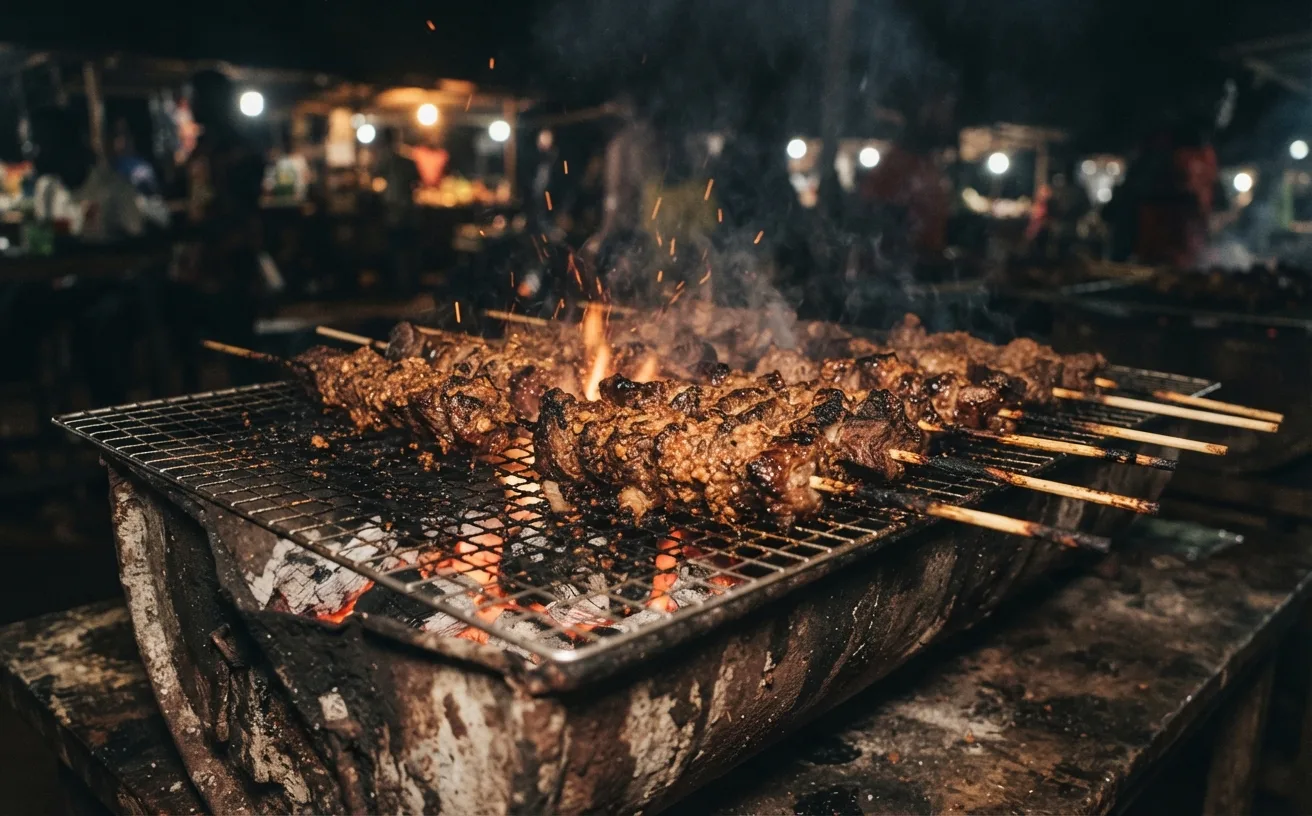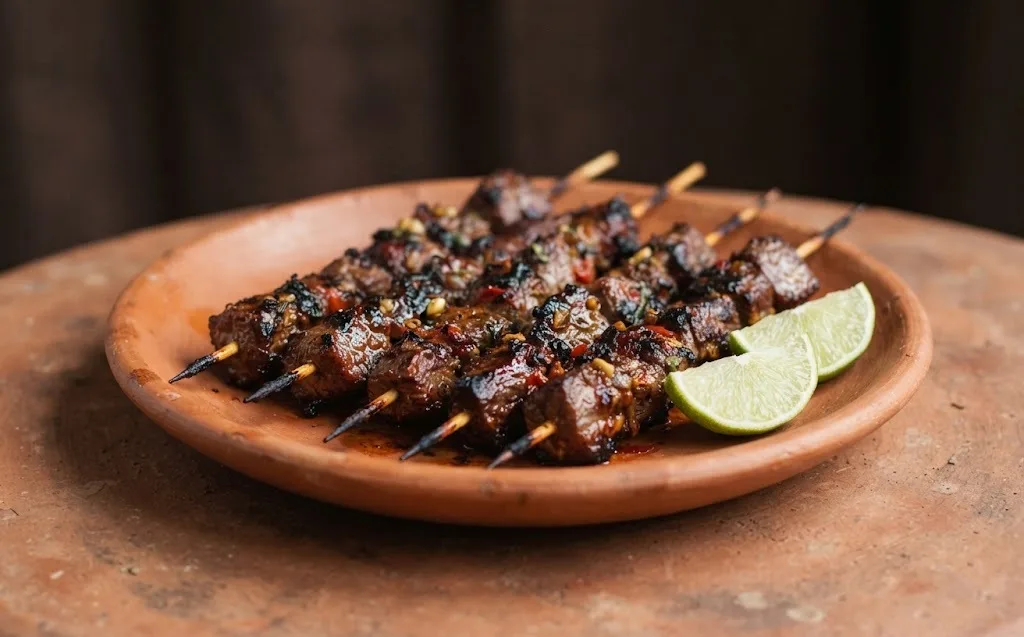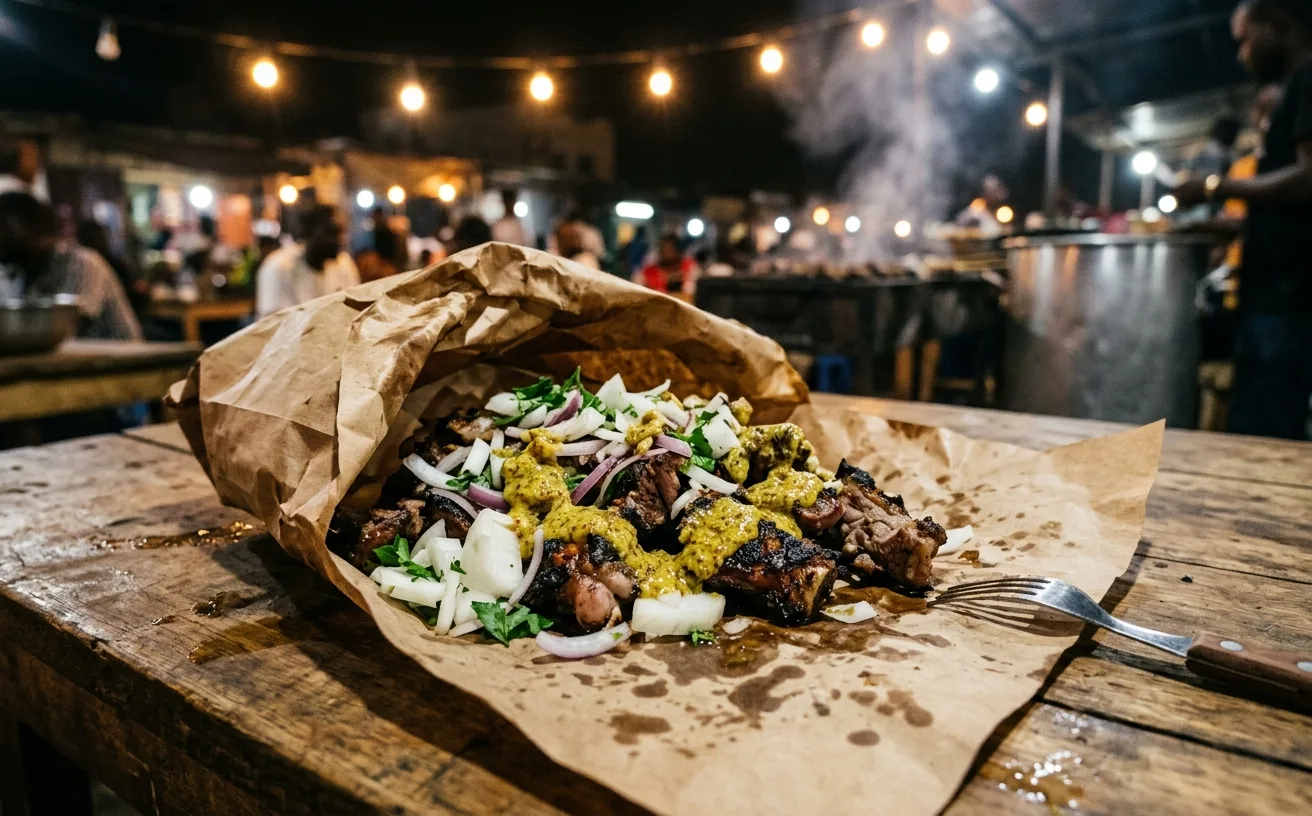
Chopped mutton or lamb grilled over wood fire at dedicated late-night shops called dibiteries, then hacked into pieces and served on butcher paper with raw onions, mustard-vinegar sauce, and kaani chili. It is Dakar's definitive after-dark meat feast, eaten by hand with bread.
Also known as dibi hausa, Senegalese grilled lamb, dibiterie lamb.
Reference video
Ingredients
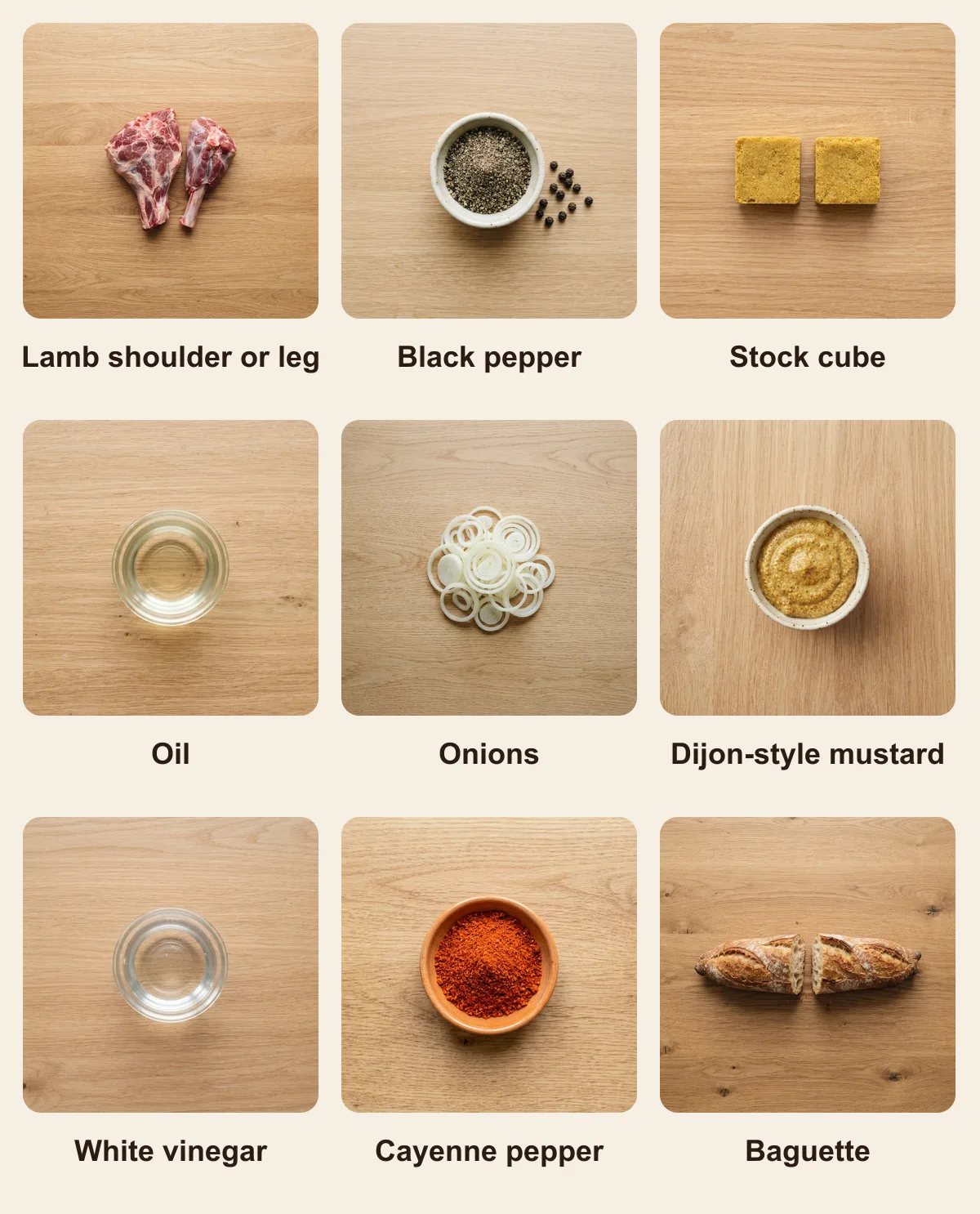
- 1 kg bone-in lamb shoulder or leg, in large chunks
- 2 tsp black pepper
- 1 stock cube, crushed
- 2 tbsp oil
- 3 large onions, thickly sliced, plus a few raw rings to serve
- 3 tbsp Dijon-style mustard
- 2 tbsp white vinegar
- 1/2 tsp cayenne pepper
- 1 baguette
How to make it
- 1
Rub the lamb with black pepper, crushed stock cube and a little oil while the fire burns down to strong embers.
- 2
Grill the chunks over wood embers 25-30 minutes, turning occasionally, until deeply browned and cooked through.
- 3
Meanwhile soften the onions in oil for 5 minutes, then stir in mustard and vinegar and cook 2 minutes more — they should stay slightly crunchy.
- 4
Hack the meat into rough pieces with a cleaver, pile onto paper or a platter and smother with the mustard onions and a dusting of cayenne.
- 5
Serve with torn baguette to mop the juices.
Pro tip: Make more mustard-onion relish than seems reasonable — Dakar dibiteries bury the meat in it.
Where Dibi comes from
The dibiterie is a specific institution — a small shop with a wood grill, a butcher's block and usually no seating, open from evening until very late. The word comes from Soninke and the format is Senegalese, though the technique connects it to the wider West African grilled-meat culture of suya and choukouya.
How Dibi is cooked
The meat is grilled in large pieces and chopped afterwards, which is the opposite of a skewer tradition and the defining feature of this family of dishes. Grilling whole keeps the interior moist; chopping afterwards distributes the fat and the char through every mouthful and lets the vendor season it on the board.
The onion sauce is made separately and is not a marinade: sliced onions cooked down with mustard and vinegar into a sharp, loose relish, while the stock and pepper season the meat itself. It is spooned over the chopped meat at the moment of serving, and its acidity against the fat is the whole balance of the dish.
Ingredients and shopping
Mutton or lamb — shoulder or leg, in large pieces, bone-in where possible. Senegalese dibiteries use the whole animal and different cuts are sold at different prices. Fat is left on.
Dijon mustard is genuinely the mustard used, a French colonial inheritance. Onions in quantity, white vinegar, black pepper, and a stock cube — Senegalese cooking uses them unapologetically. Kaani, the chilli paste, on the side. Tapalapa or French bread.
How Dibi is served
On butcher paper with the onion-mustard sauce over it, raw onion, kaani chilli and bread, eaten with the hands standing or sitting on a bench. It is late-night communal food and a dibiterie order is sized for sharing.
Common mistakes
Chopping before grilling
The meat is grilled in large pieces and chopped after. Chopping first dries it out.
Using the onion sauce as a marinade
It is a relish spooned over at the end. Its sharp acidity is the point and it would burn on the fire.
Lean cuts
Dibi is a fatty dish by design. Trimmed lean, it is dry and the onion sauce has nothing to cut through.
Charcoal briquettes
Wood is traditional and the smoke is a large part of the flavour.
Dibi: questions and answers
What is a dibiterie?
A Senegalese late-night grill shop with a wood fire and a butcher's block, selling grilled and chopped mutton by weight.
What is kaani?
The Senegalese chilli paste served alongside, for those who want additional heat.
Sources and further reading
- Dibi (food) — Wikipedia
- Senegalese Mutton Dibi — Authentic Grill Recipe — NKOSI