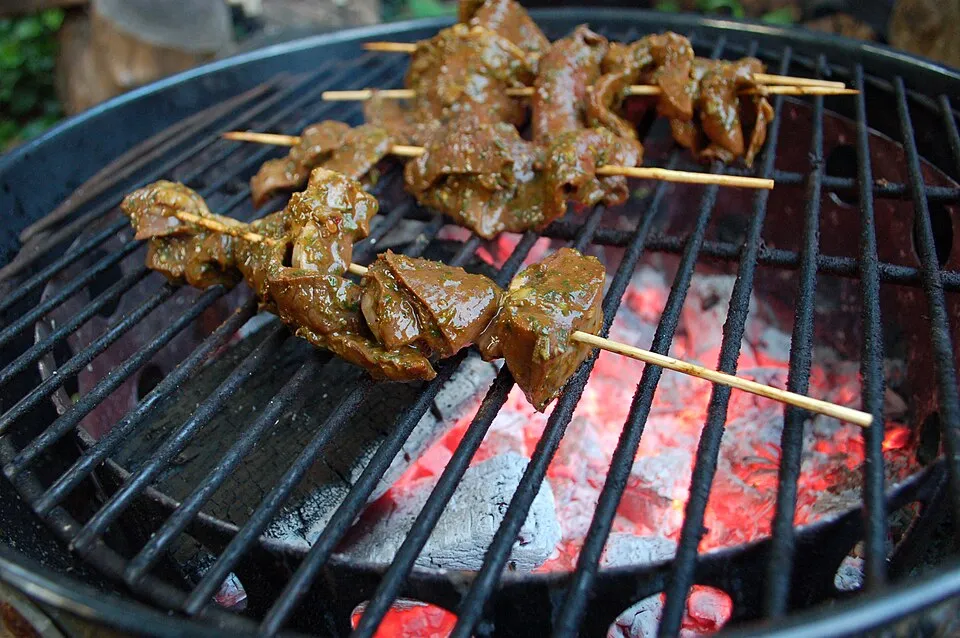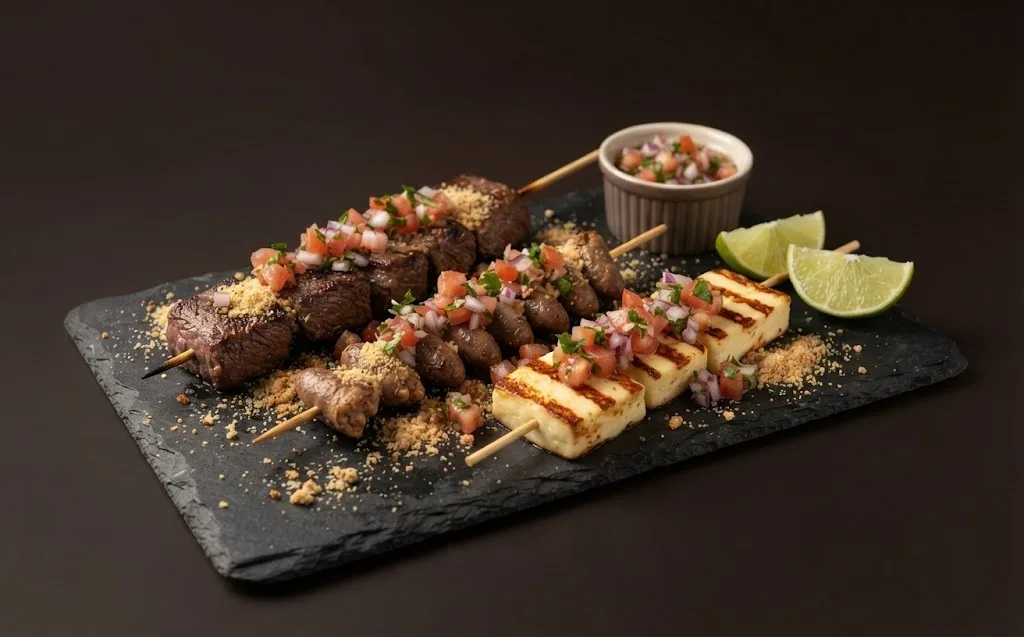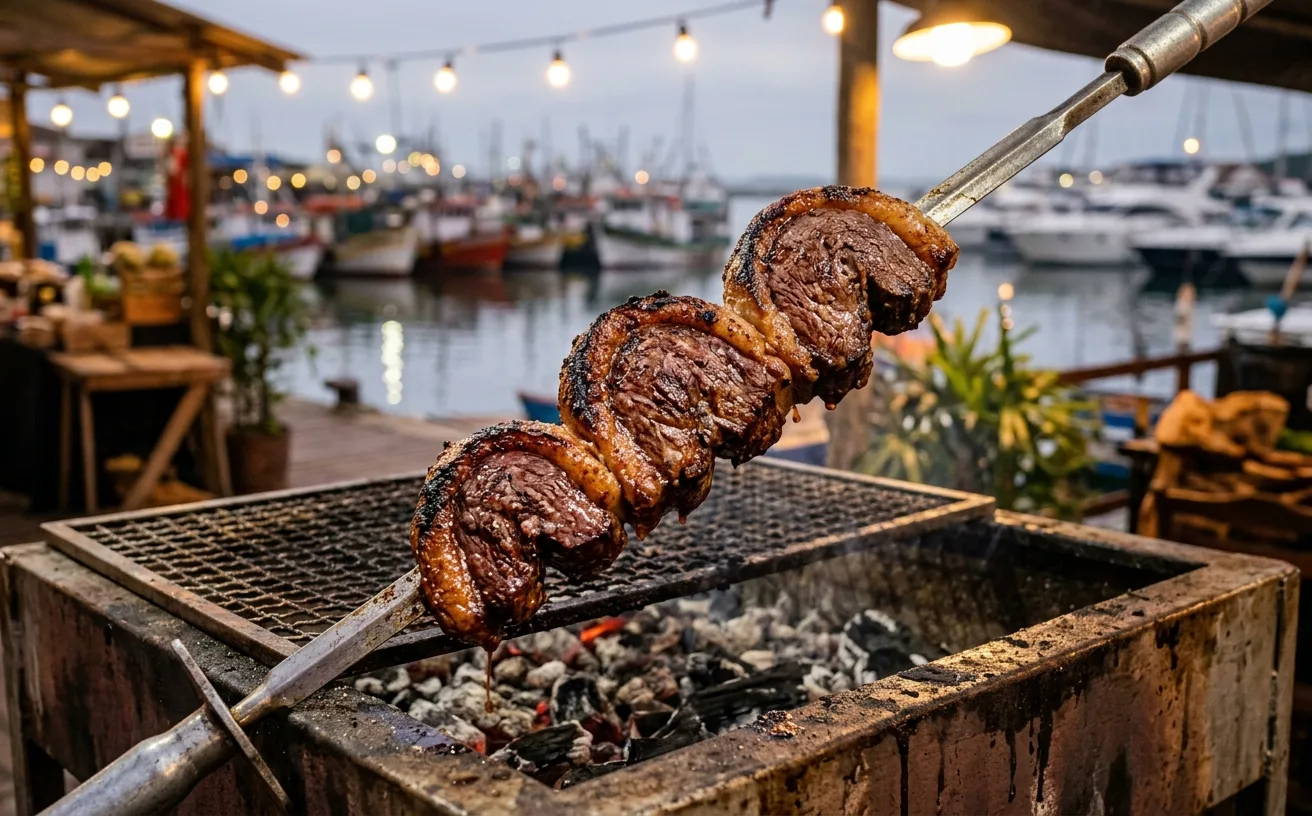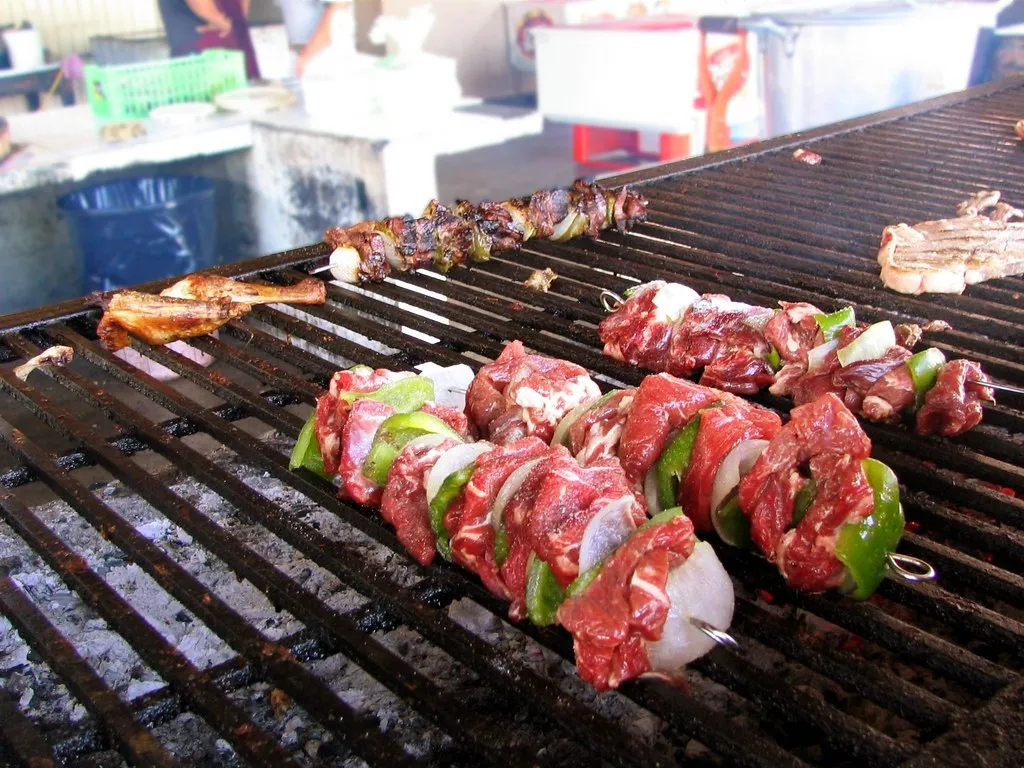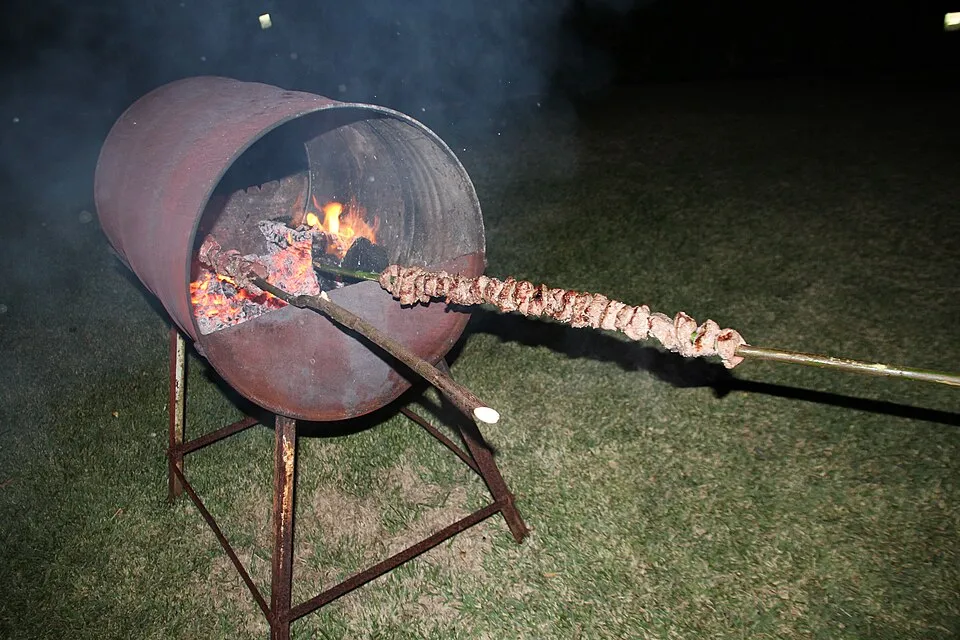
Madeira's festival skewer: large chunks of beef rubbed with garlic, coarse salt, and bay, threaded onto fresh bay-laurel branches and grilled over wood embers so the skewer itself perfumes the meat. Served hanging vertically from a stand so juices drip onto bolo do caco bread.
Also known as espetada madeirense, espetada em pau de louro, Madeiran beef skewers.
Ingredients
- 1 kg beef sirloin or rump, in 5 cm cubes
- 6 garlic cloves, crushed
- 12 fresh bay leaves (plus 4 sturdy bay branches as skewers, if you can get them)
- 20 g coarse sea salt
- 1 bolo do caco or crusty country loaf
- 1 tsp black pepper
How to make it
- 1
Crumble 4 bay leaves over the beef with the garlic, salt and pepper and let it sit 1 h.
- 2
Thread onto bay branches or metal skewers, folding a whole bay leaf between every second cube.
- 3
Grill over the highest heat you can raise, 8-10 min, turning for a charred shell over a rare-pink heart.
- 4
Hang each skewer vertically from a hook or prop it over thick slices of the bread.
- 5
Let it hang so the drippings soak into the bread below.
Pro tip: The vertical hanging rest is functional Madeira engineering: juices travel down the skewer into the bread, which is served as the first course.
Where Espetada comes from
It is inseparable from Madeira's arraiais — the summer village festivals — where it is cooked over long open fires for crowds. The laurel branch is not decoration: Madeira grows laurel abundantly, and using a green branch as a skewer is the sort of practical local solution that turns into a defining tradition.
Madeira's original: the bay-laurel branch makes the difference
The skewer itself is the seasoning in Madeira. Large beef chunks go onto green bay-laurel branches whose oils pass into the meat, while South African espetada uses a metal skewer with bay leaves tucked between the cubes and pours garlic butter over at the table. Both hang vertically; here the juices drip onto bolo do caco below. A beef option survives in Mozambican espetada, but it is brushed with piri-piri butter and prawns often take its place. Churrasco Espeto also relies on coarse salt, though it uses nothing else and carves thin slices from whole picanha, where Madeiran diners pull chunks off a shared skewer.
Compare: South African espetada · Mozambican espetada · Churrasco Espeto
How Espetada is cooked
A green laurel branch works as a skewer because it is damp and does not burn through, and because its oils release into the meat as it heats. That transfer is the entire reason the dish is distinctive — the same beef on a metal skewer is good; on laurel it tastes of the island.
The chunks are large, five centimetres or so, and the seasoning is applied at least an hour ahead: coarse sea salt, crushed garlic and bay, pressed into the meat and left. Grilling is over wood embers, and the vertical hanging service continues the cook slightly while the juices run down onto the bread — which is the part everyone at the table waits for.
Ingredients and shopping
Beef with some marbling — sirloin or a well-marbled rump rather than fillet. Large chunks. Fresh bay-laurel branches, stripped of leaves except at the top, soaked if they are not freshly cut. Where laurel is unavailable, metal skewers with bay leaves threaded between the meat is the honest compromise.
Coarse sea salt in quantity, crushed garlic, bay and black pepper. Nothing else. Bolo do caco — the Madeiran flatbread cooked on a stone, usually served with garlic butter — is the correct accompaniment and catches the drippings.
How Espetada is served
Hanging from its stand over bolo do caco, with the bread soaking up the drippings, plus milho frito (fried cornmeal cubes) and a salad. Madeira wine or a poncha. It is festival food and it is served for a table, with everyone pulling meat off the same skewer.
Common mistakes
Dry laurel branches
They burn through. Use freshly cut green branches, or soak them well.
Small chunks
Espetada uses large pieces. Small cubes over a wood fire dry out and lose the point of the hanging service.
Fine salt
Coarse sea salt is traditional and behaves differently — it draws less moisture and leaves a crust. Fine salt over-salts.
Serving it flat on a plate
The vertical hanging is functional: the juices run down onto the bread. Laid flat, they are lost.
Espetada: questions and answers
Why is bay-laurel wood used for the skewer?
Madeira grows laurel abundantly, and a green branch does not burn through. Its oils transfer into the meat as it heats, which is what makes the dish distinctive.
What meat is used?
Beef, in large chunks — sirloin or well-marbled rump. Not fillet, which has nothing to render over a wood fire.
Why is it served hanging?
So the juices drip down onto the bolo do caco bread placed beneath, which is considered part of the dish.