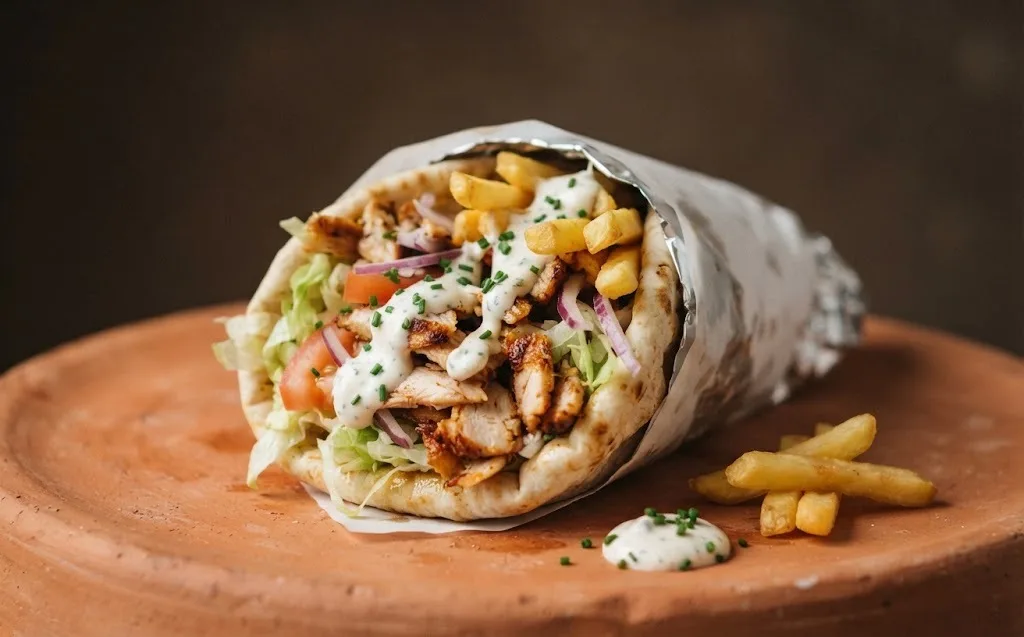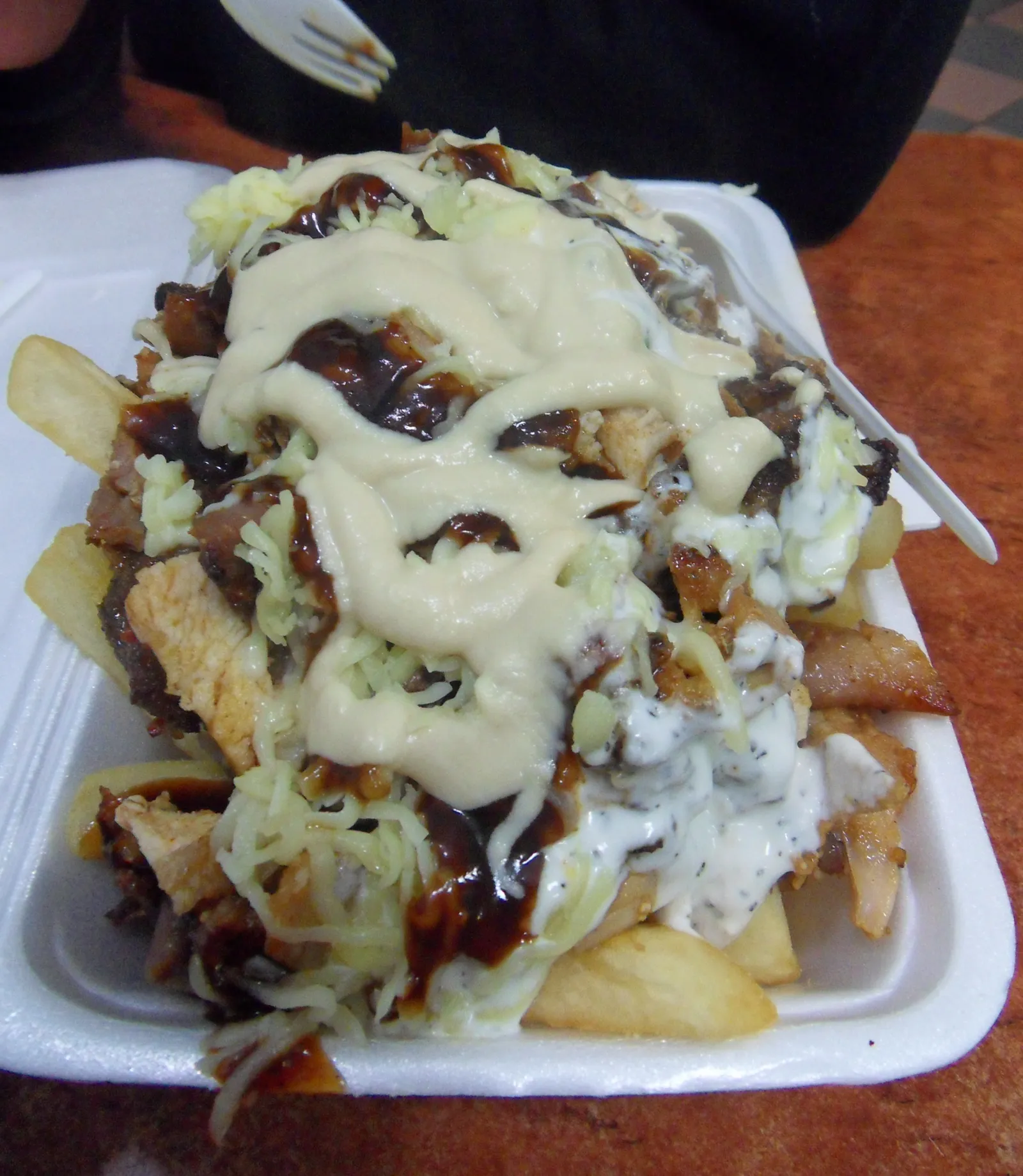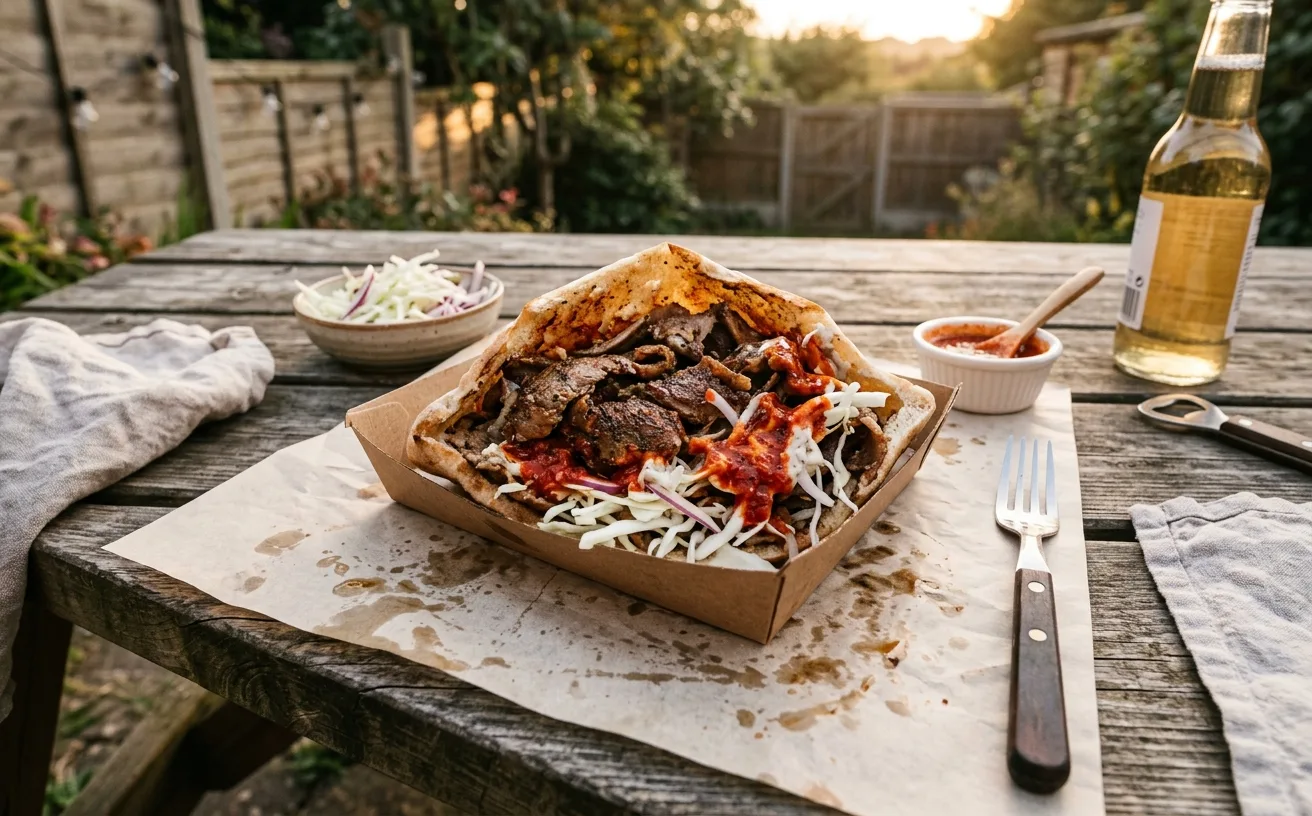
The UK's late-night institution: heavily seasoned minced-lamb döner carved off the spit into pitta with shredded cabbage, onion, and chilli sauce, sold from Turkish- and Kurdish-run shops that open when the pubs shut. Its reputation as a post-pint indulgence even spawned the annual British Kebab Awards.
Also known as donner kebab, doner, kebab and chips.
Reference video
Ingredients
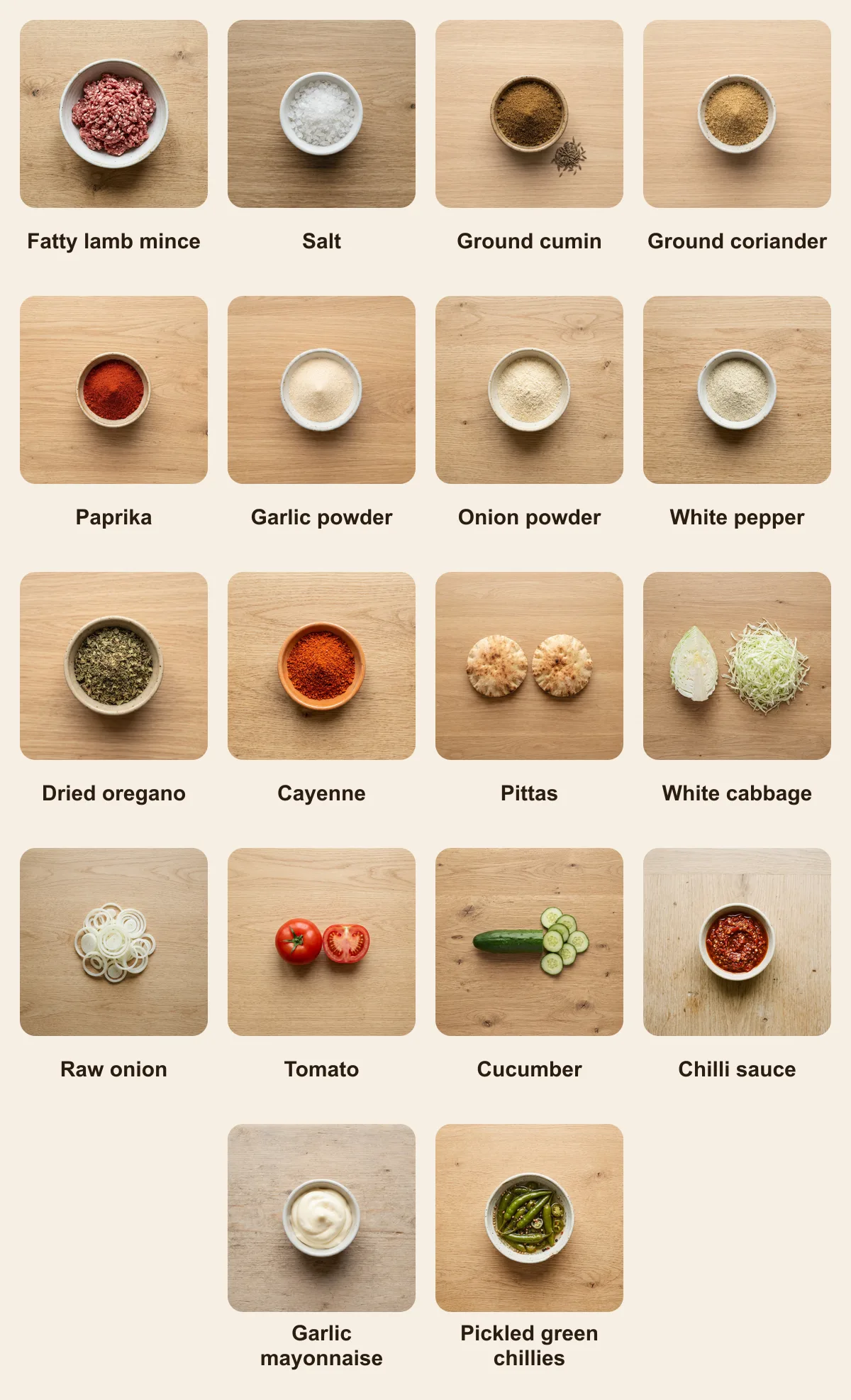
- 800 g fatty lamb mince (at least 20% fat)
- 12 g salt
- 1 tsp each ground cumin, coriander, paprika, garlic powder and onion powder
- 0.5 tsp each white pepper, dried oregano and cayenne
- 4 large pittas
- 150 g white cabbage, shredded, and half an onion, sliced
- 1 tomato, sliced; a quarter cucumber, sliced
- 60 g chilli sauce and 60 g garlic mayonnaise
- pickled green chillies
How to make it
- 1
Blitz the mince and all seasonings in a food processor to a smooth, sticky paste; that bouncy paste is the shop secret.
- 2
Pack it into a loaf tin, banging out air pockets, and bake in a water bath at 170 C for 1 h to a 70 C core.
- 3
Weight the loaf and chill it completely, ideally overnight.
- 4
Carve into thin wide ribbons and crisp them on a dry griddle 2 min.
- 5
Stuff warm pittas with meat, salad, both sauces and pickled chillies.
Pro tip: Carve only when fully cold and firm, then re-crisp; carving warm gives crumble, and it is the smooth paste plus press-and-chill that makes that unmistakable elephant-leg texture.
Where Doner Kebab comes from
It arrived with Turkish and Cypriot migration from the 1960s and has become a genuine national institution, complete with the annual British Kebab Awards and a place in the language — the post-pub kebab is a recognised cultural object rather than merely a meal. British doner is also, notably, almost always the minced-lamb cone rather than the layered-slice stack used elsewhere.
Elephant leg in warm pitta: what marks the British doner
Its giveaway is the meat: a smooth, homogenised minced-lamb cone, the trade's elephant leg, heavily seasoned with oregano, cumin and paprika. Berlin practice differs twice over, since German shops more often use a pressed stack of sliced meat and the Doner Kebab (Germany) goes into toasted fladenbrot rather than a warmed pitta. Shredded white cabbage and raw onion replace lettuce, and most shops offer only chilli sauce and garlic sauce instead of the Berlin trio. Chips sit on the side or, increasingly, inside the pitta; the Mitraillette with doner makes that the rule, cramming double-fried frites into a demi-baguette. Turnover is the variable to watch, because a slowly turning cone dries at the surface and steams within.
Compare: Doner Kebab (Germany) · Mitraillette with doner
How Doner Kebab is cooked
The elephant leg — the trade's own nickname for the cone — is a homogenised minced-lamb product, heavily seasoned with oregano, cumin and paprika, formed into a cone and cooked on a vertical rotisserie. It is a different product from a Turkish sliced stack and it behaves differently: softer, more uniform, and more forgiving of a slow evening.
The critical variable in a British shop is turnover. A cone that has been turning slowly for hours dries at the surface and steams within; a busy shop shaving continuously serves meat that has just cooked. This is why the queue is genuinely informative, and why the chef's advice — go where it is busy — is not snobbery but physics.
Ingredients and shopping
For a home version, minced lamb at 20 percent fat, blitzed with onion powder, oregano, cumin, coriander, paprika and white pepper until it is a smooth paste, pressed into a loaf tin, roasted, chilled and shaved. The paste texture is what distinguishes the British style from a sliced-meat doner.
Pitta rather than flatbread, warmed. Shredded white cabbage and raw onion, not lettuce. Chilli sauce and garlic sauce, and in most shops those are the only two. Pickled chillies on the side.
How Doner Kebab is served
In pitta with cabbage, onion, chilli sauce and garlic sauce, in paper, eaten walking. Chips on the side or, increasingly, in the pitta. Pickled chillies. It is late-night food and makes no apology for it.
Common mistakes
Coarse mince
The British cone is a smooth homogenised paste. Coarse mince gives a Turkish-style texture, which is a different sandwich.
Lettuce instead of cabbage
Shredded white cabbage is the British convention and it holds up under sauce where lettuce collapses.
Cold pitta
It must be warmed or it splits when filled.
Skipping the crisping
Slices from the loaf need a dry hot pan to get the browned edges the spit produces.
Doner Kebab: questions and answers
What is an elephant leg?
British trade slang for the large minced-lamb doner cone rotating in takeaway windows. It refers to the shape.
Why is British doner different from German doner?
British shops almost always use the homogenised minced-lamb cone; German shops more often use a pressed stack of sliced meat. The salad and sauces differ too — cabbage and chilli sauce rather than the Berlin trio.
Why does a busy kebab shop taste better?
Because the meat is shaved as it finishes cooking. A slowly turning cone dries at the surface and steams within.
Can I make British-style doner at home?
Yes — blitz minced lamb with onion and spices to a smooth paste, press into a loaf tin, roast, chill, shave and crisp in a dry pan.
Sources and further reading
- Doner kebab — Wikipedia
- Doner kebab and integration: A story worth telling — Al Jazeera