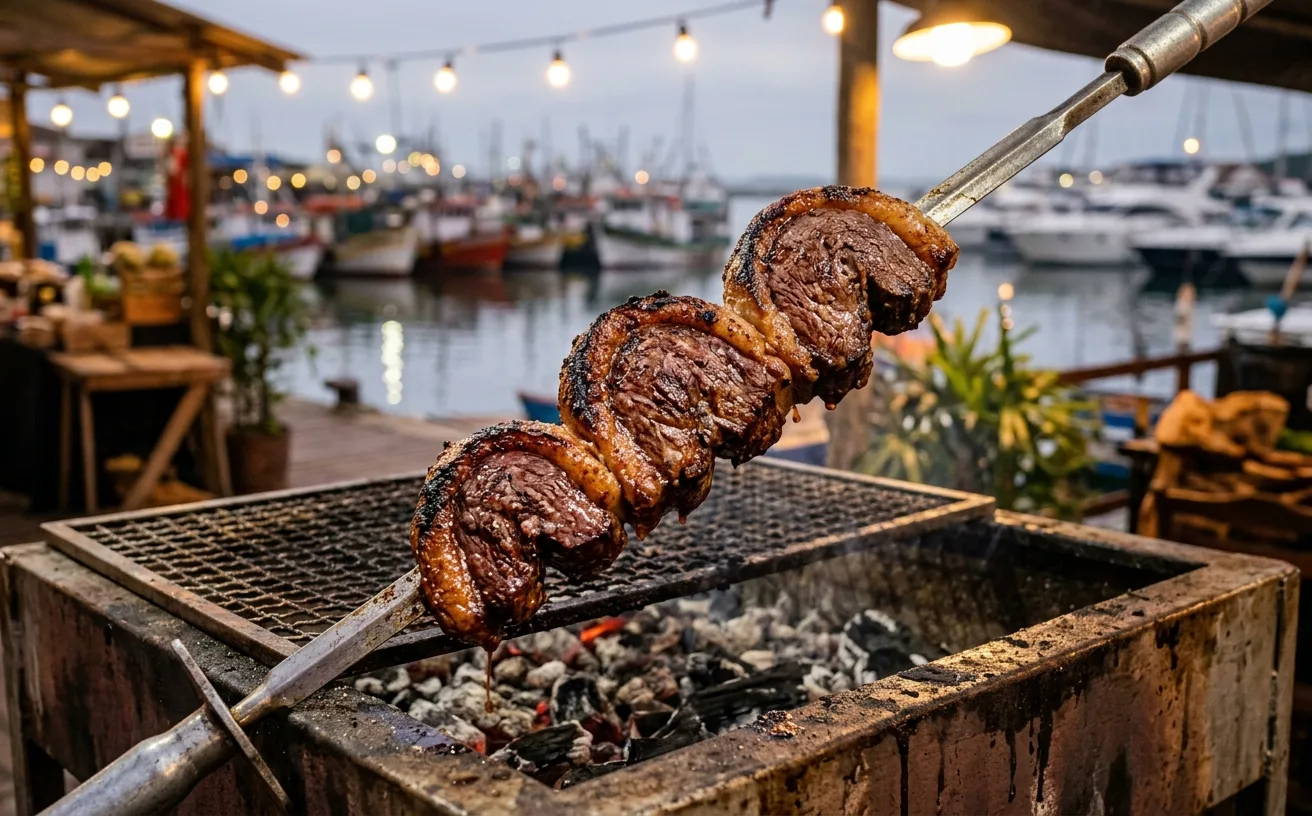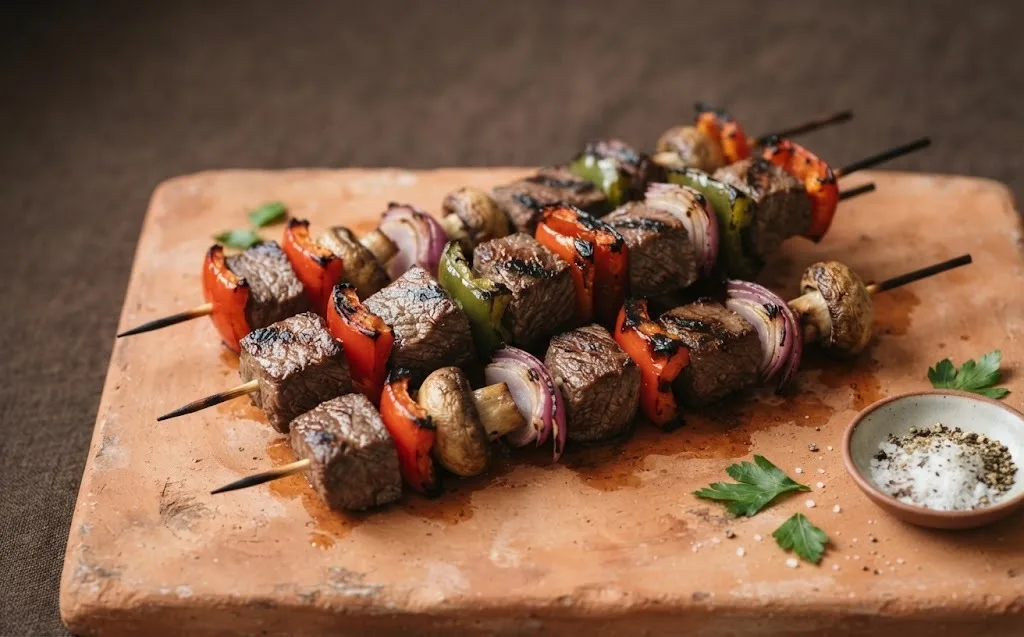
The backyard-barbecue 'kabob': cubes of beef or chicken alternated with bell pepper, onion, and mushroom on long skewers, brought to America largely by Armenian and Greek immigrants. The vegetable-studded, one-skewer-is-a-meal format is the distinctly American twist.
Also known as kabob, kebob, kabab.
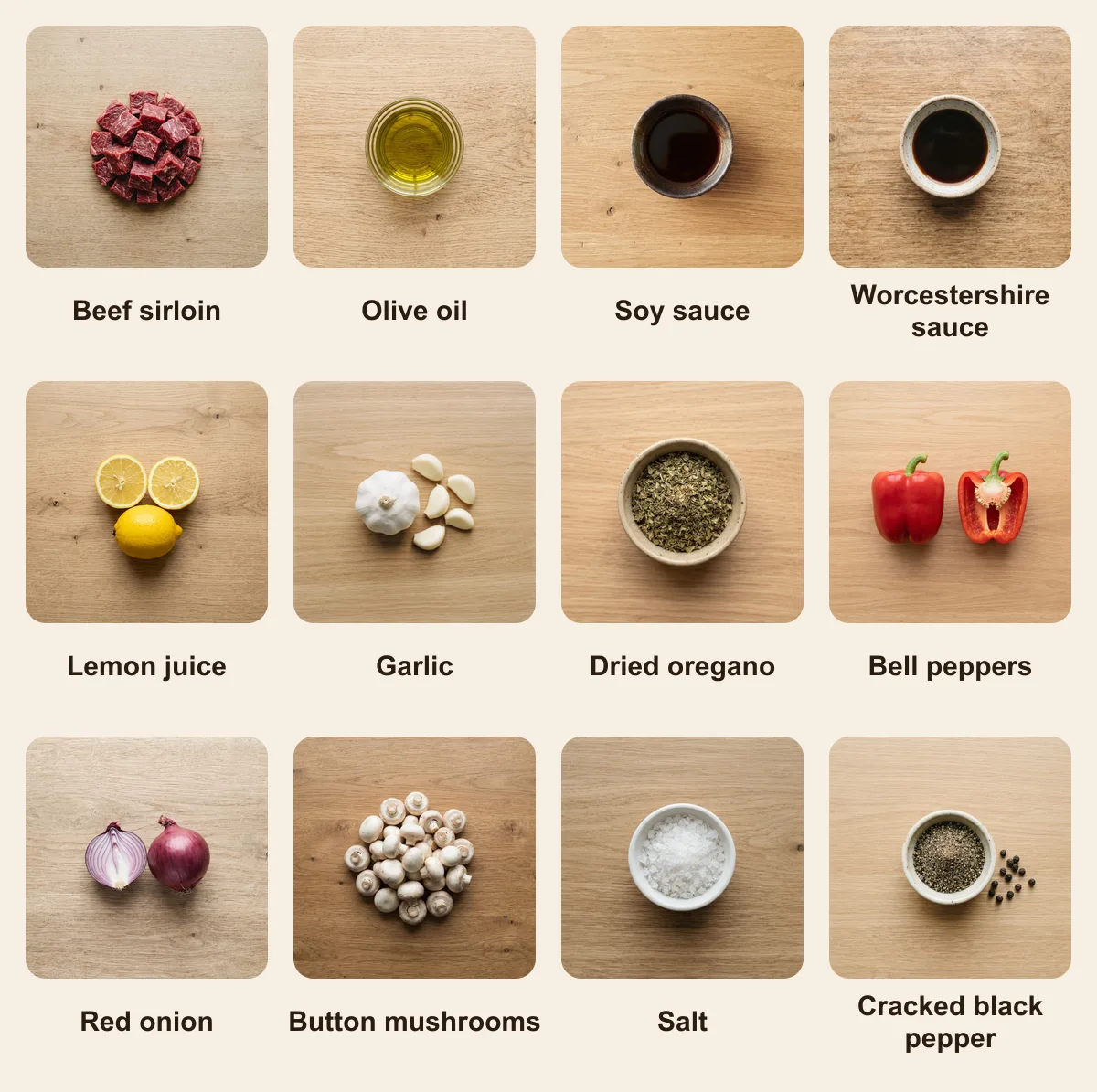
Ingredients
- 700 g beef sirloin, in 3 cm cubes
- 60 ml olive oil
- 30 ml soy sauce
- 15 ml Worcestershire sauce, 30 ml lemon juice
- 2 garlic cloves, minced, plus 1 tsp dried oregano
- 2 bell peppers, in 4 cm squares
- 1 red onion, in petals
- 200 g button mushrooms
- 1 tsp salt and 0.5 tsp cracked black pepper
How to make it
- 1
Whisk oil, soy, Worcestershire, lemon juice, garlic and oregano; marinate the beef 2 hours.
- 2
Cut the vegetables larger than the meat cubes — thick pepper and onion chunks, whole mushrooms — so their longer cooking time matches the smaller meat pieces.
- 3
Build the classic rainbow: beef, pepper, doubled onion petals, mushroom, repeat, then season all over with the salt and pepper.
- 4
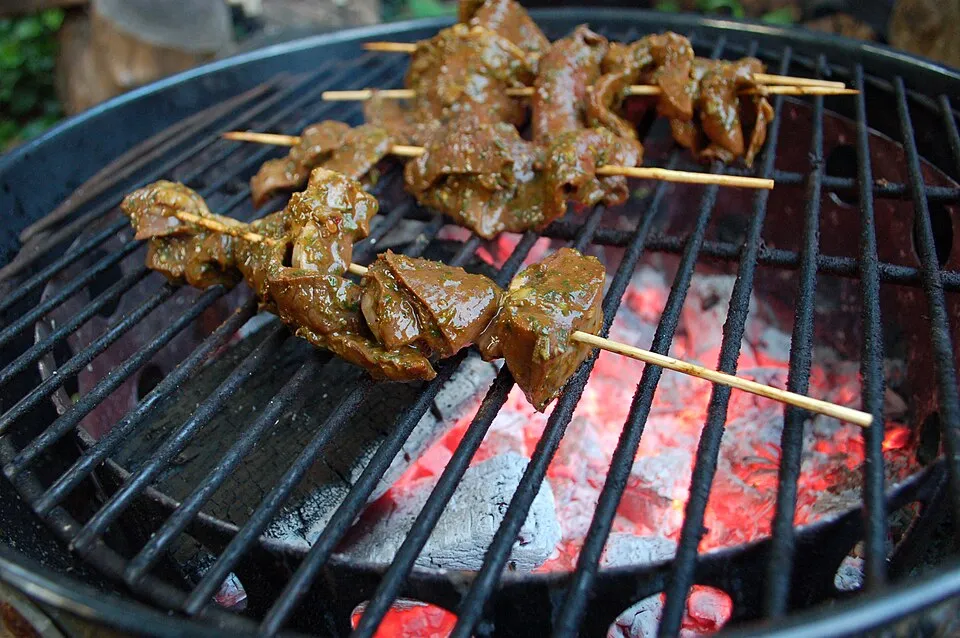
Sear over the hot side of a two-zone fire with the lid down, a quarter turn every 3 minutes, sliding the skewers to the cooler side if the vegetables char before the beef is done; 10-12 minutes total for medium.
- 5
Rest 5 minutes and serve right on the skewers.
Pro tip: Double up the onion and pepper layers between cubes: a single petal cooks to nothing while the beef finishes, but two thicknesses come out sweet, soft and slightly charred exactly on schedule.
Where Shish Kebab comes from
In every tradition the dish descends from, meat and vegetables go on separate skewers because they cook at different rates. American home cooking combined them for presentation and convenience, and then spent seventy years dealing with the consequences.
The backyard kabob, where one skewer is the whole meal
One skewer, one plate: that is the American change. Turkish Shish Kebab gives peppers and onion their own skewer because they cook faster than lamb, while the backyard kabob alternates beef sirloin or chicken with bell pepper, red onion and whole mushrooms so each skewer is a portion. Making that work means large vegetables, meat no bigger than three centimetres and a two-zone fire. Shishcheta shares the mixed stick but runs on pork and summer savory. For the marinade, oil, lemon juice, garlic, oregano, soy and Worcestershire get two to four hours, a long way from the yogurt of Chicken Shish (Tavuk Shish).
Compare: Shish Kebab · Shishcheta · Chicken Shish (Tavuk Shish)
How Shish Kebab is cooked
The mixed skewer creates a timing problem that has one honest solution: cut the vegetables large and the meat small, so their cooking times converge. Peppers and onion in wide chunks, mushrooms whole, meat in pieces no bigger than three centimetres. Cherry tomatoes should go on separately or be left off, because nothing makes them survive.
The marinade is usually oil, acid and herbs — lemon or vinegar, garlic, oregano — and the American habit of marinating overnight is the second problem. Acidic marinades left that long turn the meat surface mealy. Two to four hours does everything a long soak does without the damage.
Ingredients and shopping
Beef sirloin or chuck for beef kabobs, chicken thigh over breast. Lamb where the Armenian tradition survives. Bell peppers in three colours if the plate matters, red onion in wedges with the root left on so the layers hold, and whole cremini mushrooms.
Metal skewers for even cooking, or soaked wooden ones. A two-zone fire — hot for searing, cooler to finish — solves most of the mixed-skewer problem, and is the single upgrade that improves this dish most.
How Shish Kebab is served
Off the skewer onto rice pilaf or straight from it, with lemon, a green salad and grilled bread. It is a backyard dish and the informality is the point. In Armenian-American households it comes with lavash, raw onion with sumac and a roasted-vegetable salad, which is closer to the source and better.
Common mistakes
Vegetables cut too small
They burn before the meat is done. Large vegetables, small meat.
Overnight acidic marinade
Lemon or vinegar left that long turns the meat surface mealy. Two to four hours is the useful range.
Cherry tomatoes on the skewer
They burst and steam everything around them. Leave them off or grill them separately.
A single-zone fire
Two zones — hot to sear, cooler to finish — is what makes a mixed skewer work.
Shish Kebab: questions and answers
Should meat and vegetables go on the same skewer?
Traditionally no — they cook at different rates. If you do combine them, cut the vegetables large and the meat small so the timings converge.
What is the best beef for kabobs?
Sirloin for tenderness, chuck for flavour if you marinate longer. Avoid very lean cuts, which dry out over a grill.
Why did Americans put vegetables on the skewer?
Presentation and convenience — it turns one skewer into a complete plate. It is the main departure from the Armenian, Greek and Turkish traditions the dish came from.
Sources and further reading
- Shish kebab — Wikipedia
- Armenian Shish Kebab — James Beard Foundation
- The Shish Kabob: Dinner on a Stick — Hormel Foods