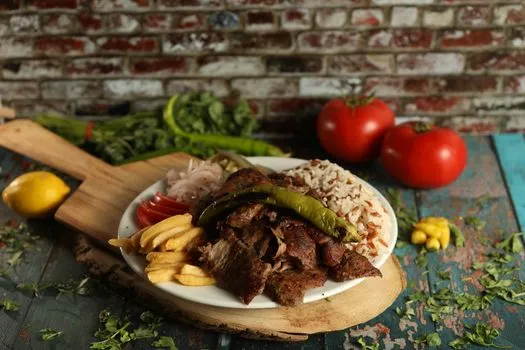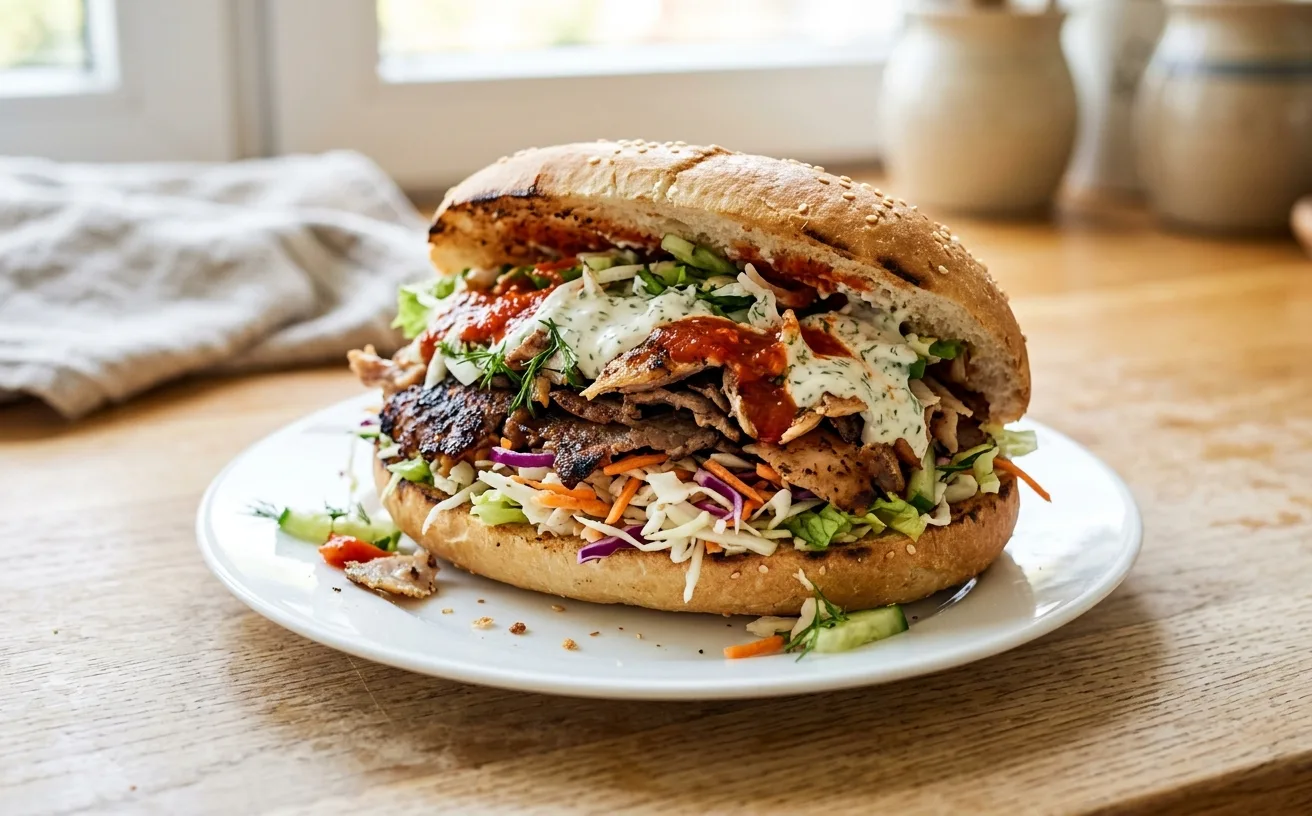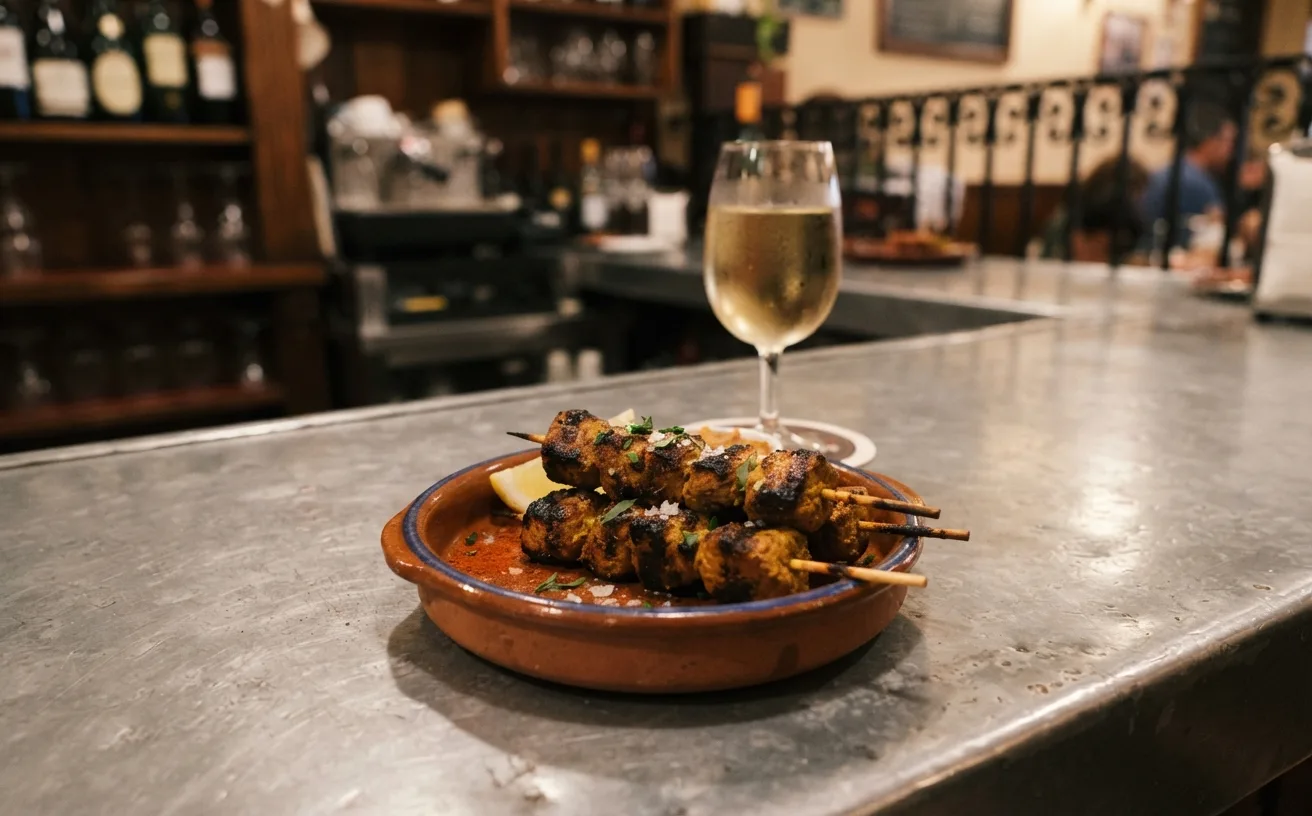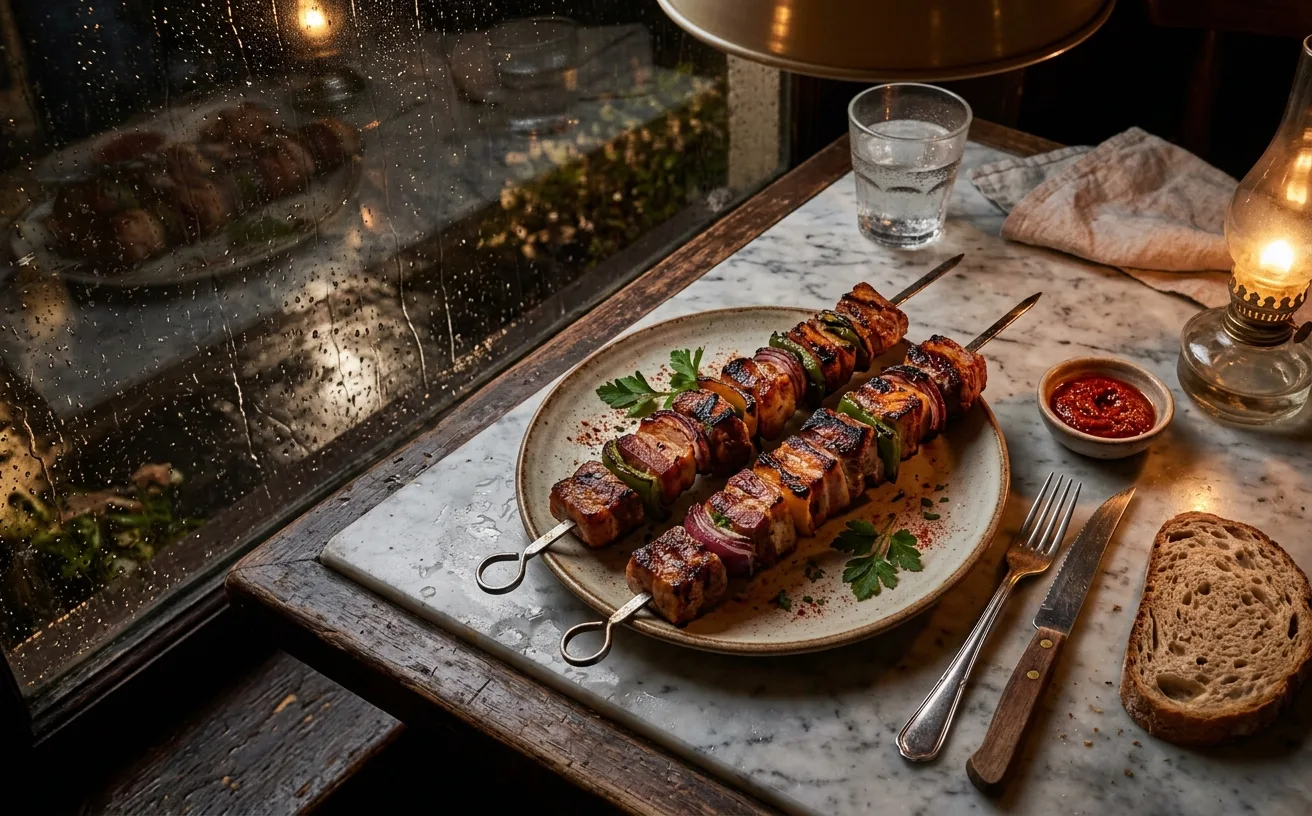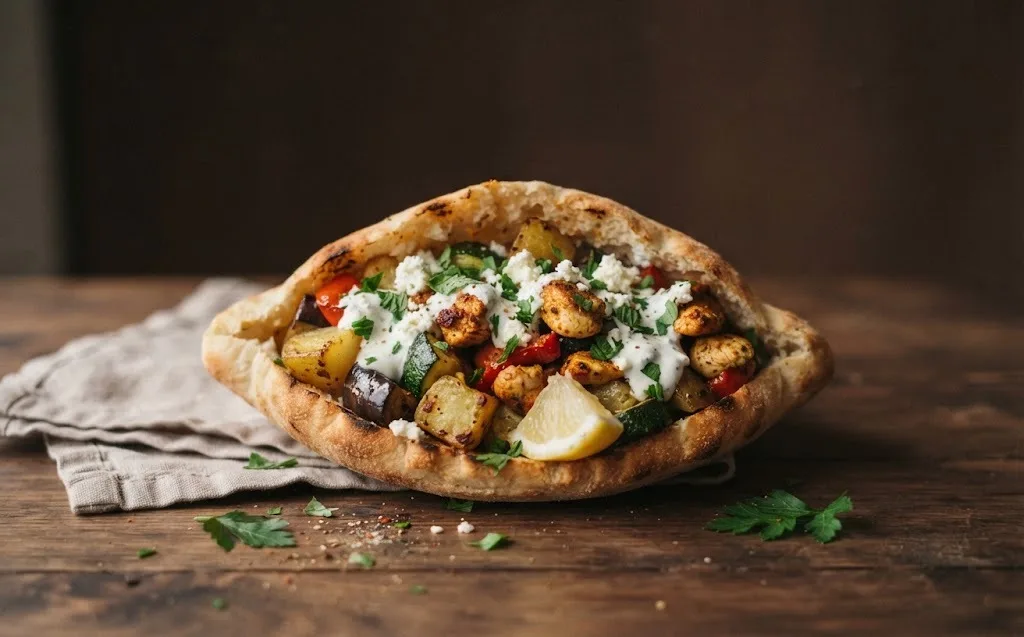
A Berlin refinement of the German doner sandwich that adds grilled and roasted vegetables (potato, zucchini, eggplant), feta, and lemon to marinated chicken shaved from the spit, popularized by Kreuzberg stands like Mustafa's. It marks the second-generation Turkish-German evolution of the 1970s Berlin doner.
Also known as Gemüse Döner, chicken vegetable kebab Berlin, Mustafa's Gemüse Kebap.
Ingredients
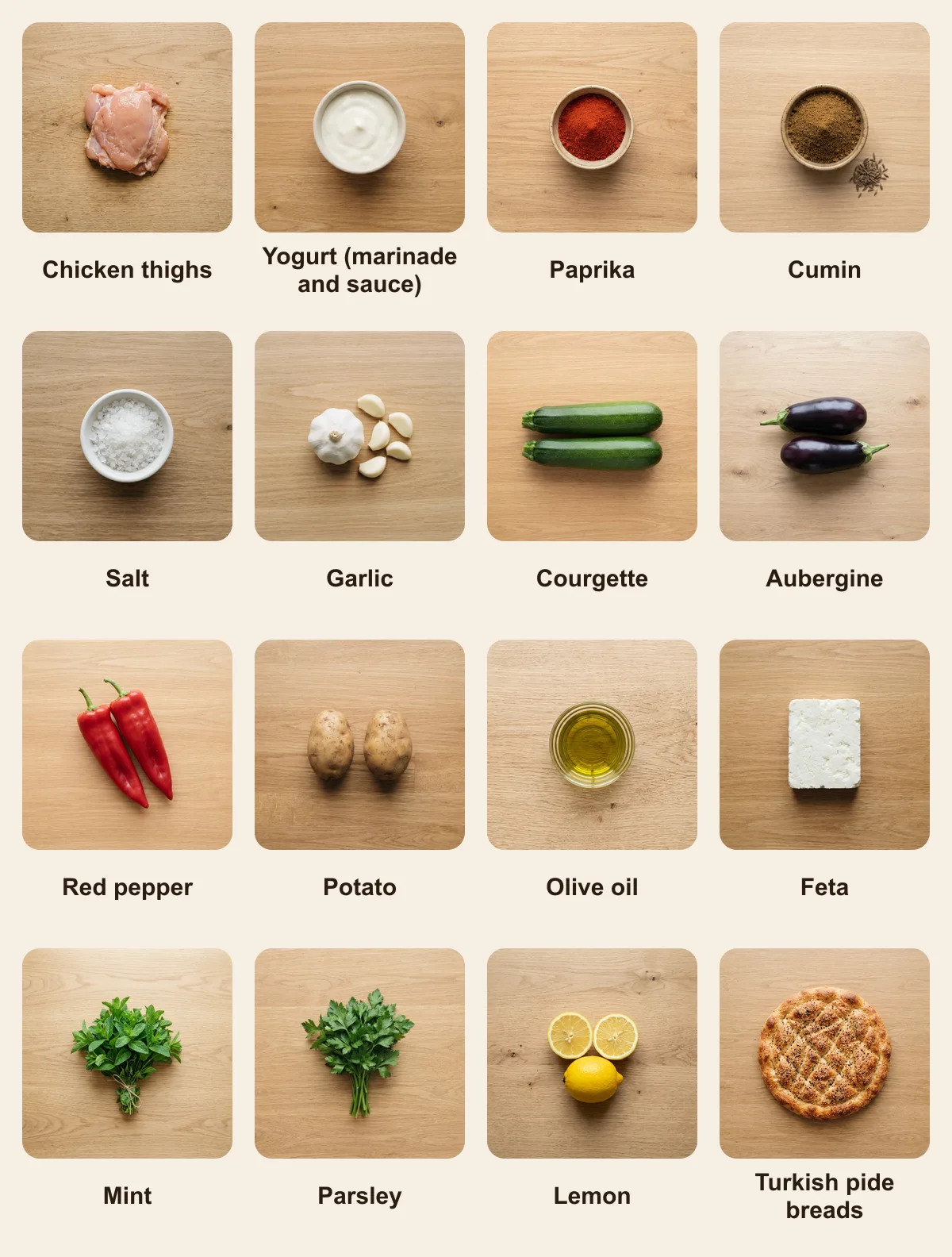
- 500 g chicken thighs, sliced thin
- 3 tbsp yogurt, 1 tbsp paprika, 1 tsp cumin, 1 tsp salt and 1 crushed garlic clove, for the marinade
- 1 courgette, 1 small aubergine, 1 red pepper and 1 potato, in chunks
- 3 tbsp olive oil
- 100 g feta, crumbled
- small bunch mint and parsley, chopped
- 1 lemon
- 150 g yogurt with 1 crushed garlic clove and salt, for the sauce
- 2 Turkish pide breads, halved into pockets
How to make it
- 1
Toss the vegetables with olive oil and salt and roast at 220°C for 25-30 minutes, until browned at the corners.
- 2
Meanwhile coat the chicken in the yogurt-paprika marinade, then sear in a wide pan 6-8 minutes until crusted and cooked through.
- 3
Toast the bread pockets and paint the insides with garlic-yogurt sauce.
- 4
Stuff in this order: roasted vegetables, chicken, more sauce, feta crumble, herbs, and a decisive squeeze of lemon.
Pro tip: This is the Kreuzberg upgrade: warm roasted vegetables under cool feta, herbs and lemon are exactly what separate a Gemüse kebap from an ordinary doner.
Where Gemüse Kebap comes from
Gemüse Kebap is a Berlin invention with a precise ancestry, and the name says so: Gemüse — say it roughly geh-MUE-zeh — is German for vegetables, while Kebap keeps the Turkish spelling. The Turkish doner sandwich as Germany knows it was itself created in Berlin in the early 1970s, when Turkish workers adapted the sliced-spit meat of Anatolia into something that could be eaten walking. Gemüse Kebap is the second-generation refinement of that idea, arriving decades later from the same neighbourhoods.
Its fame is attached to one stand — Mustafa's Gemüse Kebap at Mehringdamm in Kreuzberg — whose queue became a Berlin landmark in its own right, but the format spread far beyond it and is now standard across German Imbiss counters. The move it made was simple and consequential: put hot roasted vegetables into a sandwich that had, until then, been meat and raw salad.
How Gemüse Kebap is cooked
There are two separate cooking jobs and the dish fails when they are merged. The vegetables — potato, courgette, aubergine, red pepper — are roasted hard at high heat until their edges genuinely brown, because their sweetness comes from caramelisation, not from being warm. Meanwhile the chicken, marinated in yoghurt and paprika, is seared fast in a wide pan so it crusts before it dries.
Assembly order then does the rest. Sauce goes onto the bread first so it does not slide off the filling; roasted vegetables go in before the meat so their heat is trapped; feta and herbs go on last, cold and uncooked, directly against the lid of the bread. The final squeeze of lemon happens at the counter, not in the kitchen — it is a top note and it fades within a minute.
Ingredients and shopping
Chicken thigh, not breast: this sandwich carries a lot of acid and a lot of sauce, and breast meat disappears under them. Turkish pide or a thick fladenbrot is the correct bread — pita pockets are too thin to hold the volume and tear. Use a firm, salty barrel-aged feta rather than a mild creamy one, because it has to register against roasted vegetables and garlic yoghurt.
The vegetable mix is not fixed and never has been. Potato and courgette are near-universal; aubergine, red pepper, carrot and broccoli all appear at different stands. What matters is that everything is cut to a size that finishes together and that nothing goes in raw — a raw pepper strip in this sandwich reads immediately as a shortcut.
How Gemüse Kebap is served
It is eaten standing, wrapped in paper, within about three minutes of being made — this is not a sandwich that survives a journey, because the bread absorbs the vegetable steam and softens. At the stand it comes with a choice of sauces (garlic, herb, chilli) and usually nothing else, because there is already a full plate of vegetables inside it. Ayran or a cold Berliner Pilsner are the standard drinks.
Common mistakes
Steaming the vegetables instead of roasting them
A crowded tray at a low temperature gives you pale, wet vegetables. Spread them out, use 220°C, and let the edges go properly dark.
Chicken breast
It dries in the pan and vanishes under the sauce. Thigh has the fat to survive both.
Sauce on top
Garlic yoghurt painted inside the bread before filling seals it and stays put. Poured over the top it runs straight out of the open end.
Skipping the lemon
Everything in this sandwich is rich, warm and soft. The lemon is the only sharp element and it is what makes the whole thing readable.
Warm feta
Feta added while the vegetables are still on the tray melts into paste. It goes in cold, crumbled, at the very end.
Gemüse Kebap: questions and answers
Is Gemüse Kebap vegetarian?
No, despite the name. Gemüse means vegetable and refers to the roasted vegetables added to the sandwich — the chicken is still there. Stands do usually offer a genuinely meat-free version on request.
What is the difference between Gemüse Kebap and a normal doner?
A standard doner carries raw salad, sauce and sliced meat. Gemüse Kebap adds hot roasted vegetables, feta and lemon, which changes it from a cold-and-hot contrast into a much richer, fully cooked sandwich.
Can I make it without a doner spit?
Yes. Marinate chicken thigh in yoghurt and paprika, sear it hard in a wide pan and slice it thin. You lose the spit's crust but keep the marinade and the texture.
Which vegetables are traditional?
Potato, courgette, aubergine and red pepper are the core. Broccoli and carrot show up regularly. There is no fixed list — the stands vary and always have.
Sources and further reading
- Mustafas 'Gemüse-Kebab' — visitBerlin (official Berlin tourism board)
- Mustafa's Gemüse Kebab moves on: Will the queue follow? — The Berliner
- Döner kebab — Wikipedia