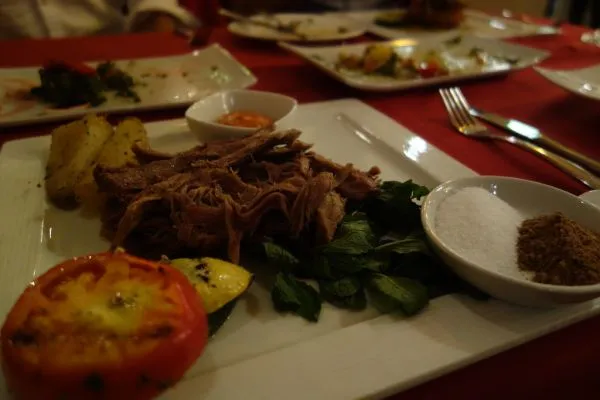
A whole lamb rubbed with smen, cumin, and saffron, then slow-roasted on a spit or in a sealed pit oven until the meat pulls apart by hand. A festival and celebration centerpiece across the Maghreb, traditionally eaten with nothing more than cumin and salt.
Also known as mechwi, meshwi, Moroccan roast lamb.
Ingredients
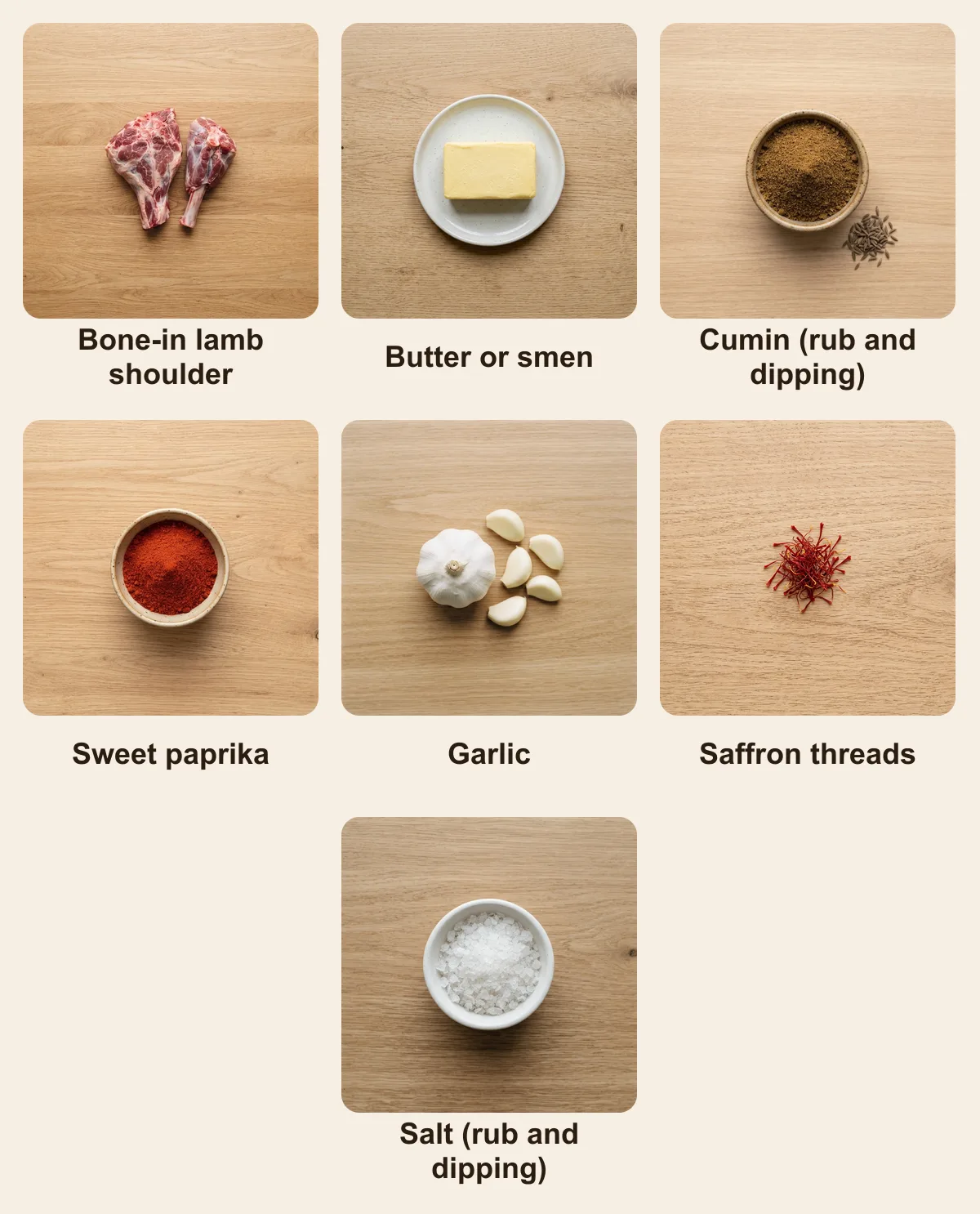
- 2 kg bone-in lamb shoulder
- 60 g soft butter or smen
- 2 tbsp ground cumin, divided
- 1 tbsp sweet paprika
- 4 garlic cloves, crushed
- Pinch of saffron threads, bloomed in warm water
- 1.5 tsp salt
- Cumin-salt (1:1), for dipping
How to make it
- 1
Stab the shoulder a dozen times and work in a paste of butter, half the cumin, paprika, garlic, saffron water and salt, pushing it into the slits.
- 2
Set the lamb on a rack over a splash of water, cover tightly with foil, and roast at 150 C for 4 to 5 hours, basting with pan juices every hour.
- 3
Uncover, raise to 220 C, and give it 15 minutes to bronze.
- 4
Rest 20 minutes under loose foil.
- 5
Bring it out whole, to be pulled apart by hand and dipped piece by piece in cumin-salt.
Pro tip: Mechoui is eaten with fingers, and that is also the doneness test: if you need a knife, it is not ready. When a gentle tug at the shank end slides meat off the bone, only then does the oven blast for crust.
Where Mechoui comes from
The word means roasted, and the dish is at the heart of Moroccan and Algerian hospitality — served at weddings, at Eid, and at any gathering large enough to justify a whole animal. In Marrakech, the mechoui alley near the Djemaa el-Fna sells it by weight from underground pit ovens fired overnight.
How Mechoui is cooked
Butter is the classic rub; smen — Moroccan fermented, aged butter — is a pungent alternative, cheesy and salty in a way ordinary butter is not. Either one, rubbed over the lamb, seasons it and forms a basting layer that keeps the surface from drying over hours of roasting.
The pit version is sealed, so the lamb roasts in trapped heat and its own steam, which is why it pulls apart rather than carving. The spit version turns over embers and produces a crisper exterior. Either way the cook is long and unhurried — four to six hours for a whole animal — and the meat is served by hand, in pieces, rather than sliced.
Ingredients and shopping
For a domestic version, a bone-in shoulder or a whole leg. Smen from a Moroccan grocer if you can find it; failing that, butter mixed with a little aged cheese and salt approximates its funk, or use ghee and accept a milder result.
The rub is smen, cumin, saffron bloomed in water, garlic, salt and sweet paprika. Cook at 150°C, tightly covered, for four to five hours, then uncover briefly to colour. Cumin mixed with salt on the table for dipping.
How Mechoui is served
Pulled apart onto a communal platter, with bowls of cumin and salt, khobz bread, and nothing else. Mint tea afterwards. It is eaten with the hands from a shared dish, and at a wedding or Eid it is the centre of the table around which everything else is arranged.
Common mistakes
Skimping on the butter
Butter or smen, worked into the slits and basted back over the lamb every hour, is what keeps the surface from drying on a long roast. Smen adds a fermented funk; plain butter is the classic choice and works well.
Cooking it hot
Mechoui is a long, low roast. High heat gives roast lamb with a dry interior.
Carving it
It is meant to pull apart by hand. If it needs a knife, it has not cooked long enough.
Elaborate seasoning
Cumin, saffron, smen and salt. Maghrebi practice keeps it plain and puts the cumin-salt on the table instead.
Mechoui: questions and answers
What is smen?
Moroccan fermented, aged butter — pungent, salty and cheesy. Used in place of plain butter in the rub, it gives mechoui a funkier edge.
Pit or spit?
Both are traditional. The sealed pit steams as it roasts and gives meat that pulls apart; the spit gives a crisper exterior.
Sources and further reading
- Méchoui — Wikipedia
- Mechoui: Morocco's Slow-Roasted Lamb Explained — Heerby