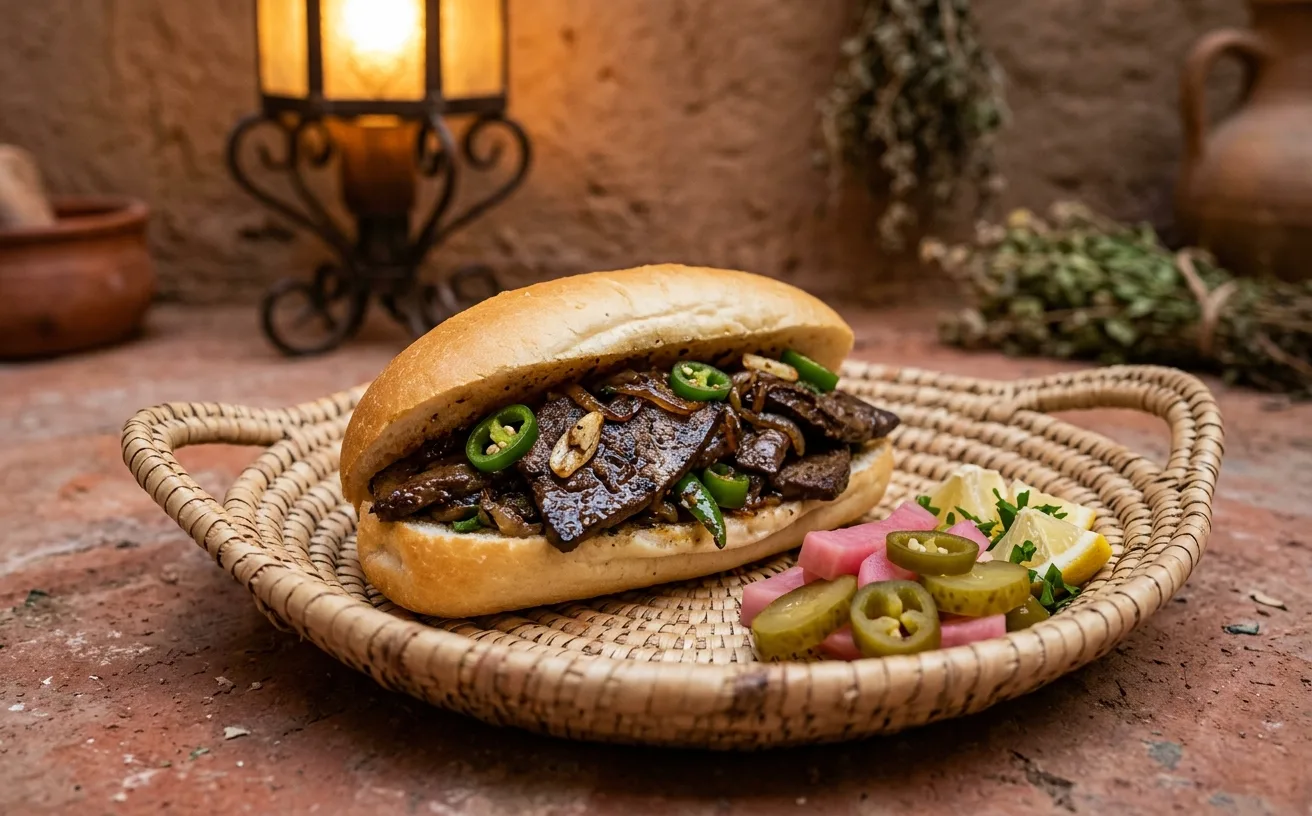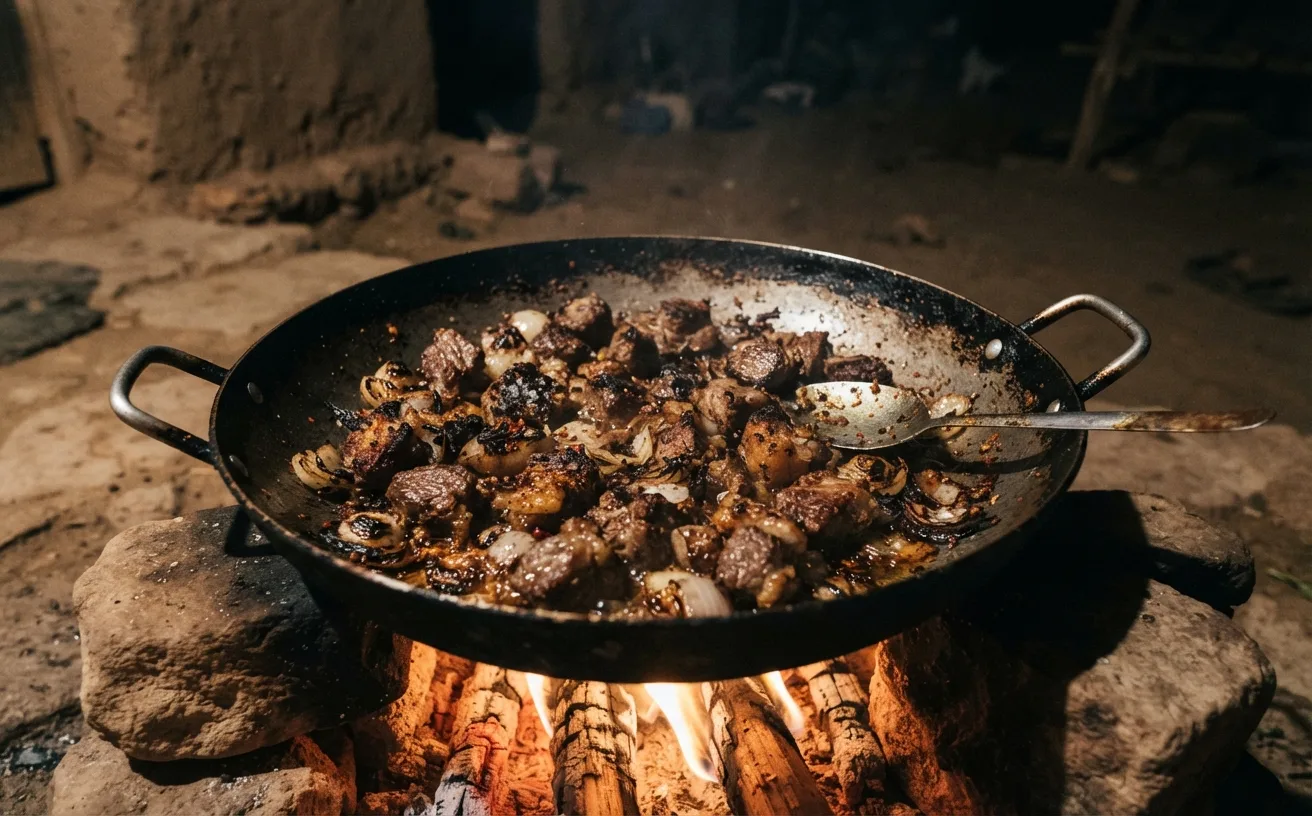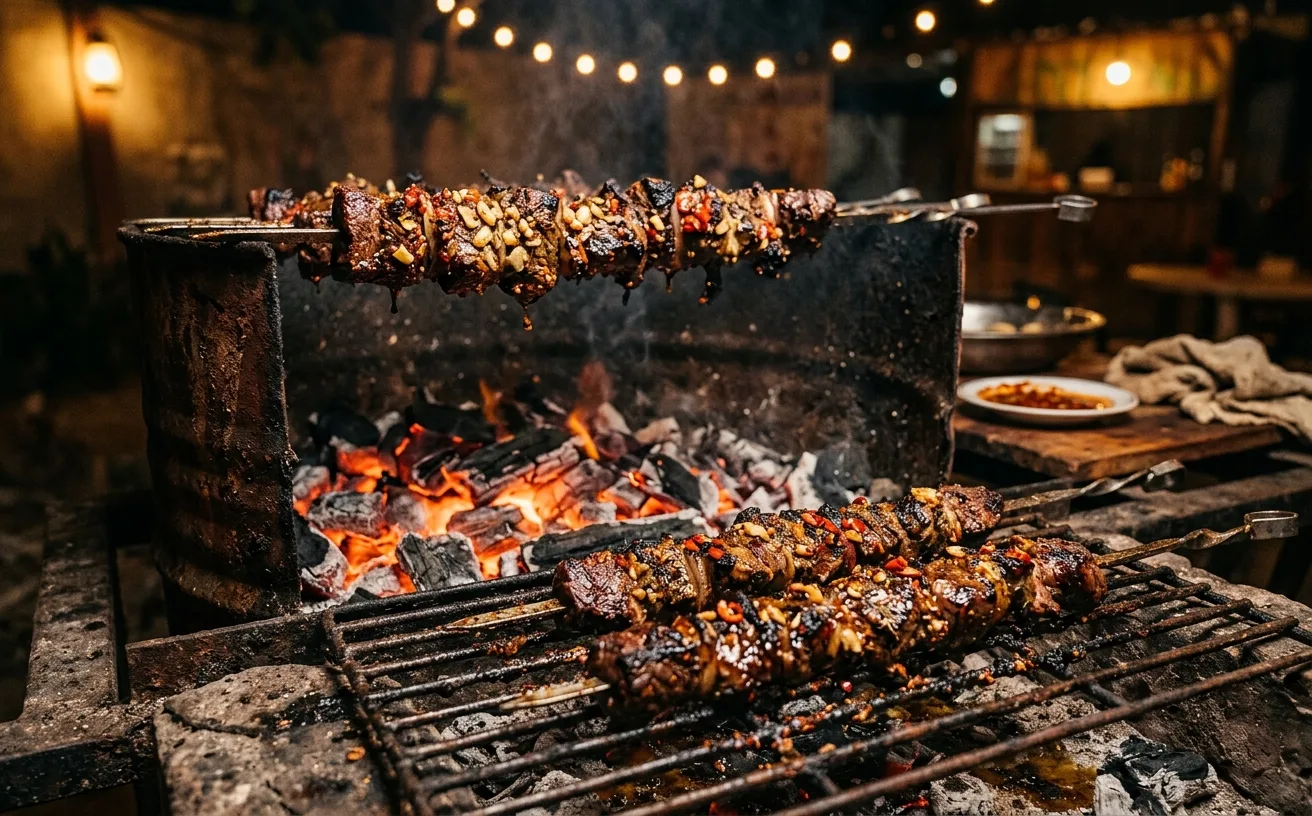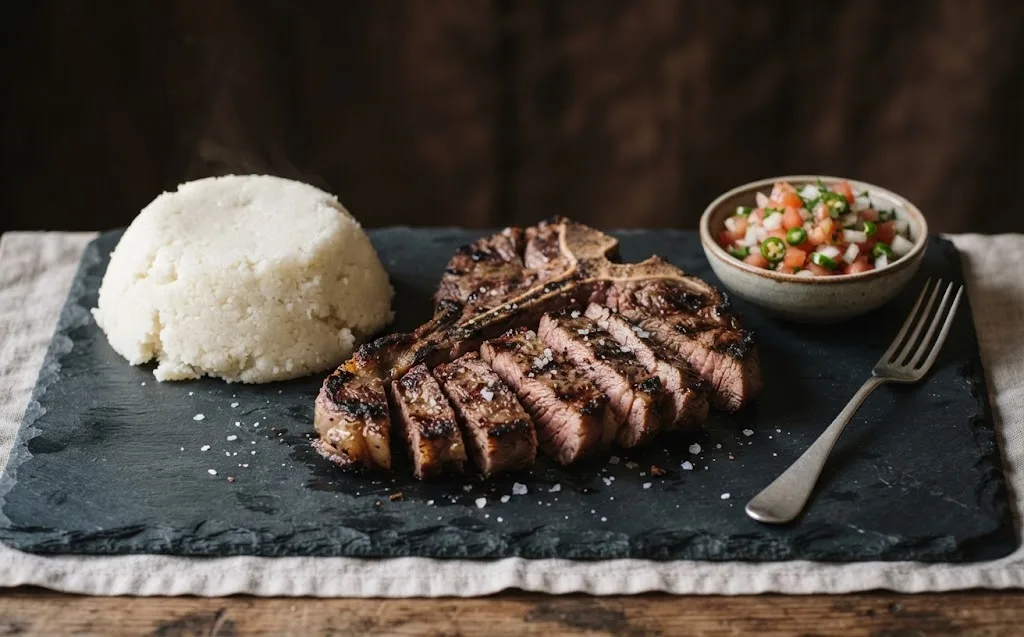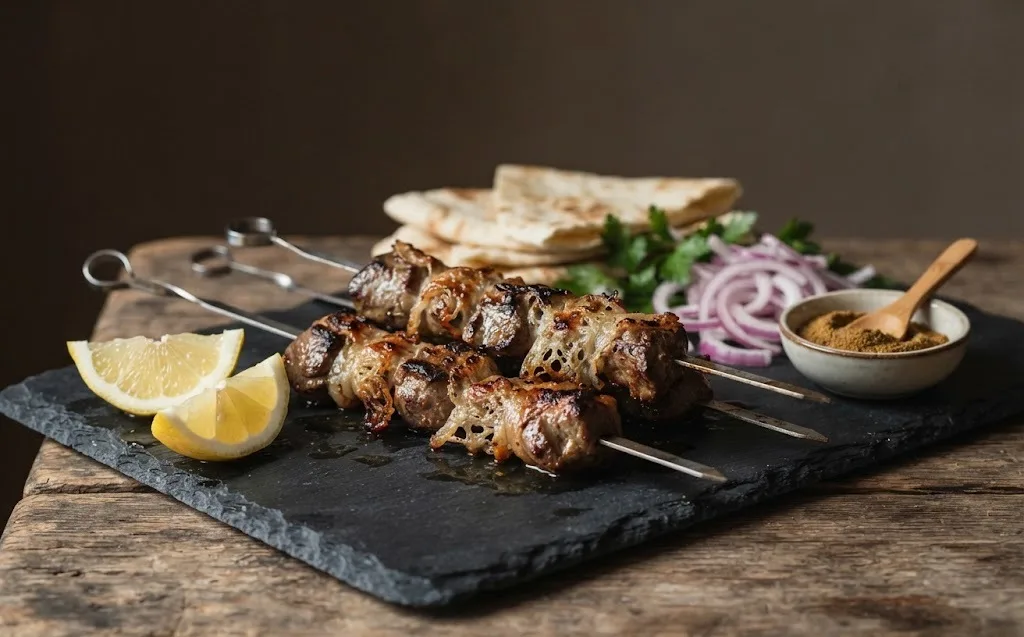
The Eid al-Adha morning rite of eastern Algeria: cubes of fresh lamb liver wrapped ('melfouf' means wrapped) in lacy caul fat, skewered and grilled so the fat self-bastes the liver, eaten within hours of the sacrifice. It shares lineage with Moroccan boulfaf and the wider Maghrebi kebda-skewer tradition.
Also known as melfouf kebda, kebab melfouf, boulfaf.
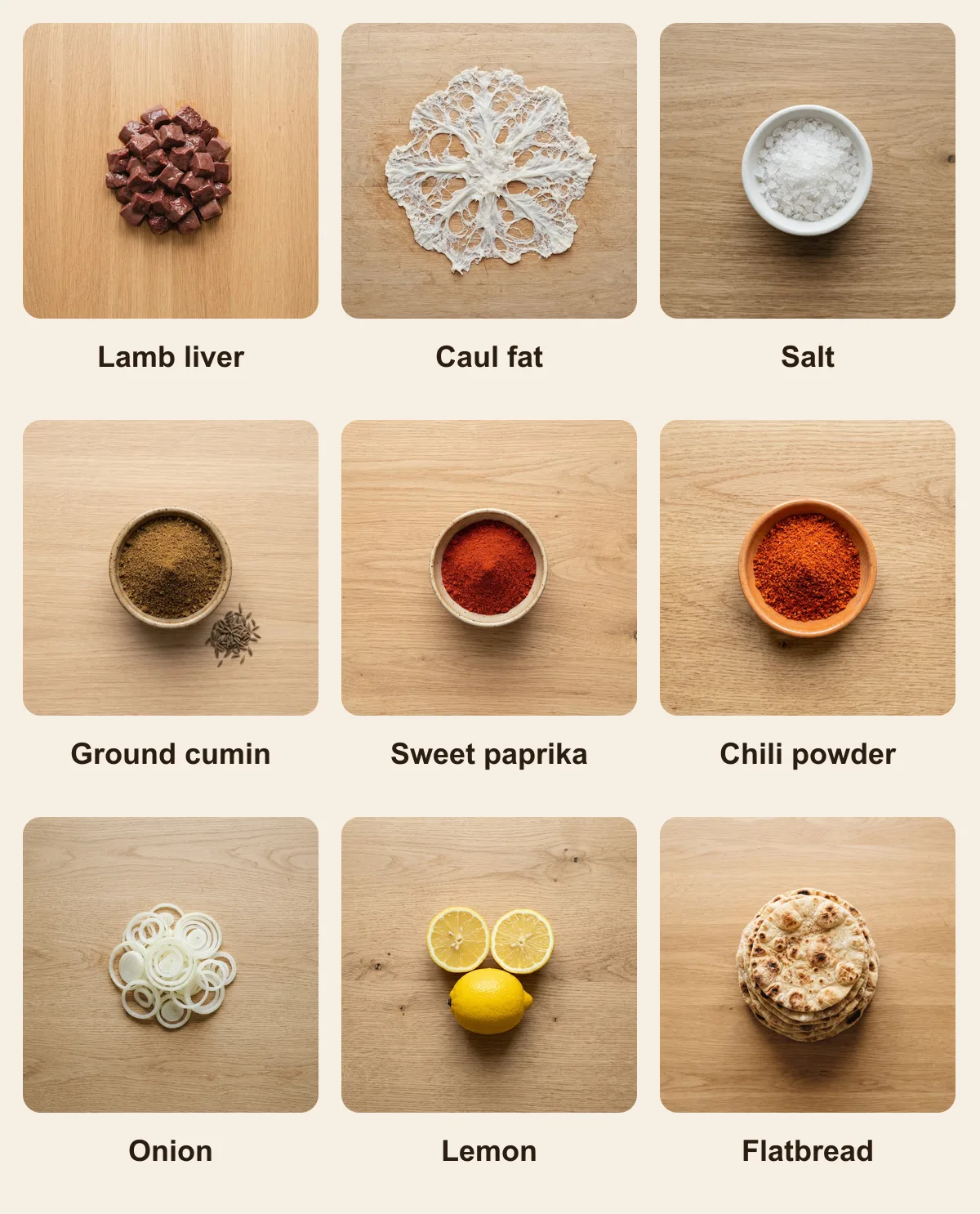
Ingredients
- 600 g fresh lamb liver, 3 cm cubes
- 200 g caul fat, soaked in warm salted water
- 1.5 tsp salt
- 1 tsp ground cumin
- 0.5 tsp sweet paprika
- 0.5 tsp chili powder
- 1 small onion, thinly sliced, to serve
- 1 lemon
- flatbread, to serve
How to make it
- 1
Season the liver cubes with salt, cumin, paprika and chili and let them sit 30 minutes while the caul fat soaks pliable.
- 2
Spread the caul into a thin sheet, cut palm-size squares and roll each liver cube into its own snug parcel.
- 3
Thread the wrapped cubes onto skewers seam-side pinned by the metal so nothing unravels.
- 4
Grill over glowing Eid-morning coals 6-8 minutes, turning steadily as the caul renders, bastes and crisps to lace.
- 5
Rest 2 minutes and serve with lemon, bread, raw onion, salt and cumin, and sweet mint tea — the traditional Eid-morning way.
Pro tip: Caul fat must go on translucent-thin; doubled-up patches stay flabby instead of frying crisp around the liver.
Where Melfouf comes from
Where Morocco leans on cumin, the Algerian version tends toward a heavier hand with paprika and a little more chilli.
How Melfouf is cooked
Caul fat wrapped around each cube is the shared technique of the whole tradition, and it solves the specific problem of grilling liver: a very lean organ with a two-minute cooking window and no fat of its own. The membrane melts away and bastes from every side simultaneously.
Algerian practice often includes a piece of the lamb's own fat inside the wrap alongside the liver, which extends the basting further. The cook runs six to eight minutes over hot embers — longer than the liver alone would need — because the caul fat has to render and crisp, and the skewers are turned constantly as it flares.
Ingredients and shopping
Fresh lamb liver, membrane peeled and tubes cut out, in three-centimetre cubes. Caul fat, soaked in warm water until pliable. A little lamb fat to tuck inside the wrap, if you like.
Paprika, cumin, salt and a little chilli — Algerian versions lean more paprika-forward than Moroccan boulfaf. Metal skewers. Khubz bread, and often a glass of very sweet mint tea alongside on Eid morning.
How Melfouf is served
Off the skewer with khubz, raw onion, salt and cumin, on Eid morning while the rest of the animal is still being butchered. Sweet mint tea. It is communal and eaten standing, and it marks the start of the feast rather than being a course within it.
Common mistakes
Dry caul fat
It tears when you try to wrap. Soak it in warm water until pliable and stretchable.
Overcooking
Left too long after the caul has rendered the liver turns grainy. Six to eight minutes total is enough, pulled while still faintly pink.
Not turning constantly
Rendering caul fat flares. Constant turning prevents the outside blackening.
Frozen liver
The texture breaks irreversibly. This is a fresh-liver dish by definition.
Melfouf: questions and answers
What does melfouf mean?
Wrapped, in Arabic — describing the caul fat wound around each cube of liver.
How is it different from Moroccan boulfaf?
The same technique and occasion. Algerian melfouf tends to be more paprika-forward and slightly hotter; Moroccan boulfaf leans on cumin.
Sources and further reading
- Boulfaf — Wikipedia
- Moroccan Liver Brochettes with Caul Fat - Boulfaf — Taste of Maroc