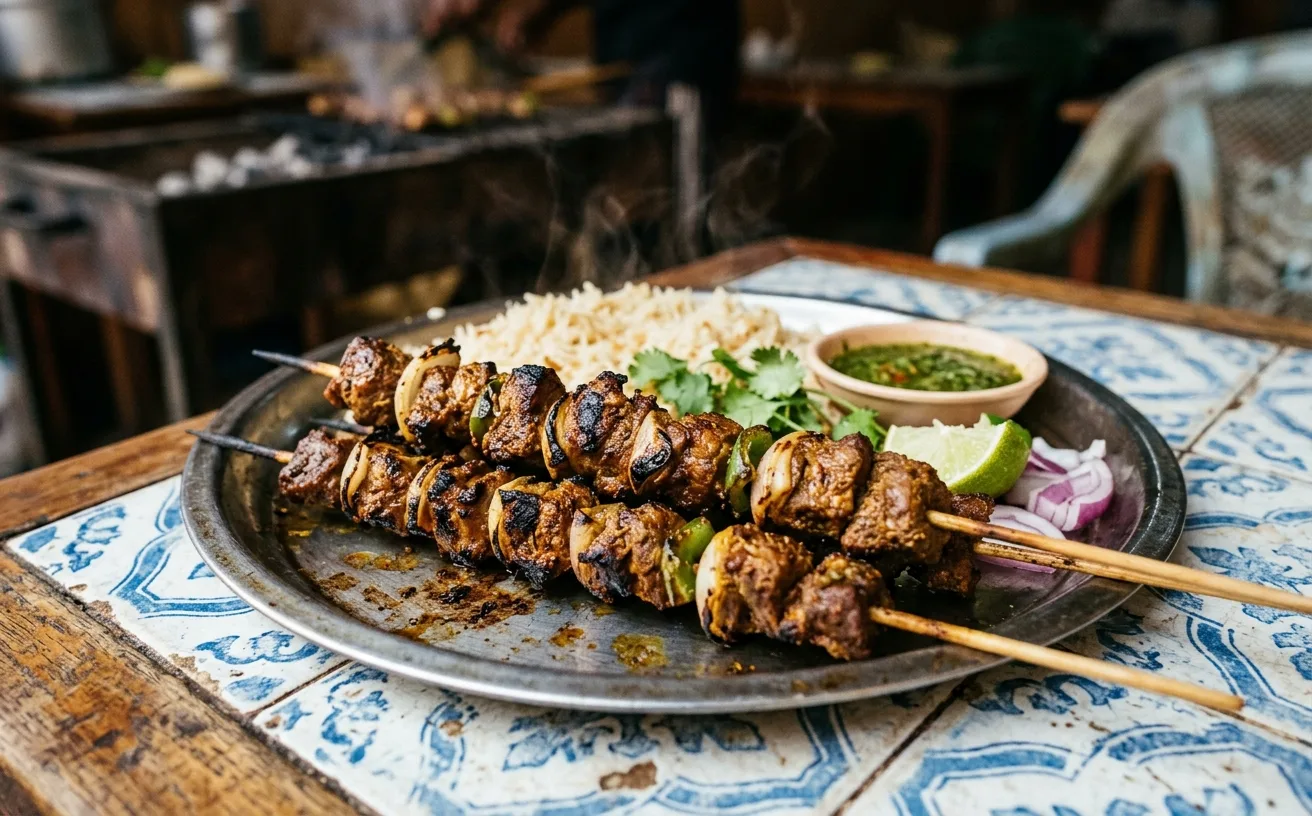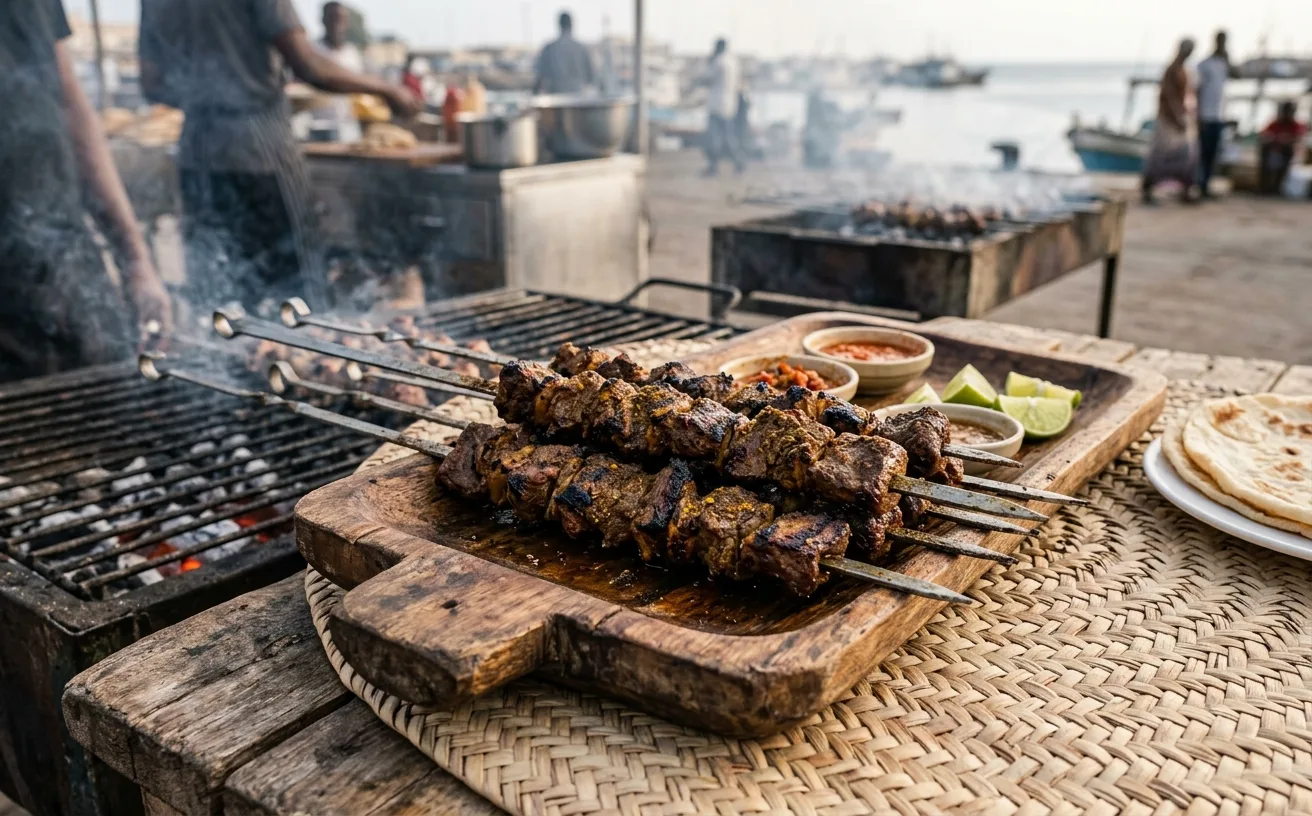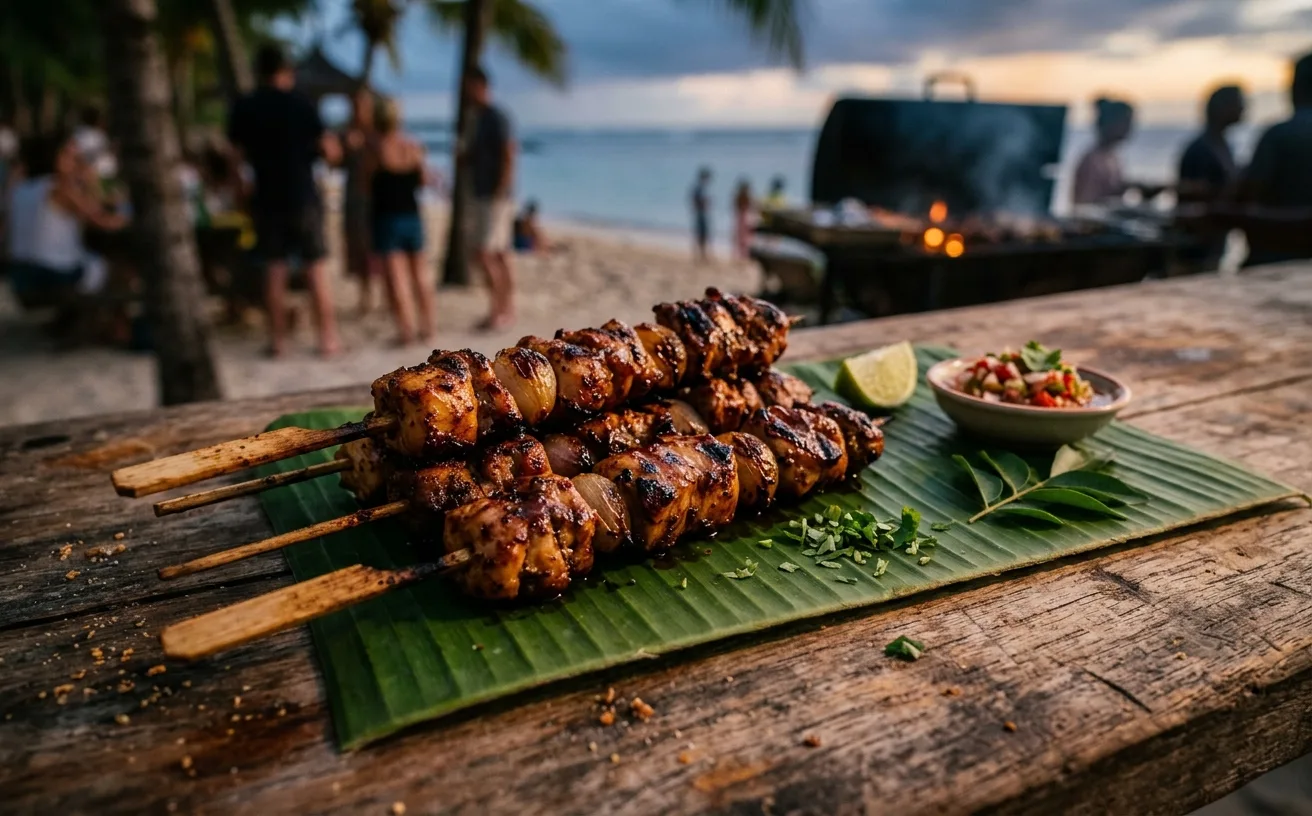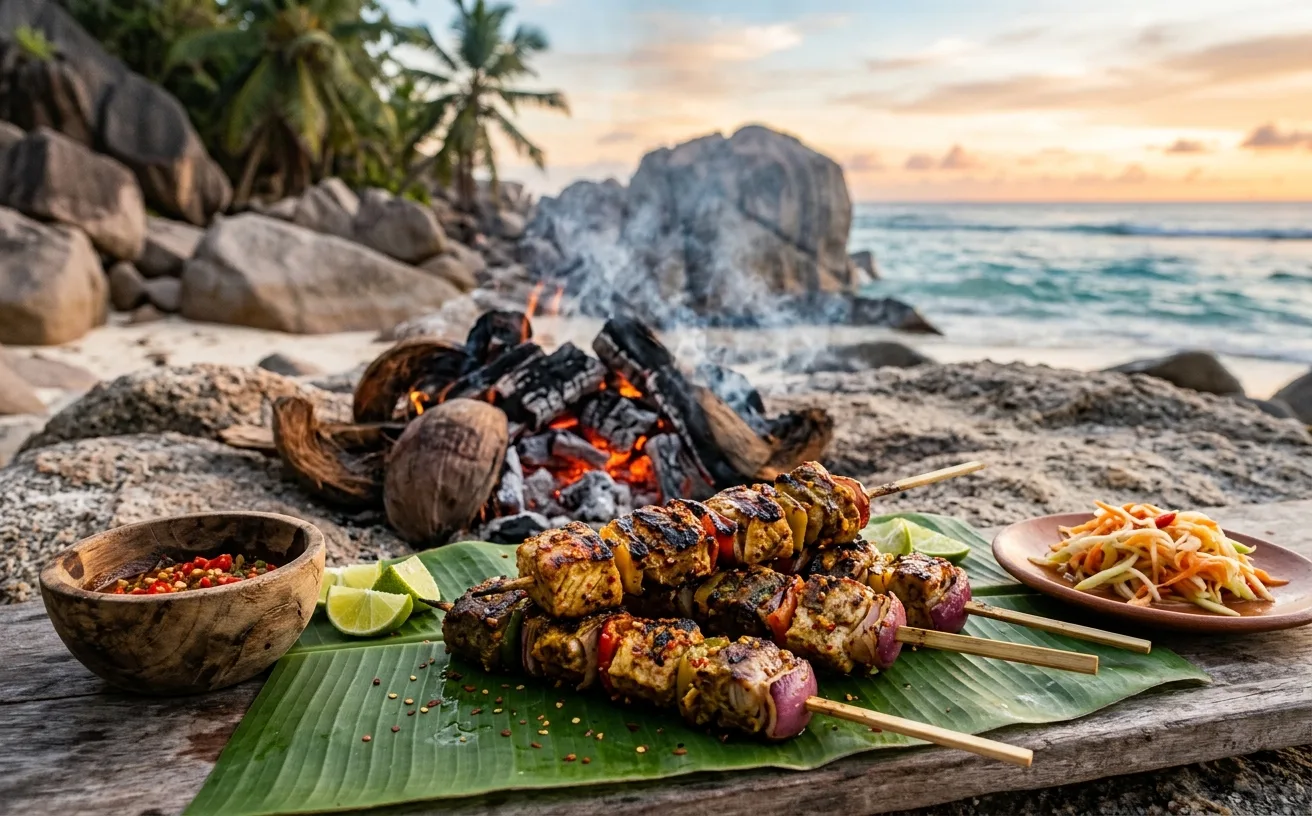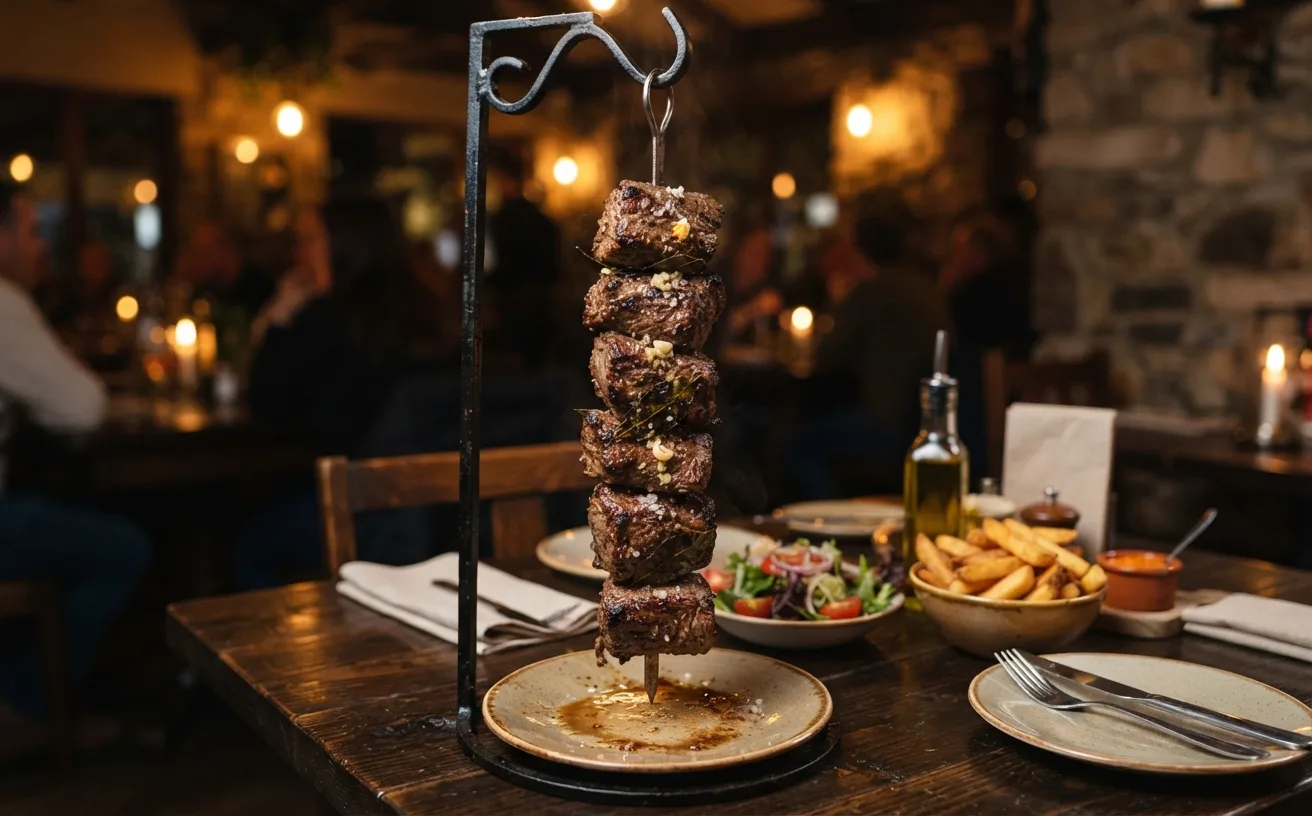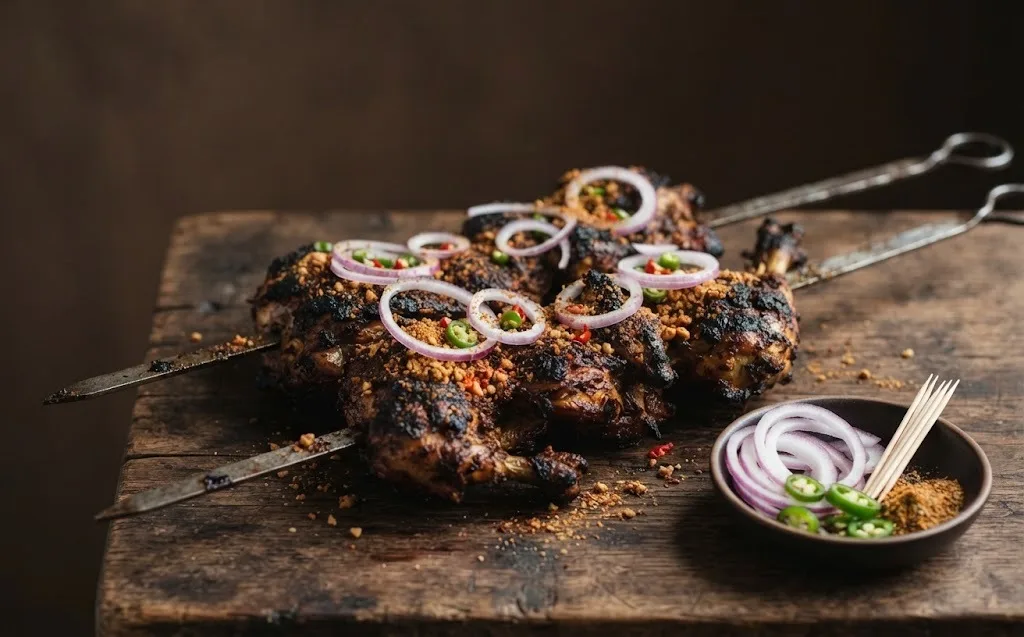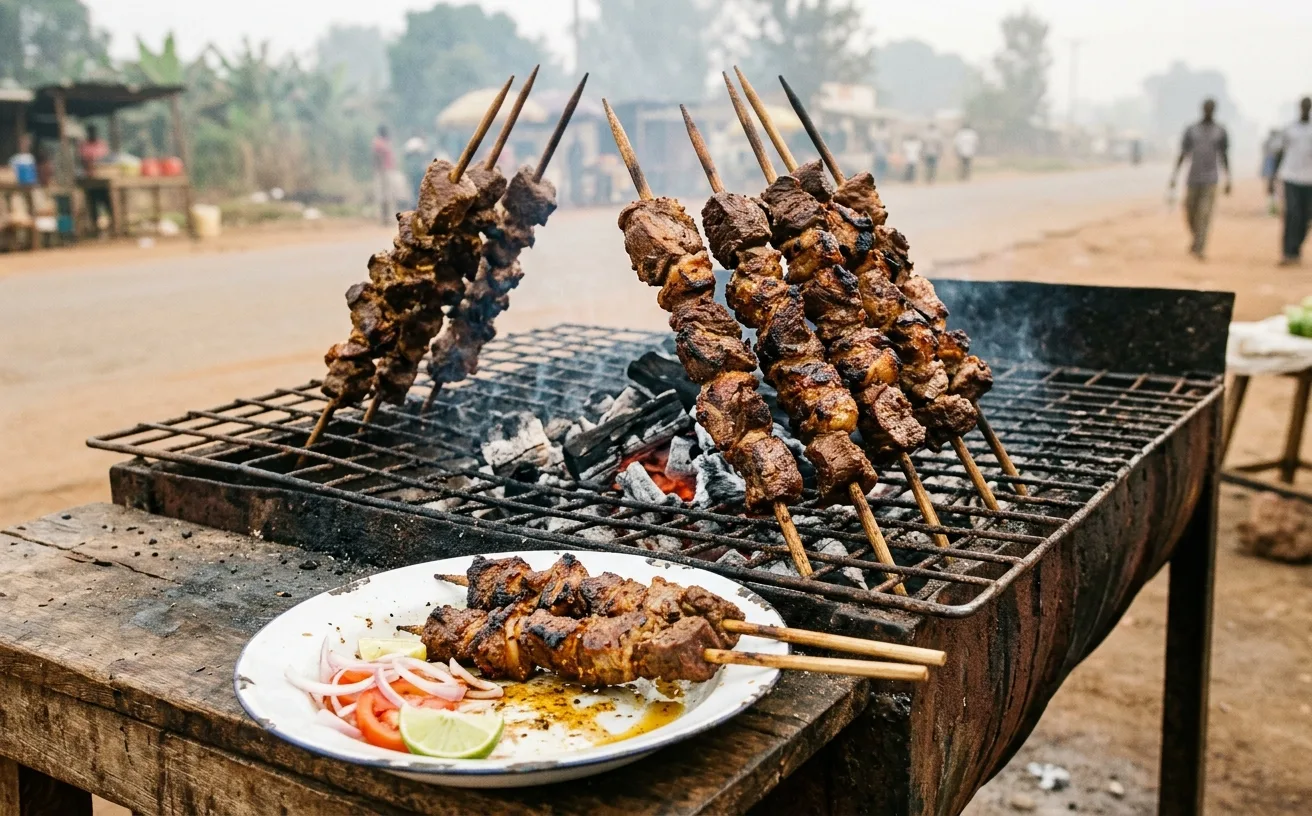
Uganda's signature stick meat: fist-sized chunks of goat, beef, pork or chicken impaled on long wooden skewers and roasted leaning around open charcoal fires, then hawked through bus windows at highway stops like Namawojjolo on the Kampala–Jinja road. It is classically paired with gonja (roasted plantain) on its own stick, and its name shares the Bantu root 'to roast' with East Africa's nyama choma.
Also known as muchomo wa mbuzi, roadside muchomo, Ugandan meat on sticks.
Reference video
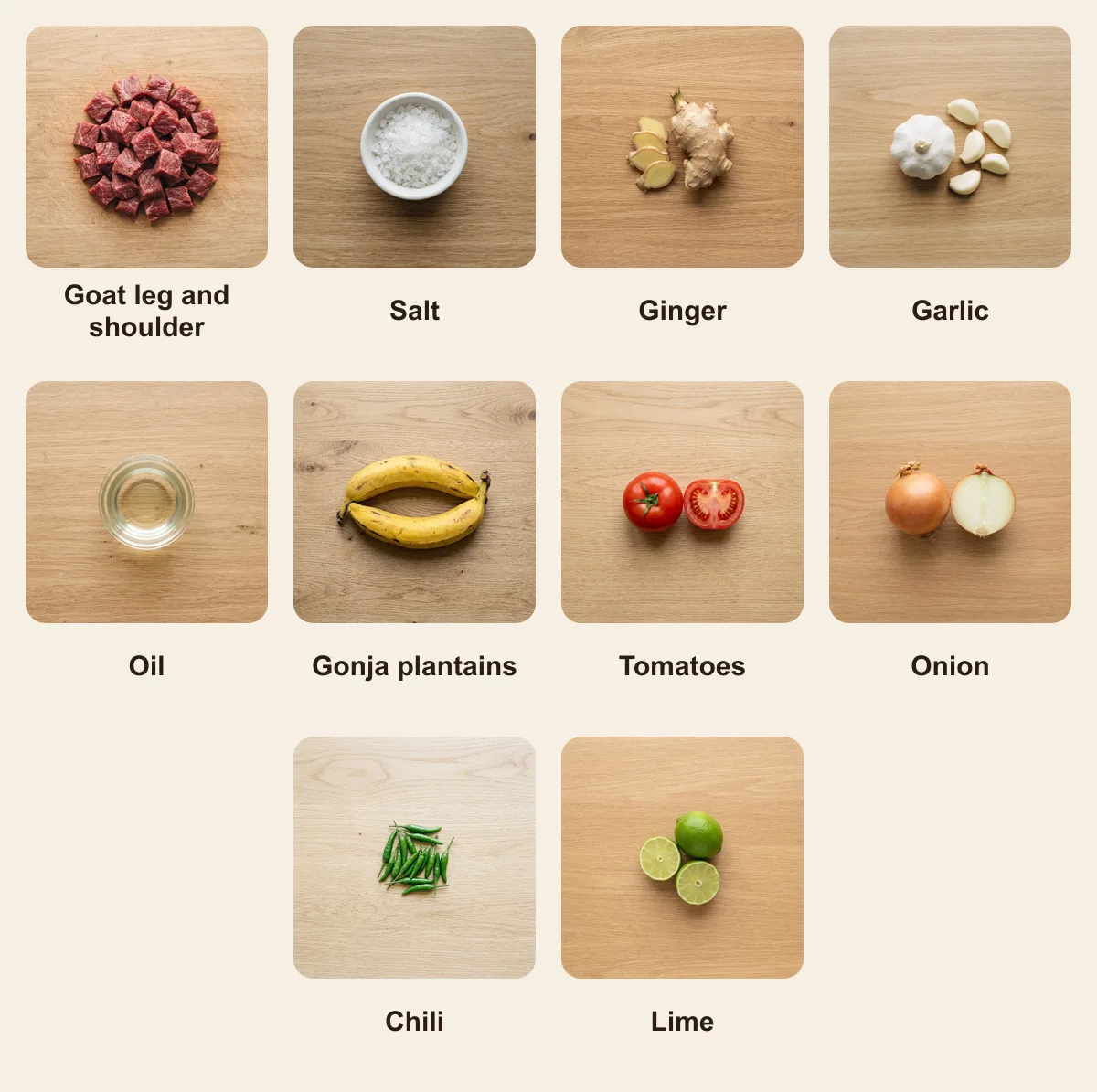
Ingredients
- 1.2 kg goat leg and shoulder (or beef/pork), fist-size 5 cm chunks
- 2 tsp salt
- 1 tbsp grated ginger and 3 garlic cloves (optional, many stalls use salt alone)
- 1 tbsp oil
- 4 gonja (sweet plantains), unpeeled
- 2 tomatoes, 1 onion, 1 chili and lime, for kachumbari
How to make it
- 1
Rub the goat chunks with salt (plus ginger-garlic and oil if using) and spear them onto long, sturdy sticks, 4-5 chunks each.
- 2
Prop the skewers leaning over the coals rather than directly above — Ugandan roadside muchomo roasts slowly at the fire's shoulder.
- 3
Cook 35-45 minutes, rotating the sticks every 8-10 minutes, until the chunks are deep brown and firm right through; muchomo is served well done, never pink.
- 4
Throw the gonja on the grill for the last 15 minutes until the skins blacken and the inside steams sweet.
- 5
Slice tomato, onion and chili with lime into kachumbari and serve everything off the stick.
Pro tip: The lean-away angle is the trick: direct high heat blackens fist-size chunks raw at the core, while the slow lean cooks them through to the Ugandan standard.
Where Muchomo comes from
What makes muchomo its own thing is the highway trade: the roadside markets where buses stop are genuine commercial ecosystems, and the pairing with gonja — roasted plantain on its own stick — is fixed.
How Muchomo is cooked
The skewers are long and the meat is leaned around the fire rather than laid across it, standing at an angle so the heat is radiant rather than direct. That arrangement cooks large chunks slowly and evenly, and it lets a vendor keep dozens of sticks going at once at different stages.
Because the pieces are large and the cook is slow, seasoning is minimal — salt, sometimes a light rub — and the fat renders through the meat over a long period. Vendors baste occasionally with oil or with the drippings caught below, and the outside develops a dry smoky crust.
Ingredients and shopping
Goat is the prestige meat, beef and pork are common, chicken is available. Fist-sized chunks, bone-in where possible. Long wooden or bamboo skewers, sturdy enough to hold a heavy piece leaning at an angle.
Salt and sometimes a simple rub of salt, pepper and a stock cube. Gonja — the roasting plantain, a specific sweet variety — on its own stick alongside. Kachumbari-style tomato-onion salad if you are sitting down rather than buying through a bus window.
How Muchomo is served
On the stick, with gonja on another stick, bought through a bus window at a highway stop or from a roadside grill in the evening. Salt and sometimes a chilli sauce. It is eaten with the hands and it is inseparable from travel in Uganda.
Common mistakes
Small pieces
Muchomo uses large chunks cooked slowly. Small cubes over the same fire dry out entirely.
Laying skewers flat over the coals
They are leaned around the fire at an angle so the heat is radiant. Direct contact chars the outside before the middle cooks.
Heavy seasoning
Salt and smoke. The tradition is plain and the gonja supplies the sweetness.
Skipping the gonja
Roasted plantain on its own stick is the fixed partner. It is not optional in Uganda.
Muchomo: questions and answers
What is gonja?
A specific sweet variety of plantain roasted on its own stick and sold alongside muchomo. The pairing is fixed in Uganda.
Where is it famous?
Highway stops on the Kampala–Jinja road, especially Namawojjolo, where the roadside markets sell it through bus windows.
Sources and further reading
- choma — Wiktionary
- Street Food — Saint Kaggwa Martyrs Pilgrimages and Safaris
- Muchomo – meat on the stick — Daily Monitor (Uganda)