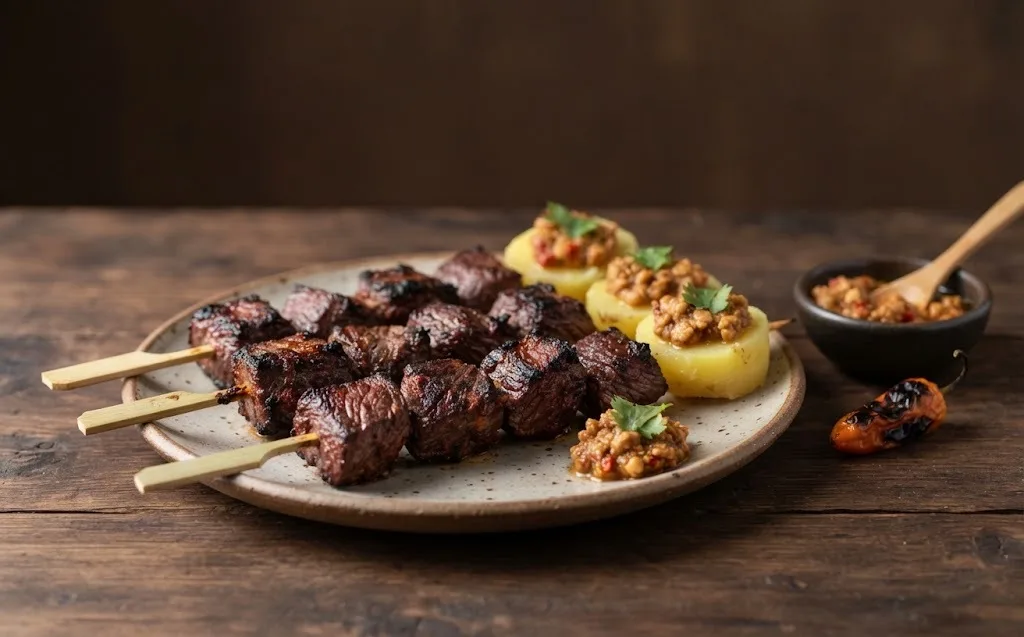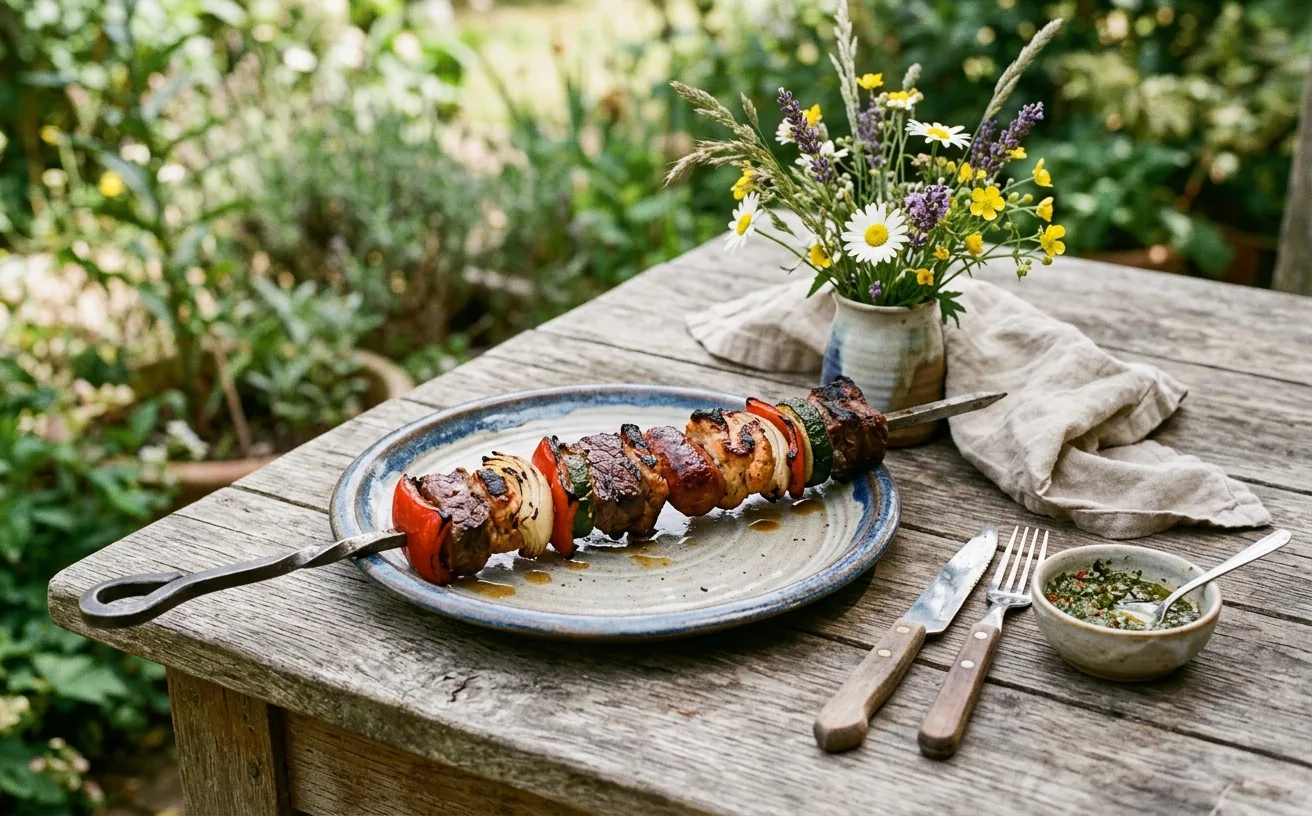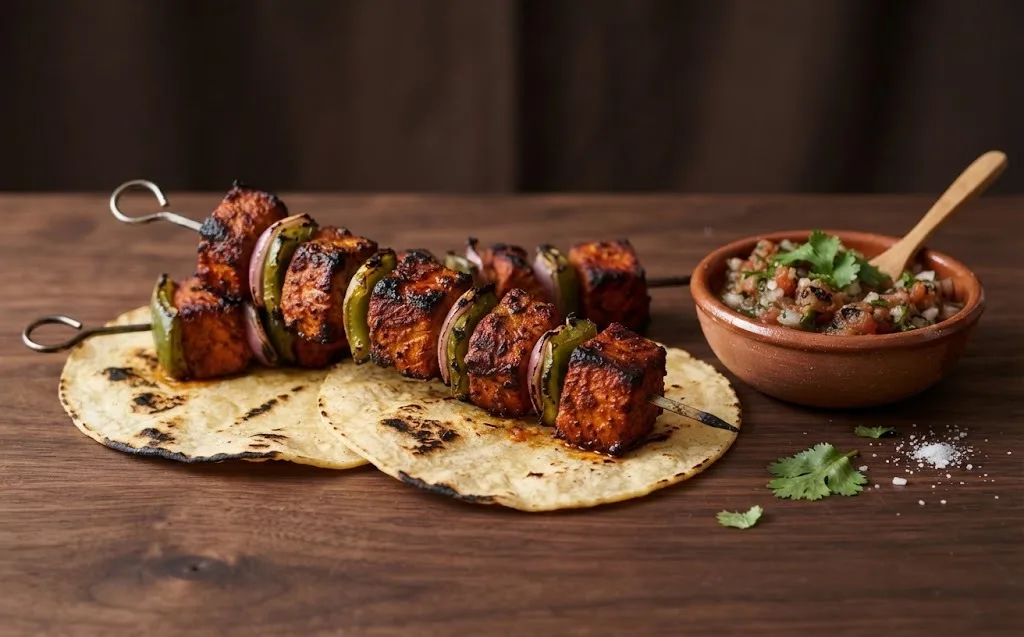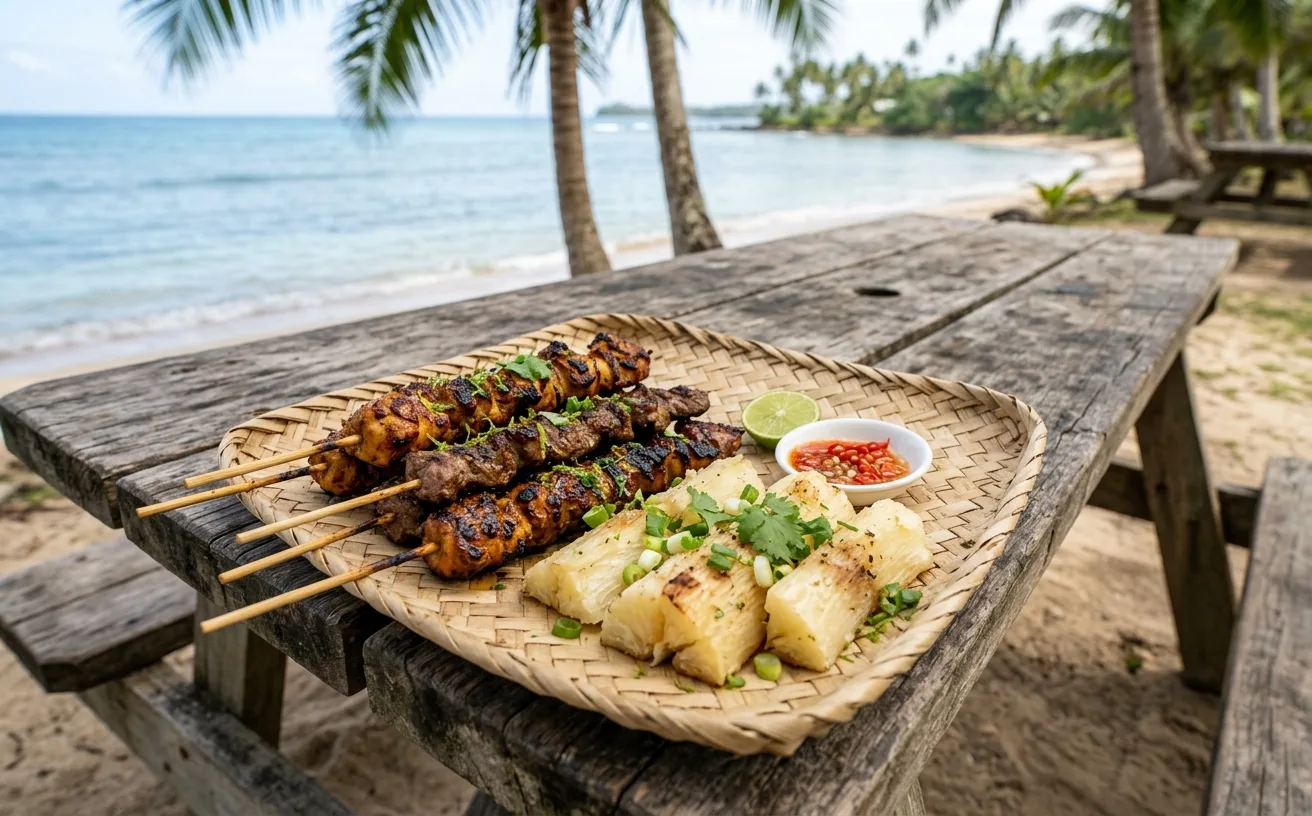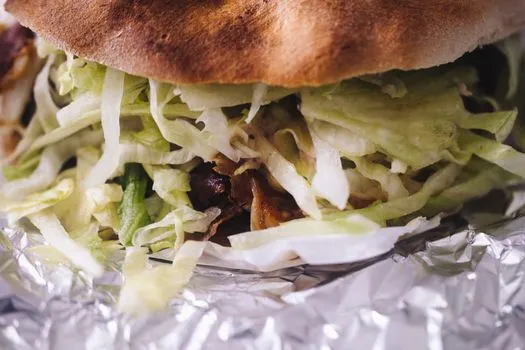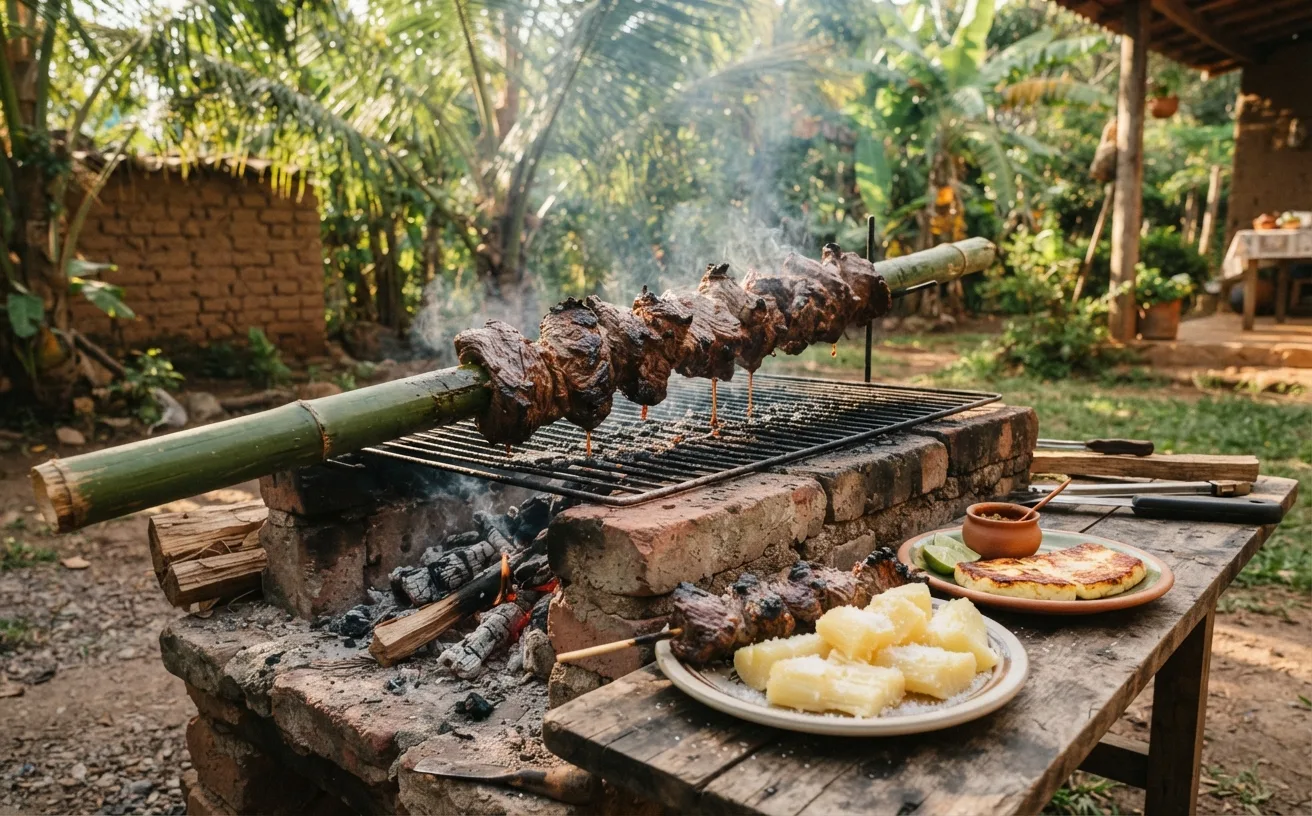
The giant kebab of Bolivia's eastern lowlands (Beni and Santa Cruz): fist-sized chunks of beef threaded on long rods or green stakes, slow-grilled churrasco-style and served with boiled yuca and grilled cheese. The name is Guaraní, and portions are measured by the meter of skewer rather than the plate.
Also known as pacumutu de res, pacumutu camba.
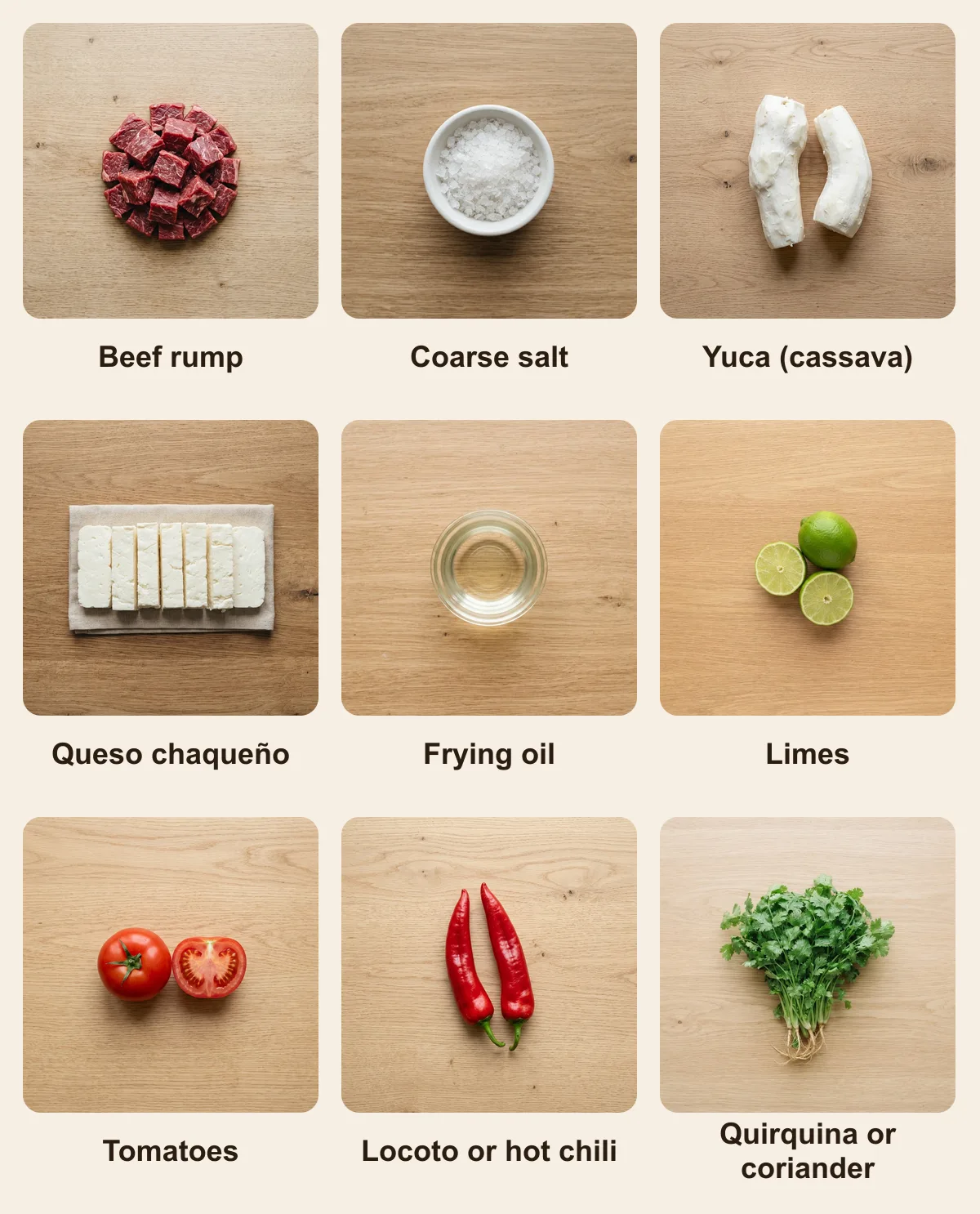
Ingredients
- 1.5 kg beef rump, fist-size 6 cm chunks
- 2 tbsp coarse salt
- 1 kg yuca (cassava), peeled
- 300 g queso chaqueño or other firm grilling cheese, thick slabs
- 500 ml oil, for frying
- 2 limes
- 2 ripe tomatoes
- 1 locoto or other hot chili
- 1 small bunch quirquina or coriander
How to make it
- 1
Rub the beef chunks with coarse salt only — pacumutu is about beef and fire, nothing else — and spear them onto one or two long metal rods.
- 2
Stand or angle the rods beside a wood fire or bank of coals and roast 30-40 minutes, rotating a quarter turn every 8 minutes so the huge chunks cook evenly to the center.
- 3
Meanwhile boil the yuca 15 minutes until just tender, drain, split into batons and fry at 180 C until golden and crisp.
- 4
Grill the cheese slabs alongside the coals for the last few minutes, turning once, until golden and starting to melt at the edges.
- 5
Pound or blend the tomatoes, chili and herbs with salt into a rough llajua.
- 6
Slide the meat off the rods, carve each chunk in half to check for a rosy center, and serve with fried yuca, lime halves and llajua.
Pro tip: Keep the rods a hand-span from the flames — the fist-size chunks need radiant heat to cook through before the crust blackens.
Where Pacumutu comes from
Portions are measured by the metre of skewer rather than by the plate, which tells you most of what you need to know about the eating culture of the Bolivian lowlands. It is cattle country, the beef is cheap and good, and pacumutu is what a family orders at a churrasquería on a Sunday.
How Pacumutu is cooked
Very large chunks over a long, moderate fire is the whole approach, and green stakes rather than metal are traditional in the countryside — a green branch does not conduct heat into the meat and does not burn through in the time the cook takes.
The seasoning is minimal — coarse salt, sometimes garlic — and the cook is slow enough that the exterior develops a genuine crust while the interior stays rare to medium. It is carved off the skewer at the table in large pieces rather than served as portions, and the yuca and cheese go alongside rather than under.
Ingredients and shopping
Beef in fist-sized chunks — a well-marbled cut such as rump or a thick piece of sirloin. Bolivian lowland beef is grass-fed and lean, so a cut with some fat matters. Green branches or long metal skewers.
Yuca (cassava), peeled and boiled until tender, is the standard starch. Queso chaqueño or another firm grilling cheese, cut in slabs and grilled alongside. Llajwa — the Bolivian chilli and tomato sauce — for heat.
How Pacumutu is served
Carved off the skewer at the table onto a shared platter with boiled yuca, grilled cheese and llajwa. Beer. It is a family meal at a churrasquería and the portion is ordered by length of skewer, which nobody outside Bolivia finds normal.
Common mistakes
Cutting the meat smaller to speed it up
The scale is the dish. Smaller chunks over the same fire dry out and it becomes an ordinary skewer.
A fierce fire
Large chunks need moderate heat and time. High heat gives a burnt crust and a raw middle.
Dry wooden stakes
They burn through. Use green branches or metal.
Heavy seasoning
Coarse salt is the tradition. The beef and the fire are the flavour.
Pacumutu: questions and answers
What does pacumutu mean?
It is a Guaraní word. The dish comes from Bolivia's eastern lowlands, in Beni and Santa Cruz departments.
How big are the pieces?
Fist-sized. The scale is what defines the dish and cutting smaller changes it into an ordinary skewer.
Sources and further reading
- Pacumutu — Wikipedia (Spanish)