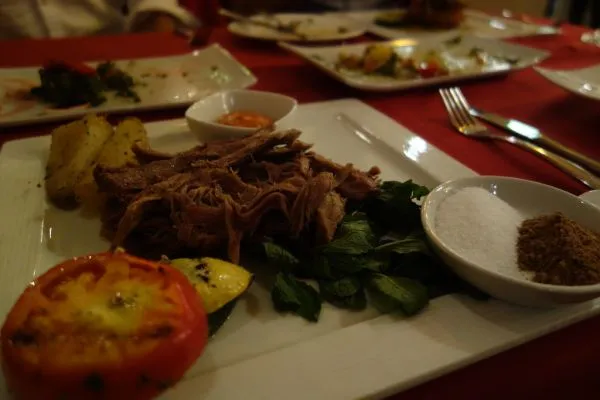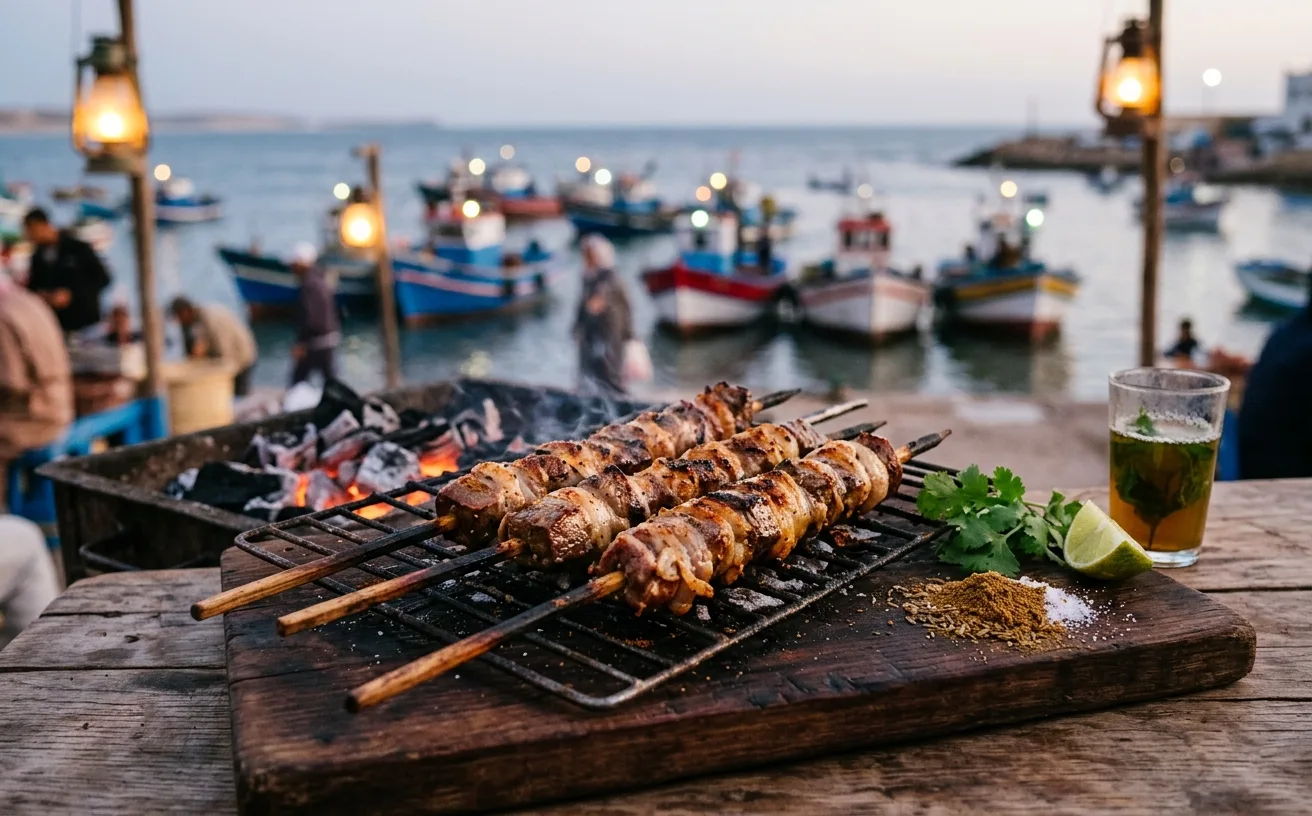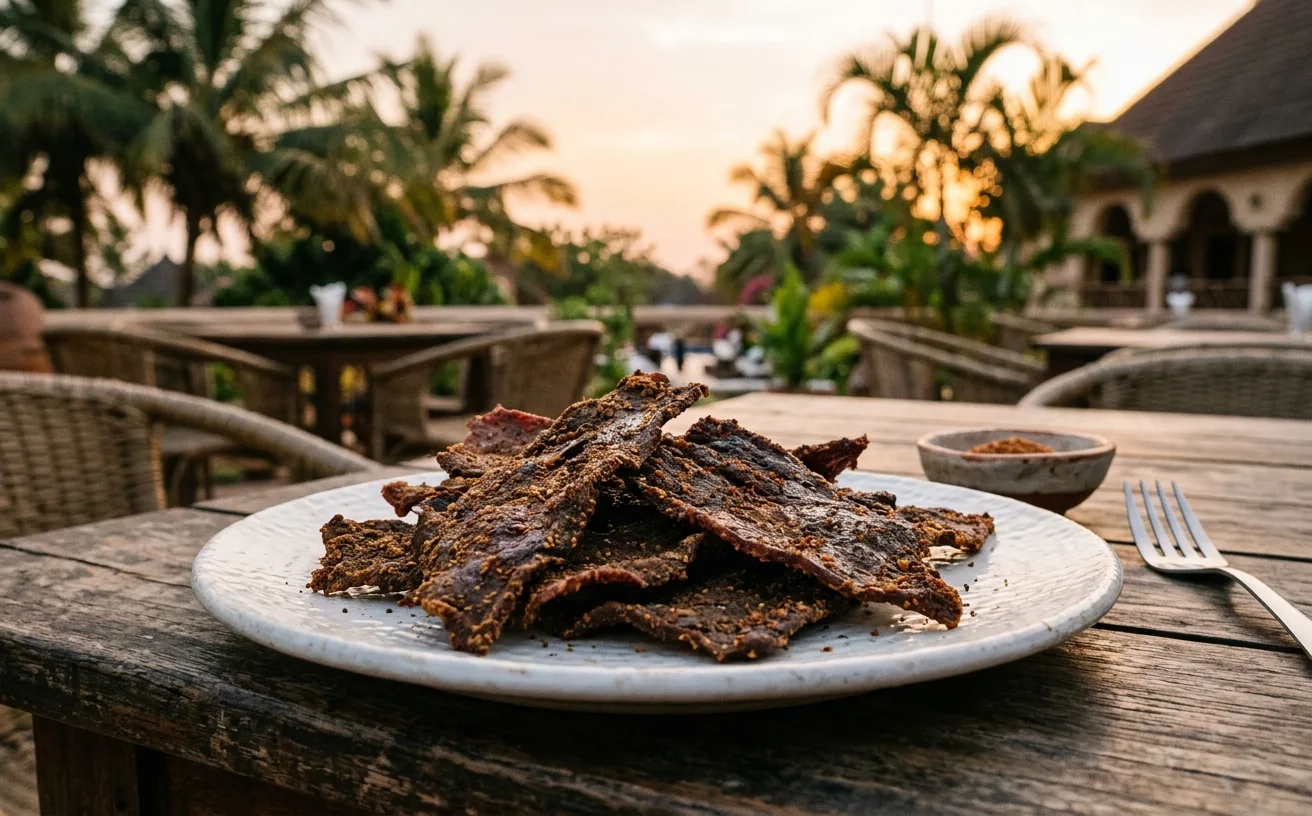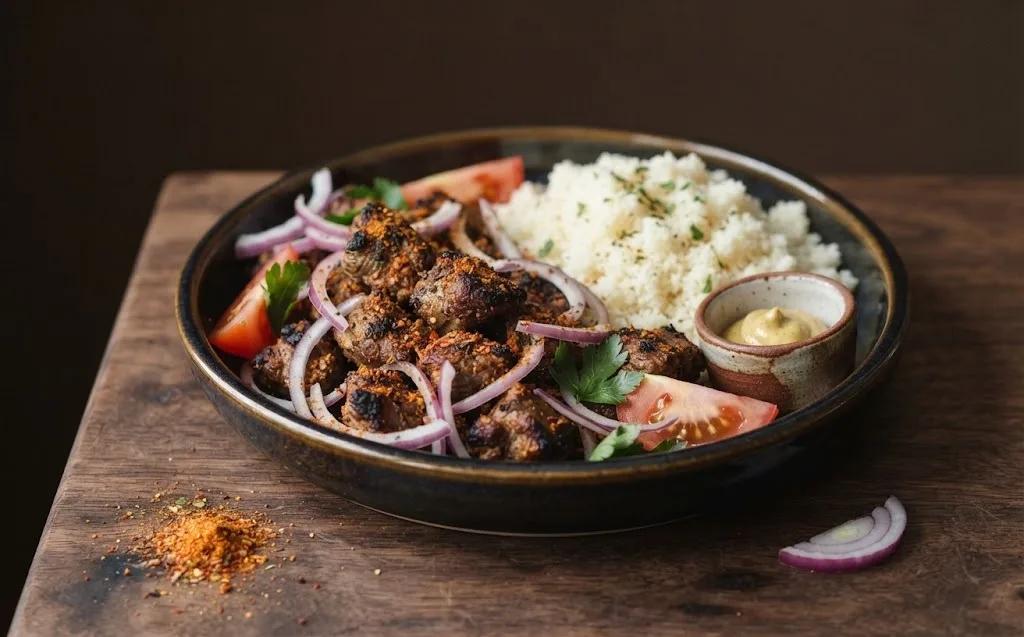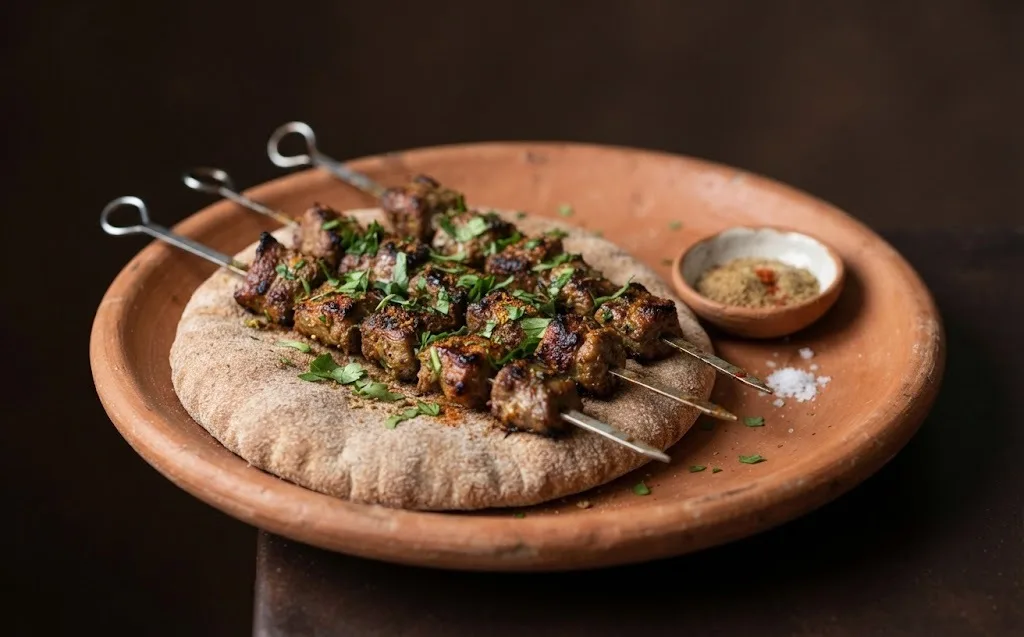
Small cubes of lamb marinated in cumin, sweet paprika, garlic, and olive oil, threaded tightly on thin skewers and flash-grilled at souk stalls. The pieces are cut deliberately small so they char in minutes and are eaten straight off the stick with khobz bread and cumin-salt for dipping.
Also known as qotban, quotban, kotban.
Reference video
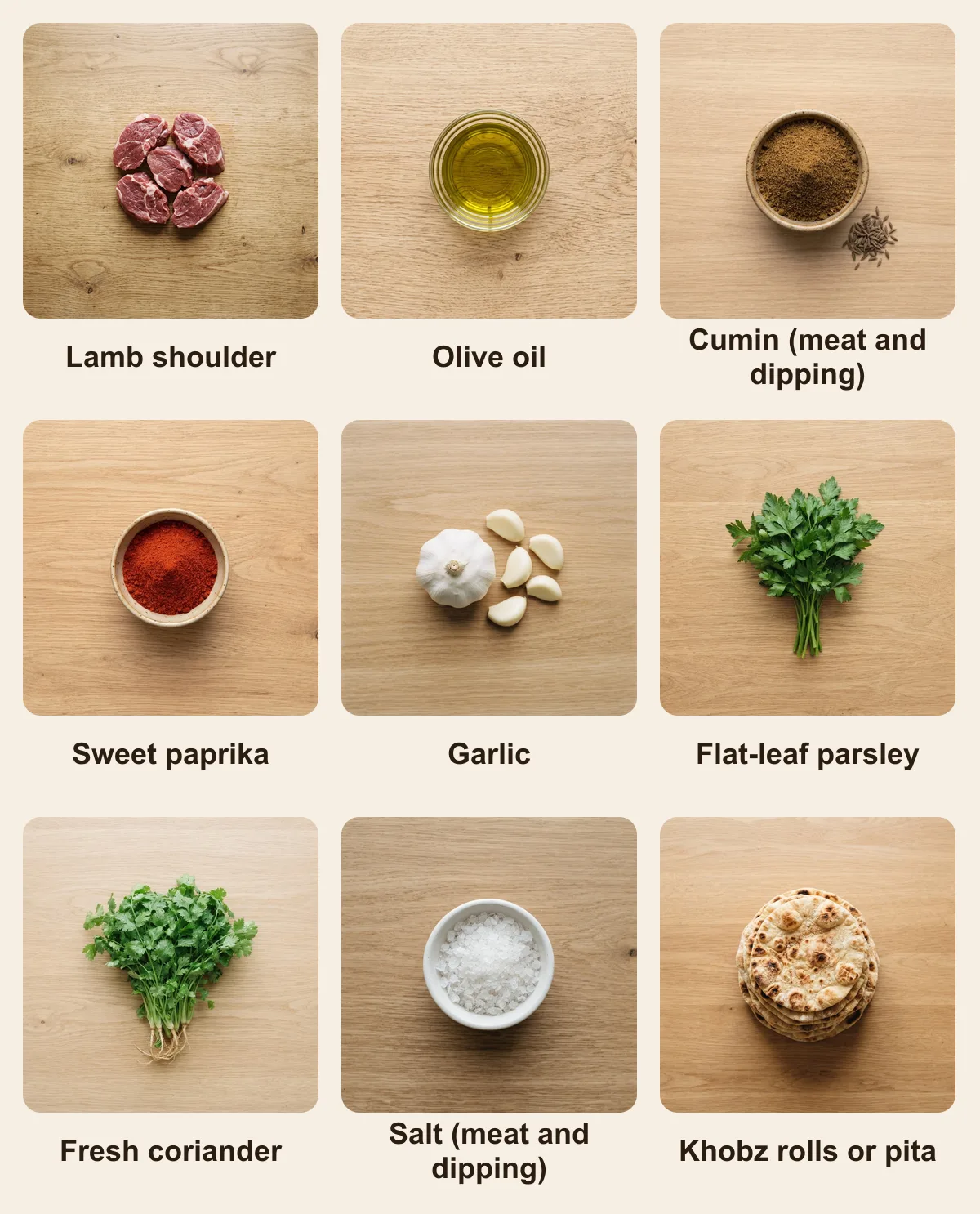
Ingredients
- 600 g lamb shoulder, in 2 cm cubes
- 45 ml olive oil
- 2 tsp ground cumin
- 2 tsp sweet paprika
- 3 garlic cloves, finely grated
- 15 g flat-leaf parsley, chopped
- 15 g fresh coriander, chopped
- 1 tsp salt
- 4 khobz rolls or pita
- 1 tsp cumin + 1 tsp salt, mixed, for dipping
How to make it
- 1
Toss the lamb with olive oil, cumin, paprika, garlic, herbs and salt, working the spices into the meat, then refrigerate 2 hours.
- 2
Thread the cubes snugly onto thin skewers, five or six per stick with no gaps.
- 3
Grill over very hot charcoal 6-8 minutes, giving a quarter turn every 2 minutes, until charred outside and just cooked through.
- 4
Rest 2 minutes, then tuck into khobz with the cumin-salt alongside for dipping.
Pro tip: Keep the cubes at 2 cm — the Marrakech street standard — so every piece grabs char before the centre overcooks.
Where Qotban comes from
They are eaten straight off the stick with khobz and cumin-salt, and the format is closer to Abruzzo's arrosticini than to a Turkish şiş — many small skewers rather than a few substantial ones. In Marrakech and Fez they are ordered by the handful and grilled continuously.
Two-centimetre lamb cubes built to char in minutes
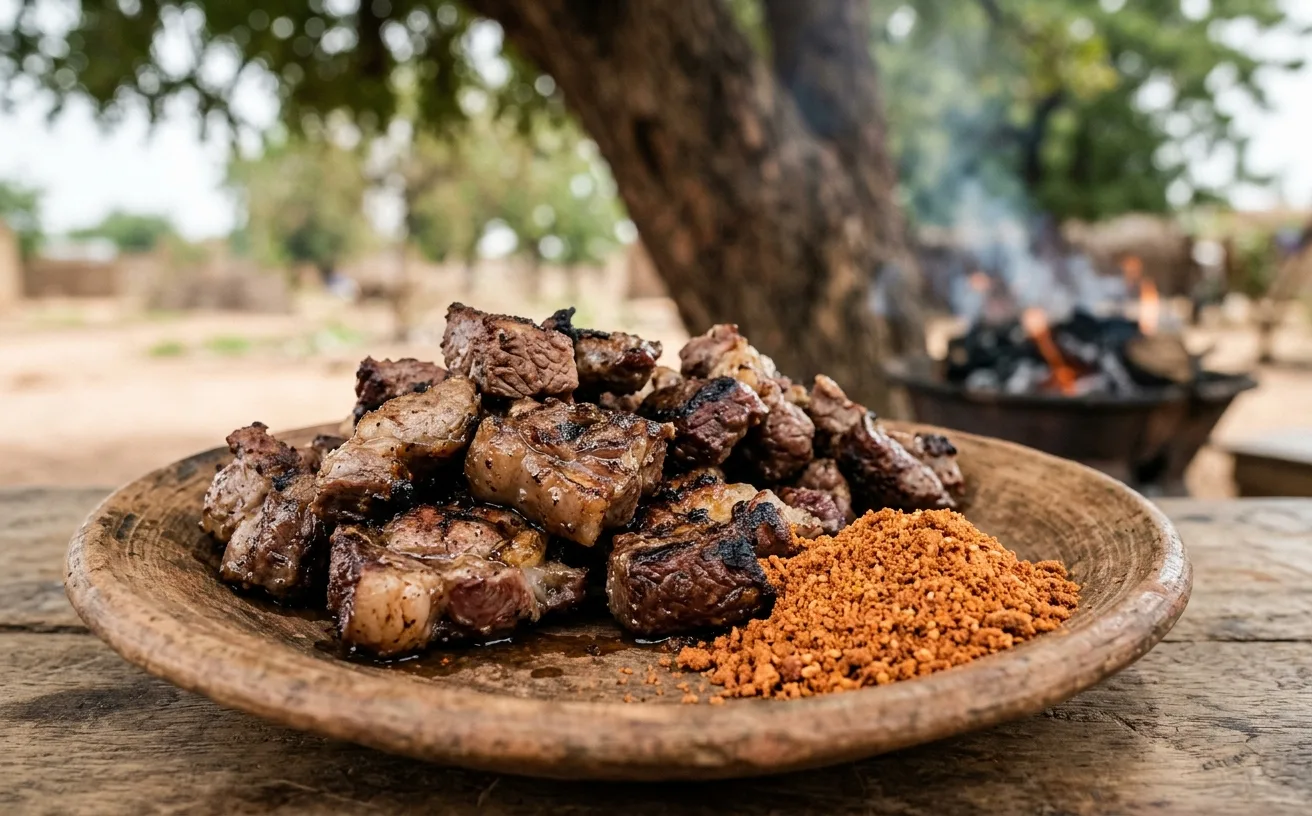
Everything about qotban is built for speed. Lamb shoulder is cut to about two centimetres and packed tight on thin skewers, so over very hot charcoal it cooks through in the six to eight minutes the surface needs to char. Djiboutian brochettes and Brochettes (East African) cut their goat larger, at three centimetres, and give it a longer cook over moderate coals. The marinade is cumin, sweet paprika, garlic, olive oil and fresh herbs for an hour or two, more herb-led than Djibouti's cardamom-scented paste and far busier than the Great Lakes' salt. Khobz and a dish of cumin-salt replace the fries or grilled banana of its cousins.
Compare: Djiboutian brochettes · Brochettes (East African)
How Qotban is cooked
Small pieces threaded tight is the whole method. At around two centimetres, the cubes cook through in the six to eight minutes it takes for the surfaces to char, so there is no gap between the outside being ready and the inside being done — the same logic that governs arrosticini and çöp şiş.
Fat is threaded between the lean pieces, or the cut is chosen with fat running through it, because there is no marinade thick enough to protect meat this small over a fierce fire. The marinade itself is short — an hour or two — and is more a seasoning than a tenderiser.
Ingredients and shopping
Lamb shoulder in two-centimetre cubes with fat included, or lamb with pieces of tail fat threaded between. Thin skewers, several small pieces to each.
Cumin, sweet paprika, garlic, olive oil, salt, parsley and coriander; a pinch of cayenne is an optional extra. An hour or two of marinating. Khobz bread and a bowl of cumin-salt for dipping. Harissa on the side for those who want heat.
How Qotban is served
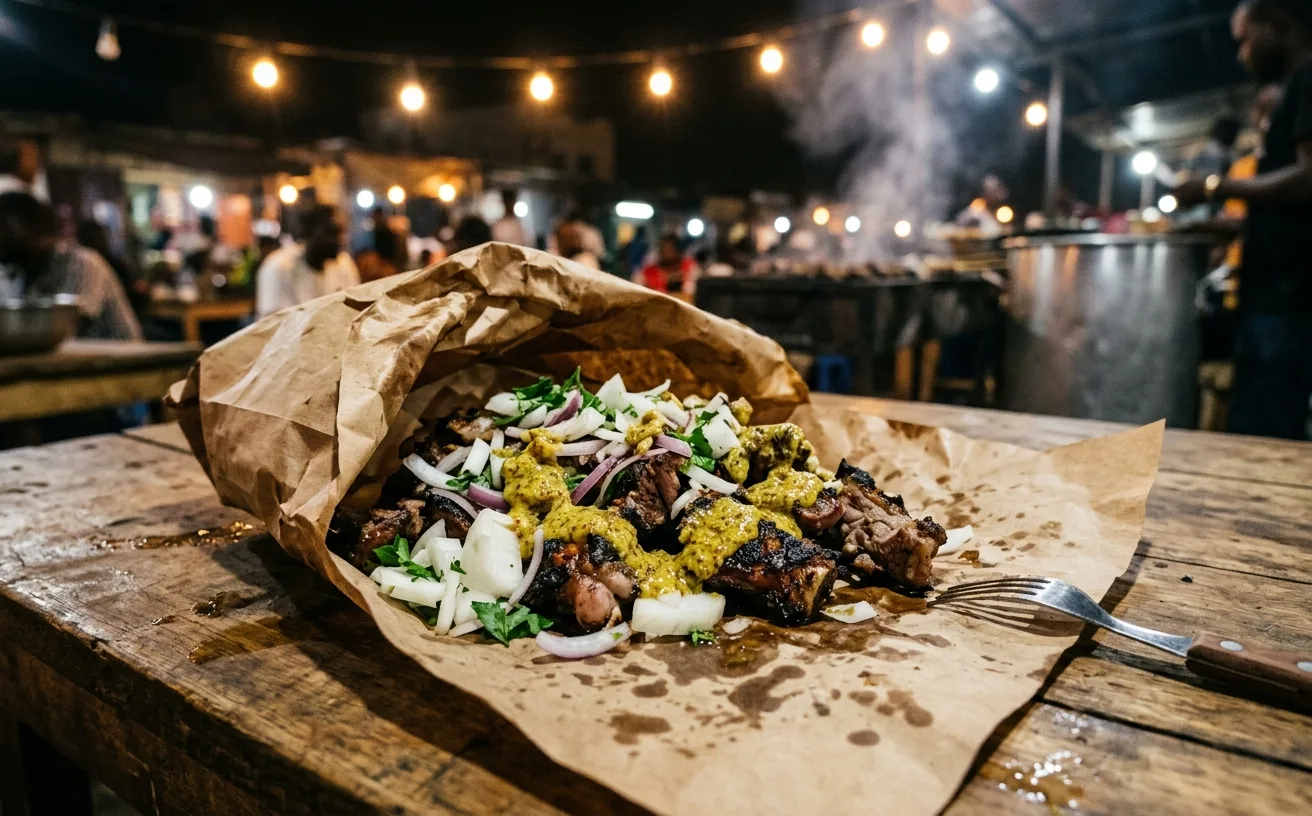
Several skewers at a time on paper, with khobz, cumin-salt, harissa, and a chopped tomato-and-onion salad. Eaten with the fingers standing at the stall. Mint tea afterwards.
Common mistakes
Cubes too large
The dish depends on pieces small enough to cook through as they char. Larger cubes need a different fire and become a şiş.
No fat
Small lean pieces over a fierce fire dry in seconds. Include fat in the cut or thread it between.
A long marinade
An hour or two. The pieces are small and the marinade is seasoning, not tenderising.
Loose threading
Pack them tight so the sides are protected. Gaps expose more surface and dry it out.
Qotban: questions and answers
What is the difference between qotban and kefta brochettes?
Qotban are cubes of whole lamb; kefta brochettes are minced meat pressed onto the skewer. Both are Moroccan souk standards and often sold from the same stall.
Why are the pieces cut so small?
So they cook through in the same time the surface takes to char. It is the same logic behind Abruzzo's arrosticini.
Sources and further reading
- Moroccan Lamb or Beef Brochettes - Kebab or Qotban — Taste of Maroc
- Eid Al Kabir in Morocco - The Festival of the Sacrifice — Taste of Maroc