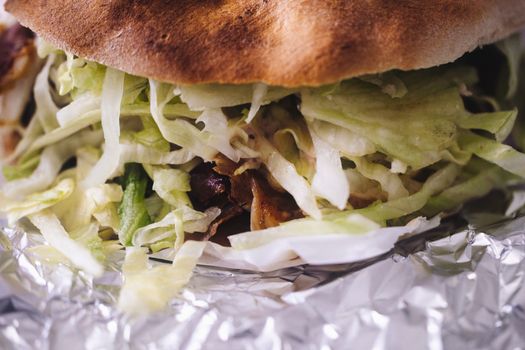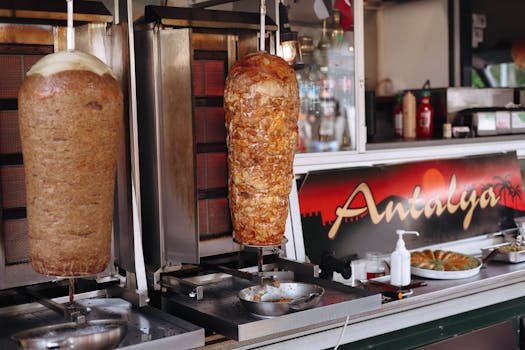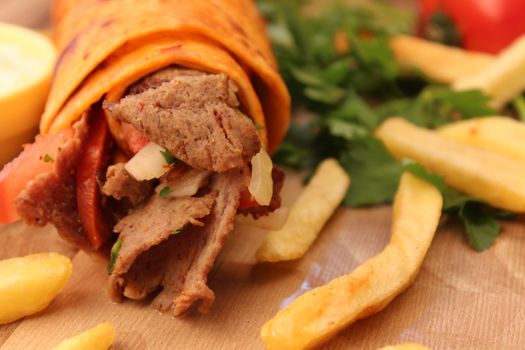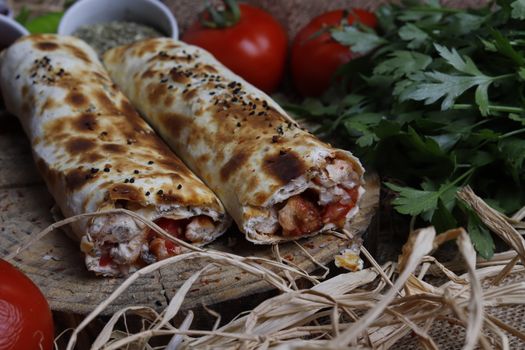
The Norwegian and Danish 'roll kebab': doner meat rolled into a large soft wheat flatbread with cabbage, corn, cucumber, and a distinctive mild yogurt-herb dressing rather than Turkish sauces. Late-night rullekebab from gatekjøkken kiosks is the Scandinavian descendant of the Berlin-style doner wrap.
Also known as: rullekebab, rulle kebab, kebab i rull, kebabrull, rullekebab med dressing
Watch it made
Ingredients
- 500 g thin-sliced lamb or beef, tossed with 2 tsp doner spice (paprika, cumin, garlic powder, oregano)
- 4 large soft wheat flatbreads (about 30 cm)
- 200 g white cabbage, finely shredded (or 1/2 iceberg)
- 150 g sweetcorn kernels
- 1/2 cucumber, in half-moons
- 2 tomatoes, diced
- 100 ml plain yogurt, 50 ml mayonnaise, 1 tsp mild chili sauce and 1/2 tsp paprika, for the kebab sauce
- 1 tbsp oil
How to make it
- 1
Stir the sauce together and let it stand while you prepare everything else.
- 2
Sear the spiced meat strips in a screaming-hot oiled pan 3-4 minutes, until crisp at the edges.
- 3
Warm each flatbread 20 seconds a side so it rolls without cracking.
- 4
Lay sauce, meat, cabbage, corn, cucumber and tomato in a strip just off-centre, fold in the ends and roll tight.
- 5
Jacket the lower half in foil and hand it over.
Pro tip: Sweetcorn is the giveaway Nordic touch, and the foil is structure, not packaging — rest the roll 2 minutes inside it so the bread seals shut.
The story of Rullekebab
Rullekebab — roll kebab — is the Norwegian and Danish descendant of the Berlin doner wrap, sold from gatekjøkken kiosks late at night. Doner meat is rolled into a large soft wheat flatbread with cabbage, corn, cucumber and a distinctive mild yoghurt-herb dressing rather than the Turkish sauce trio.
The Scandinavian divergence is mostly a matter of palate. Norwegian and Danish versions are noticeably milder than their German parent, and the inclusion of sweetcorn — which would baffle a cook in Berlin — reflects a local salad-bar convention that made its way into the wrap and stayed.
The technique that defines it
The wrap is pressed after rolling, which is the technical detail worth copying. A hot press or a dry pan seals the flatbread, warms the filling through and gives the outside a light crispness, and it also solves the structural problem of a large soft wrap wanting to unroll.
Filling order runs sauce onto the bread, then salad, then meat, then more sauce, with the meat sitting toward the centre so the roll closes cleanly. Overfilling is the standard failure — a Scandinavian rullekebab is generously filled but the bread has to close and survive the press.
Choosing your ingredients
A large soft wheat flatbread — Scandinavian kiosks use a specific thin, pliable type. Doner meat, shaved and crisped. Shredded cabbage, cucumber, tomato, sweetcorn, and lettuce.
The dressing is a mild yoghurt-and-herb sauce rather than a garlic toum or a chilli sauce. Dill is a common inclusion, which is very much a Nordic touch. A strong chilli sauce is available on request but is not the default.
Mistakes that ruin it
Skipping the press
It seals the roll, warms the filling and crisps the outside. Unpressed, a large soft wrap unrolls in the hand.
Overfilling
The bread has to close and go through a press. Generous is fine; overflowing is not.
Using a strong garlic sauce
The Scandinavian version is deliberately mild, with a yoghurt-herb dressing. A Turkish toum makes it a different wrap.
Cold flatbread
It cracks when rolled. Warm it briefly first.
How it is served
In paper from a gatekjøkken kiosk, late, often after a night out. Chips on the side if the kiosk sells them. It is the Scandinavian late-night standard and it sits alongside the pølse — the hot dog — in the same cultural slot.
Questions about Rullekebab
What is a gatekjøkken?
A Norwegian street kitchen or kiosk, typically open late, selling hot dogs, burgers, chips and kebabs.
Why is there sweetcorn in it?
It reflects a Scandinavian salad-bar convention that made its way into the wrap. It would baffle a Berlin kebab cook, and that is precisely the point of the local variant.
Why is the wrap pressed?
It seals the roll, warms the filling and lightly crisps the outside. A large soft flatbread unrolls without it.
What sauce is used?
A mild yoghurt-and-herb dressing, often with dill, rather than the Turkish garlic and chilli sauces.