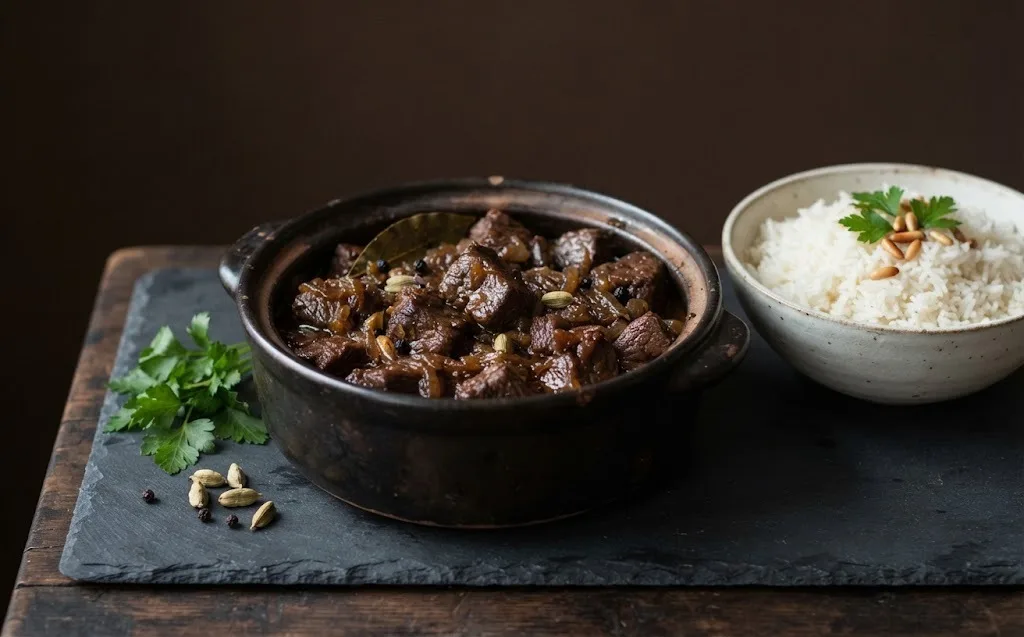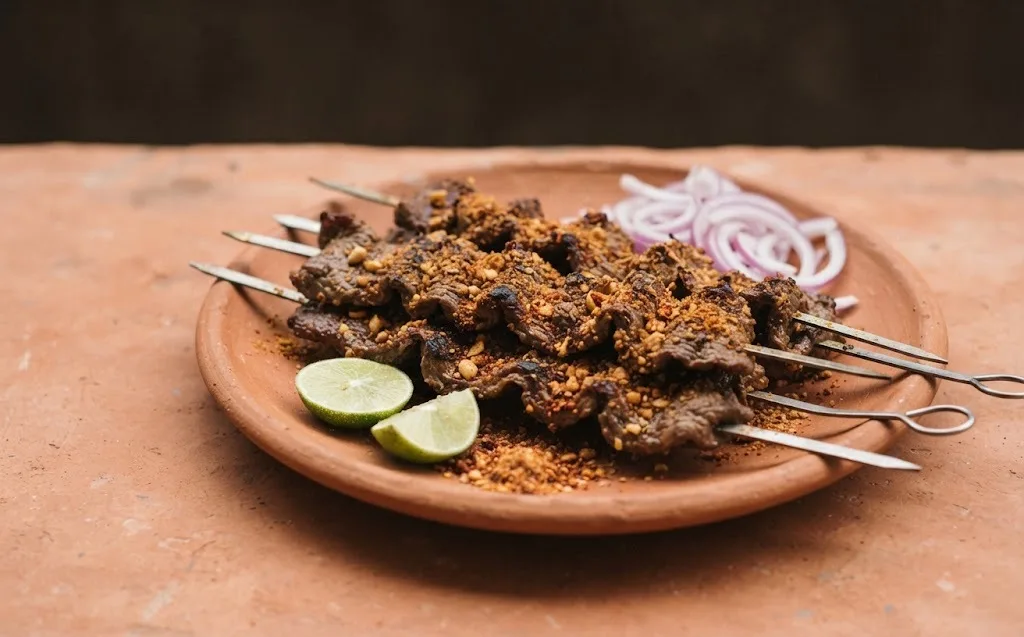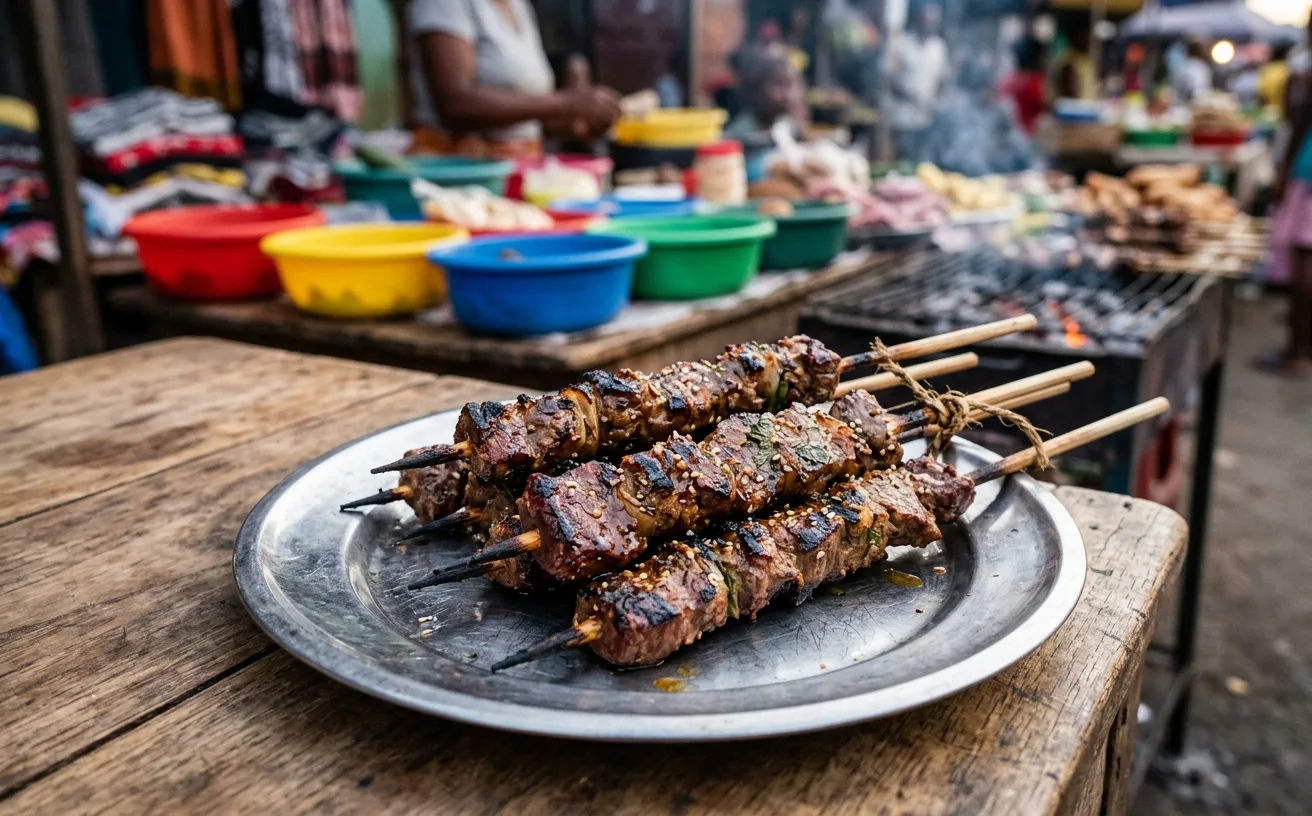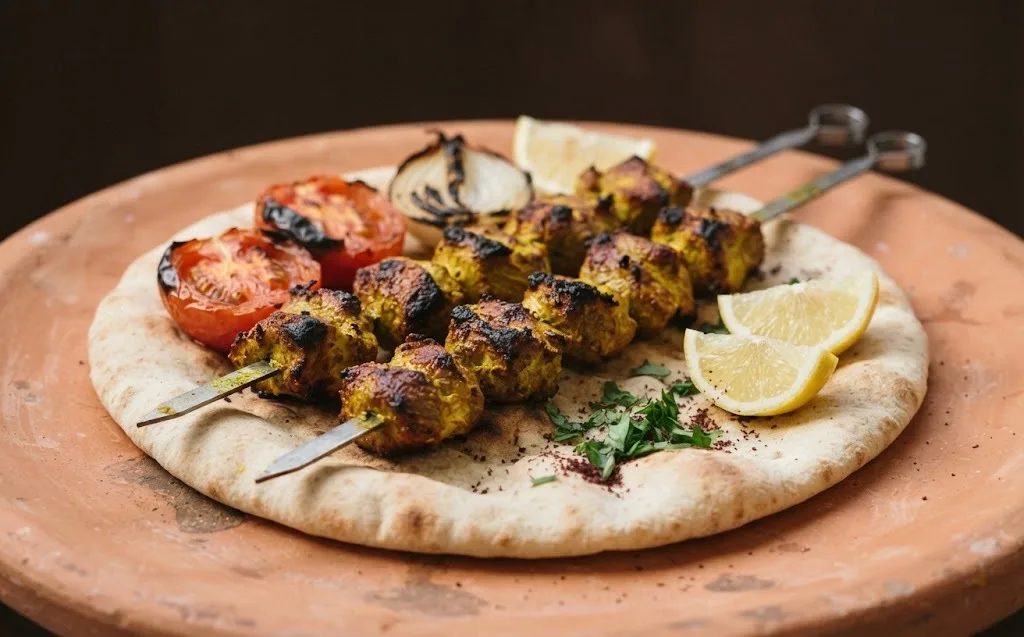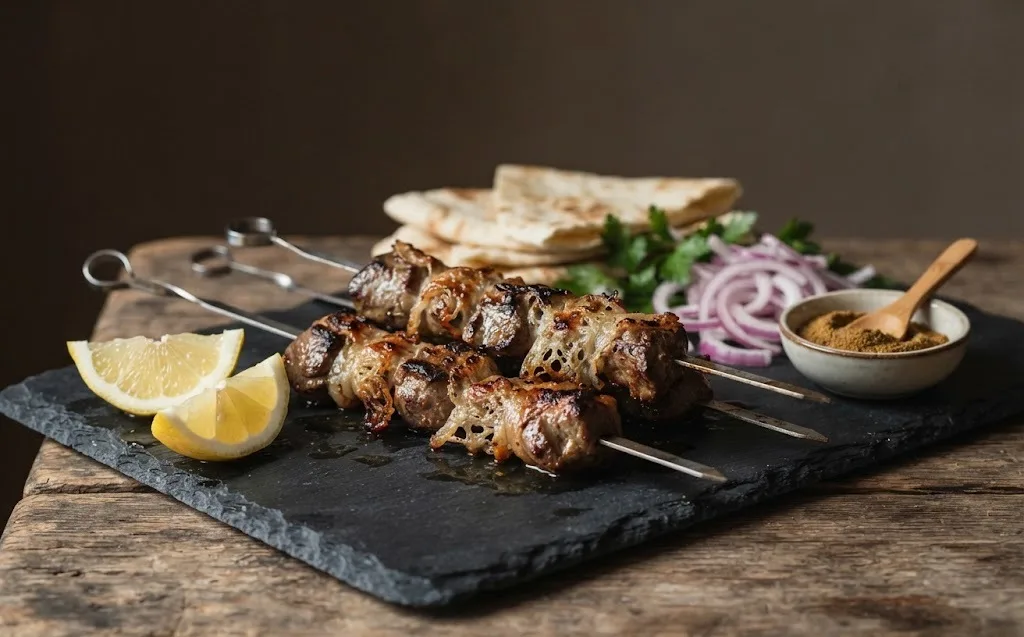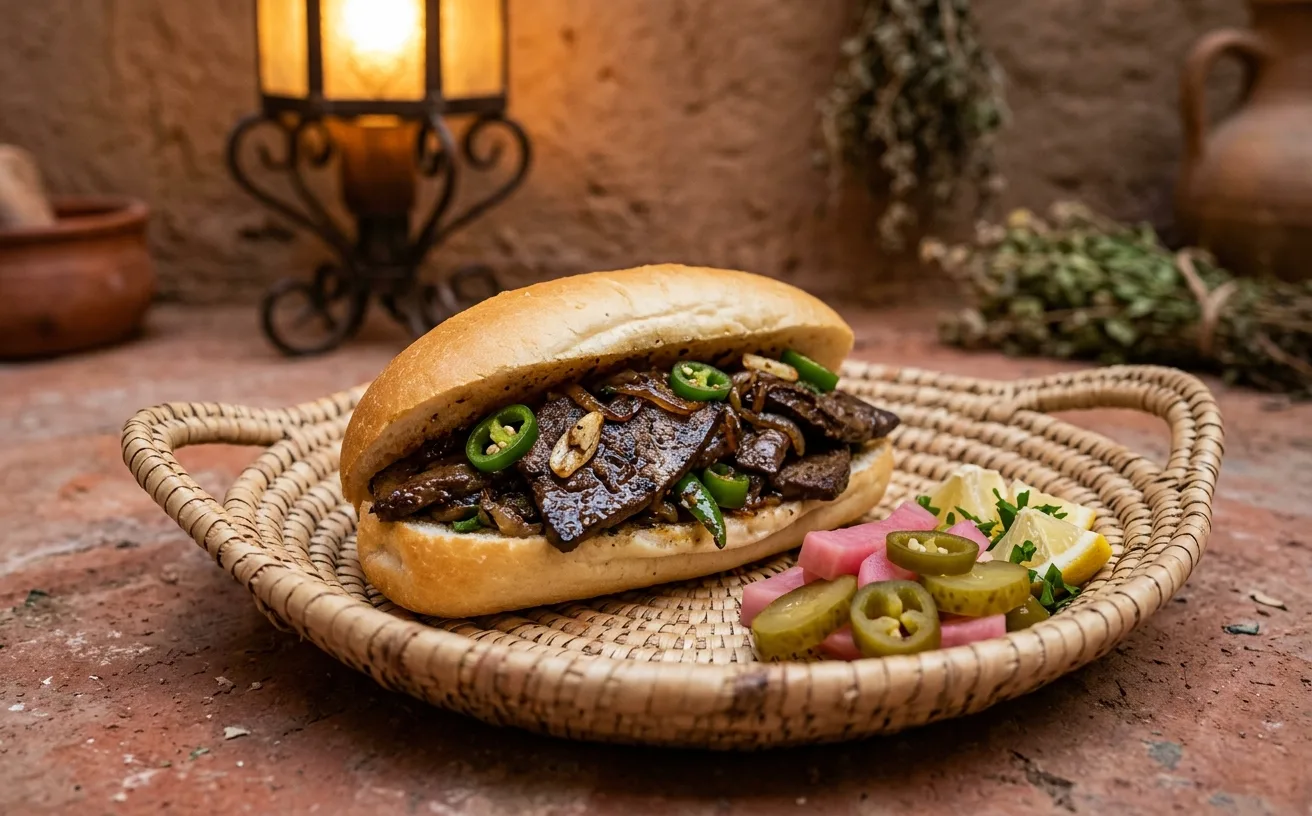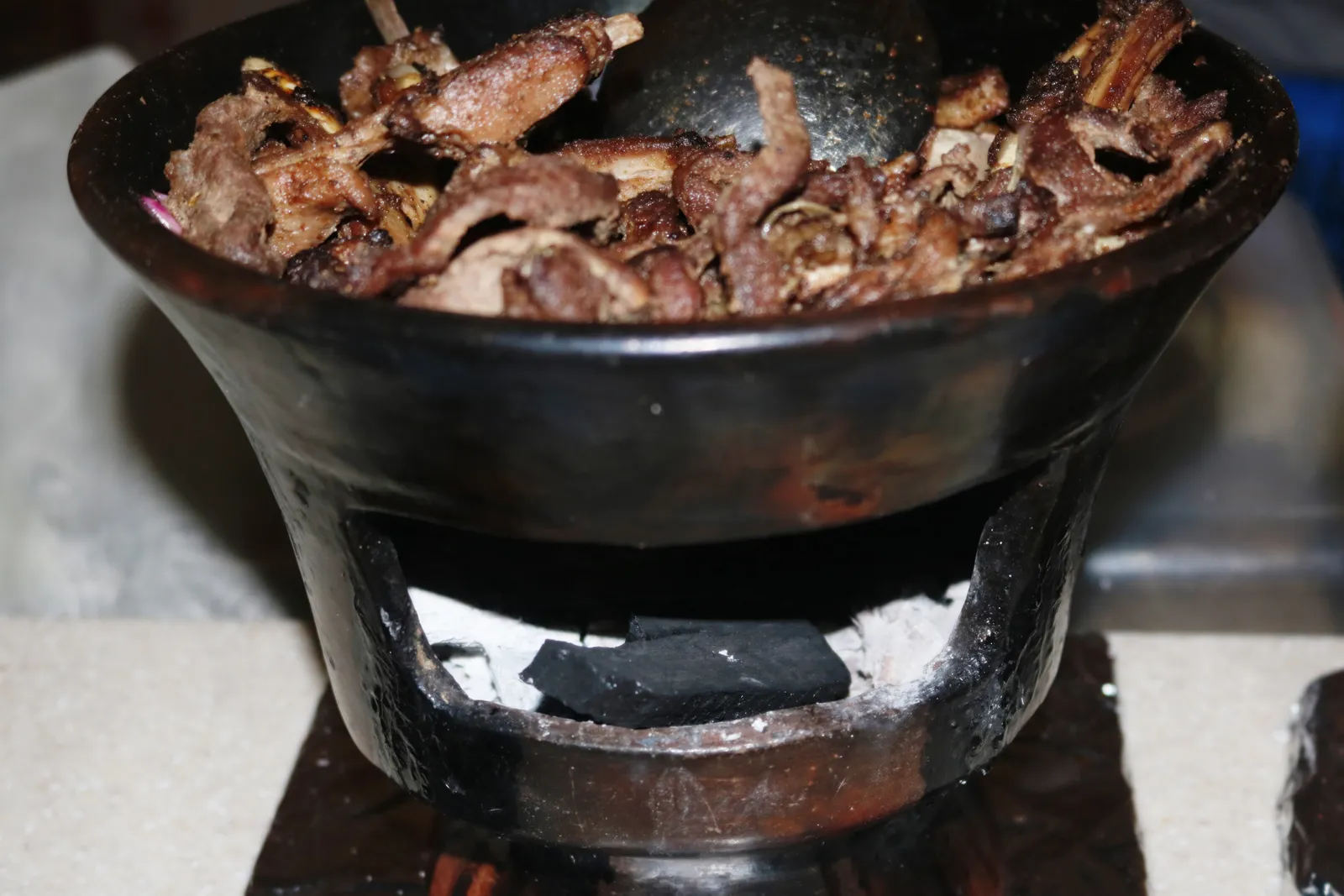
Cubes or strips of beef or lamb seared with niter kibbeh spiced butter, rosemary, onion, and jalapeno, brought to the table still crackling on a shekla clay brazier over live coals. Ethiopia's celebratory meat dish, scooped up with injera and fired up with berbere or awaze paste.
Also known as tibs, tibbs, zilzil tibs.
Reference video
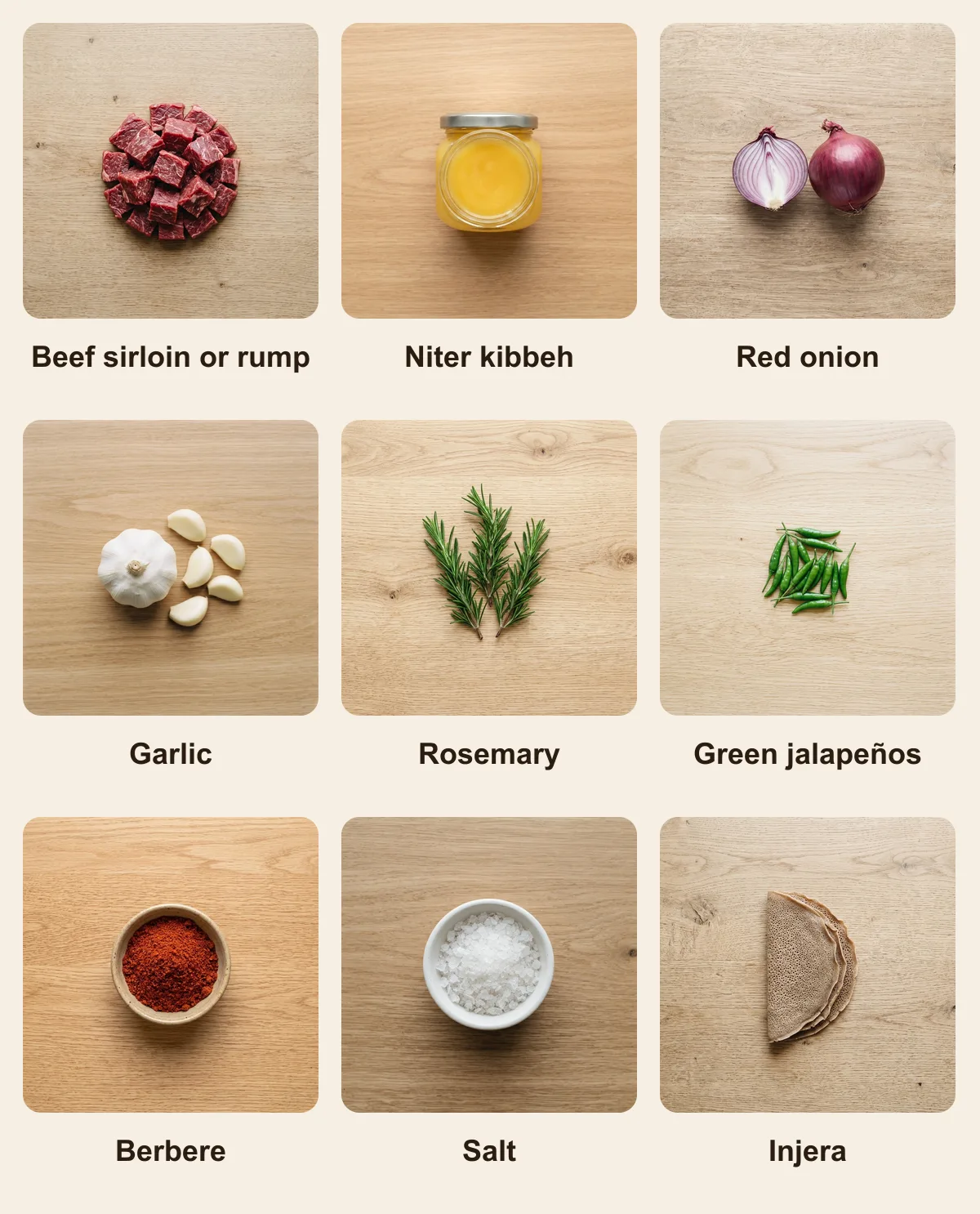
Ingredients
- 600 g beef sirloin or rump, in 2 cm cubes
- 3 tbsp niter kibbeh (Ethiopian spiced clarified butter)
- 1 red onion, in thick wedges
- 2 garlic cloves, sliced
- 1 sprig rosemary
- 2 green jalapeños, in rings
- 1/2 tsp berbere (optional)
- 1/2 tsp salt
- injera, to serve
How to make it
- 1
Get a cast-iron pan (or a clay shekla dish) smoking hot and sear the beef dry, in two batches, about 2 minutes per batch.
- 2
Return all the meat, drop in the niter kibbeh, onion, garlic and rosemary and toss over the highest heat 3-4 minutes — centres should stay blush pink.
- 3
Season with salt, and berbere if you like heat, then add the jalapeño rings for a final 30 seconds.
- 4
Carry the pan to the table still sizzling and scoop everything up with torn injera.
Pro tip: Crowd the pan and tibs boils in its own juice — searing in two batches is non-negotiable.
Where Shekla Tibs comes from
Tibs covers a wide family of sautéed meat dishes in Ethiopian cooking, and shekla tibs is the version defined by its serving vessel. The brazier keeps it cooking at the table, which means the last pieces are more done than the first and the dish evolves across the meal — an intended feature rather than a flaw.
How Shekla Tibs is cooked
Niter kibbeh is the ingredient that makes this Ethiopian rather than generic. It is butter clarified with onion, garlic, ginger, fenugreek, cardamom, korarima, cinnamon and other spices, then strained — an aromatic cooking fat that carries flavour into everything it touches. Using plain butter gives a completely different dish.
The meat is seared hard and fast in a very hot pan, in batches, so it browns rather than steams. Rosemary is added toward the end — it is a genuine and slightly surprising Ethiopian usage — along with onion and sliced jalapeño. Then everything is transferred to the preheated clay shekla with coals underneath.
Ingredients and shopping
Beef sirloin or lamb, cut into cubes or strips, with fat. Niter kibbeh, which is worth making in a batch and keeping — it is used across Ethiopian cooking and freezes well. Fresh rosemary, red onion, and jalapeño or a similar green chilli.
Berbere — the Ethiopian chilli-and-spice blend — or awaze, its wet paste form, is served alongside rather than cooked in for this dish — at most the optional pinch stirred in at the end. Injera, the fermented teff flatbread, is both plate and utensil. A clay shekla if you have one; a small cast-iron pan preheated hard is the practical substitute.
How Shekla Tibs is served
On the shekla at the table with injera underneath and alongside, awaze or berbere for heat, and often a salad of tomato and onion. Ethiopian beer or tej (honey wine). It is shared from the same brazier and eaten with the right hand using injera.
Common mistakes
Using plain butter
Niter kibbeh is spiced clarified butter and it is the flavour foundation. Plain butter gives a generic sautéed beef.
Crowding the pan
It steams instead of searing. Cook in batches over the hottest heat you have.
Adding rosemary at the start
It burns and turns medicinal. It goes in toward the end.
A cold serving vessel
The shekla must be preheated with coals so the dish keeps cooking at the table. A cold pan defeats the format.
Shekla Tibs: questions and answers
What is awaze?
A wet paste made from berbere with wine or water, served alongside for heat rather than cooked into the dish.
Why rosemary in an Ethiopian dish?
It is a genuine and long-established Ethiopian usage, particularly with tibs, and it is one of the surprising markers of the cuisine.
Sources and further reading
- Tibs — Wikipedia
- Flavor-Packed Shekla Tibs, not your Standard Ethiopian Traditional Food — CulturEatz