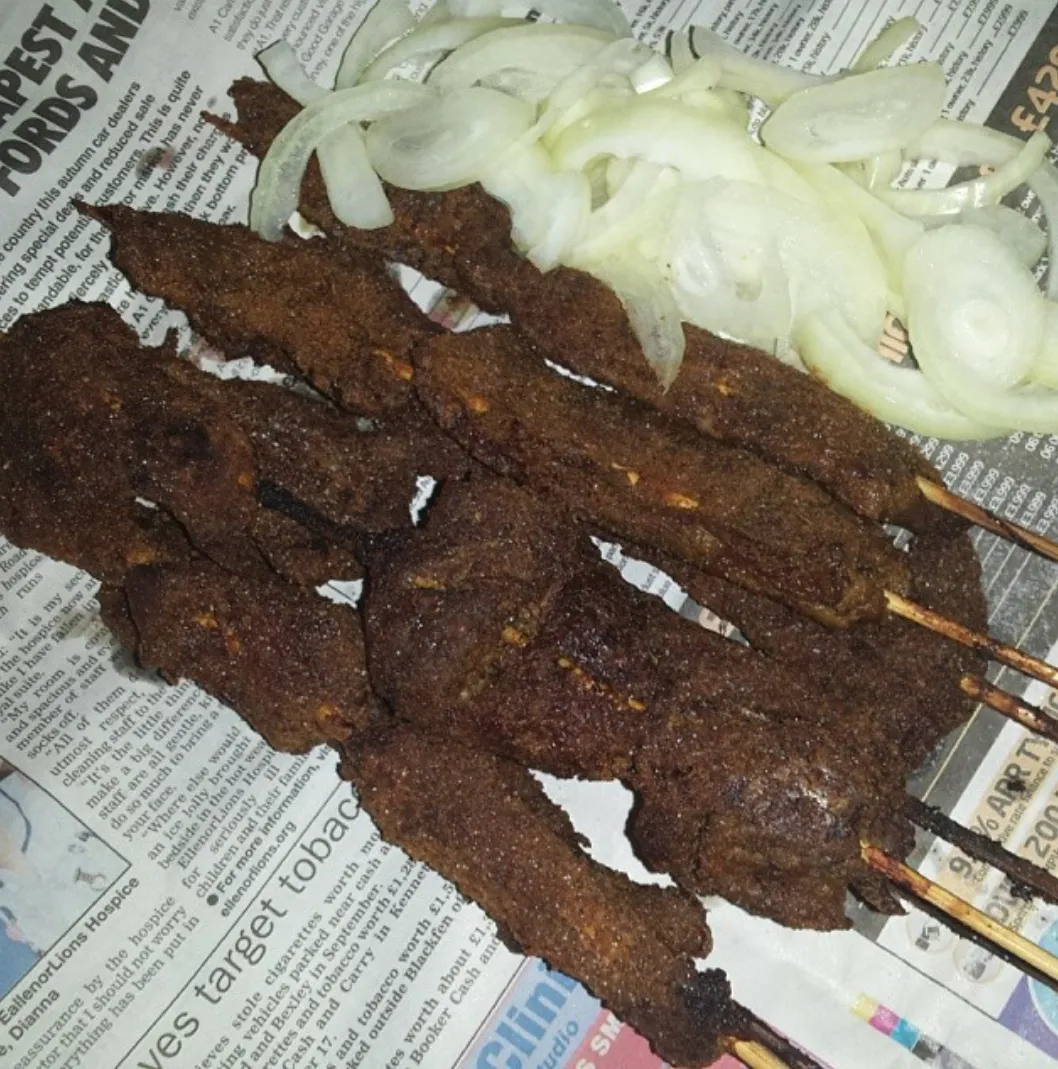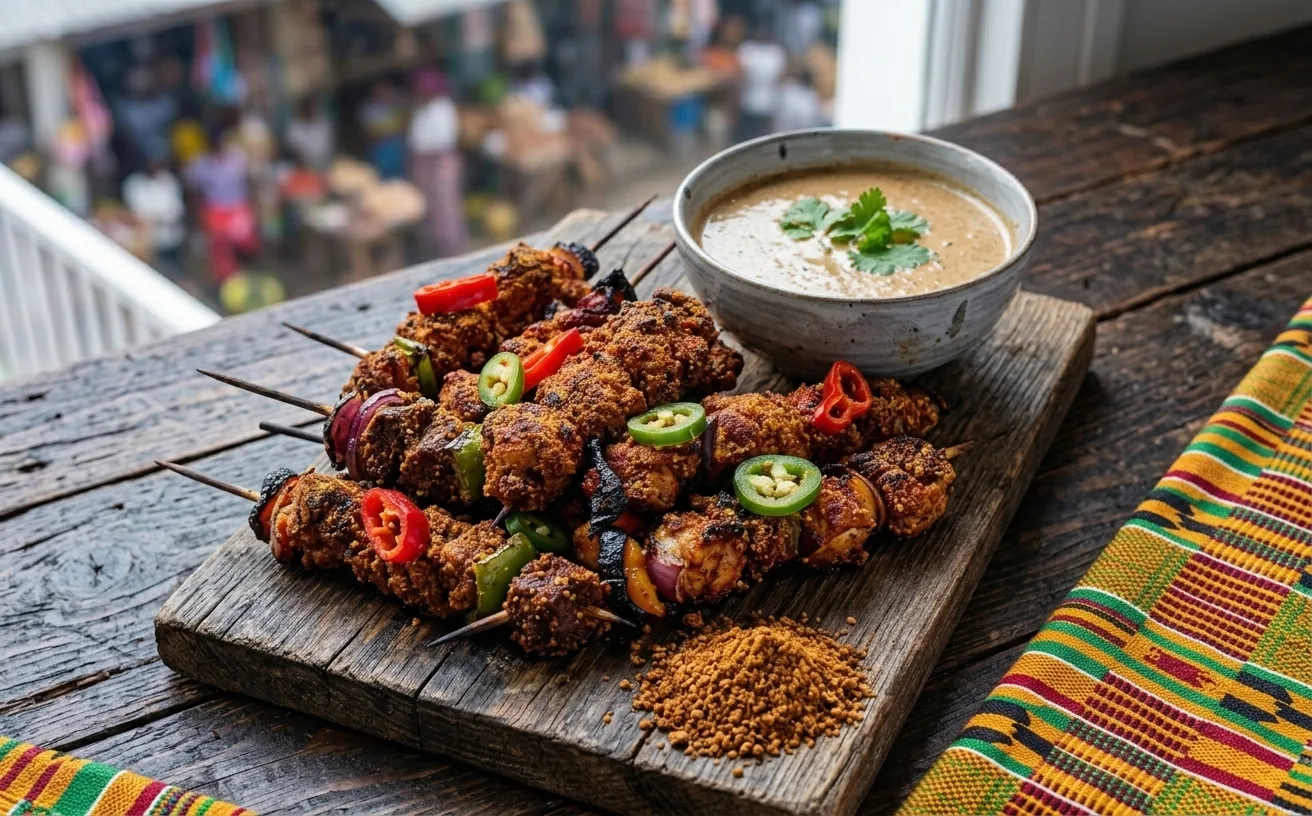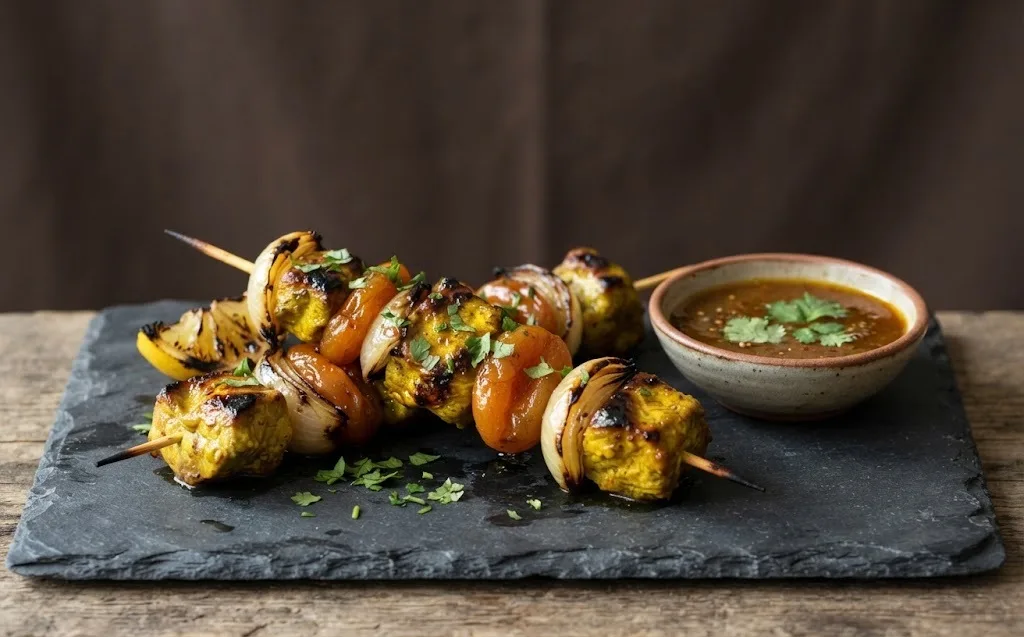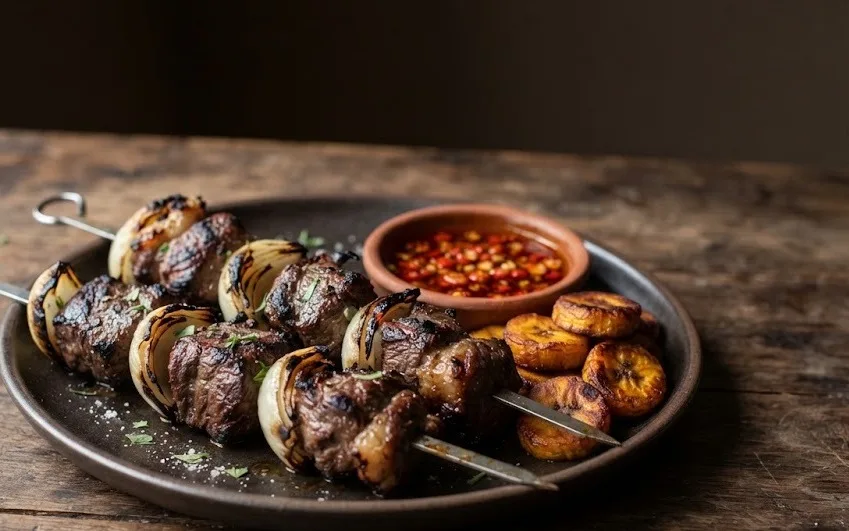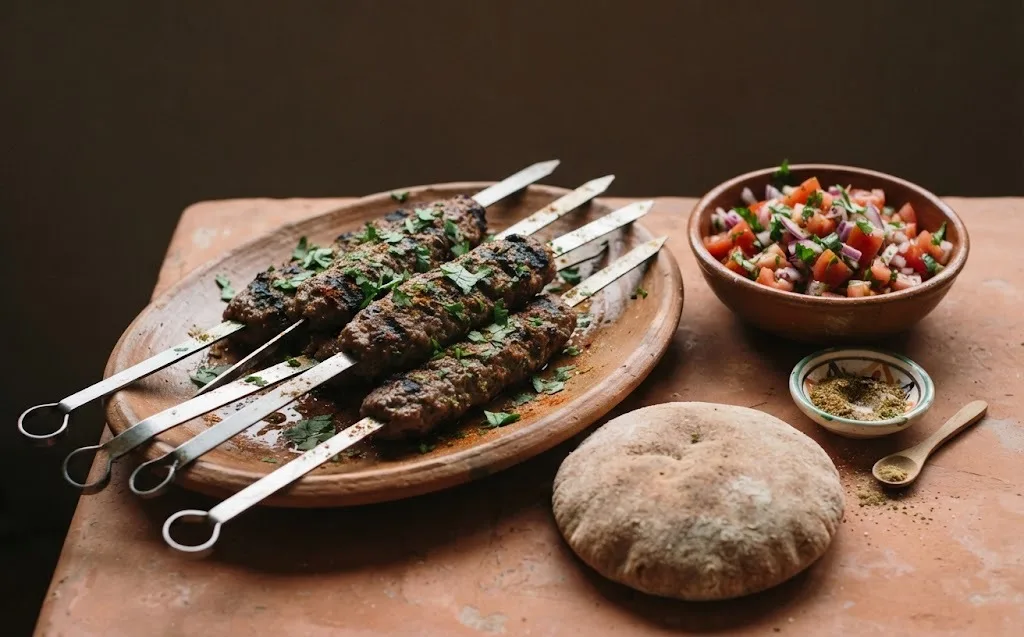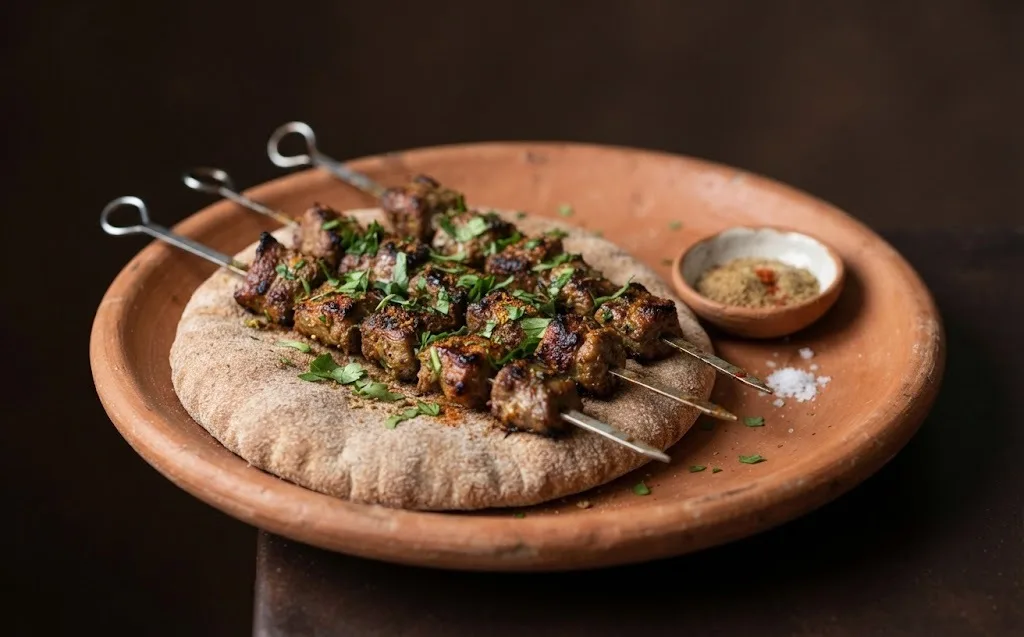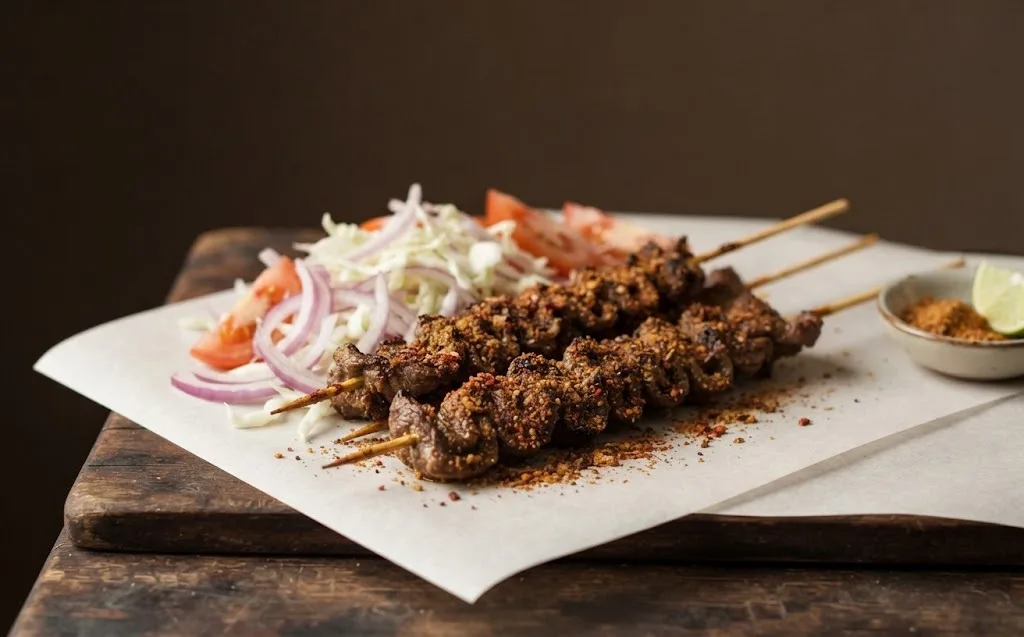
Tsire is the stick-mounted original of the suya family: thin strips of beef threaded ribbon-like onto slender skewers, oiled and coated in kuli-kuli (groundnut cake) based yaji spice, and grilled by Hausa mai-suya from Niamey's night markets eastward through Chad to Sudan, where the trade travels under the name agashe. The word tsire specifically denotes the skewered form, distinguishing it from flat-grilled suya slabs.
Also known as tsire suya, tsinke, agashe (Sudan).
Reference video
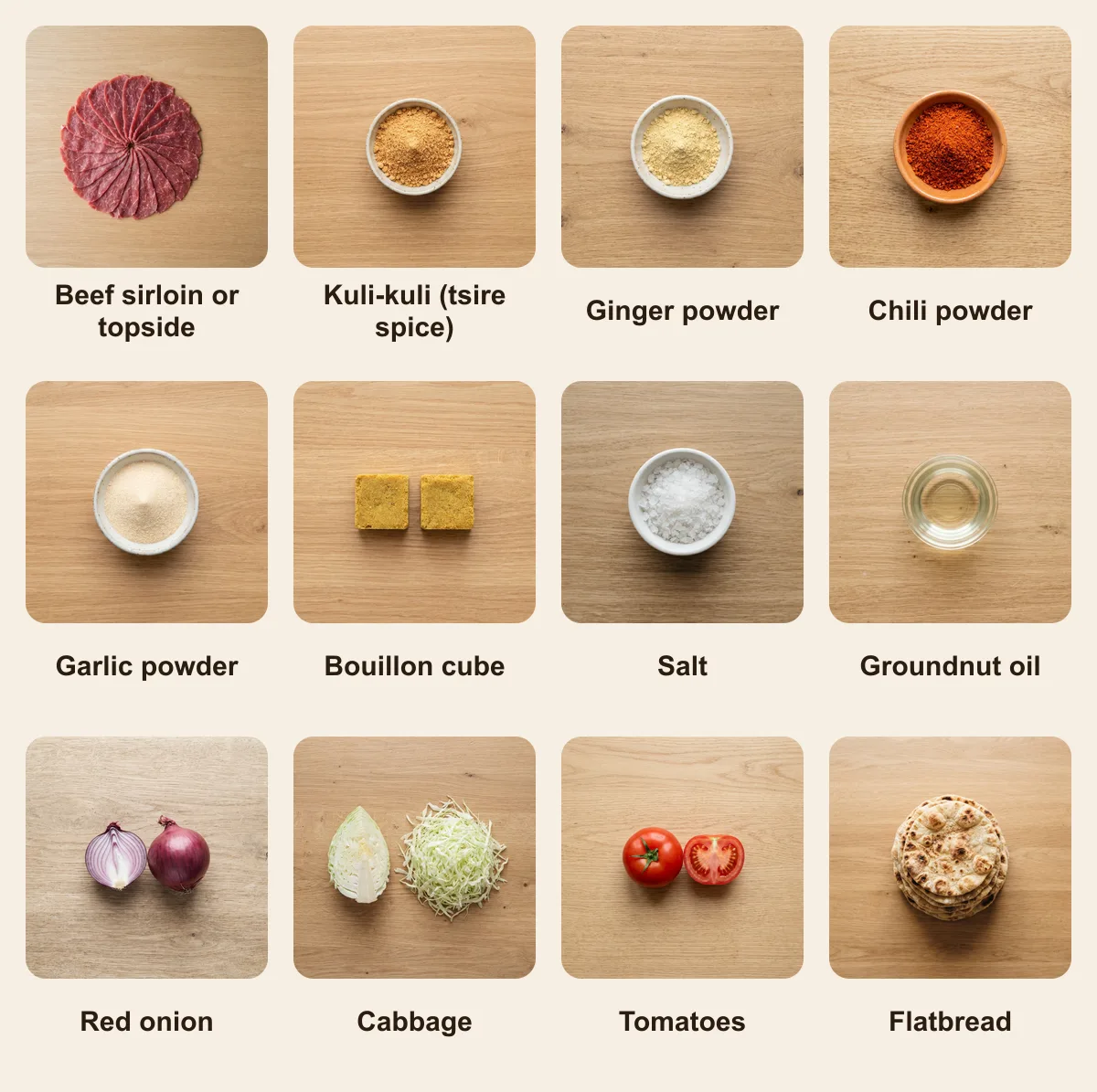
Ingredients
- 600 g beef sirloin or topside, sliced into thin 10 cm x 2-3 mm ribbons
- 5 tbsp tsire spice: ground kuli-kuli (defatted peanut), ginger powder, chili powder, garlic powder, ground bouillon cube, salt
- 2 tbsp groundnut oil
- 1 red onion, sliced
- 0.5 small cabbage, shredded
- 2 tomatoes, sliced
- paper or flatbread, for serving
How to make it
- 1
Ribbon the beef strips onto slender skewers in tight waves so the metal barely shows — the Hausa original of the whole suya family.
- 2
Brush with groundnut oil, then press each skewer into the tsire spice until furred on all sides; rest 1 hour so the peanut coat hydrates into the meat.
- 3
Grill over medium coals 6-8 minutes, turning gently; the peanut crust should toast nut-brown, never black.
- 4
Oil-brush once more mid-grill to bloom the spices.
- 5
Serve dusted with fresh tsire, with onion, cabbage and tomato heaped alongside.
Pro tip: Defatted peanut (kuli-kuli) is the crust's secret — ordinary ground peanuts release oil and slide off, while kuli-kuli grips and toasts.
Where Tsire comes from
That distinction matters to Hausa speakers and is generally lost in translation — English-language writing treats suya as one dish, where the tradition itself distinguishes between the cut, the mounting and the spice.
Tsire: the skewered form of the suya family
The word tsire names the stick: beef ribbons 2 to 3 mm thick, woven so tightly onto slender skewers that the metal barely shows. Suya, from the same Hausa butchers, is sliced 5 mm thin and fanned out more loosely, and both are dredged in a kuli-kuli yaji before grilling. Follow the trade east to Sudan and the skewer becomes agashe, where the peanuts are crushed coarse rather than ground and the meat stays over medium coals so the crust survives. Kilishi uses the same spice as a slurry on beef that is dried before it ever meets the fire.
How Tsire is cooked
Ribbon threading is the technique the name refers to: a long thin strip of beef is woven onto the skewer in an S, so it is held at multiple points and presents a large surface to the fire while staying on the stick. It is a genuinely clever solution and it is what allows the meat to be sliced as thin as it is.
The strip is brushed with groundnut oil before the yaji goes on, and the oil matters — it helps the powder adhere and it stops the peanut in the spice scorching directly against dry meat. The second coating goes on after grilling, unheated, as in the whole family.
Ingredients and shopping
Lean beef — topside or a similar cut — sliced into long strips two or three millimetres thick. Thin slicing is easier from partially frozen meat. Slender skewers, metal or soaked wood.
Kuli-kuli ground to a powder with dried chilli, ginger and garlic powder, salt and a crumbled stock cube, and often a little onion powder, negro pepper or cloves. Groundnut oil for brushing. Raw onion, tomato and extra yaji for serving, wrapped in paper.
How Tsire is served
Wrapped in paper with raw onion, tomato and a heap of extra yaji, from a night-market grill. Eaten with the fingers standing. Several sticks at a time, as with every member of this family.
Common mistakes
Threading the strip flat
Weave it in an S so it is held at several points and presents maximum surface. Flat, it slides off and cooks unevenly.
Skipping the oil
It helps the yaji adhere and stops the peanut scorching against dry meat. Brush before coating.
Thick strips
Two or three millimetres. The whole design of the dish assumes a thin ribbon.
Only coating once
The second, uncooked coating after grilling is where the pungency lives.
Tsire: questions and answers
What does tsire mean?
It denotes the skewered form specifically, as distinct from flat-grilled suya slabs. The distinction is meaningful in Hausa and usually lost in English.
How is the meat threaded?
In a ribbon, woven onto the skewer in an S so it is held at several points and presents a large surface to the fire.
Sources and further reading
- Suya — Wikipedia
- Nigerian Beef Suya — Chef Lola's Kitchen