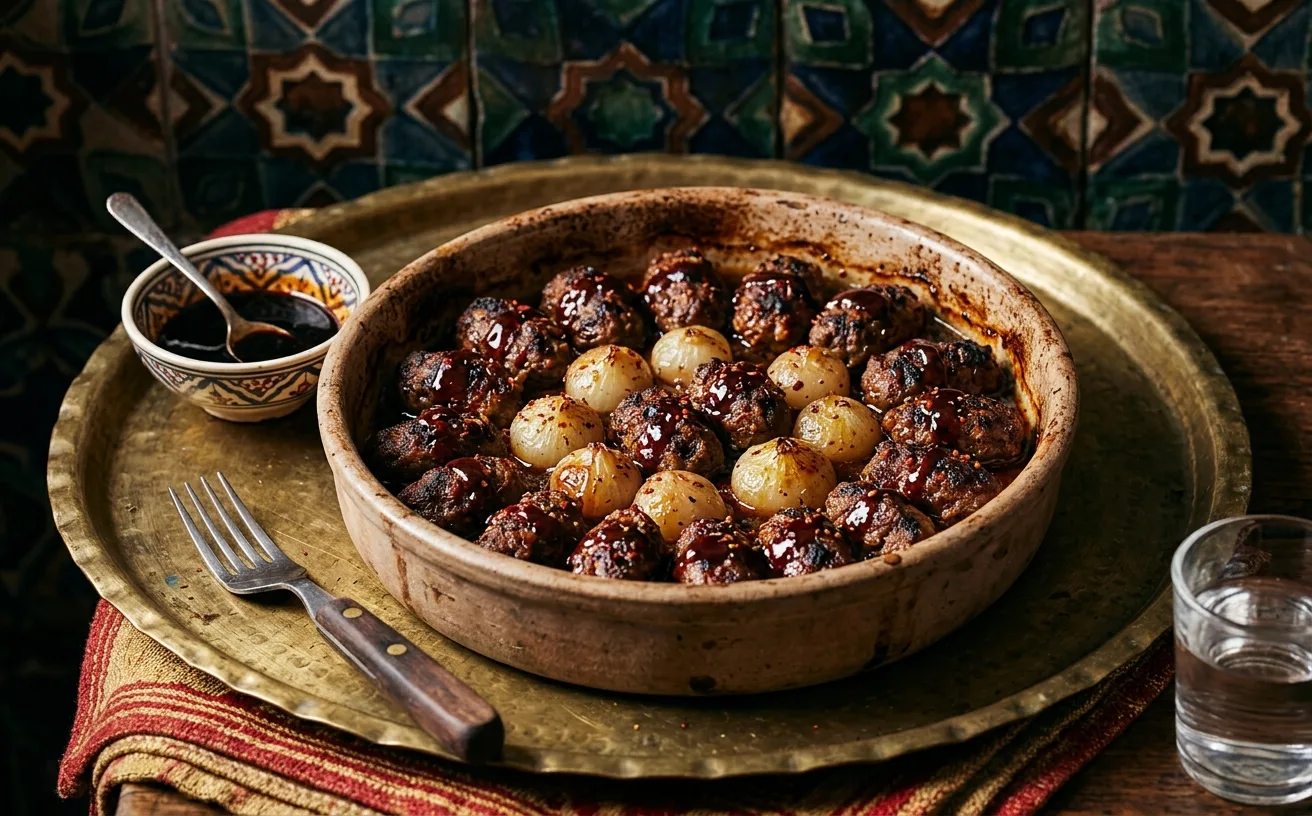
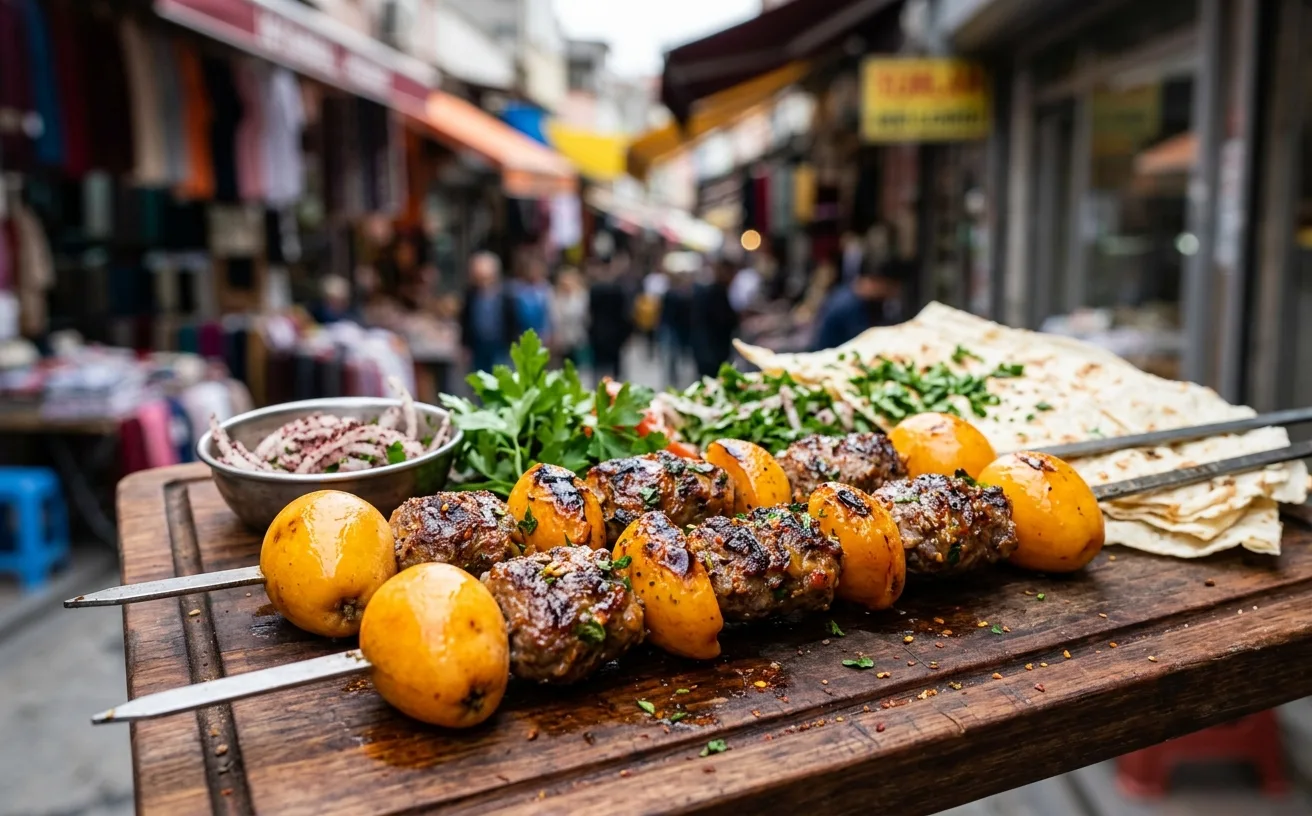
Lamb and vegetables sealed in a parchment (originally greased paper) parcel and baked, so the meat steams in its own juices — a dish cooked across Turkey, distinct from the minced-beef kağıt kebabı registered to Antakya. The parcel is opened at the table for the aroma.
Also known as kağıt kebabı, paper kebab.
Reference video
Ingredients
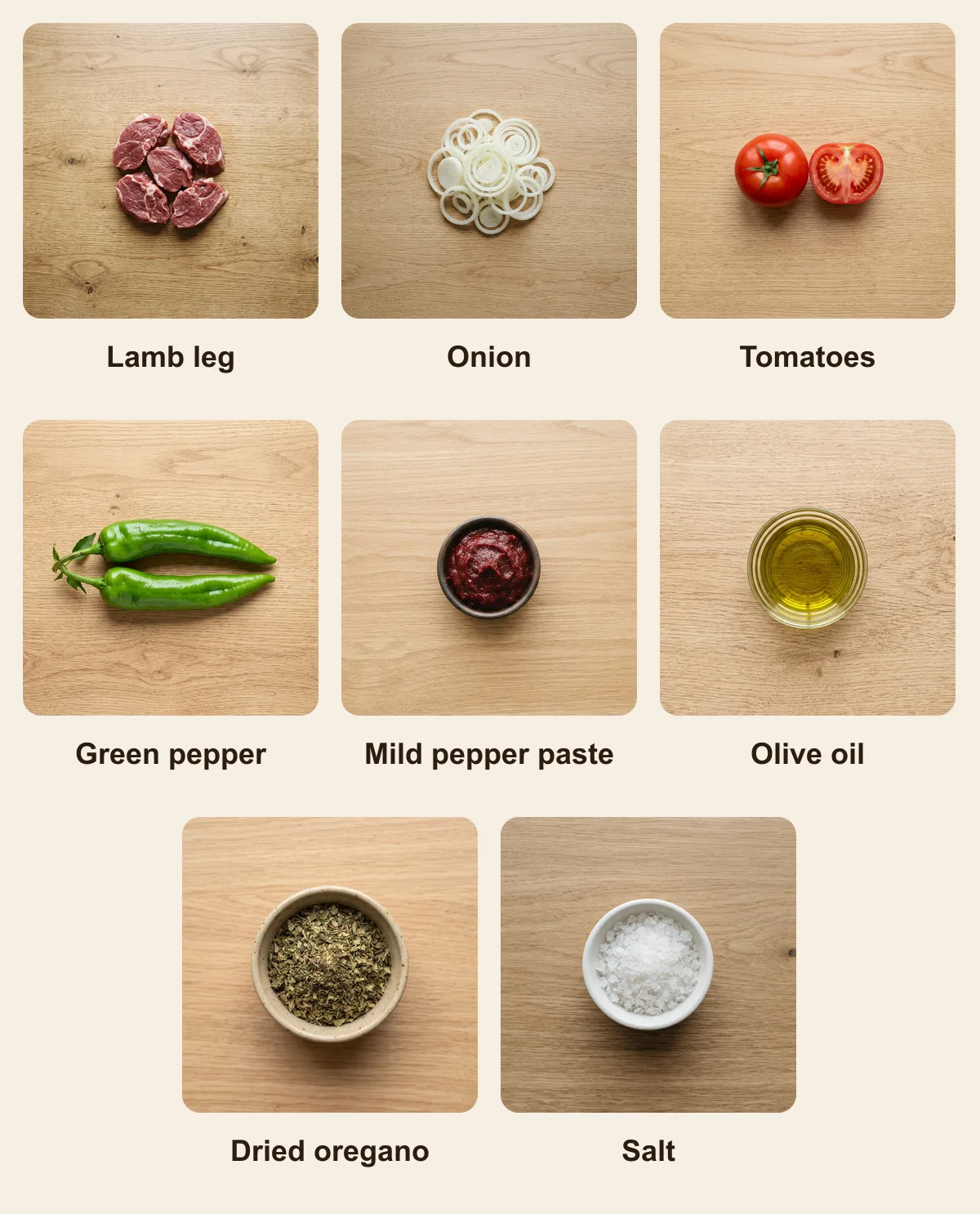
- 600 g lamb leg, in 2 cm cubes
- 1 onion, thinly sliced
- 2 tomatoes, chopped
- 1 green pepper, in rings
- 2 tbsp (30 g) mild pepper paste (biber salcasi)
- 30 ml olive oil
- 1 tsp dried oregano
- 1 tsp salt
- 4 sheets baking parchment, about 40 cm each
How to make it
- 1
Work the pepper paste, oil, oregano and salt through the lamb, then fold in the vegetables.
- 2
Divide between the parchment sheets, placing the mix on one half of each.
- 3
Fold the paper over and crimp the edge in tight overlapping pleats to make four sealed half-moons.
- 4
Bake on a tray at 190 C for 45 min; the parcels should puff and the meat steam tender in its own juice.
- 5
Carry to the table unopened and slash each parcel open in front of the eater.
Pro tip: Double-fold every pleat; one leaking seam and the parcel braises dry instead of steaming.
Where Kagit Kebab comes from
Kağıt kebabı — paper kebab — is the Turkish name for meat finished in fireproof paper. Antakya has its own registered version, hand-chopped beef brisket with peppers, parsley and garlic baked as a disc on oiled paper. In the parcel style, lamb and vegetables are sealed inside and baked, and the parcel is opened at the table so the trapped steam is released in front of the person eating it.
The technique is old and the material has changed with the century: originally greased paper or even a sheet of dough, now baking parchment or foil. The theatre of the opening is not incidental — the dish is built around the moment the aroma escapes, which is why restaurants that serve it never open the parcel in the kitchen.
How Kagit Kebab is cooked
Everything cooks inside a sealed pouch with almost no added fat and no added liquid. Cubes of lamb, tomato, pepper and onion are tossed with pepper paste, olive oil and oregano, the parchment is folded and crimped tightly, and the whole thing goes into a 190°C oven for about forty-five minutes. The vegetables release water, the water turns to steam, and the steam cooks the lamb.
The seal is the technique. A parcel that leaks turns into a dry tray bake and loses its point entirely. Restaurants crimp aggressively and often double-wrap; at home, parchment inside foil is the reliable answer. The reward is meat that is genuinely steamed in vegetable juice rather than roasted in fat.
Ingredients and shopping
Lamb shoulder cut into two-centimetre cubes is standard; the long moist cook suits it. Vegetables should be ones that give up liquid — tomato above all, then pepper and onion. Aubergine is sometimes added. Avoid anything watery and bland like courgette in large quantity, which dilutes rather than flavours.
Olive oil is the fat, and a modest amount is enough since nothing evaporates. Spicing stays simple: mild pepper paste and oregano, with pul biber or black pepper if you want more heat. The pepper paste worked through the lamb deepens the sauce that forms.
How Kagit Kebab is served
The parcel goes to the table intact on a plate and is slit open in front of the diner. Rice or bulgur pilav sits alongside to take the juices, with flatbread, pickles and a bowl of yoghurt. The aromatic release is treated as the beginning of the meal.
Common mistakes
A loose parcel
Steam escapes and the dish dries out. Crimp hard, double-wrap if unsure, and do not pierce it.
Adding water
The vegetables provide all the liquid. Extra water gives you boiled lamb in a bag.
Opening it early to check
Every peek costs steam and time. Trust the clock — forty-five minutes at 190°C for two-centimetre lamb cubes.
Cutting the meat too large
Big chunks need longer than the vegetables can survive. Keep them small and even.
Kagit Kebab: questions and answers
What is kağıt kebabı?
Lamb and vegetables sealed in a parchment or foil parcel and baked, so the meat steams in the vegetables' own juices. It is opened at the table for the aroma.
Can I use foil instead of parchment?
Yes, and many restaurants do. Parchment inside foil is the most reliable home combination — parchment for the surface and foil for the seal.
Where is kağıt kebabı from?
Turkey. Meat baked in fireproof paper is cooked across the country; the version registered to Antakya in Hatay is a different dish, hand-chopped beef brisket pressed into a disc and baked on oiled paper.
Why should the parcel not be opened in the kitchen?
The escaping aroma is part of the dish. Opening it at the table is the traditional service and the reason the technique survived.
Sources and further reading
- Kağıt kebabı — Wikipedia
- Antakya Kağıt Kebabı — Hatay Chamber of Commerce and Industry (official geographical indication)