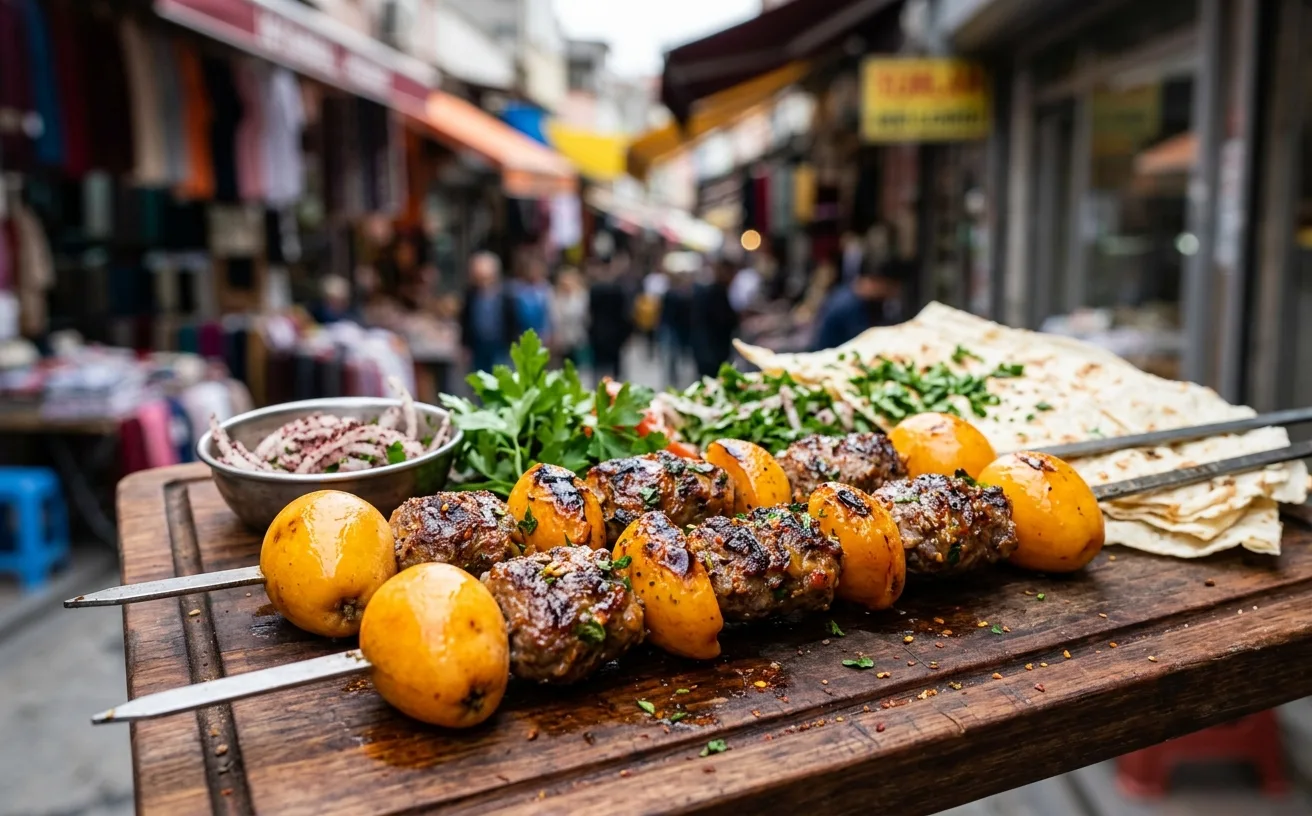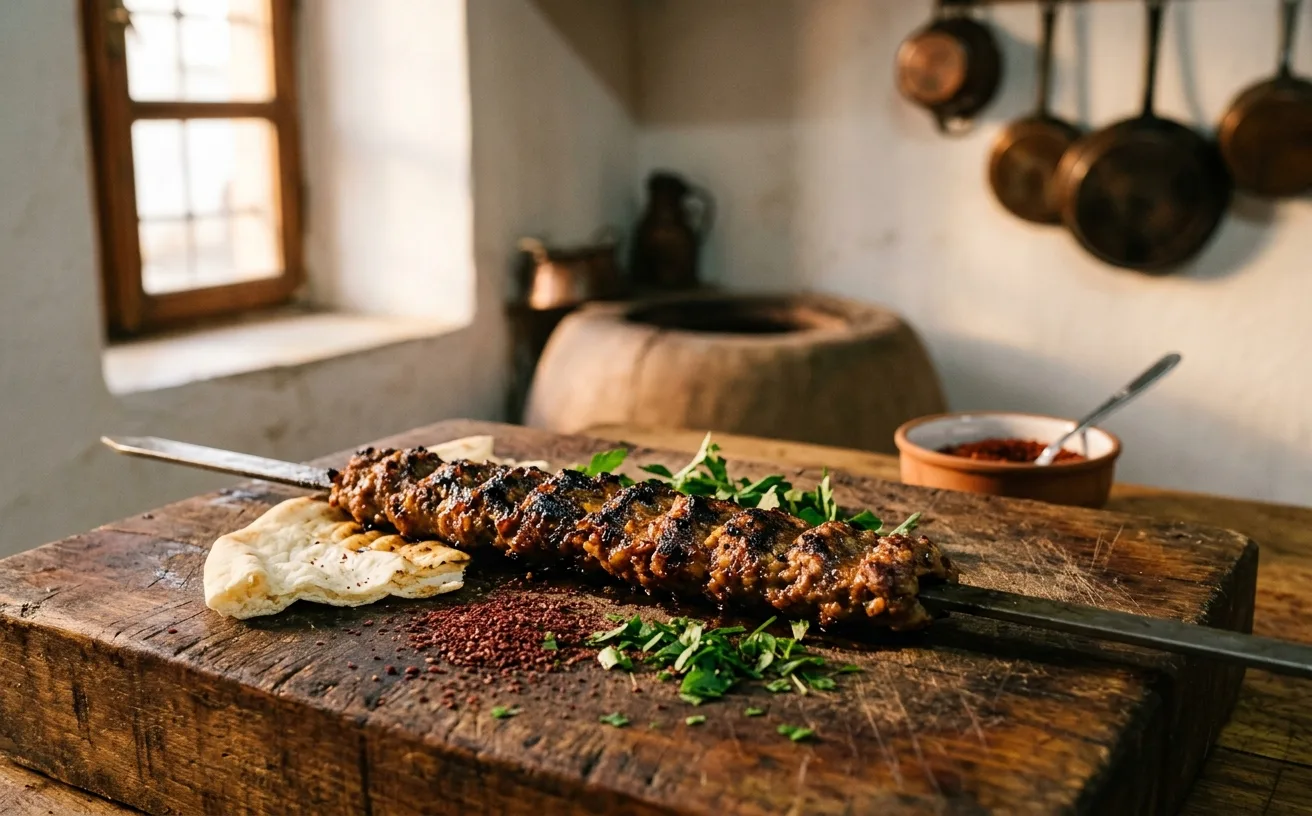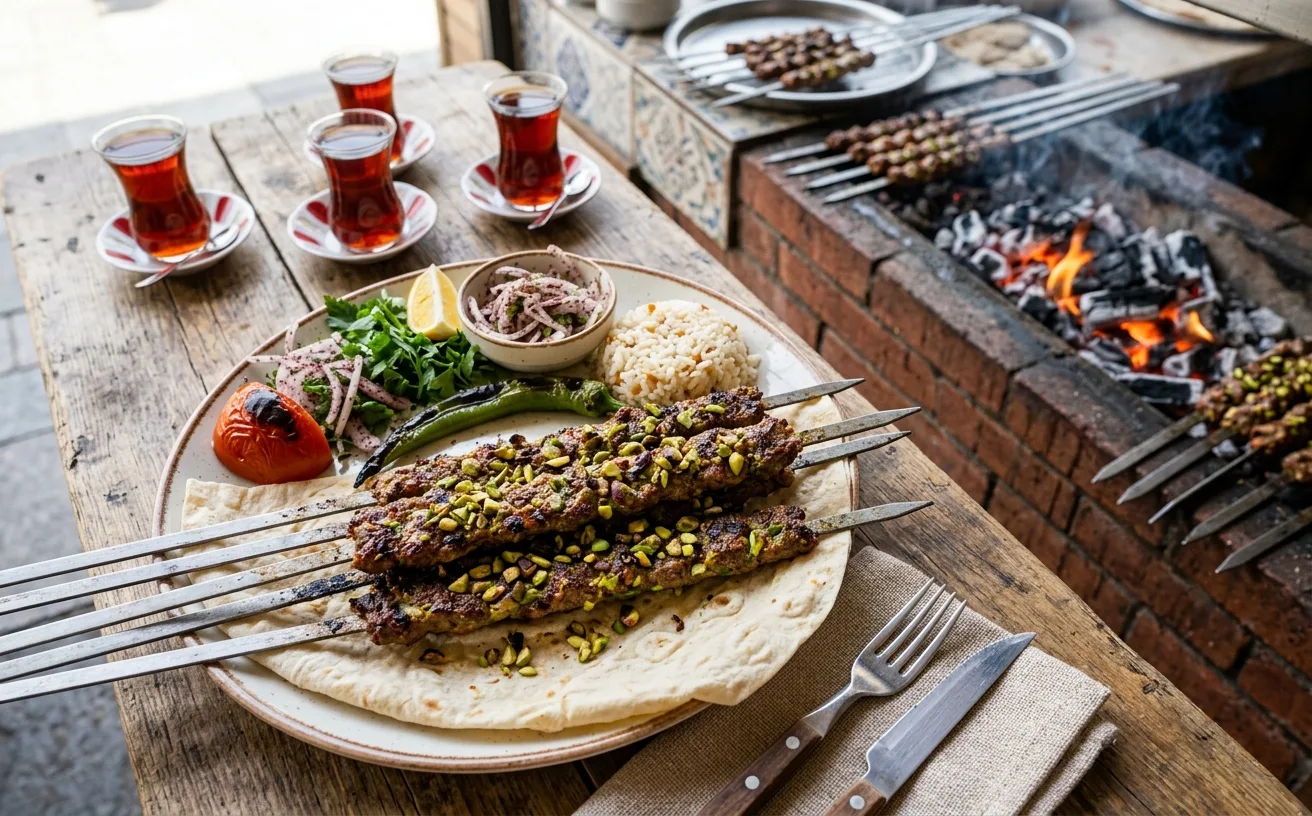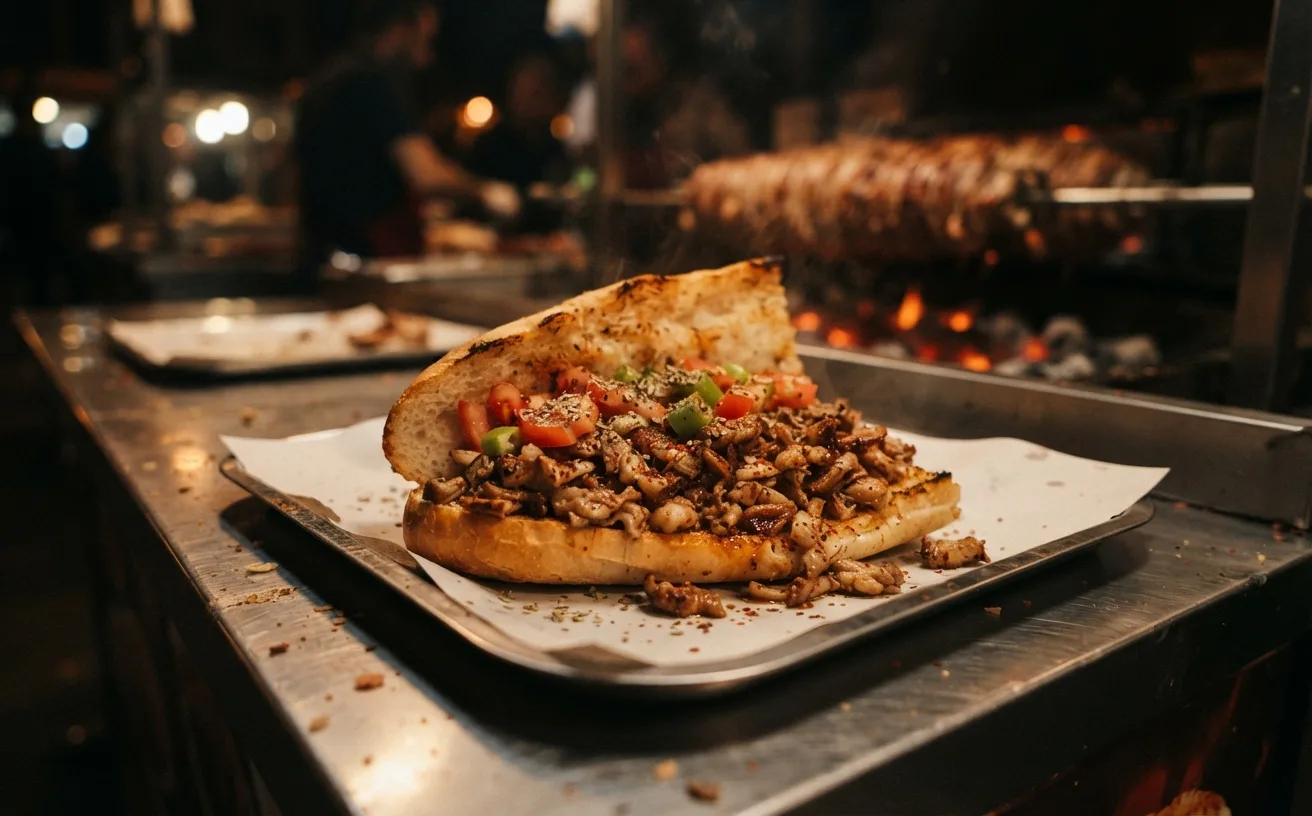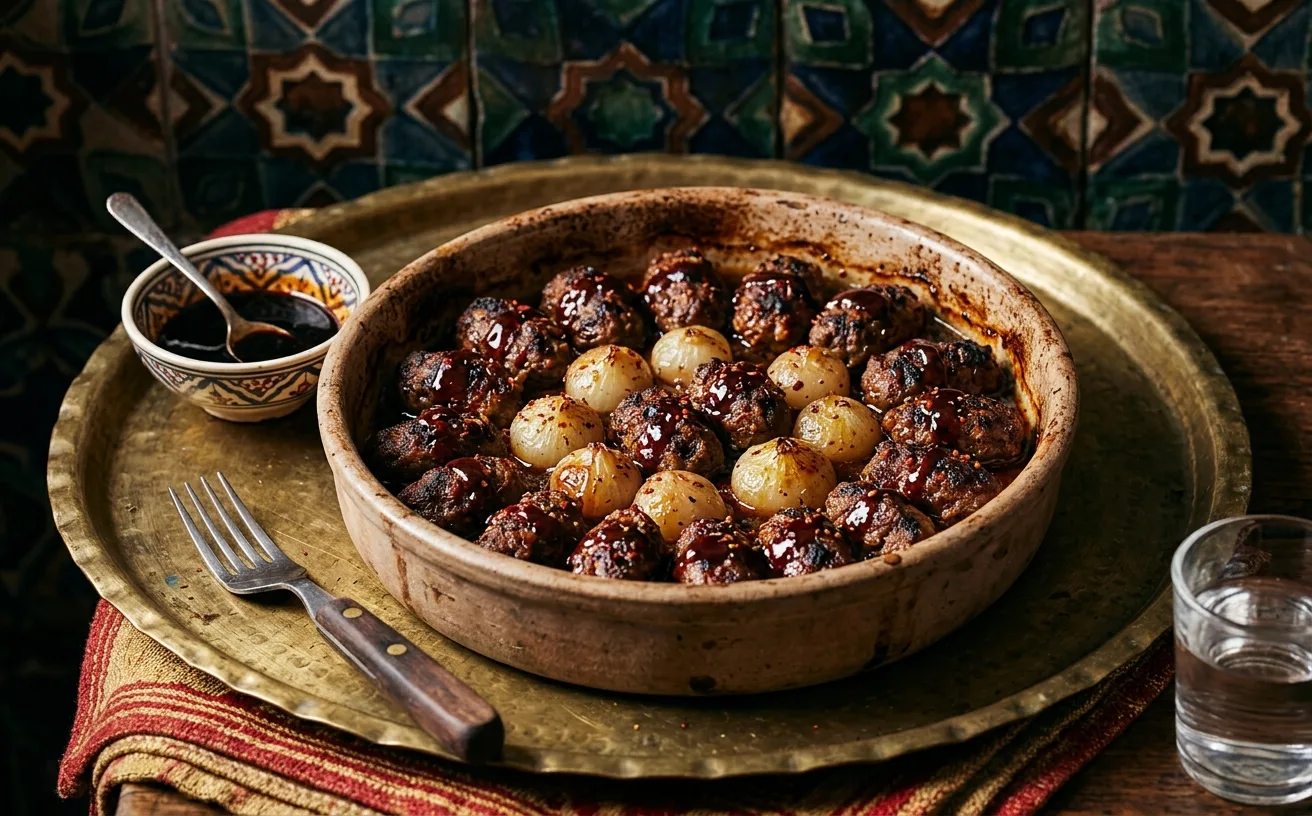
A winter dish from Gaziantep: small köfte roasted in a tray among whole baby onions, then dressed with a tart pomegranate-molasses sauce. The onions caramelize into the star of the dish, sweet against the sour glaze.
Also known as soğan kebabı, sogan kebabı, onion kebab.
Reference video
Ingredients
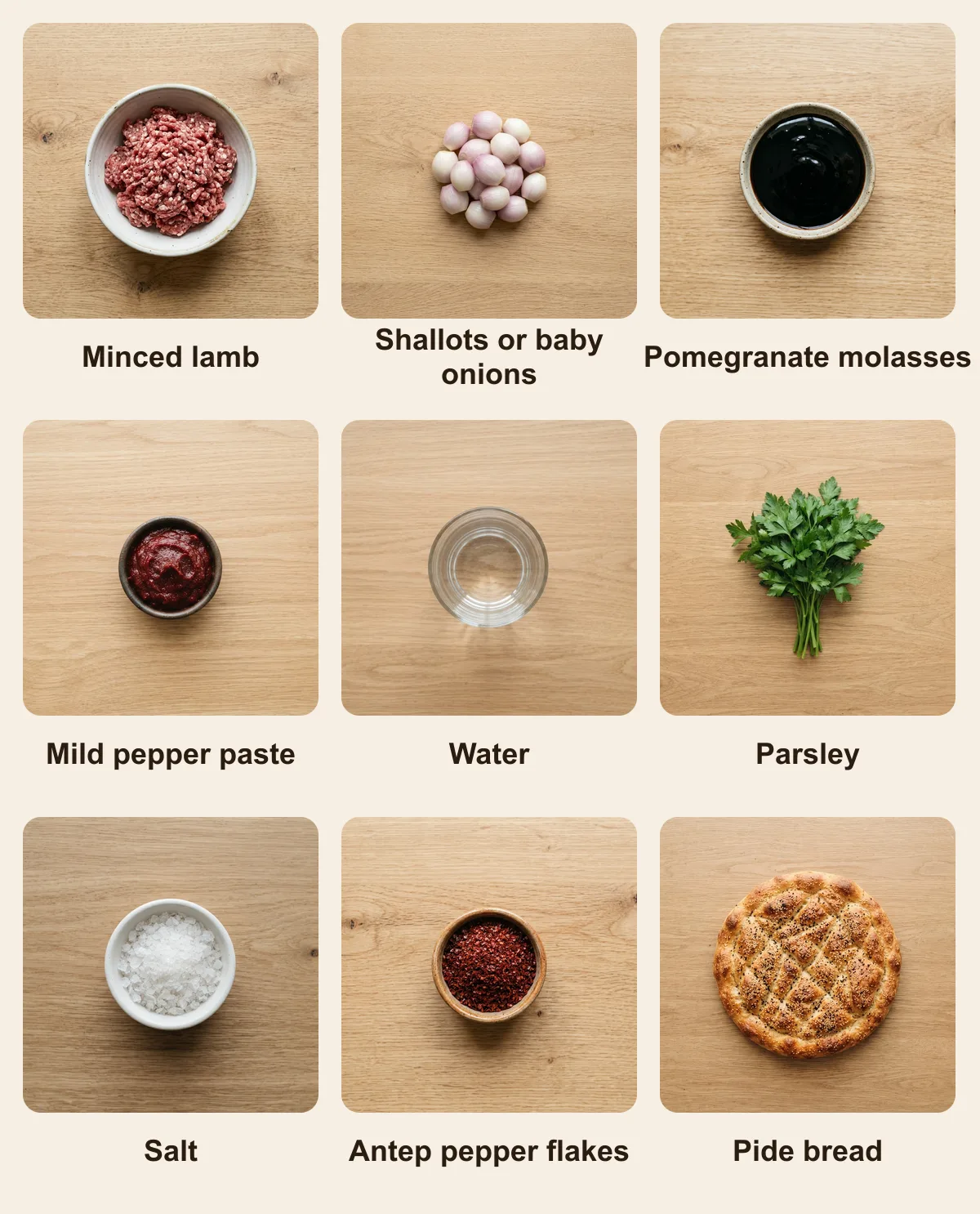
- 500 g minced lamb (about 20% fat)
- 16 small shallots or baby onions, left whole with skins on
- 60 ml pomegranate molasses
- 20 g mild pepper paste
- 60 ml hot water
- 15 g parsley, chopped
- 1.5 tsp salt
- 0.5 tsp Antep pepper flakes
- 2 pide breads
How to make it
- 1
Knead the mince with salt and pepper flakes for 3 min and roll into walnut-size kofte.
- 2
Stand the whole onions upright in a round baking tray with the kofte tucked between them.
- 3
Roast at 200 C for 30 min until the onions blister and soften to caramel.
- 4
Whisk the molasses with pepper paste and hot water, pour it over everything, and return to the oven for 10 min.
- 5
Scatter parsley and serve straight from the tray with torn pide for mopping.
Pro tip: The onions must be fully collapsed and sweet before the molasses goes on; sauce poured over firm onions leaves them raw-sharp forever.
Where Sogan Kebab comes from
It belongs to Antep's tray-kebab tradition (tepsi kebabı and its relatives), a body of cooking that developed because the city's bakeries had communal ovens. Households assembled trays at home and carried them to the baker, and dishes evolved to suit a very hot bread oven and a single, uninterrupted cook.
How Sogan Kebab is cooked
The onions go in whole and unpeeled at the root, so they hold together while their layers soften and their sugars concentrate. Roasted long enough, a baby onion collapses into something jammy and almost sweet — that transformation is the entire dish, and it cannot be rushed with higher heat, which chars the outsides before the centres give in.
The köfte are small and firm, seasoned simply, and they sit between the onions so their rendering fat runs into them. The pomegranate molasses goes on near the end rather than at the start; added early it burns and turns bitter. The finished tray should have a dark, sticky, sweet-sour glaze at the bottom that you deliberately scrape up.
Ingredients and shopping
Small onions — shallots, pickling onions or the smallest brown onions available — are essential. Full-sized onions quartered are not the same thing: you lose the whole-onion structure that makes each one a self-contained sweet parcel. Lamb mince at around 20 percent fat for the köfte, seasoned with salt and Antep pepper flakes, plus a little cumin if you like.
Pomegranate molasses (nar ekşisi) varies enormously in sourness between brands. Taste yours first — a very sharp one needs diluting with a little water and perhaps a pinch of sugar, and a sweet, syrupy one may need lemon juice to bring it back into balance.
How Sogan Kebab is served
It comes to the table in its tray, with flatbread to mop the glaze and a bowl of plain yoghurt as a counterweight to the sweet-sour finish. Bulgur pilav is the usual side. It is winter food in Antep and it eats like it — rich, sticky, and better on the second day when the glaze has thickened further.
Common mistakes
Using large onions
The dish depends on whole small onions turning jammy inside their own skins. Large quartered onions fall apart and steam.
Adding the pomegranate molasses at the start
It burns and goes bitter over a long roast. Add it in the last fifteen minutes.
Roasting too hot
High heat blackens the outsides before the centres soften. Moderate and long is correct.
Oversized köfte
Large meatballs need more time than the onions and dry out. Keep them walnut-sized.
Sogan Kebab: questions and answers
What kind of onions should I use?
Small ones — shallots, pickling onions, or the smallest brown onions you can find. They need to stay whole so each becomes a soft, sweet parcel.
When do I add the pomegranate molasses?
Near the end, in the last fifteen minutes or so. Added early it burns and turns bitter over the long roast.
Is soğan kebabı a grilled dish?
No. It is a tray kebab, roasted in an oven — a Gaziantep tradition that grew out of households sending trays to the communal bakery.
Sources and further reading
- Soğan kebabı — Wikipedia
- Soğan Kebabı, The Onion Kebab — Boxed Halal