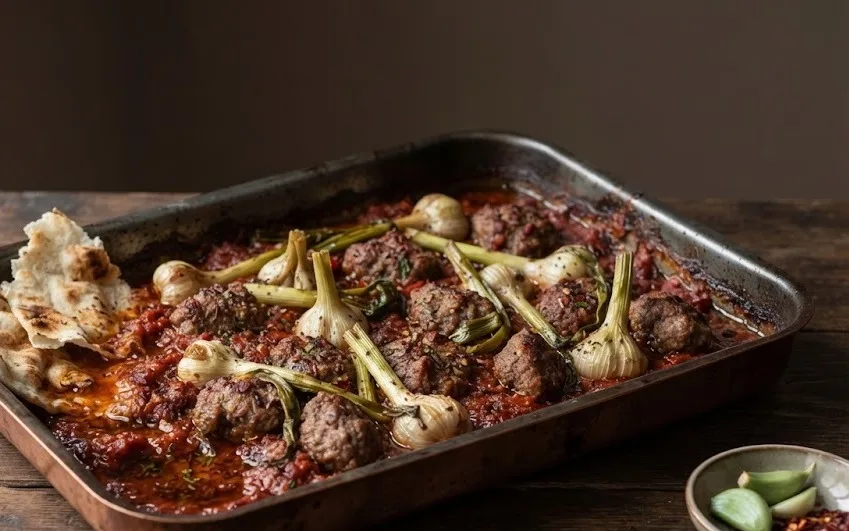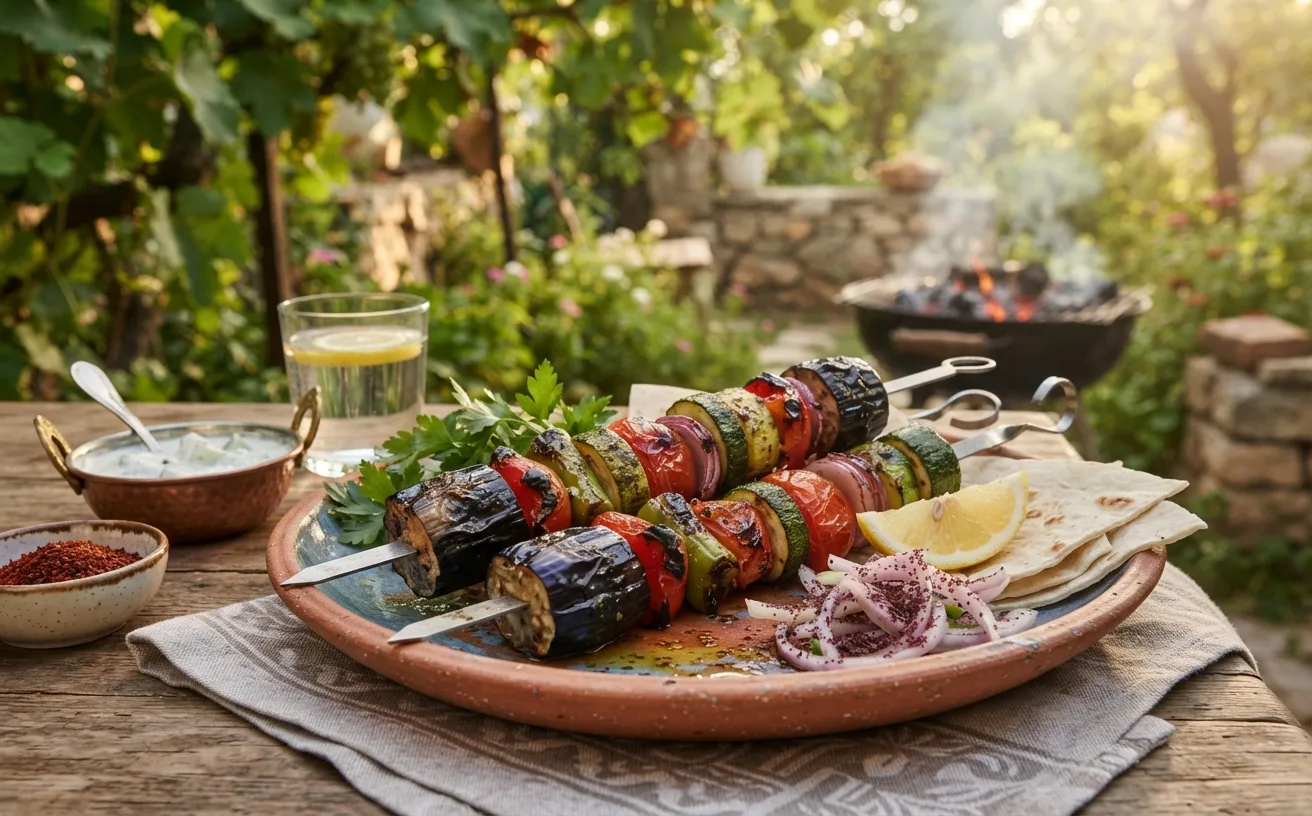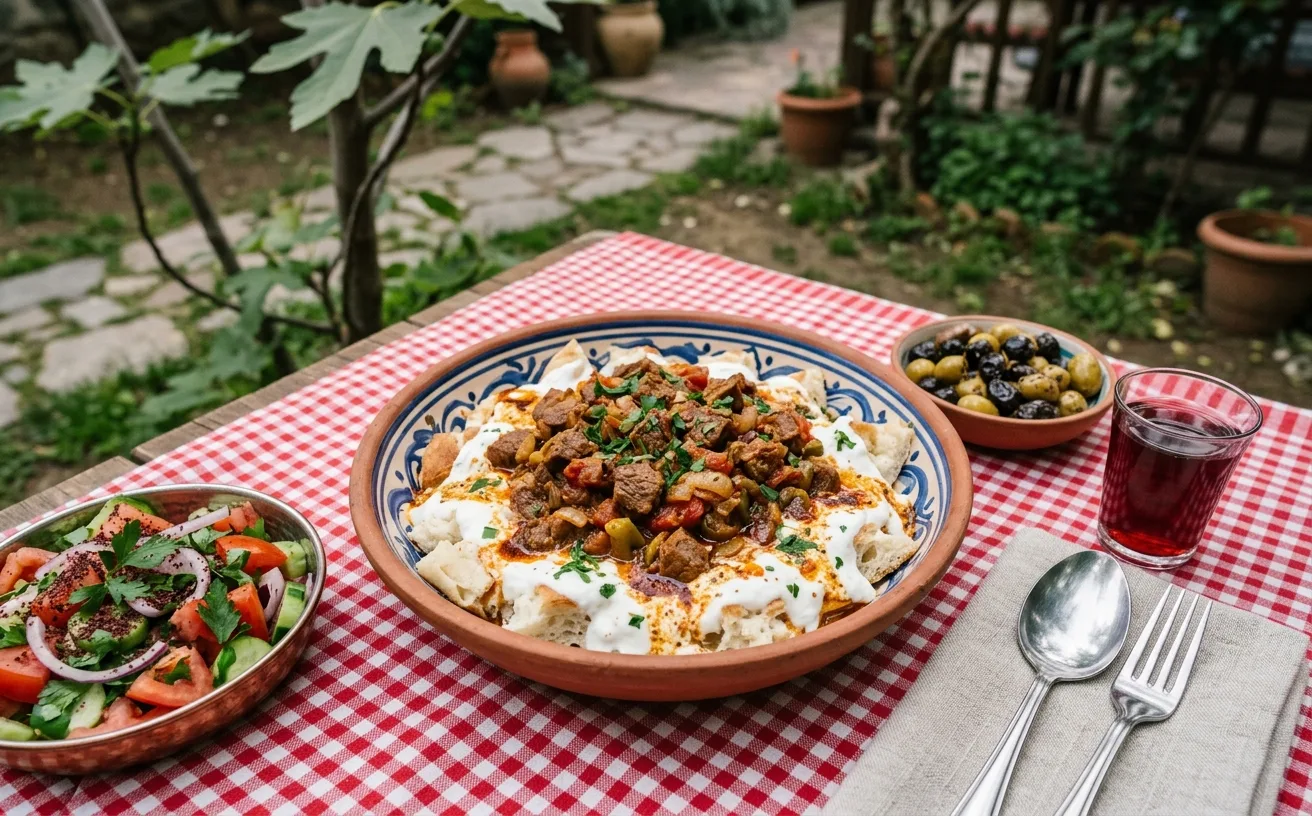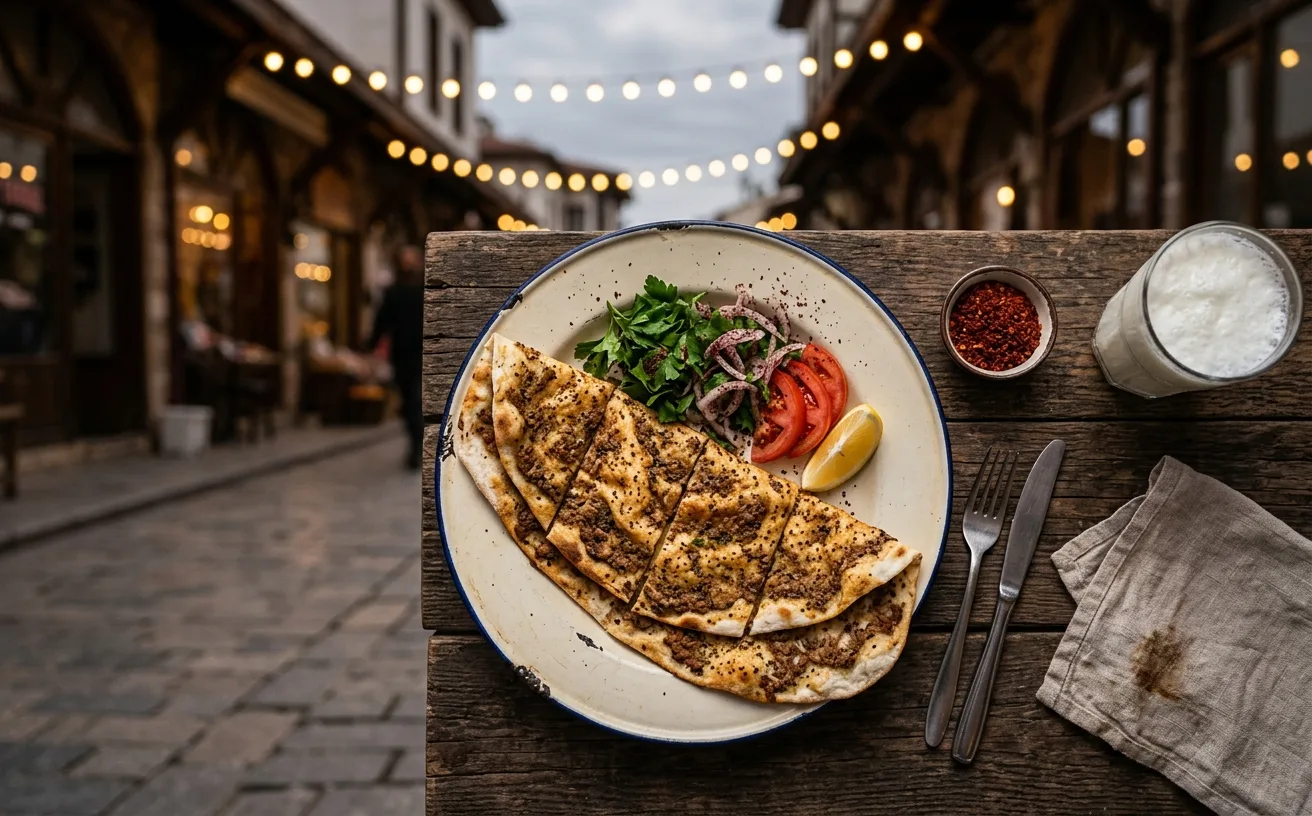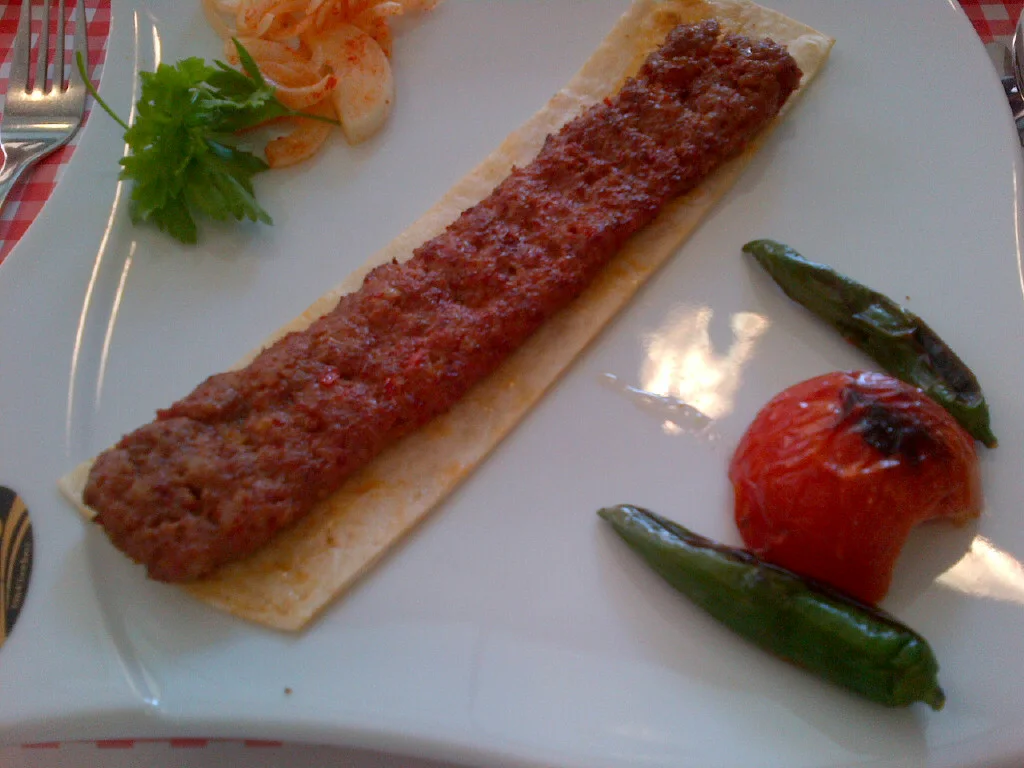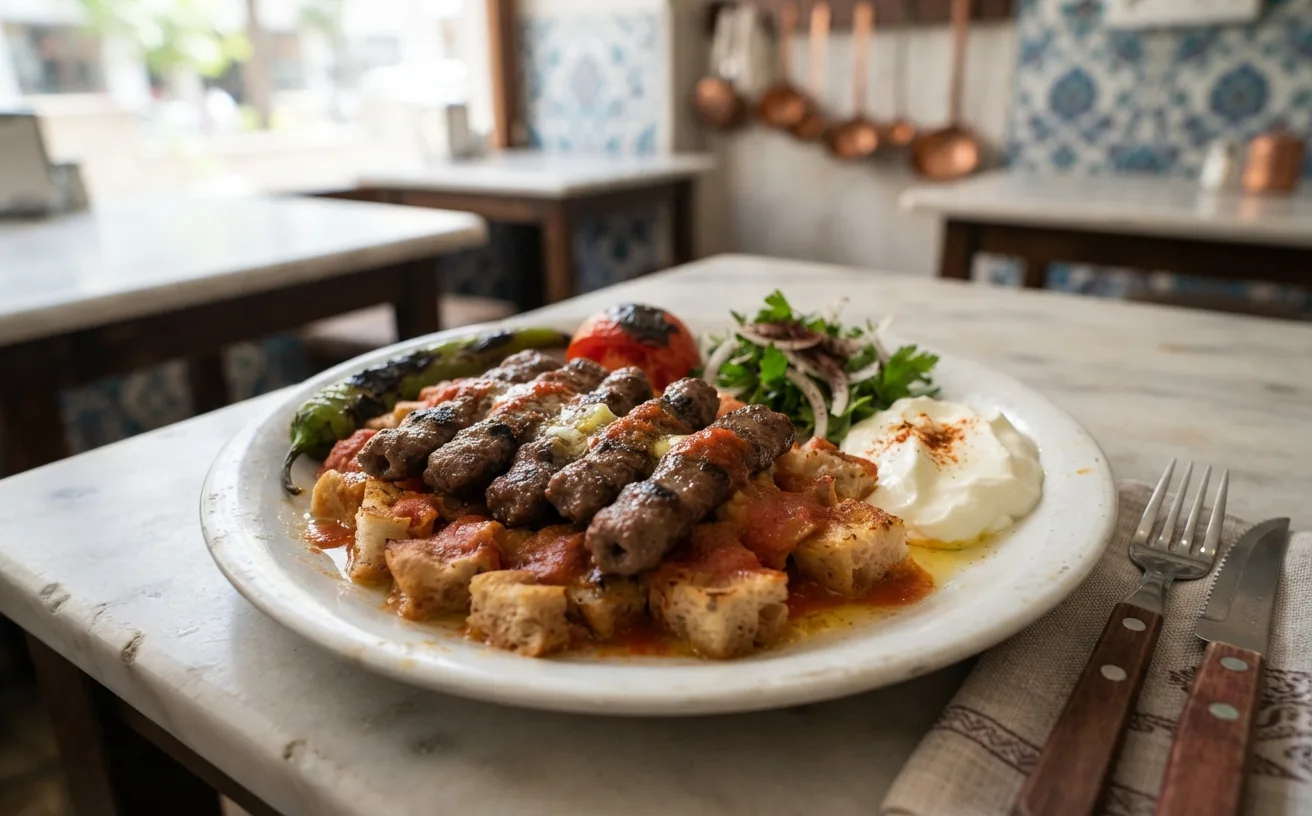
The Aegean town of Manisa's take: slim, casing-free köfte grilled and served over cubed pide slicked with butter and tomato, with grilled peppers and yogurt. Essentially an İskender built on köfte instead of döner.
Also known as Manisa köfte kebabı.
Reference video
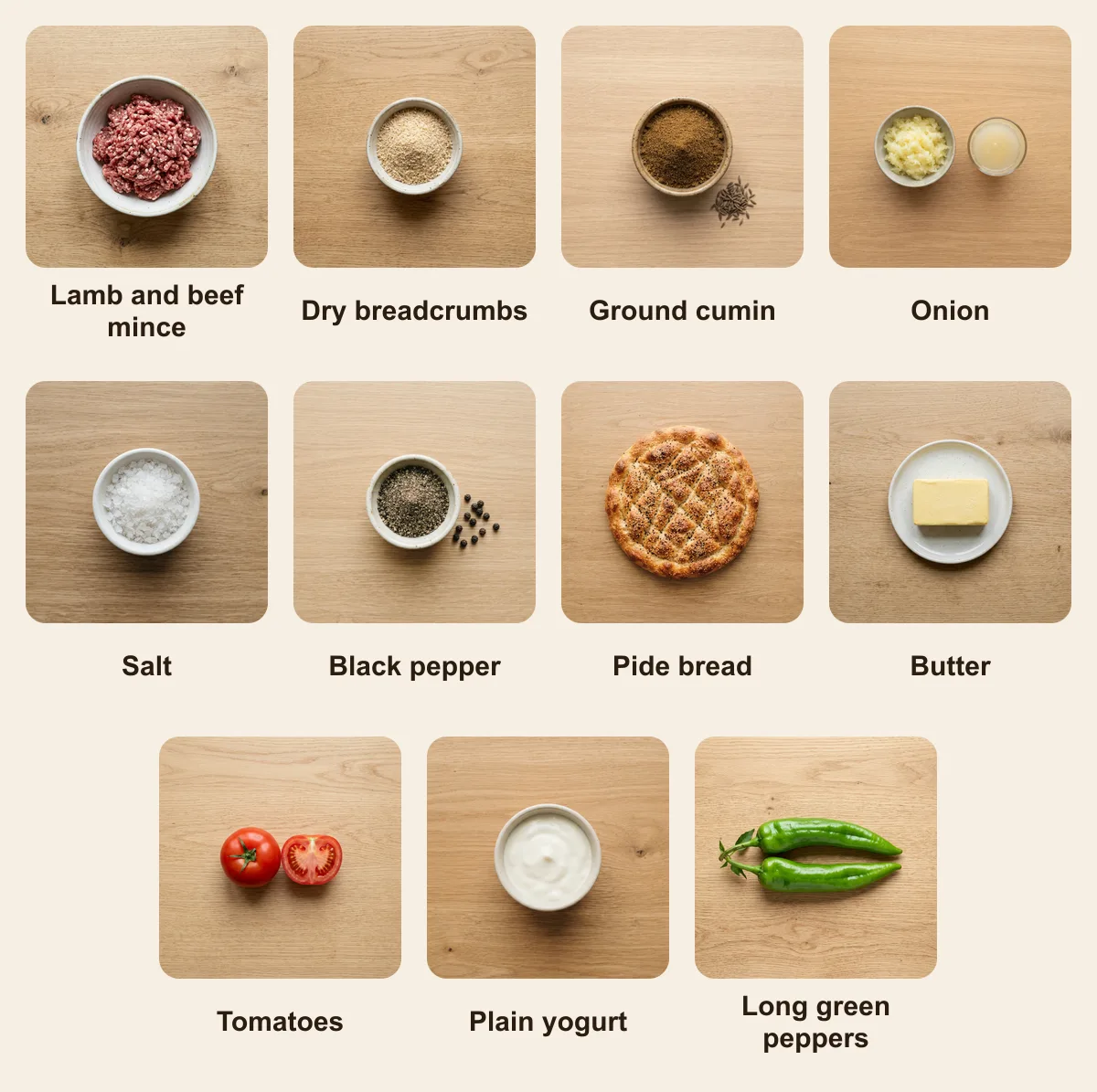
Ingredients
- 500 g minced lamb-and-beef mix
- 3 tbsp dry breadcrumbs
- 1 tsp ground cumin
- 1 onion, grated and squeezed
- 1.5 tsp salt
- 0.5 tsp black pepper
- 2 pide breads, cut into 2 cm cubes
- 80 g butter
- 3 tomatoes, grated and simmered to a loose sauce
- 200 g plain yogurt
- 4 long green peppers
How to make it
- 1
Knead the mince with onion, breadcrumbs, cumin, salt and pepper, roll slim, casing-free finger kofte and chill them 30 minutes.
- 2
Grill or griddle them over high heat 6-8 min with the green peppers until browned all round.
- 3
Toast the pide cubes in a dry pan, then foam the butter over them until they crackle.
- 4
Spoon the warm tomato sauce across the buttered bread.
- 5
Top with the kofte and peppers and serve with cold yogurt on the side.
Pro tip: The butter must hit the bread audibly hot; that fried-pide base, not the meat, is what makes it Manisa.
Where Manisa Kebab comes from
Manisa's köfte tradition is old and locally proud — the town is one of several in western Turkey that claims a distinctive meatball — and this dish is the restaurant presentation of it. It is a sit-down plate rather than street food, and it is what Manisa serves to visitors as the thing to eat there.
How Manisa Kebab is cooked
The köfte are shaped long and thin — finger-sized — which matters, because they are grilled fast and then sit on hot bread absorbing butter. Fat köfte would still be raw inside by the time the outside has the char this dish needs. They are grilled over coals or on a griddle, not fried.
The bread underneath is the second half of the technique. Day-old pide is cubed and lightly toasted so it can absorb melted butter and tomato sauce without disintegrating. Fresh soft bread turns to paste. Everything is assembled hot: bread, butter, sauce, köfte on top, yoghurt to the side rather than over.
Ingredients and shopping
The köfte mix is lamb, or lamb and beef, at around 20 percent fat, with grated onion squeezed dry, breadcrumb or a little soaked bread, cumin, black pepper and salt. It is kneaded well, shaped and rested in the fridge for half an hour to an hour, which improves both bind and flavour.
Use pide or a similar flat white bread, preferably a day old. Butter should be real butter, and a decent amount; this is not a dish that survives a health-conscious edit. The tomato sauce is simple — tomato, butter, salt — reduced until it coats.
How Manisa Kebab is served
One plate: buttered tomato bread underneath, köfte over, grilled long green peppers and a grilled tomato at the edge, thick yoghurt to one side. Şalgam or ayran. It is a complete lunch and Manisa treats it as one — nothing else is expected on the table except bread and pickles.
Common mistakes
Making the köfte too thick
They need to cook fast and char. Finger-thin is the shape; anything rounder is a different meatball.
Fresh soft bread
It turns to mush under butter and sauce. Day-old pide, cubed and lightly toasted, holds up.
Skipping the rest in the fridge
Resting the mixture improves both the bind and the flavour. Half an hour to an hour in the fridge is enough.
Yoghurt over the top
It goes at the side so each forkful can be balanced. Poured over, it cools and softens everything at once.
Manisa Kebab: questions and answers
How is Manisa kebab different from İskender?
The architecture is the same — bread, butter, tomato, yoghurt — but İskender uses sliced döner and Manisa kebabı uses grilled finger köfte.
Why use day-old bread?
It absorbs butter and tomato sauce without collapsing. Fresh bread turns to paste under the same treatment.
Should the yoghurt go on top?
No, at the side. That way each mouthful can be balanced between hot buttered bread and cool yoghurt.
Sources and further reading
- Manisa kebabı nasıl yapılır? Manisa kebabı tarifi — Hürriyet (Lezizz)
- Manisa kebabı tarifi — Sözcü