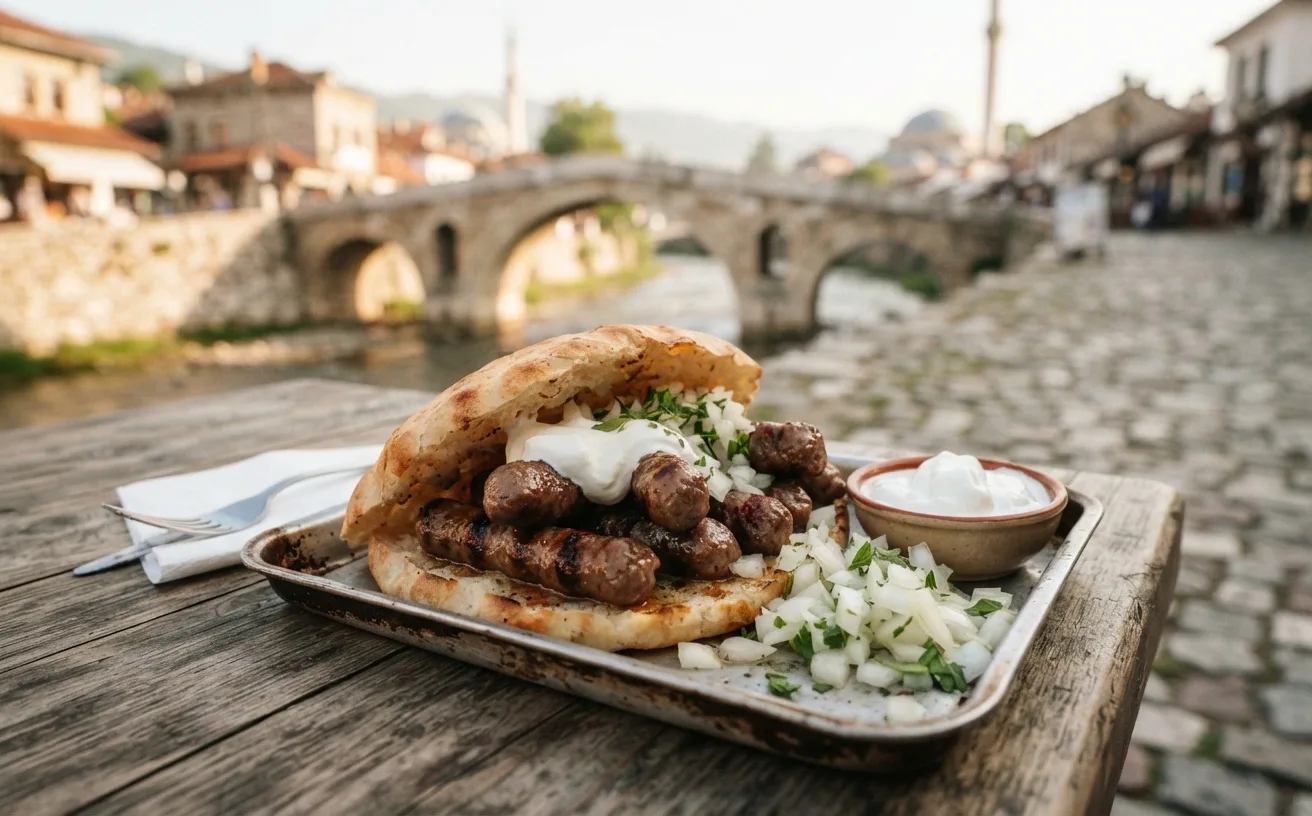
Lamb offal (heart, liver, sweetbreads, lungs) threaded on a horizontal spit, wrapped tightly in seasoned intestines, and slowly spit-roasted, then sliced off in rounds; it is the centerpiece of Greek Easter alongside the whole lamb. Shared with Turkish kokoreç, it shows the spit-roast kebab lineage applied to offal on both sides of the Aegean.
Also known as κοκορέτσι, kokoreç (Greek style).
Reference video
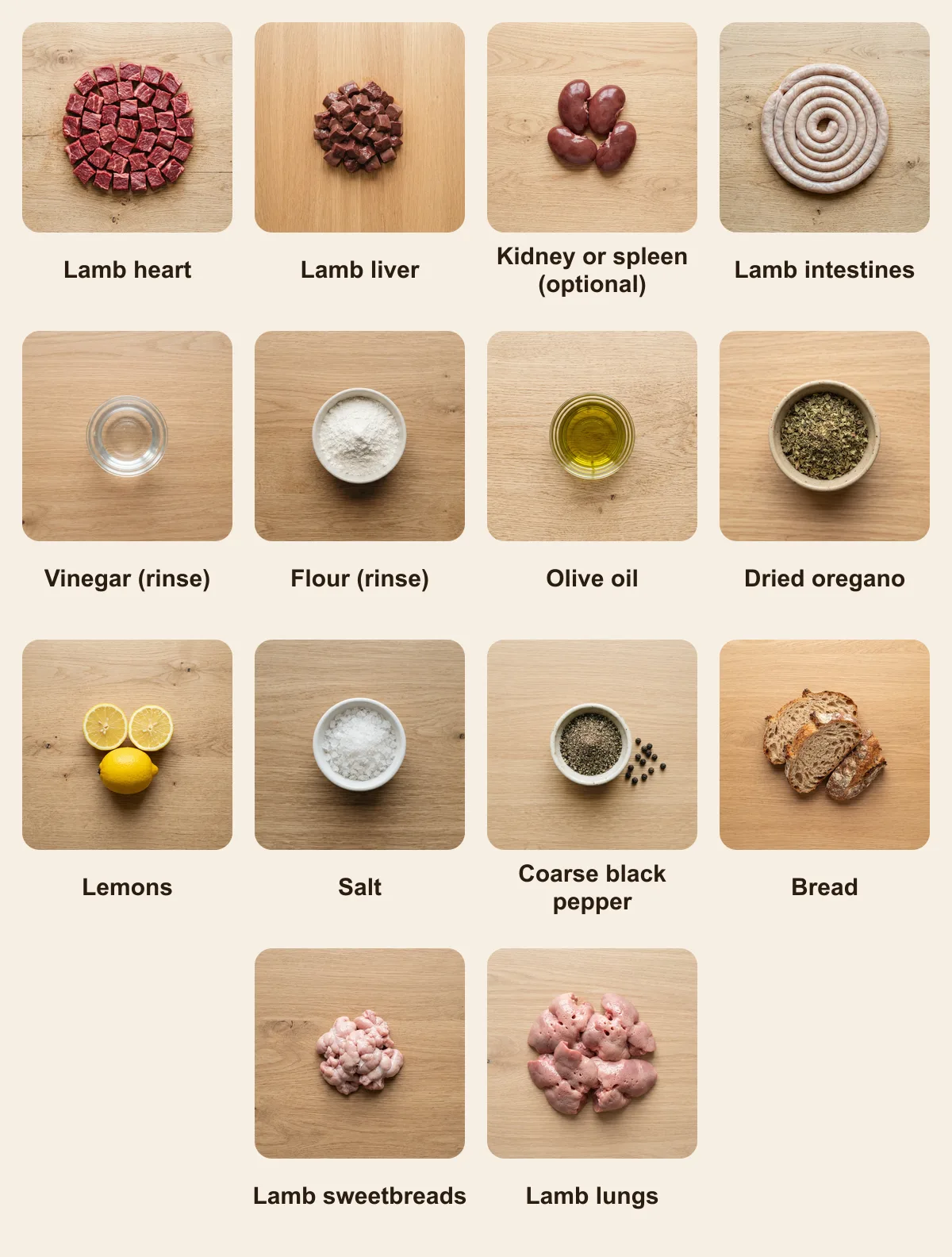
Ingredients
- 1 kg mixed lamb offal: heart, liver, sweetbreads, lungs (kidney or spleen if you like)
- 200 g lamb intestines, thoroughly cleaned, plus a little vinegar and flour for the final rinse
- 60 ml olive oil
- 2 tbsp dried oregano
- 2 lemons
- 1.5 tsp salt and 1 tsp coarse black pepper
- A long spit with a rotisserie motor
- Bread, for serving
How to make it
- 1
Rinse the intestines inside and out in water with salt, vinegar, lemon and a little flour until spotless, then let them drain.
- 2
Cut the offal into 3 cm pieces, season with oil, oregano, salt and pepper, and thread onto the spit alternating the types so fatty sweetbreads sit beside lean heart.
- 3
Wind the intestines around the whole length in tight overlapping spirals, tying off at both ends.
- 4
Turn over low coals (or in a 160 C rotisserie oven) for 2.5 to 3 hours, starting far from the heat, until the casing turns deep amber.
- 5
For the last 15 minutes, bring it close to fierce heat to crackle the skin, then slice into thick rounds with lemon and oregano.
Pro tip: Two heats, in order: hours of gentle rendering far from the coals, then a short fierce finish. Rush the distance and the intestine wrapping chars while the inside is still steaming; the amber-then-crackle sequence cannot be inverted.
Where Kokoretsi comes from
Kokoretsi — say it ko-ko-REH-tsee — is the Greek Easter centrepiece that turns beside the whole lamb: heart, liver, sweetbreads and lungs threaded onto a horizontal spit, wrapped tightly in seasoned intestines, and turned over coals for hours. It is shared with Turkish kokoreç, and both sides of the Aegean claim it with genuine feeling.
In Greece its calendar position is fixed. It is made on Holy Saturday and eaten on Easter Sunday, and it is usually off the fire first, eaten as a meze while the whole lamb is still turning. That timing gives it a significance no ordinary offal dish carries.
How Kokoretsi is cooked
The offal is cut and threaded onto the spit in an even core, and then the cleaned intestines are wound around it in tight, overlapping spirals — a wrapping that both holds the assembly together and, as it renders and crisps, protects the offal inside from drying. The winding is the skill, and a loose wrap unravels over the fire.
Cleaning comes first and dominates the labour: the intestines are turned inside out and washed repeatedly with salt, lemon and often flour until there is no odour at all. The spit then turns over moderate coals for two to three hours. Unlike the Turkish version, Greek kokoretsi is usually sliced into rounds rather than chopped fine.
Ingredients and shopping
Lamb offal from a butcher who can supply it fresh around Easter — heart, liver, sweetbreads, lungs and the intestines themselves. Freshness is not negotiable. Seasoning is Greek and simple: salt, pepper, dried oregano and lemon, applied during the winding.
A motorised spit makes this feasible; hand-turning for three hours over Easter is traditional in villages and hard work. For a domestic version, a tight roll wrapped in foil and oven-roasted, then finished uncovered to crisp, is the usual compromise.
How Kokoretsi is served
Sliced into rounds and served hot with lemon, oregano and bread, usually standing around the spit while the lamb finishes. Tsoureki and red eggs are on the table because it is Easter. Retsina or a local red, and the eating begins early and continues.
Common mistakes
Insufficient cleaning
Salt, lemon, flour and repeated rinsing until there is no smell at all. This is the whole dish and it cannot be shortened.
Winding the intestines loosely
A loose wrap unravels on the spit and leaves the offal exposed to dry out. It must be tight and overlapping.
Rushing the cook
The fat needs two to three hours to render out. Fast kokoretsi is greasy rather than crisp.
Over-seasoning
The Greek version is oregano, lemon, salt and pepper. Heavy spicing is the Turkish idiom, not this one.
Kokoretsi: questions and answers
What is kokoretsi made of?
Lamb offal — heart, liver, sweetbreads and lungs — threaded on a spit and wrapped tightly in cleaned, seasoned intestines, then slow-roasted.
When is kokoretsi eaten?
At Greek Easter. It is prepared on Holy Saturday and eaten on Easter Sunday, often before the whole lamb is ready.
How is it different from Turkish kokoreç?
The technique is shared. The Greek version is seasoned with oregano and lemon and sliced into rounds; the Turkish version is spiced with pepper flakes and chopped fine into bread.
How do you clean the intestines?
Turn them inside out and wash repeatedly with salt, lemon juice and flour until no odour remains at all.
What does kokoretsi taste like?
Milder than most people fear. The casing eats like crackling; underneath, the liver brings an earthy, mineral depth while the sweetbreads stay creamy, and the lemon and oregano stop any bite from feeling heavy.
Can you make kokoretsi without lungs?
Yes — and in the United States you have to, because the USDA has barred lungs from the food supply since 1971. Greek-American families simply add more heart and sweetbreads to make up the weight, and the spit turns exactly the same.
Sources and further reading
- Kokoretsi — Wikipedia
- Kokoretsi - Easter table — Greek Gastronomy Guide