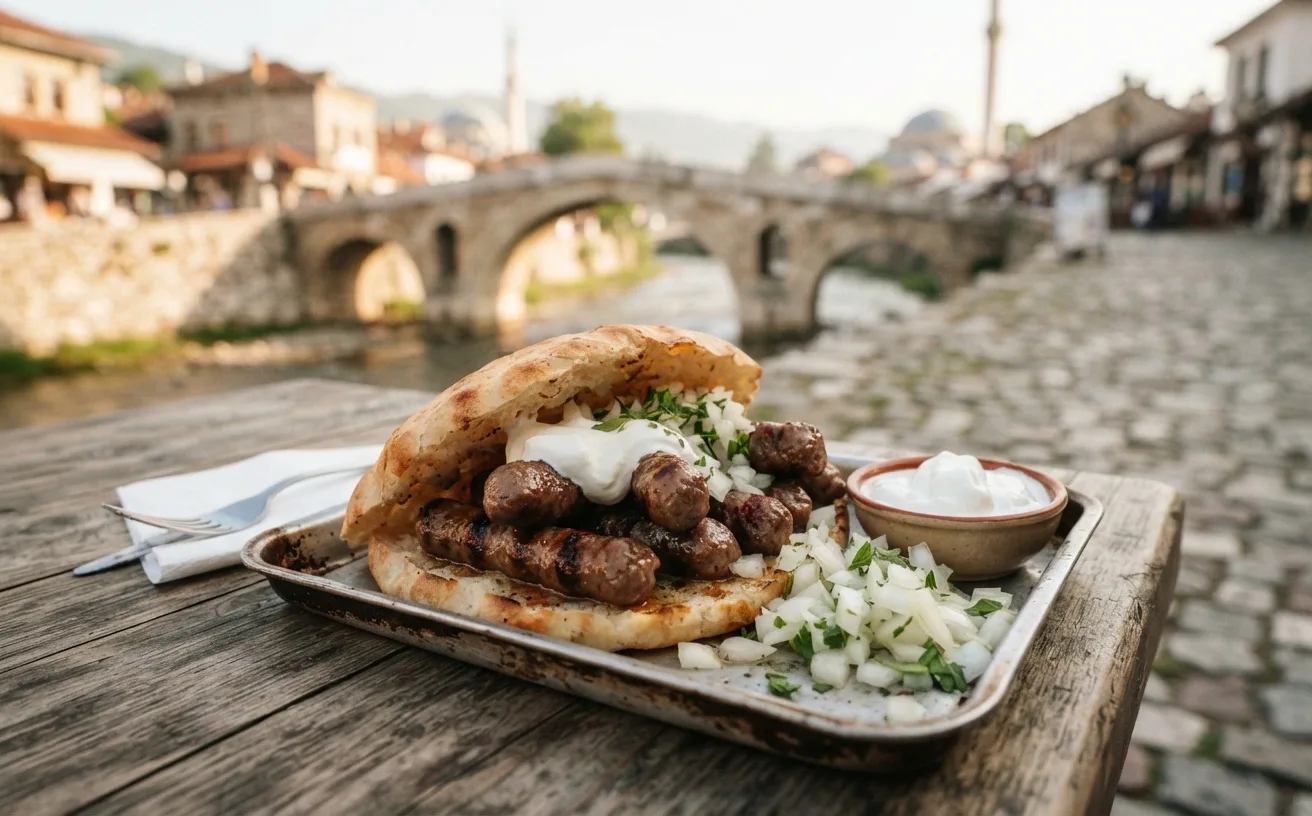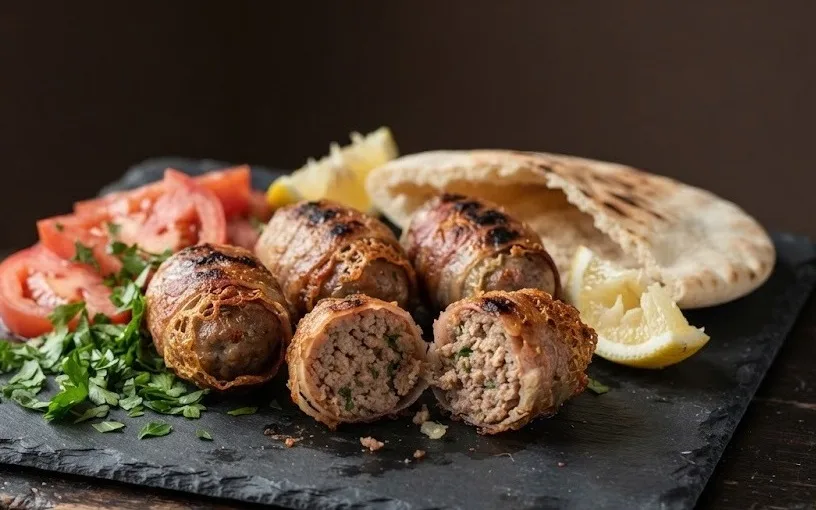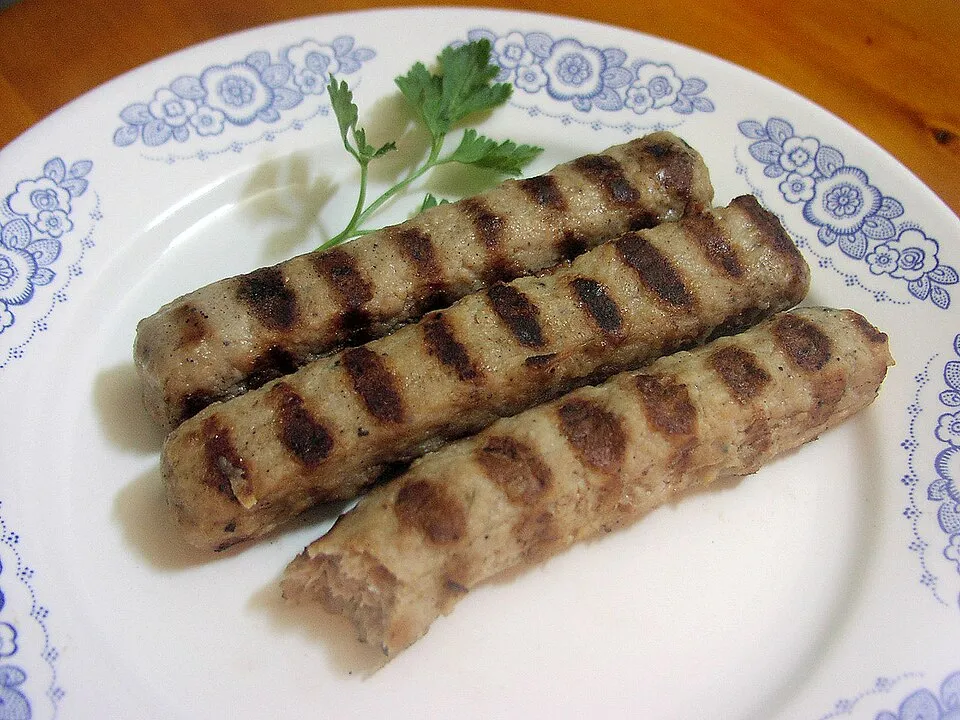
Bulgaria's oblong minced pork-and-beef grill sausage, seasoned heavily with cumin and black pepper and always ordered in multiples alongside its round sibling, the kyufte. It anchors the classic skara (grill) plate with white beans and shopska salad.
Also known as кебапче, kebapcheta, Bulgarian kebapche.
Reference video
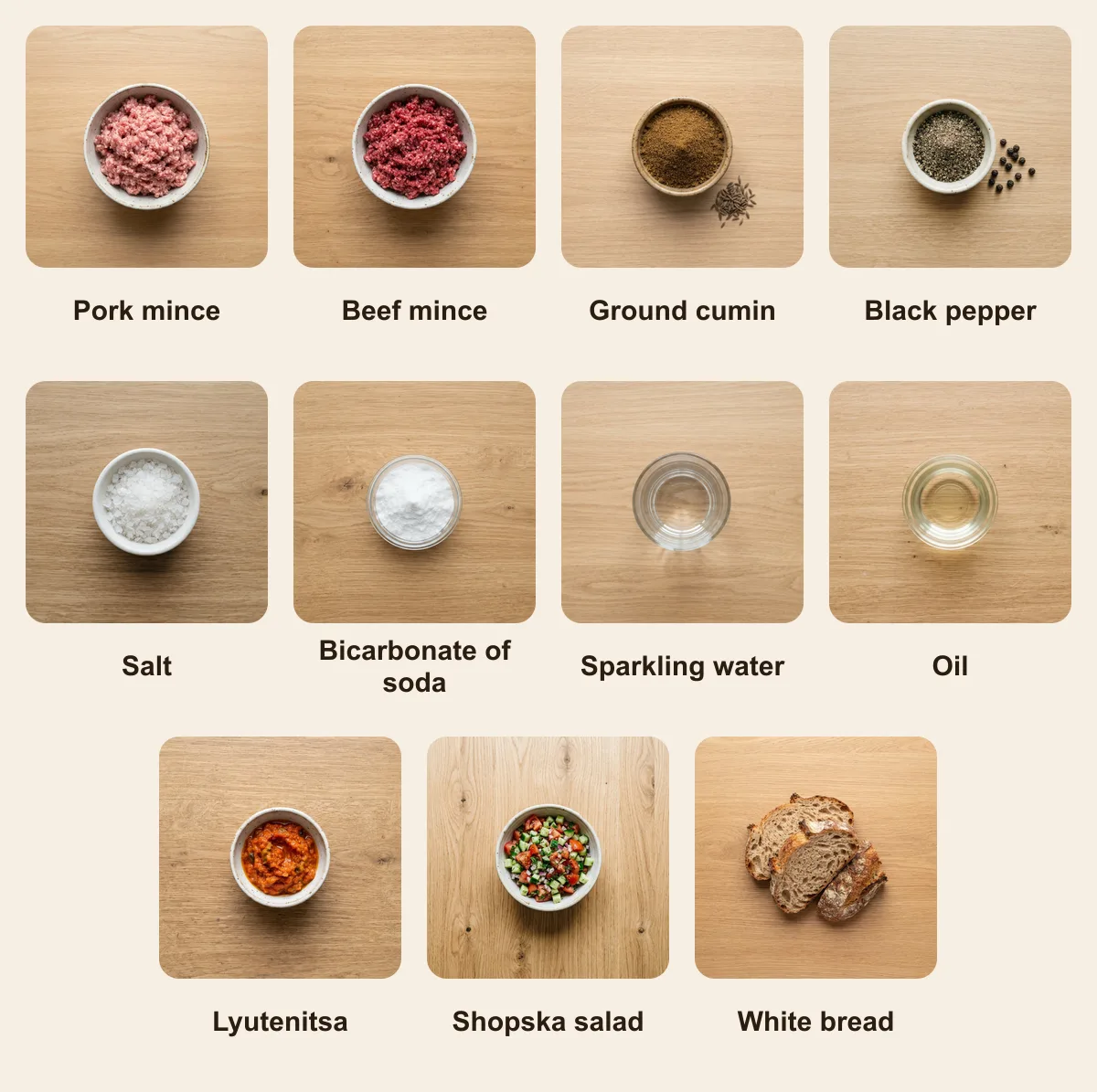
Ingredients
- 500 g pork mince
- 250 g beef mince
- 1.5 tsp ground cumin
- 1 tsp freshly ground black pepper
- 1.5 tsp salt
- 0.5 tsp bicarbonate of soda
- 50 ml sparkling mineral water
- Oil, for the grate
- Lyutenitsa, shopska salad and white bread
How to make it
- 1
Work the two minces with cumin, pepper, salt, bicarbonate of soda and the sparkling water until the mixture holds together and pulls from the bowl.
- 2
Chill overnight; the soda and spices need the time to work.
- 3
Roll finger-thick cylinders about 10 cm long, keeping the ends blunt.
- 4
Grill on an oiled grate over medium-hot coals around 4 minutes a side, resisting any urge to press.
- 5
Rest 2 minutes under foil and serve three to a plate with lyutenitsa, shopska salad and bread.
Pro tip: Kebapche seasoning stops at cumin, pepper and salt. Add garlic or paprika and you have drifted across the border into cevapi territory; the austere spicing is the Bulgarian signature.
Where Kebapche comes from
Kebapche is Bulgaria's oblong grilled mince roll, and it is inseparable from its round sibling the kyufte.
The name descends directly from the Ottoman kebab with a Slavic diminutive on the end, and the dish is part of the same family as ćevapi and mici. What separates the Bulgarian version is the spicing: cumin in quantity, and a great deal of black pepper, giving it a warmer and sharper profile than its Serbian neighbours.
How Kebapche is cooked
The mixture is minced pork and beef, pork-heavy at roughly two to one, worked with cumin, black pepper, salt and a little bicarbonate of soda, then rested — overnight is standard practice in Bulgarian kitchens and it makes a real difference to both texture and flavour.
Shaping is done by hand into long, even rolls, thinner and longer than ćevapi. They are grilled over coals and turned once or twice, and they are done in a few minutes. The key detail is not to press them on the grill: kebapche should be juicy and any pressing squeezes out exactly what makes it good.
Ingredients and shopping
Pork and beef at roughly two to one, with fat content around 20 to 25 percent. Bulgarian butchers sell a ready mix for this. Cumin is the defining spice and should be generous — this is the main thing that distinguishes kebapche from a Serbian ćevap.
Bicarbonate of soda at about half a teaspoon per kilo, and a splash of sparkling mineral water beaten in. Overnight rest in the fridge. Serve with fresh white bread rather than a flatbread; Bulgaria does not use lepinja the way Serbia does.
How Kebapche is served
On a skara plate with kyufte, chips, and often a fried egg or a piece of grilled cheese, with shopska salad and a bowl of white beans. Lyutenitsa or a pepper relish on the side. Rakia before, beer with. It is the standard Bulgarian restaurant meal and is ordered by the piece.
Common mistakes
Pressing them on the grill
It squeezes out the fat and juice. Turn them, never press them.
Skimping on cumin
Cumin is the Bulgarian signature here. Under-spiced, a kebapche is just a grilled mince roll.
No overnight rest
The soda and spices need time. Bulgarians consider this step non-negotiable.
Making them too thick
They should be long and relatively slim, so they cook through fast and stay juicy.
Kebapche: questions and answers
What is the difference between kebapche and kyufte?
The same mixture, shaped differently: kebapche is an oblong roll, kyufte is a round flat patty. They are almost always ordered together.
What spices go in kebapche?
Cumin above all, with black pepper and salt. The heavy cumin is what distinguishes it from Serbian ćevapi.
What meat is used?
Minced pork and beef, roughly two parts pork to one of beef, at 20 to 25 percent fat.
Why rest the mixture overnight?
The bicarbonate of soda and the spices need time to work through the meat, improving both texture and flavour.
Sources and further reading
- Kebapche — Wikipedia
- 8 Bulgarian spices that define the local cuisine — Kashkaval Tourist