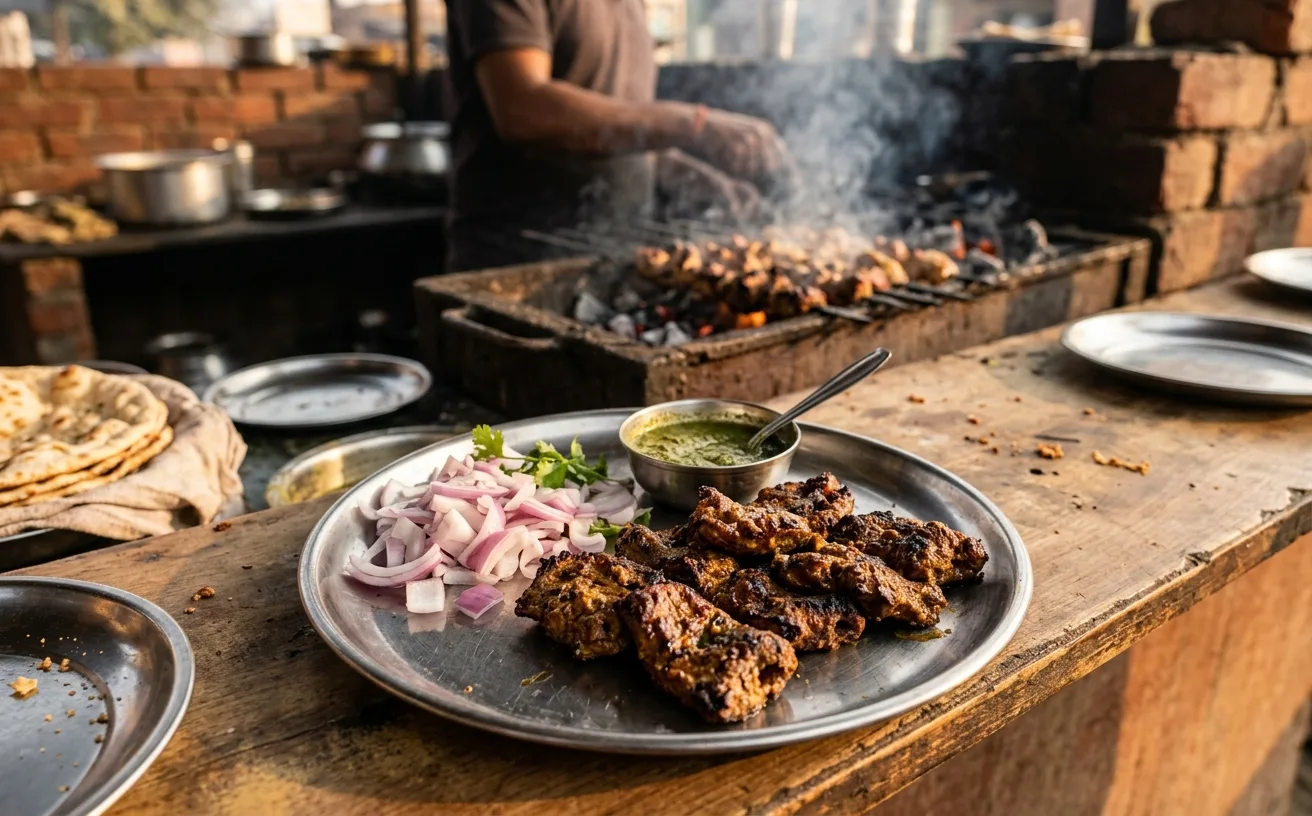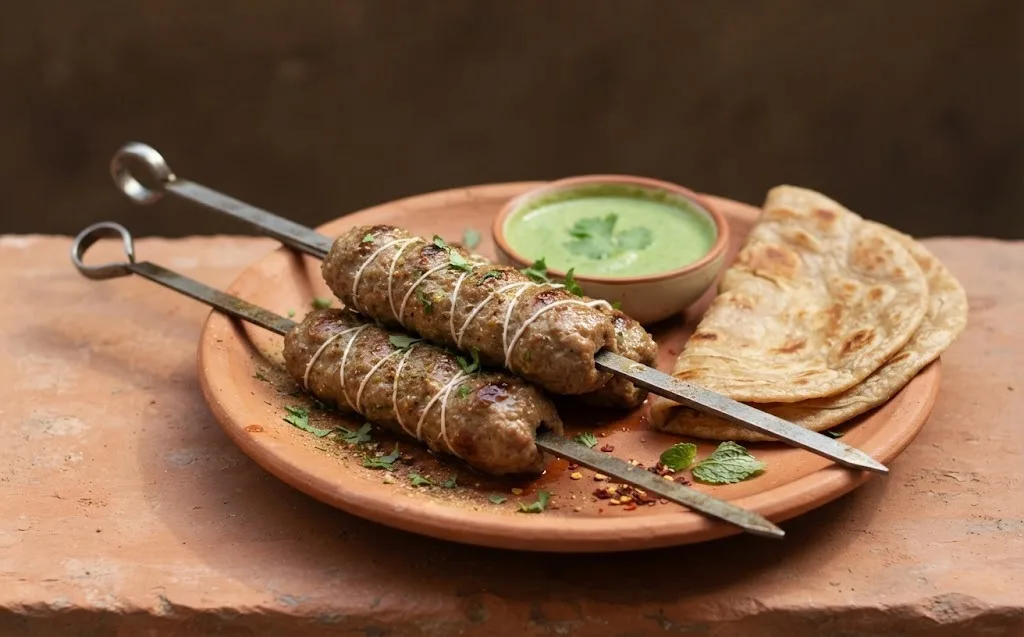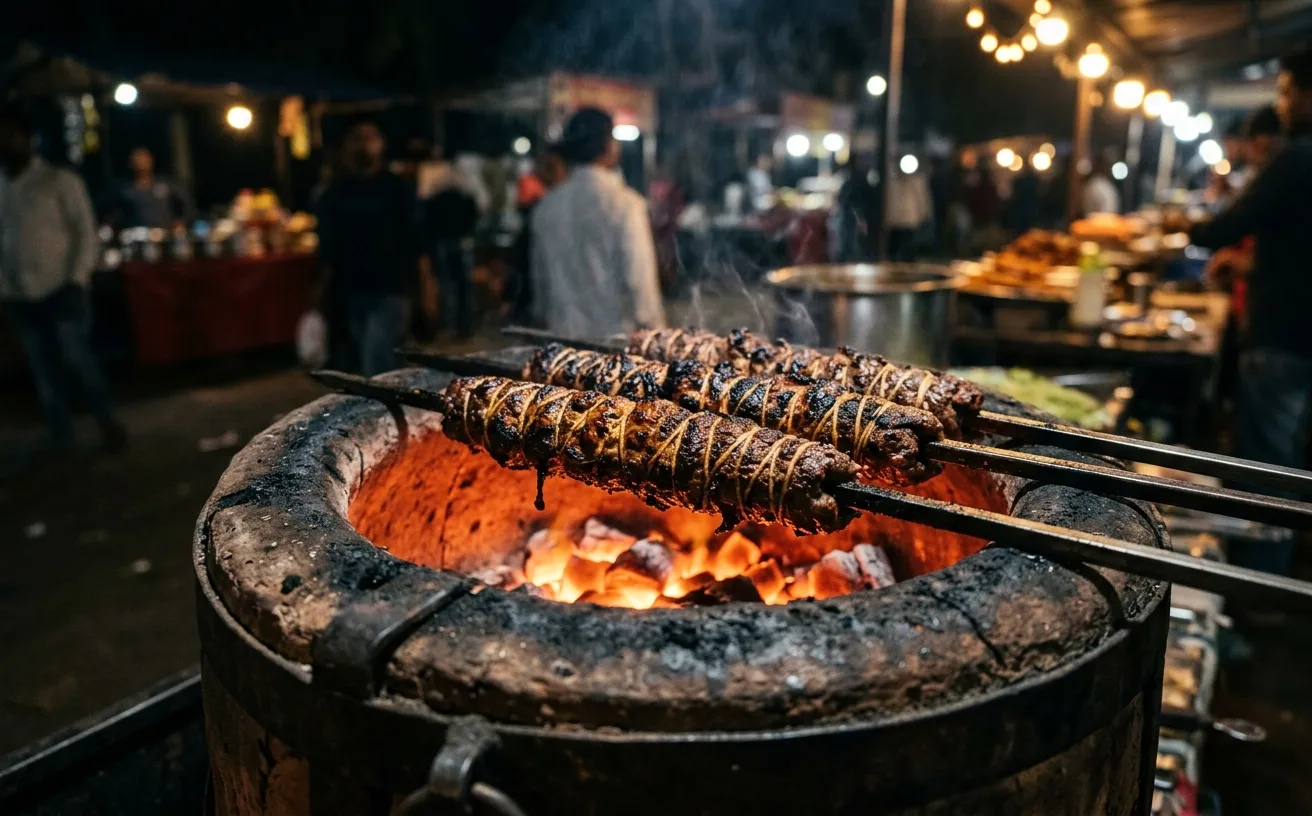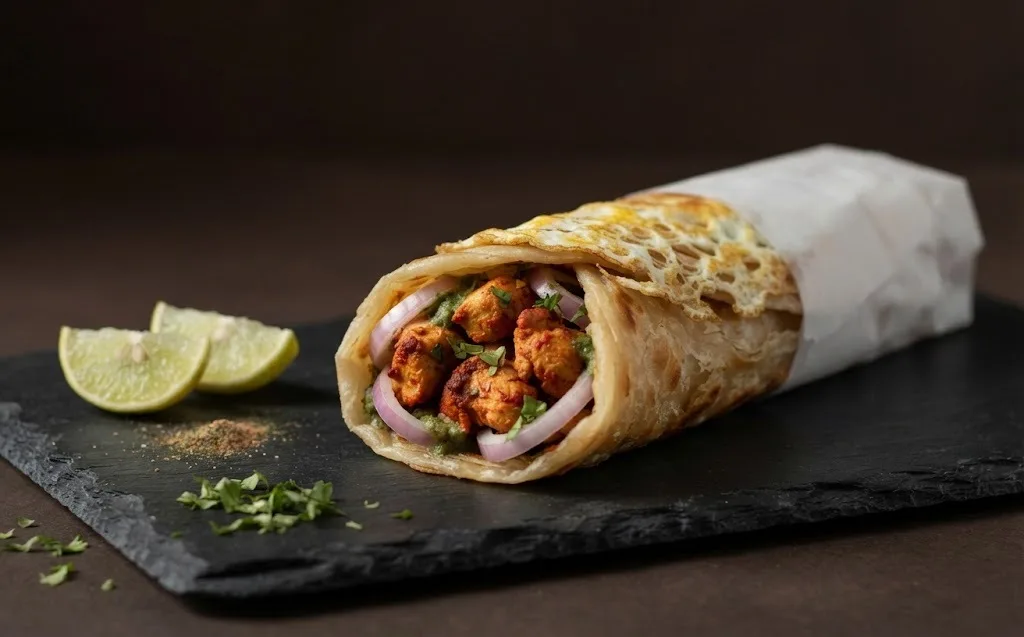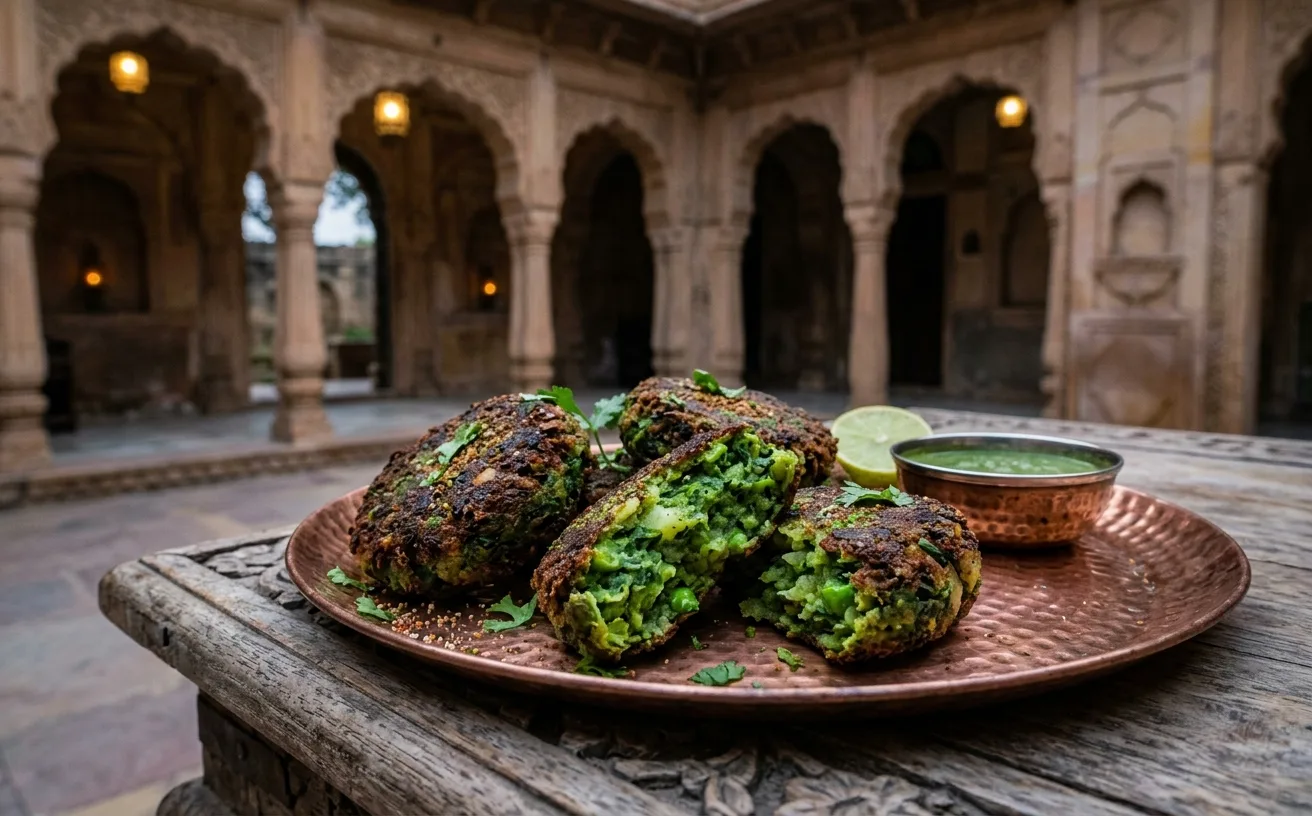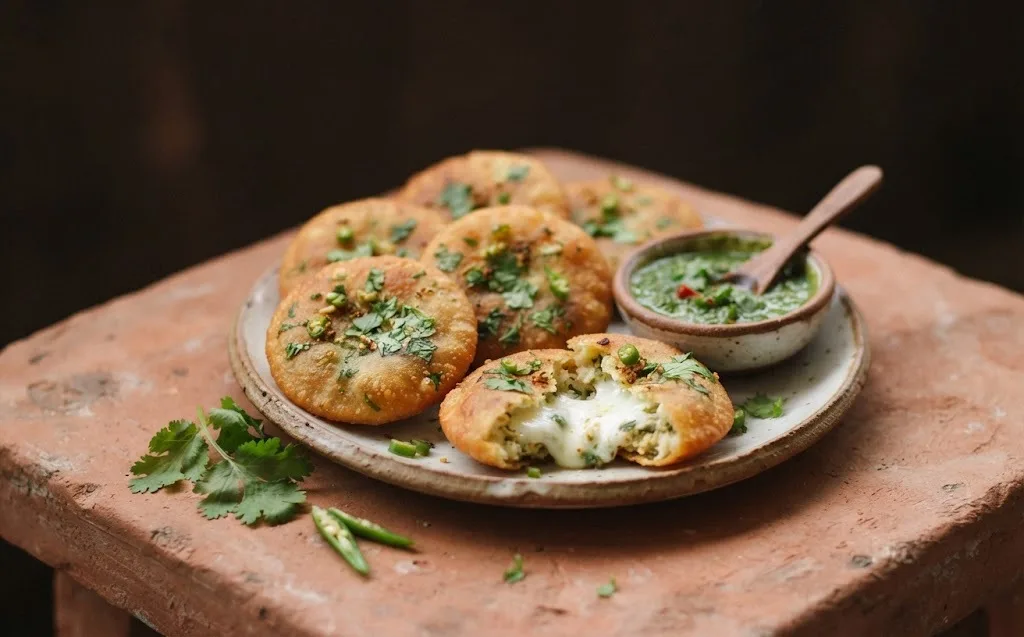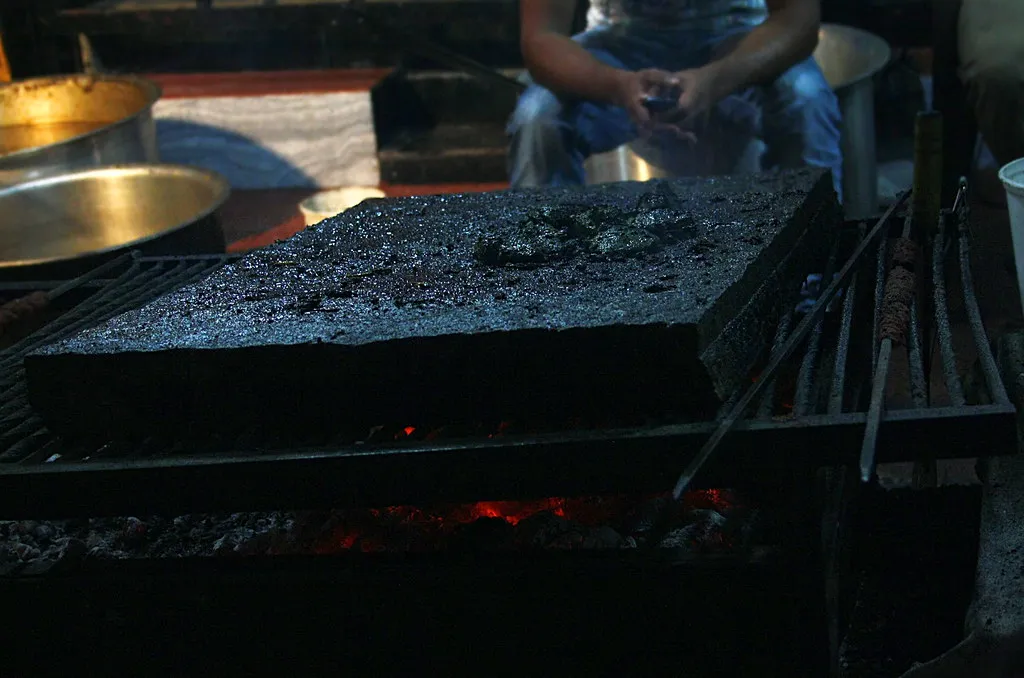
A Hyderabadi Nizam-era specialty in which paper-thin marinated lamb slices are seared directly on a slab of granite heated over coals. The stone's steady, even heat cooks the meat in seconds without scorching the delicate marinade.
Also known as patthar kebab, stone kebab, پتھر کا گوشت.
Reference video
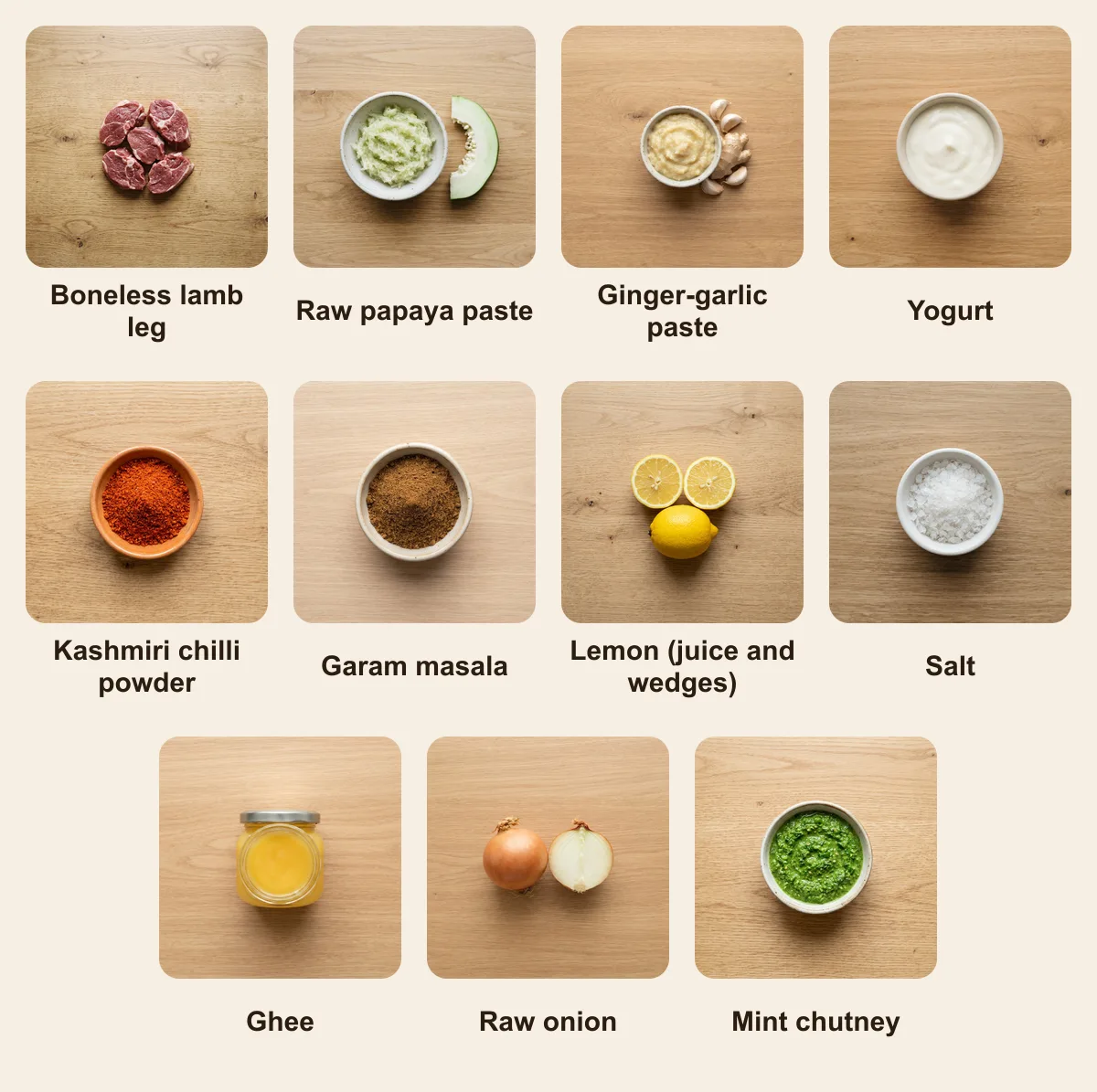
Ingredients
- 600 g boneless lamb leg, sliced 5 mm against the grain and pounded thinner
- 40 g raw papaya paste
- 1 tbsp ginger-garlic paste
- 80 g yogurt
- 1 tsp Kashmiri chilli powder
- 0.5 tsp garam masala
- 15 ml lemon juice
- 1.25 tsp salt
- 30 g ghee
- raw onion, lemon wedges and mint chutney, to serve
- a granite slab or heavy cast-iron plancha
How to make it
- 1
Pound the slices between parchment into near-transparent sheets.
- 2
Marinate 1-2 hours in papaya, yogurt, ginger-garlic, spices, lemon and salt.
- 3
Heat the granite slab over coals or two burners for a full 30 min, until a water drop skitters and vanishes.
- 4
Wipe the stone with ghee and lay the slices flat, 45-60 seconds per side, pressing once.
- 5
Eat straight off the stone with raw onion, lemon and mint chutney.
Pro tip: The stone must be brutally preheated; on a merely warm slab the papaya-tenderised meat stews and slumps into paste instead of searing.
Where Patthar ka Gosht comes from
The traditional account has it developed for the Nizam's kitchens, where the stone was prized for producing a result no metal pan could: no hot spots, no sticking, and a gentle heat curve that suits papaya-tenderised meat. It survives in a handful of Hyderabad restaurants and at weddings, where the stone is set up as a live station.
How Patthar ka Gosht is cooked
The stone is heated over coals for a long time — up to an hour — and the fire is then reduced. What matters is stored heat, not flame: granite holds enormous thermal mass and releases it evenly across the whole surface, so a slice of meat cooks identically wherever it lands.
The meat is sliced very thin and pounded thinner, then marinated with raw papaya, yoghurt and Hyderabadi spices. On the stone it takes under a minute a side. The marinade is delicate — garam masala and a little Kashmiri chilli — and would burn on a metal griddle before the meat was done, which is precisely why the stone exists in this dish.
Ingredients and shopping
Lamb leg or loin, sliced across the grain as thinly as possible and then pounded between sheets of plastic. Raw papaya paste in small quantity for an hour or two. Yoghurt, ginger-garlic, garam masala and a little Kashmiri chilli; many Hyderabadi cooks also add cardamom, mace and nutmeg.
For a home version, a thick granite or soapstone slab preheated in a hot oven, or a very heavy cast-iron griddle, is the practical route. Use only stone rated for cooking; garden stone can crack or shatter from thermal shock, which is a real hazard rather than a caution.
How Patthar ka Gosht is served
Straight off the stone with mint chutney, sliced onion and lemon, and thin roti. It is served in small quantities as the meat is rich and the slices are delicate. At Hyderabadi weddings the stone is a live station and the meat goes from slab to plate in seconds, which is the correct way to eat it.
Common mistakes
Thick slices
The method depends on meat thin enough to cook in under a minute. Thick slices need a different technique.
Too much papaya
As in kakori, papain works fast and does not stop. Small quantity, short marinade.
An under-heated stone
It must be thoroughly charged with heat. A warm stone steams the meat instead of searing it.
Improvised garden stone
Porous or damp stone can crack violently when heated. Use cookware-grade granite or soapstone, or cast iron.
Patthar ka Gosht: questions and answers
Why cook on stone rather than metal?
Granite holds and releases heat evenly with no hot spots, so a delicate spice marinade cooks without burning. A metal griddle scorches it before the meat is done.
Can I use any stone?
No. Use cookware-grade granite or soapstone. Porous or damp stone can crack or shatter from thermal shock.
Where does it come from?
Hyderabad, from the Nizam-era royal kitchens.
Sources and further reading
- Pathar-ka-Gosht — Wikipedia
- Pathar Ka Gosht: The Unique Stone-Cooked Meat Legacy Of Hyderabad — Slurrp