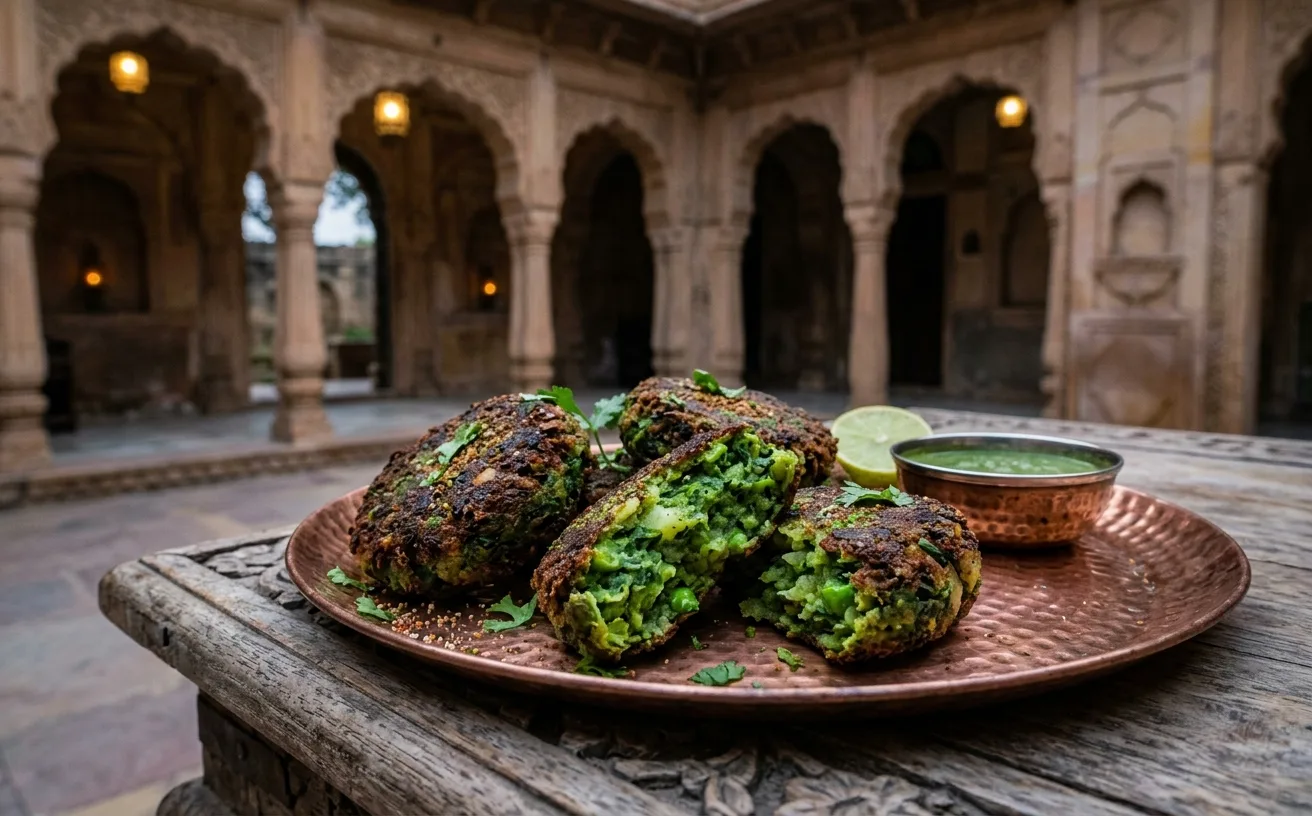
Hyderabad's 'belly-full' kebab: a shami-style meat-and-lentil patty stuffed with a pocket of tangy yogurt, onion, and mint before shallow-frying. Cutting one open releases the cool filling against the spiced crust — the whole point of the dish.
Also known as شکم پوری کباب.
Reference video
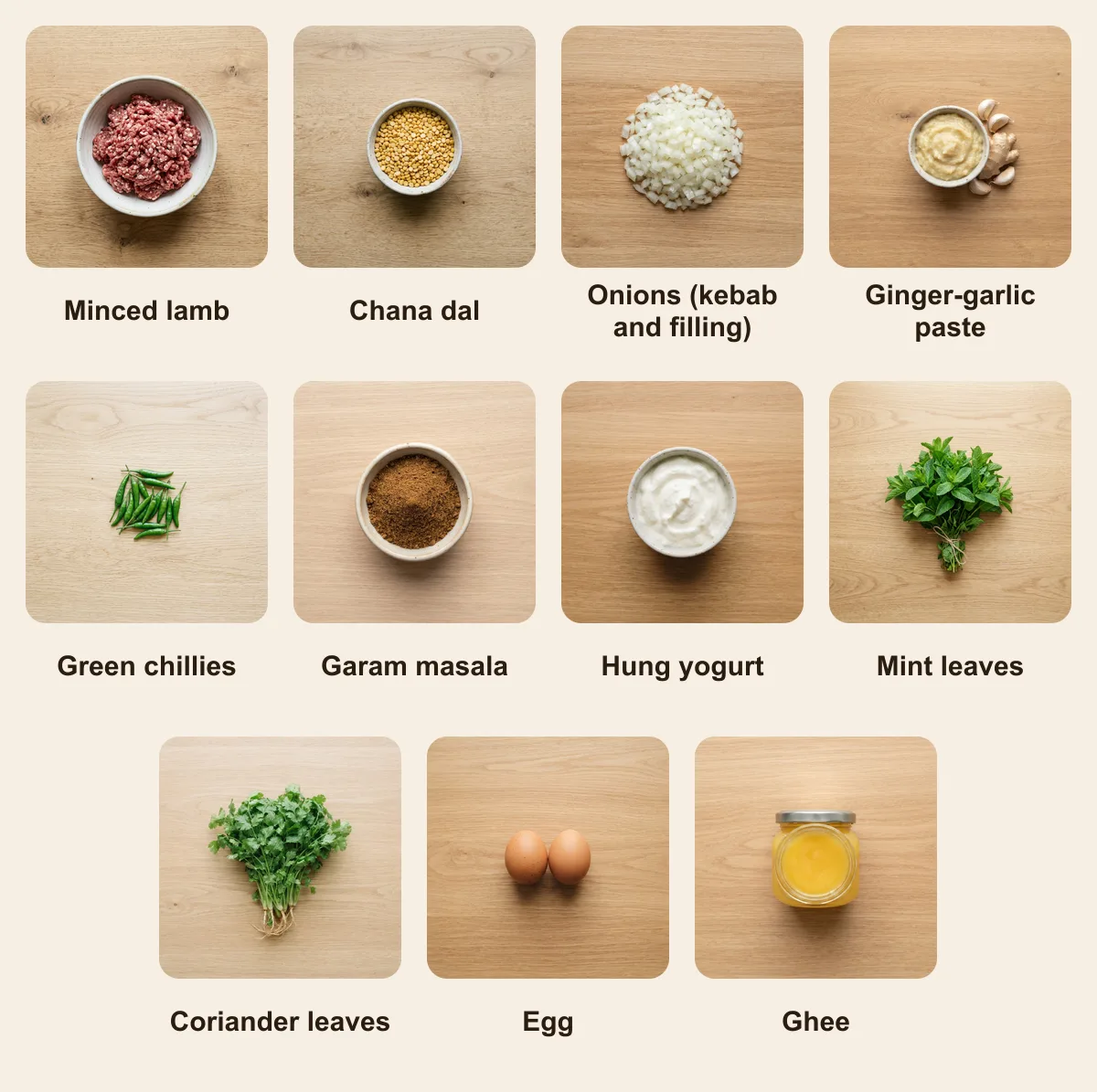
Ingredients
- 500 g minced lamb
- 100 g chana dal, soaked 1 h
- 1 onion, chopped, plus 1 small onion very fine for the filling
- 1 tbsp ginger-garlic paste
- 2 green chillies
- 1 tsp garam masala
- 150 g hung yogurt
- 10 g each mint and coriander leaves
- 1 egg
- 1 tsp salt
- ghee, for shallow frying
How to make it
- 1
Simmer the mince, dal, chopped onion, ginger-garlic, chillies and garam masala with 200 ml water until the pan is completely dry, about 30 min.
- 2
Grind to a fine paste, cool, knead in the egg with 1 tsp salt, then chill the paste 1 hour.
- 3
Stir the filling: hung yogurt, fine onion squeezed of its water, mint and coriander with a pinch of salt.
- 4
Cup a ball of meat paste in your palm, spoon in a teaspoon of filling, seal and flatten to a 2 cm disc.
- 5
Shallow-fry in ghee over medium heat 3 min per side to a deep russet crust.
Pro tip: Cook the meat-dal mixture bone dry before grinding; any hidden moisture turns to steam in the pan and blows the yogurt pocket open.
Where Shikampuri Kebab comes from
It comes from the Nizam's Hyderabad, a kitchen that specialised in exactly this sort of concealed elaboration, and it is a dish that rewards being made properly and punishes being rushed. Hyderabadi households still make it for weddings and for Ramadan, and it appears on restaurant menus as a marker of a serious kitchen.
How Shikampuri Kebab is cooked
The outer casing is a shami mixture — meat and chana dal cooked dry, ground smooth, bound with egg — and it must be firm enough to enclose a wet filling without splitting. That means it needs to be drier than a plain shami and thoroughly chilled before shaping.
The filling is hung yoghurt beaten with finely chopped onion, mint and coriander, and it must be genuinely thick — loose yoghurt bursts the patty in the pan. Shaping is done by flattening a portion of the casing in the palm, spooning in a modest amount of filling, and sealing it completely before flattening into a disc. Frying is gentle: high heat cracks the seal.
Ingredients and shopping
Mutton or lamb mince with fat, chana dal, and the usual whole spices for the boil. For the filling, yoghurt hung in a cloth for at least two hours until it is as thick as cream cheese, with finely chopped onion squeezed of its water and plenty of mint.
Chill everything. The casing mixture needs an hour minimum, and the assembled patties benefit from another twenty minutes in the fridge before they meet the pan. Ghee or a neutral oil for shallow frying, at moderate heat.
How Shikampuri Kebab is served
Whole, so that the diner cuts into it and finds the filling — serving it pre-cut destroys the point. With mint chutney, onion and lemon, as a starter or an iftar dish. Hyderabadi tables serve it alongside shami so the difference is visible.
Common mistakes
Loose yoghurt filling
It bursts the patty in the pan. Hang the yoghurt for at least two hours until it is genuinely thick.
Wet onion in the filling
Chop it fine and squeeze it. Onion water thins the filling and splits the seal.
Overfilling
A modest spoonful. Too much and the casing cannot seal around it.
Frying too hot
High heat expands the filling and cracks the seal. Moderate heat, patient browning.
Shikampuri Kebab: questions and answers
What is inside a shikampuri kebab?
A pocket of thick hung yoghurt beaten with finely chopped onion, mint and coriander. The cool tangy filling against the spiced crust is the point of the dish.
Why does my filling leak?
The yoghurt was not thick enough, the onion was not squeezed dry, the patty was overfilled, or the oil was too hot.
How is it different from shami kebab?
The casing is essentially a shami. Shikampuri adds the stuffed yoghurt pocket, which requires a drier casing and gentler frying.
Where is it from?
Hyderabad, from the Nizam-era kitchen tradition.
Sources and further reading
- Biryani is famous, but have you tried Hyderabadi Shikampuri Kebab yet? — Siasat Daily
- Hyderabadi Chicken Shikampuri Kebab Recipe — Archana's Kitchen