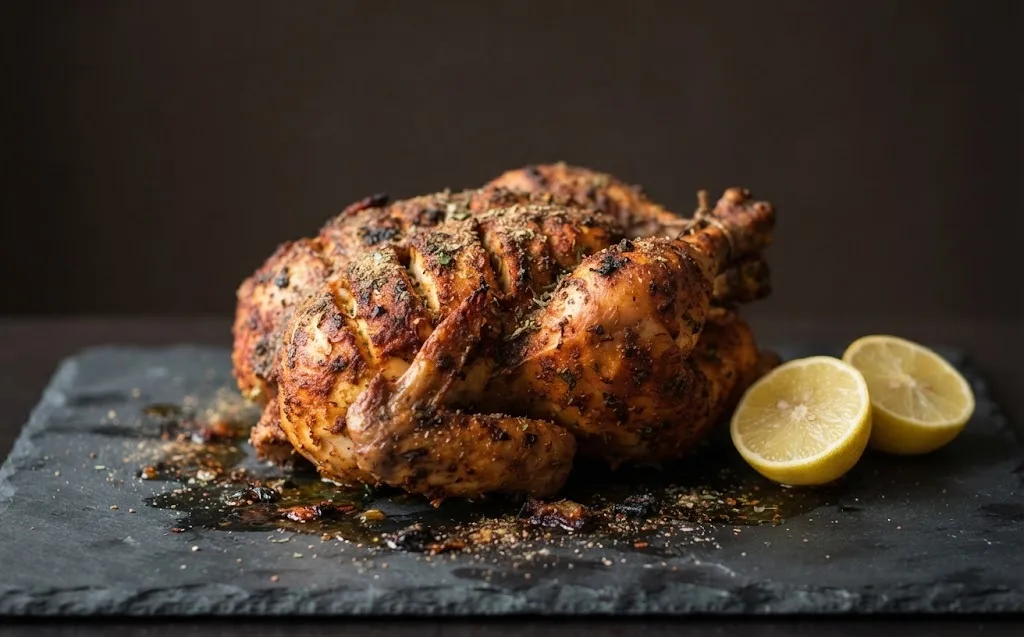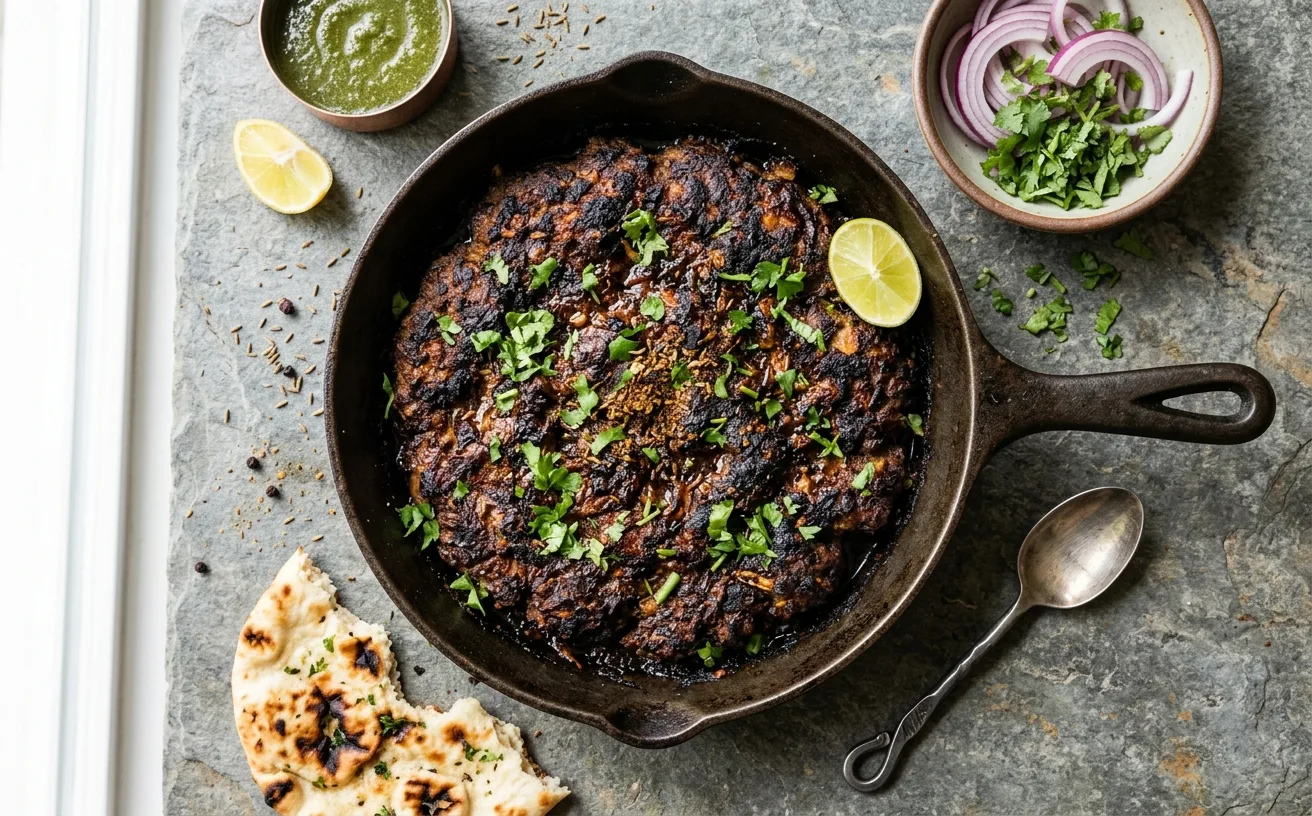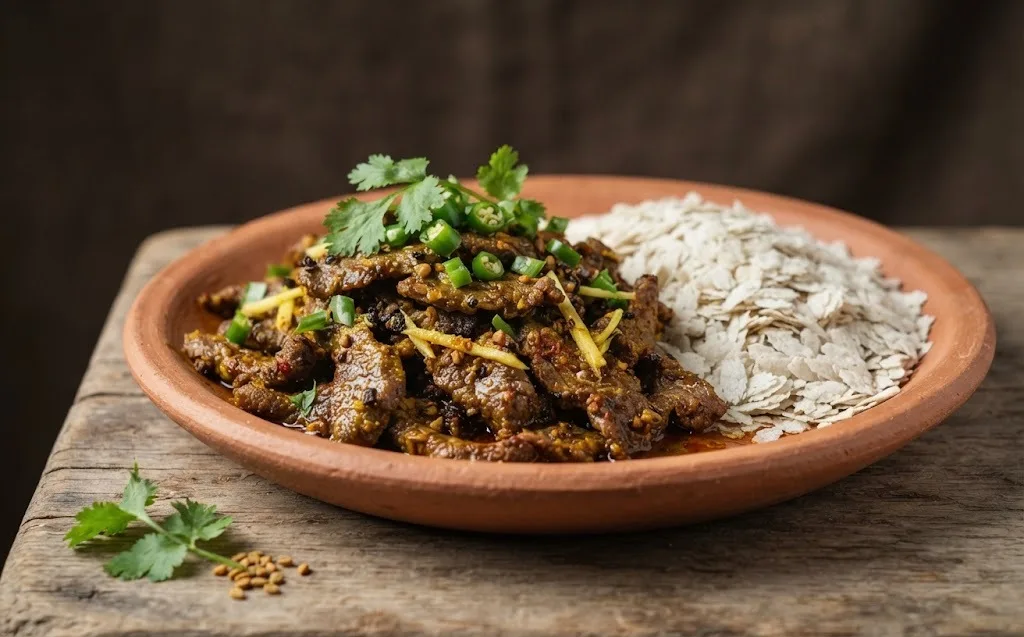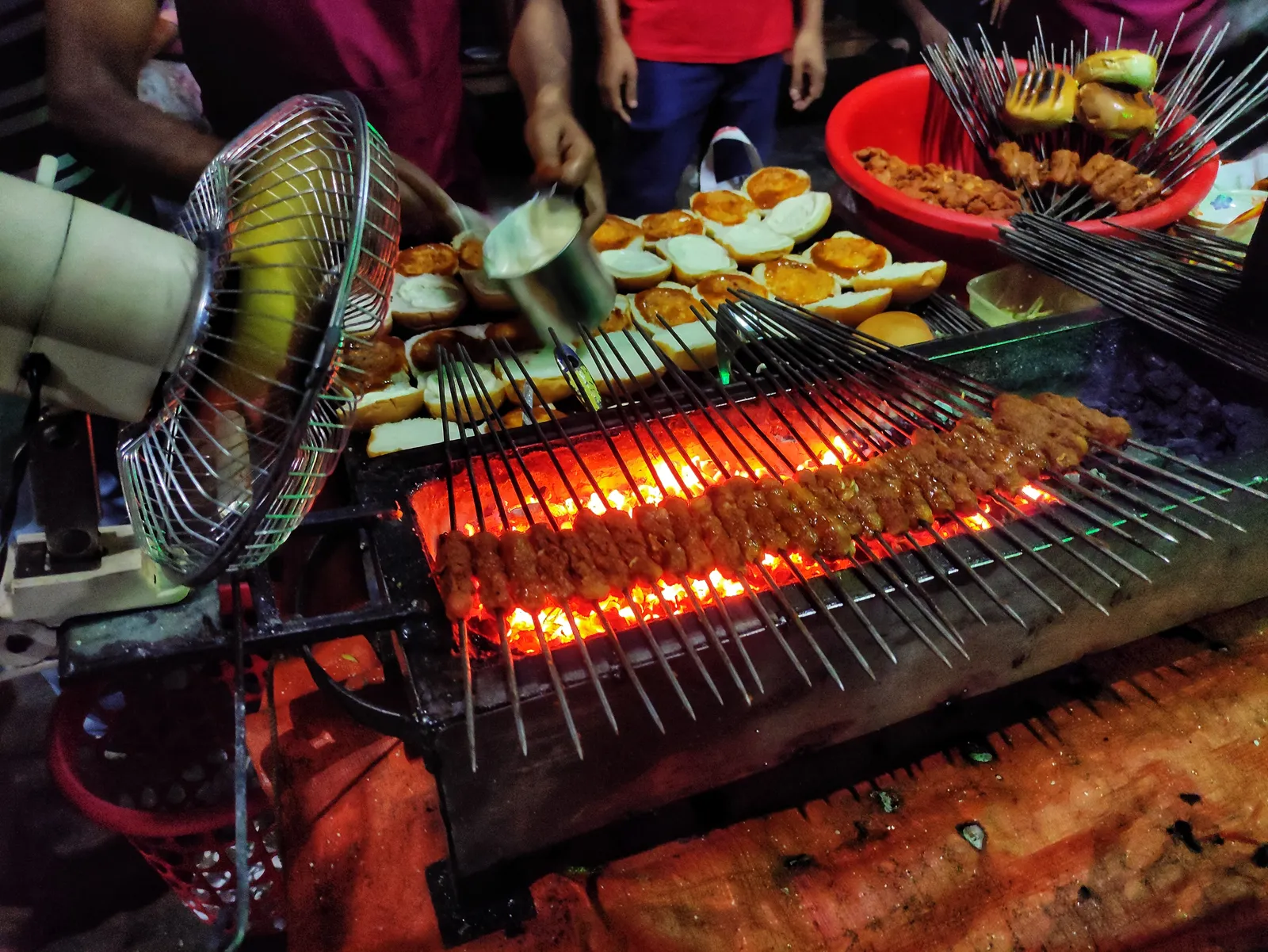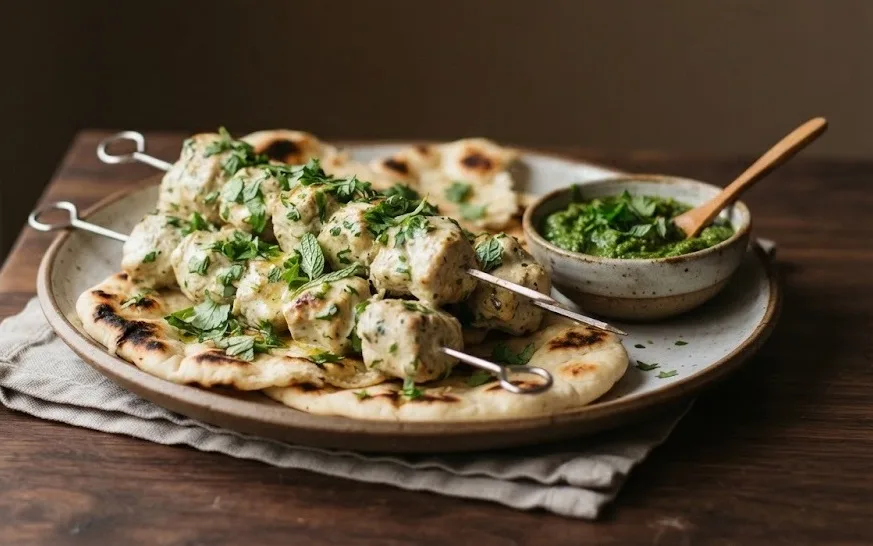
Chicken marinated in a pale blend of yogurt, cream, cashew, and mild spices, grilled so it stays white and succulent rather than red. In Afghan restaurants it typically arrives buried under long-grain rice or on fresh naan with chutney.
Also known as Afghani kebab, kabob-e-murgh, Afghani murgh kebab.
Reference video
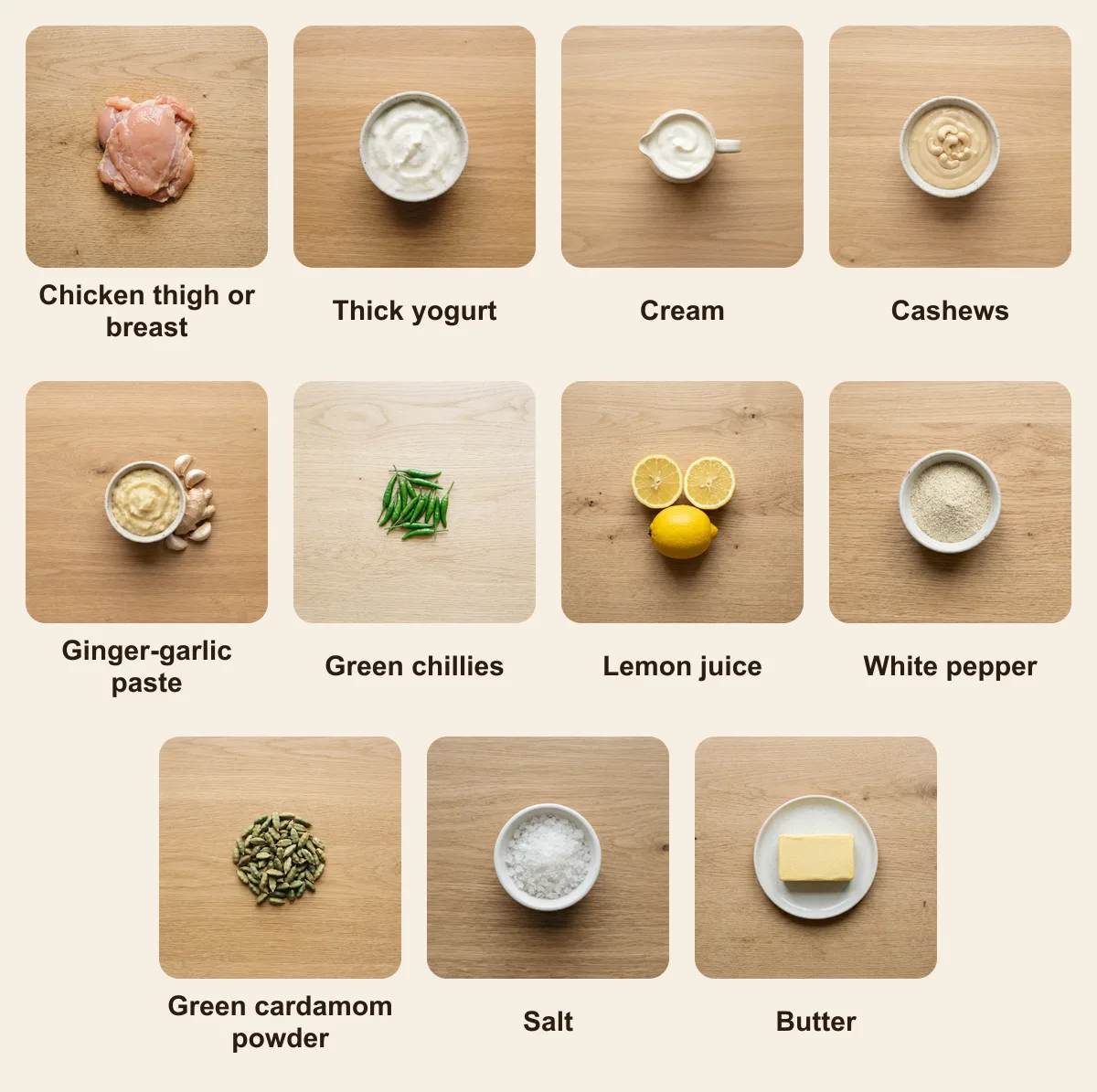
Ingredients
- 800 g chicken thigh or breast, in 4 cm pieces
- 150 g thick yogurt
- 60 ml cream
- 40 g cashews, soaked and blended smooth
- 1 tbsp ginger-garlic paste
- 15 ml lemon juice
- 0.5 tsp white pepper and 0.25 tsp green cardamom powder
- 1.25 tsp salt
- 30 g butter, for basting
How to make it
- 1
Blend the yogurt, cream, cashew, ginger-garlic, lemon, salt and the pale spices into a white marinade.
- 2
Fold in the chicken and refrigerate 6 h; no red spice touches this dish.
- 3
Skewer and grill over moderate coals (or roast at 200 C) 18-20 min, turning gently.
- 4
Baste twice with butter, chasing ivory with faint gold, never char.
- 5
Rest 5 min and serve with naan and green chutney.
Pro tip: Keep the fire genuinely moderate; the cream-and-cashew coat caramelises fast, and anything past light gold turns the signature white kebab bitter.
Where Afghani Chicken Kebab comes from
The name is used loosely — the dish as served in Indian and Pakistani restaurants under this label is more a North Indian idea of Afghan cooking than a Kabul original — but the underlying idea is genuine. Afghan grilling is mild, dairy-forward and unspiced by subcontinental standards, and the dish reflects that accurately even where its recipe has been elaborated abroad.
How Afghani Chicken Kebab is cooked
The marinade is deliberately colourless and the technique is to keep it that way. No turmeric, no chilli powder, no tomato. Thickness comes from hung yoghurt, cream and cashew paste, and the whiteness is maintained by using white pepper rather than black so no dark specks appear.
Cooking is at moderate heat rather than the tandoor's maximum, because the dairy and nut solids in the marinade scorch. The chicken should come off ivory to pale gold, never charred. A final brush of butter as it leaves the fire is standard; a crush of kasuri methi is an optional finish.
Ingredients and shopping
Chicken thigh for flavour or breast for the pale restaurant look — both work with a marinade this protective. Hung yoghurt, thick cream, cashews soaked and blended smooth, and a little grated cheese if you want the restaurant richness.
White pepper, green cardamom and ginger-garlic paste, with a pinch of mace or kasuri methi as optional extras. A squeeze of lemon in the marinade. Long-grain rice or naan, and a green chutney to provide the sharpness the dish deliberately withholds.
How Afghani Chicken Kebab is served
On naan or over long-grain rice, with green chutney, sliced onion and lemon. The chutney is not optional — the dish is rich and supplies no acidity of its own. Afghan green tea afterwards.
Common mistakes
Adding anything coloured
Turmeric, chilli powder or tomato defeat the entire premise. It is a white kebab by design.
Black pepper instead of white
It leaves dark specks in a dish whose appeal is its paleness. Use white pepper.
Cooking it hard
Cream and cashew scorch. Moderate heat, pulled at pale gold.
Thin marinade
Cashew paste and thick cream give the body it needs to cling. Plain yoghurt slides off.
Afghani Chicken Kebab: questions and answers
Why is Afghani chicken white?
The marinade uses cream, cashew and yoghurt with white pepper, and deliberately excludes turmeric, chilli powder and tomato. Paleness is the defining feature.
Is it actually Afghan?
The name is used loosely. Afghan grilling is genuinely mild and dairy-forward, but the elaborated restaurant version is largely a North Indian interpretation.
Can I use chicken breast?
Yes — the dairy marinade is protective enough that breast works here, which is not true of most tandoori kebabs.
Sources and further reading
- Secret To Afghan Chicken Is In The Marinade — The Spokesman-Review