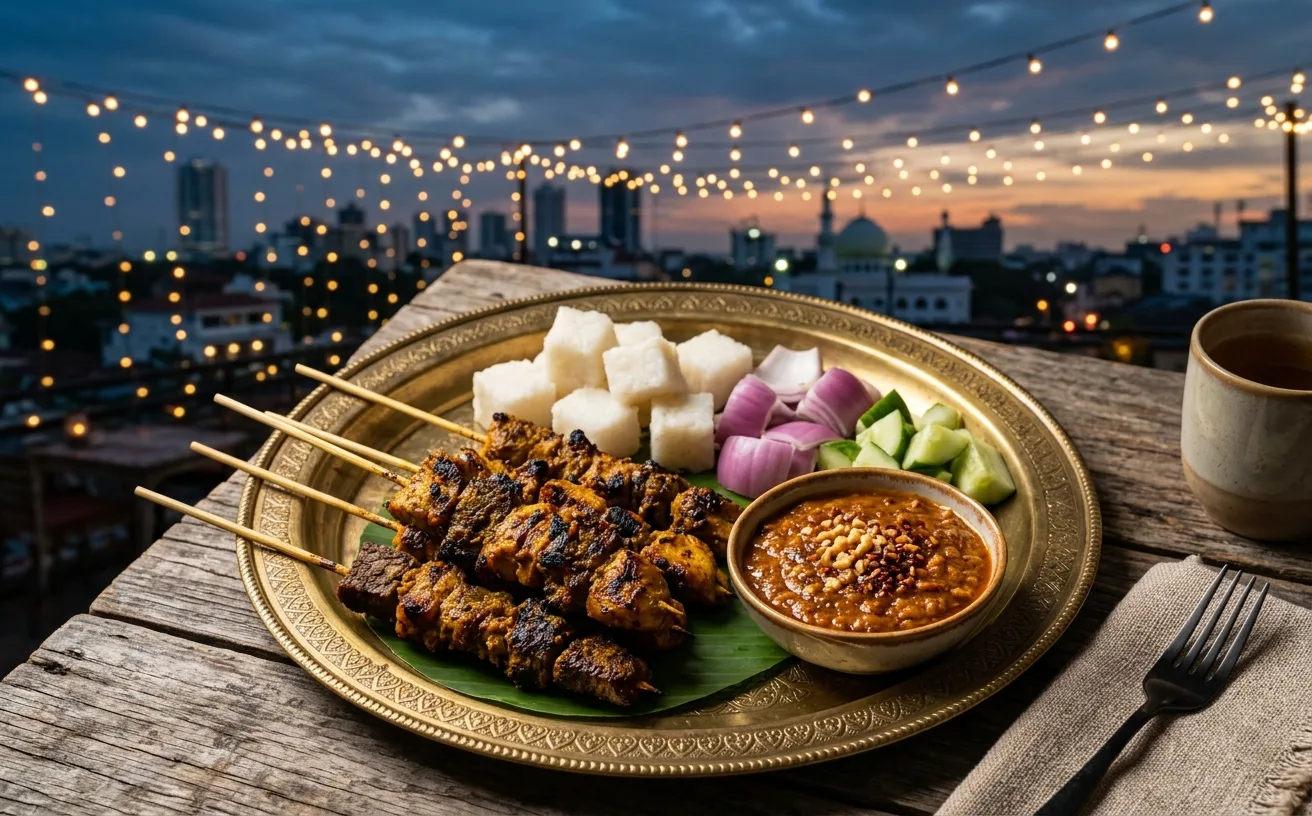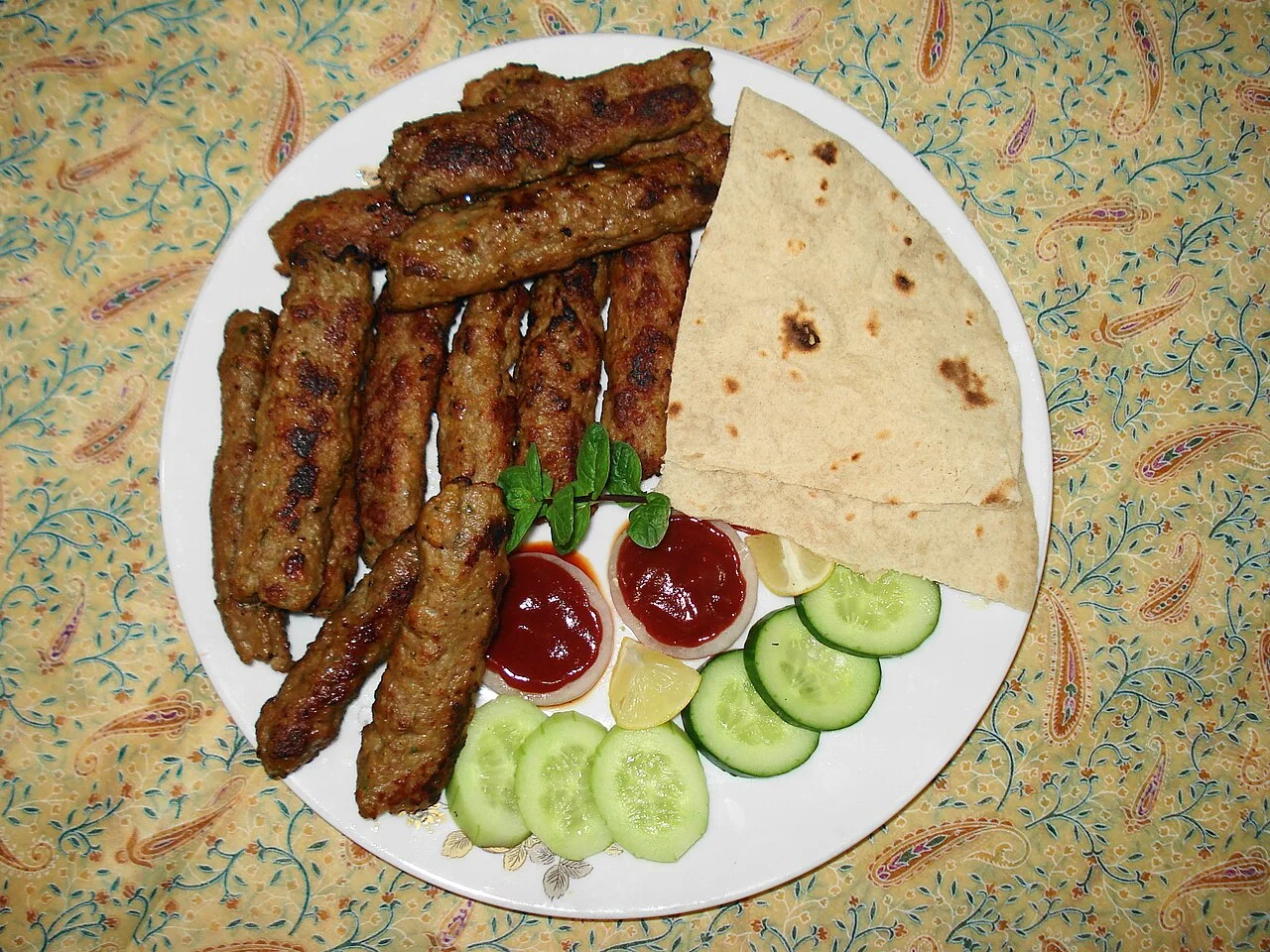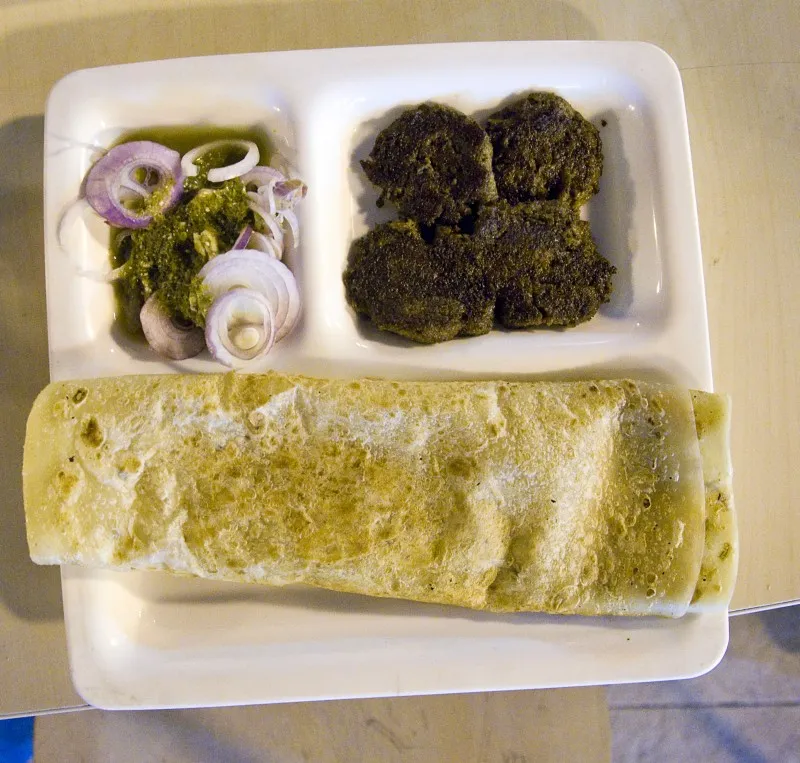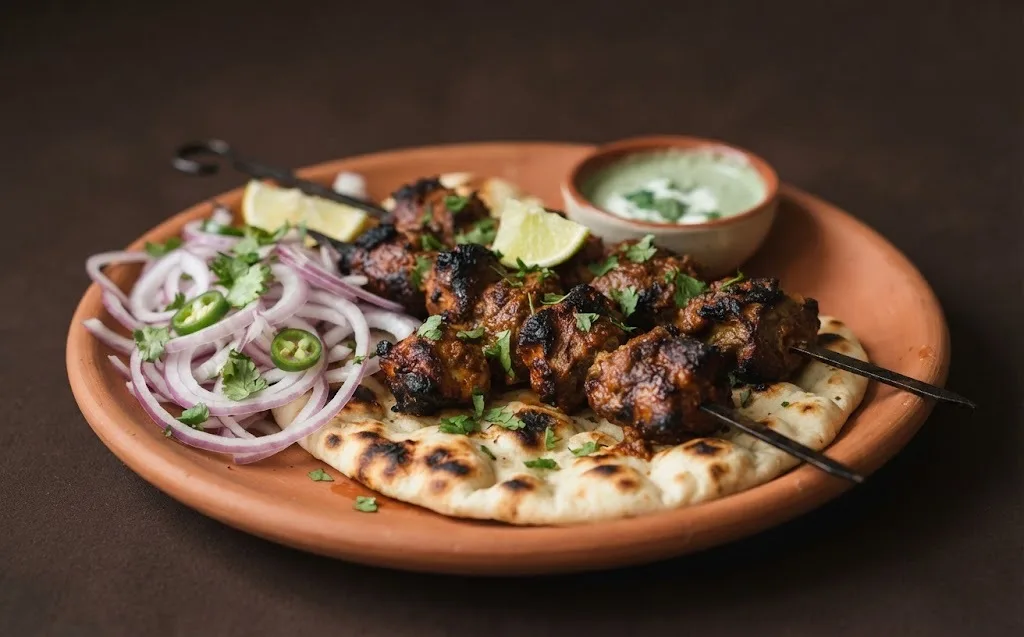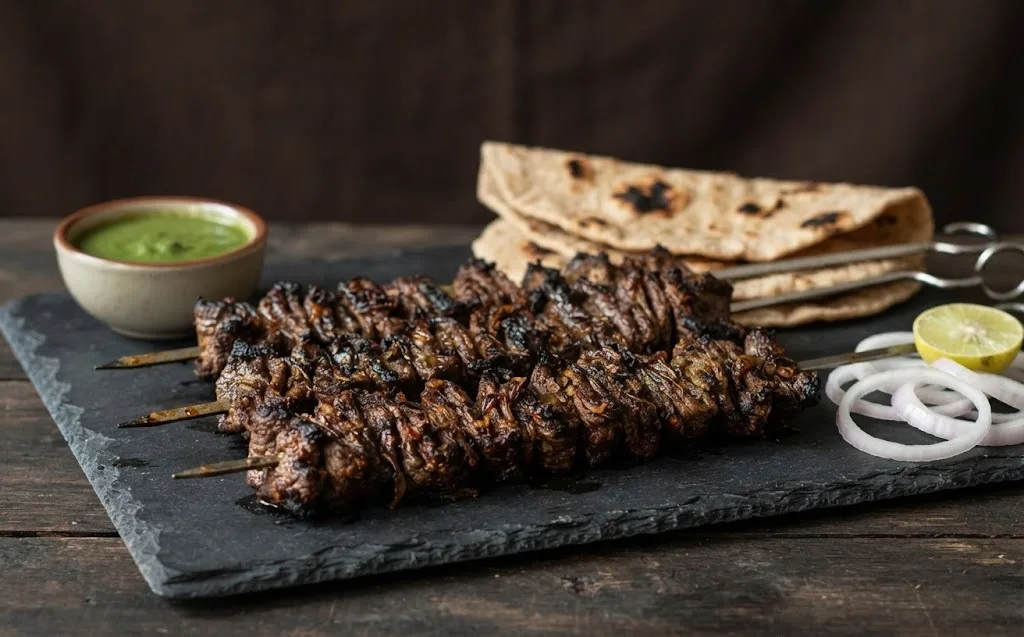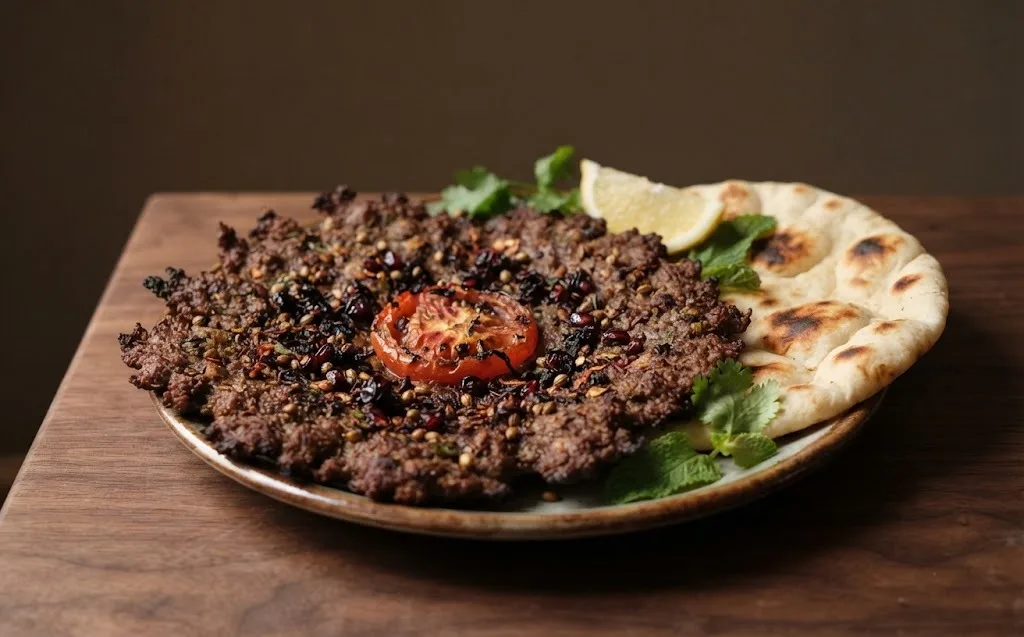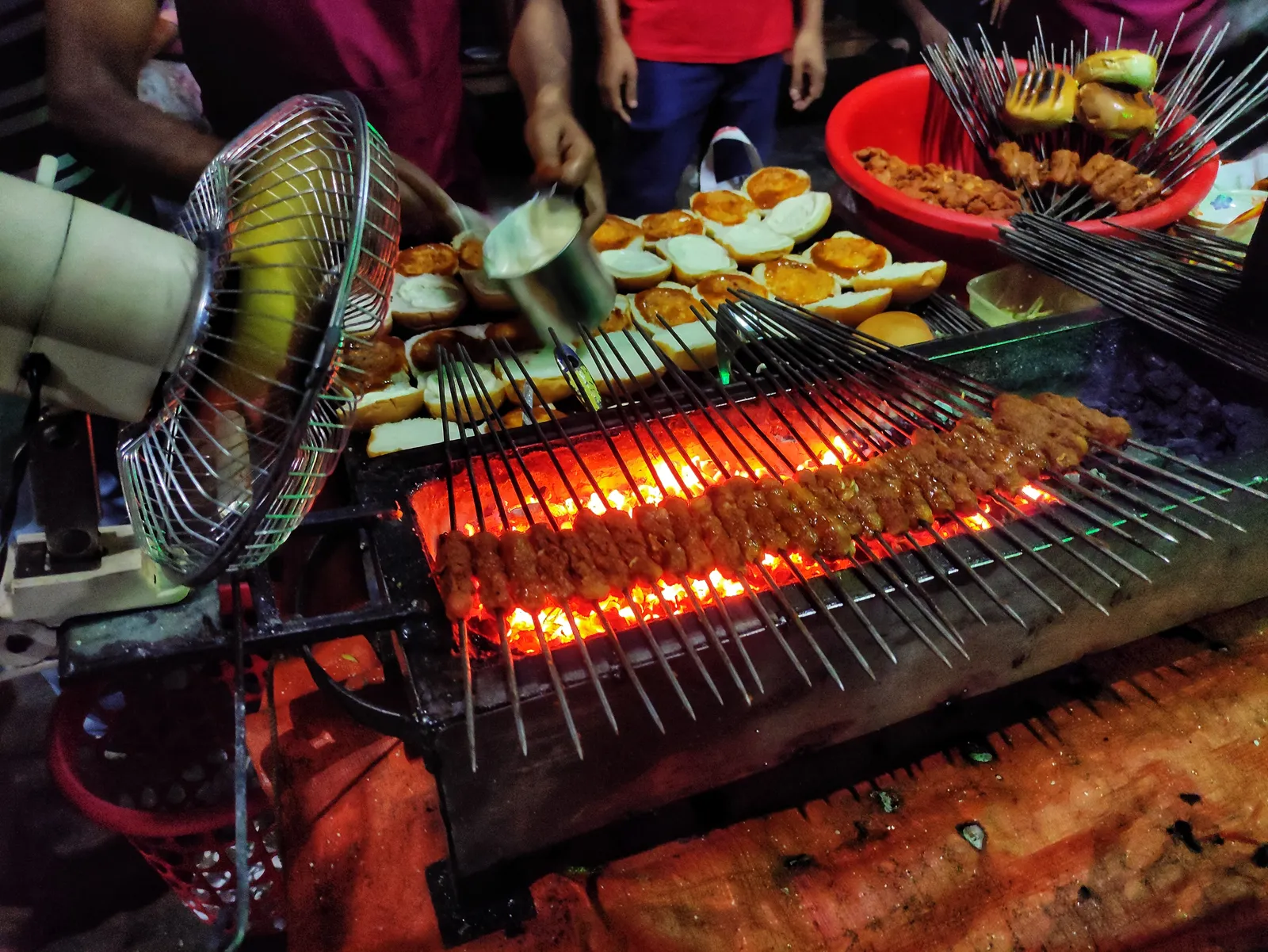
Old Dhaka's after-dark ritual: spiced minced beef or khashi (castrated goat) pressed onto flat iron skewers, fanned over coal braziers in lanes like Nazira Bazar, and eaten folded into luchi or thin ruti with mustard and onion. Bangladesh's Mughal-era kebab culture survives most intensely in these Puran Dhaka kabab houses, especially during Ramadan iftar.
Also known as shik kabab, sheek kabab bangladesh, shik kebab.
Reference video
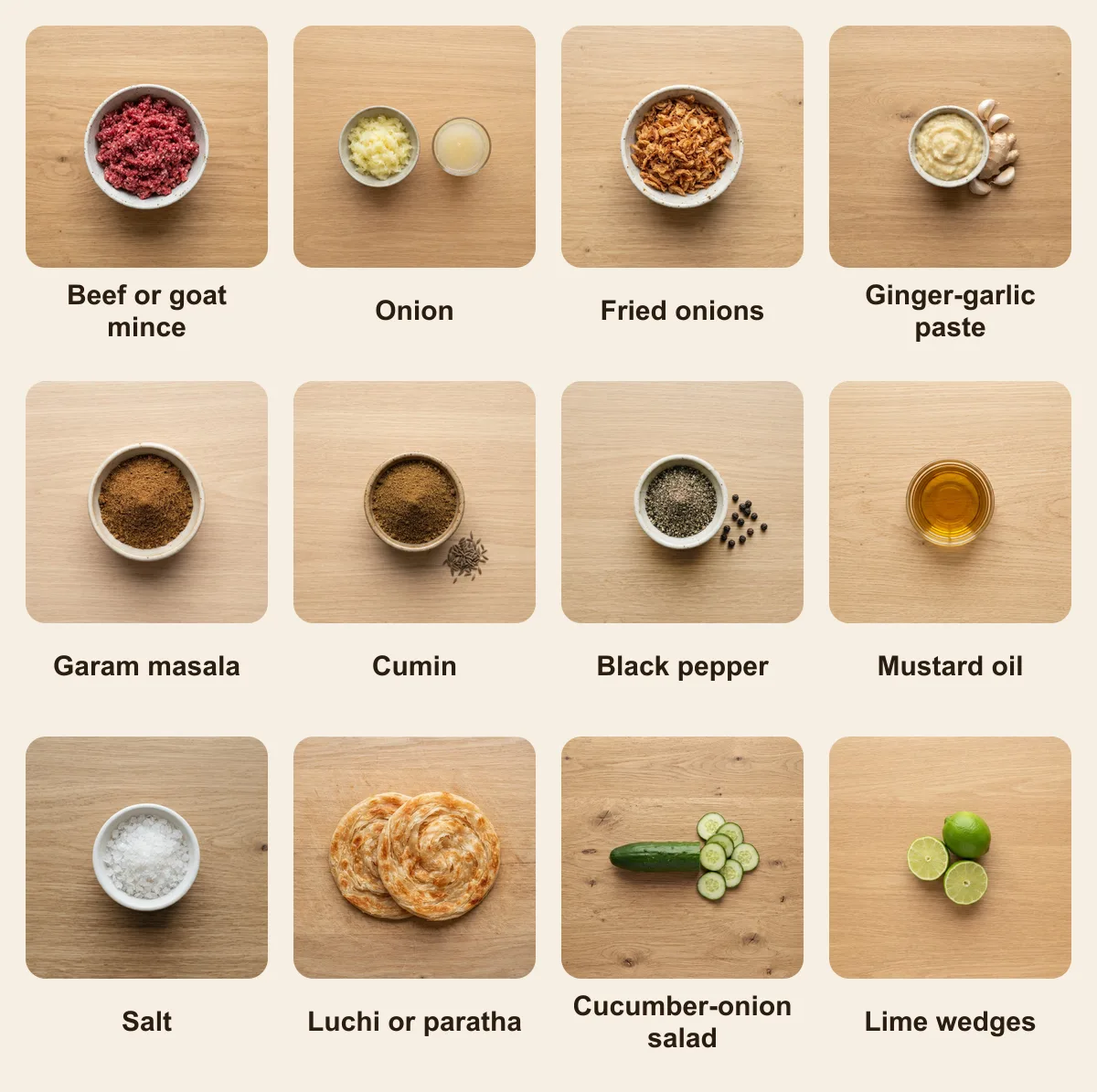
Ingredients
- 600 g beef or khashi (goat) mince, 15-20% fat
- 1 onion, grated and squeezed, plus 1 tbsp fried onions, crushed
- 1 tbsp ginger-garlic paste
- 1.5 tsp garam masala
- 1 tsp cumin, toasted and ground
- 0.5 tsp black pepper
- 1 tbsp mustard oil
- 1.5 tsp salt
- luchi or paratha, cucumber-onion salad and lime wedges
How to make it
- 1
Heat the mustard oil to smoking and let it cool, then work the mince hard with both onions, ginger-garlic, spices, the cooled oil and salt until it pulls in sticky strands from the bowl; rest 2 hours cold.
- 2
Hug handfuls around flat iron skewers into long kababs, thinner than koobideh — Old Dhaka likes them slim and heavily browned.
- 3
Grill over charcoal at a medium ember, fanning the coals (a hand fan is traditional) to keep heat lively without flame.
- 4
Turn every 2 minutes for 8-10 minutes total until deep brown all around with crisp blistered patches.
- 5
Serve off the skewer with luchi, salad and a wedge of lime.
Pro tip: The fanning is functional: bursts of fanned heat crisp the surface repeatedly without pushing the slim kabab past juicy.
Where Shik Kabab comes from
The word shik is the same as seekh and şiş — skewer — and the lineage is direct.
How Shik Kabab is cooked
The Dhaka mixture is distinguished by mustard, which appears both as mustard oil in the mince and as a mustard-and-chilli condiment served alongside. Bengali cooking uses mustard the way other cuisines use chilli — as a primary pungent note — and this is the clearest example of it inside the kebab family.
The mince is worked to stickiness with fried onion, ginger-garlic, and a Bengali warm spice blend, then pressed onto wide flat iron skewers and grilled over open braziers that are fanned by hand. The fanning is not theatre; it lifts the heat for the short burst that a thin skewer of mince needs.
Ingredients and shopping
Beef mince or goat, with around 20 percent fat, ground fine. Mustard oil, heated and cooled before use. Fried onion paste, ginger-garlic, green chilli if you want heat, and a spice blend leaning on cumin, coriander, cinnamon and cardamom.
Wide flat iron skewers. Luchi (the puffed fried bread) or thin ruti to serve. Sliced raw onion, cucumber salad and a squeeze of lime go alongside; a mustard-and-chilli paste is an optional pungent extra.
How Shik Kabab is served
Folded into luchi or thin ruti with mustard paste, sliced onion and green chilli, eaten standing in the lane. During Ramadan it is one item among dozens at the Chawkbazar iftar market. Tea afterwards, or a sweet lassi.
Common mistakes
Raw mustard oil
Heat it to smoking and cool it before it goes into the mince. Raw, it is acrid.
Under-kneading
As with every minced skewer kebab, the mixture must be worked until it grips the steel. No egg, no breadcrumb.
Round skewers
Wide flat iron is what holds the mince. A round skewer lets it rotate and drop.
Grilling over open flame
Flame scorches a slim kabab before the centre cooks. Medium embers, fanned in short bursts, and no flame.
Shik Kabab: questions and answers
What does shik mean?
Skewer — the same word as seekh in Urdu and şiş in Turkish. The lineage of the name runs directly back to Ottoman and Mughal usage.
What is khashi?
Castrated goat, prized in Bangladesh for its tenderness and mild flavour, and commonly used for kebabs.
Sources and further reading
- Chawkbazar Iftar Market — Wikipedia
- Experiencing iftar in Old Dhaka other than Chawk — The Daily Star
- Culinary delights of Puran Dhaka — Dhaka Tribune
- 5 best Kabab places in Dhaka — The Business Standard