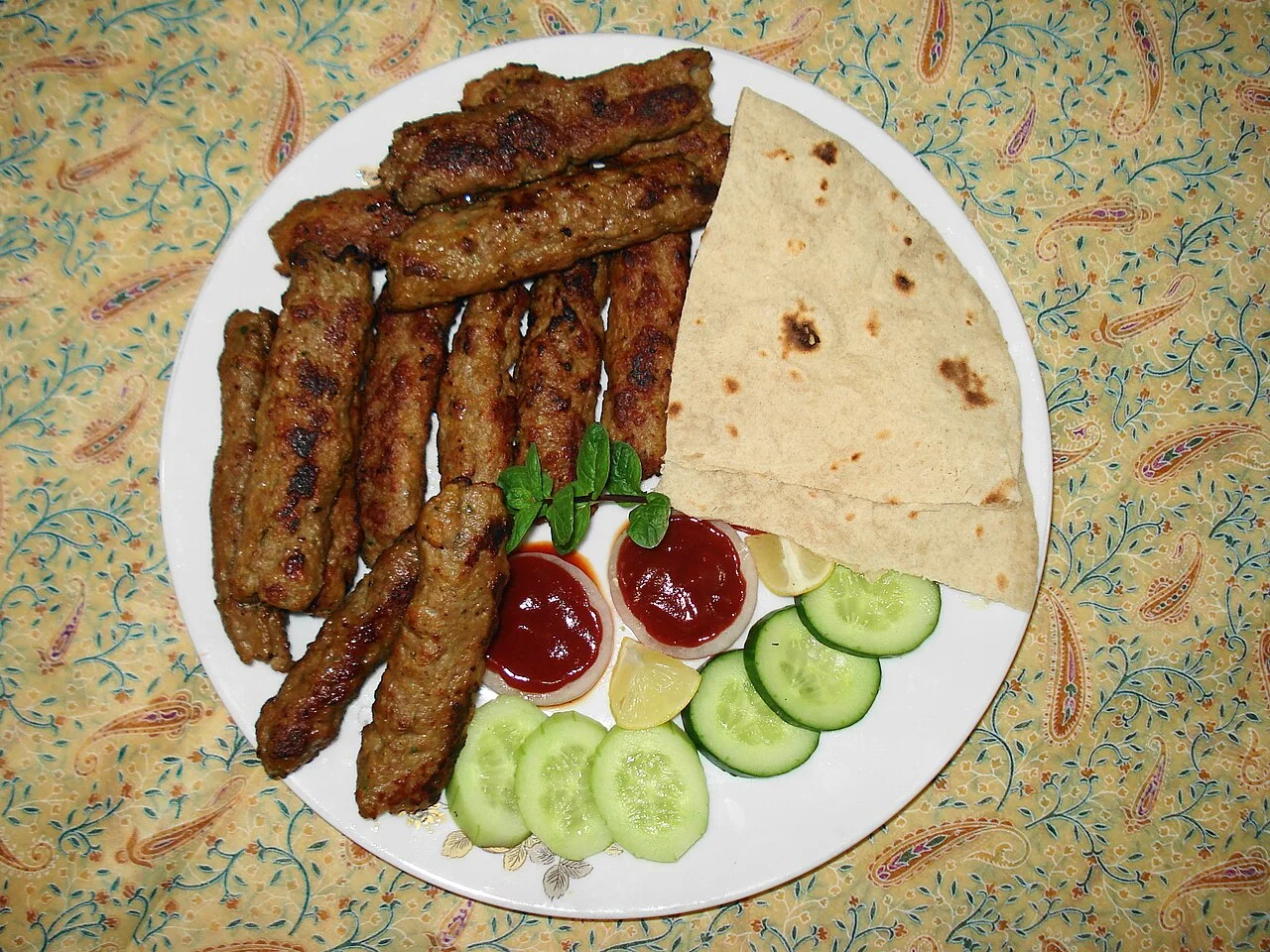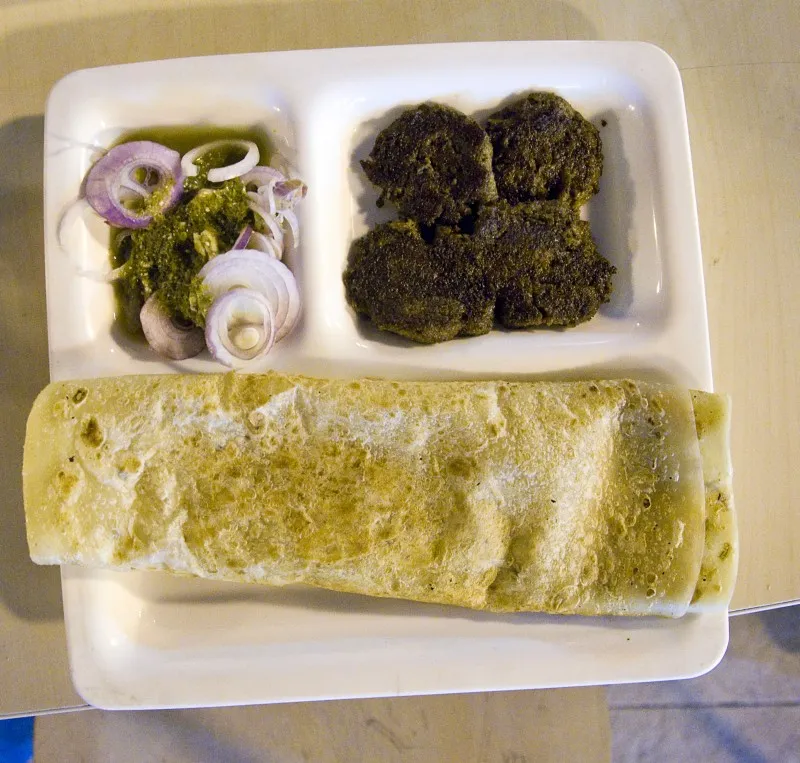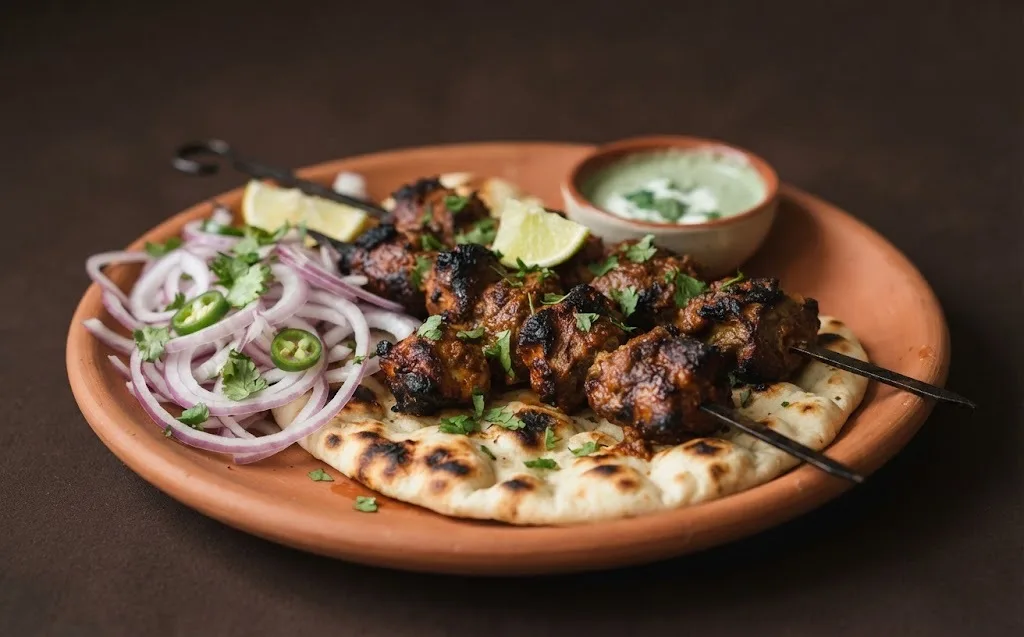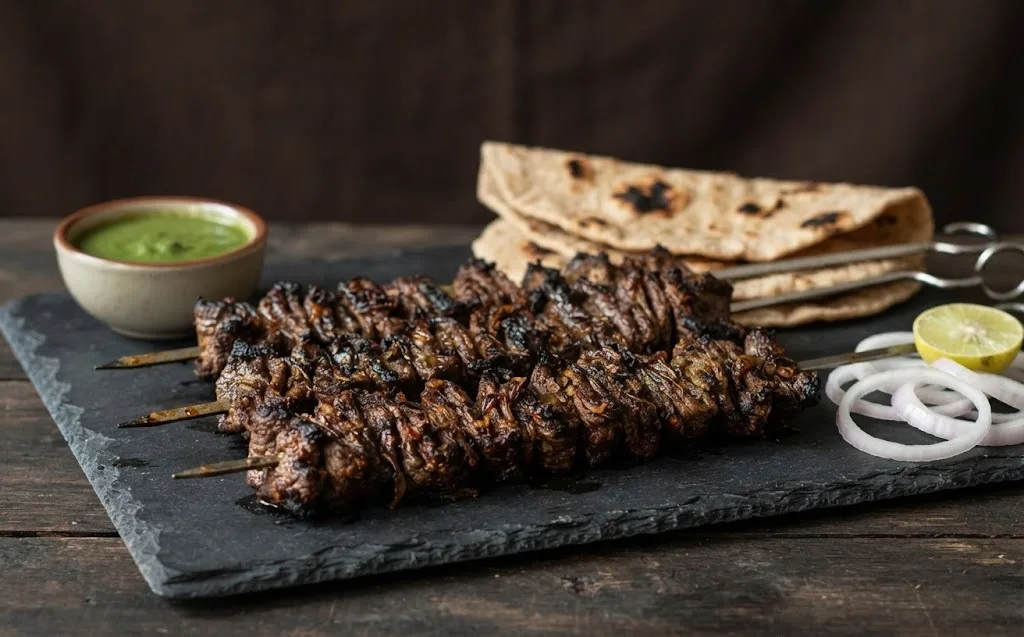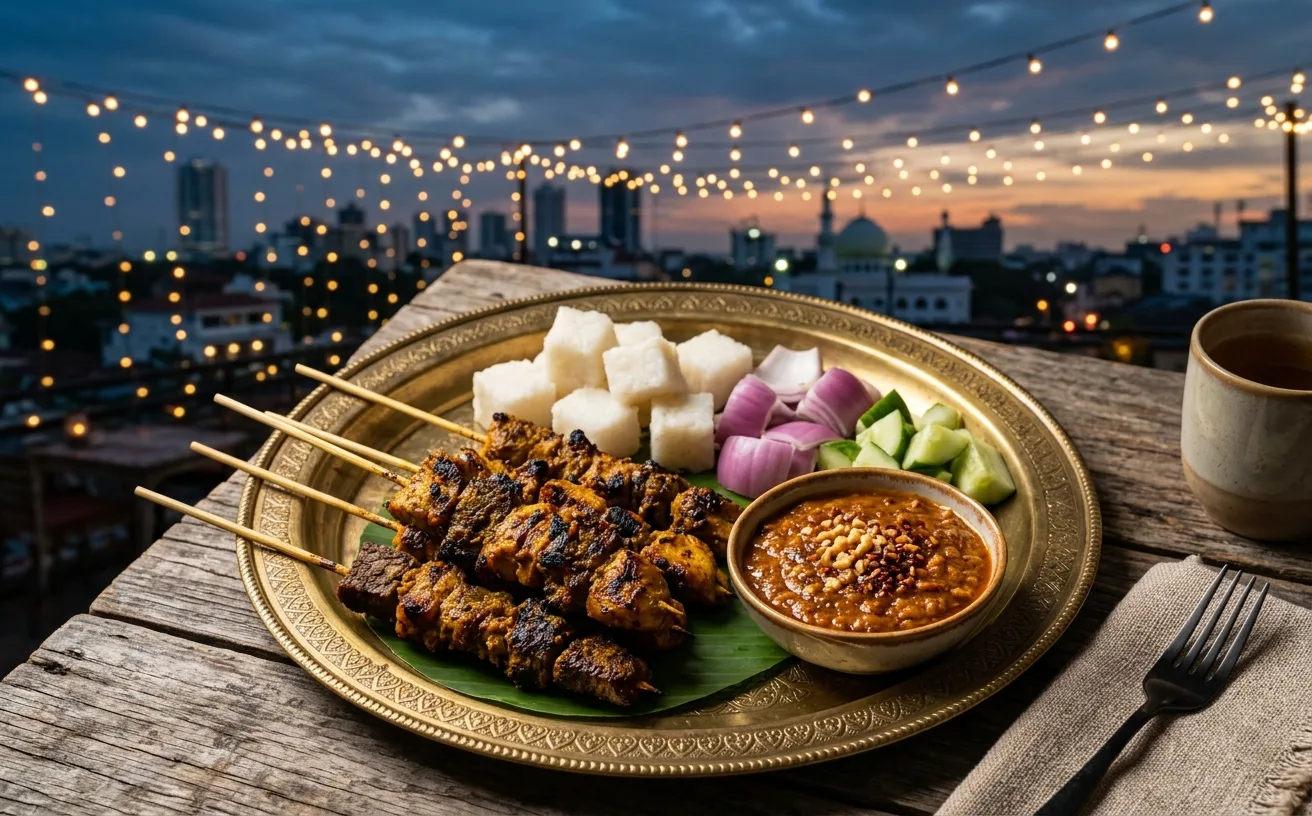
Colombo's Malay community, descended from Javanese exiles of the Dutch era, keeps a local satay tradition alive in Slave Island: beef or chicken cubes in a turmeric-heavy marinade, grilled and doused in a curry-leaf-inflected peanut gravy. It is the island's clearest link between the satay and kebab families.
Also known as sathe, sri lankan satay, malay satay colombo.
Ingredients
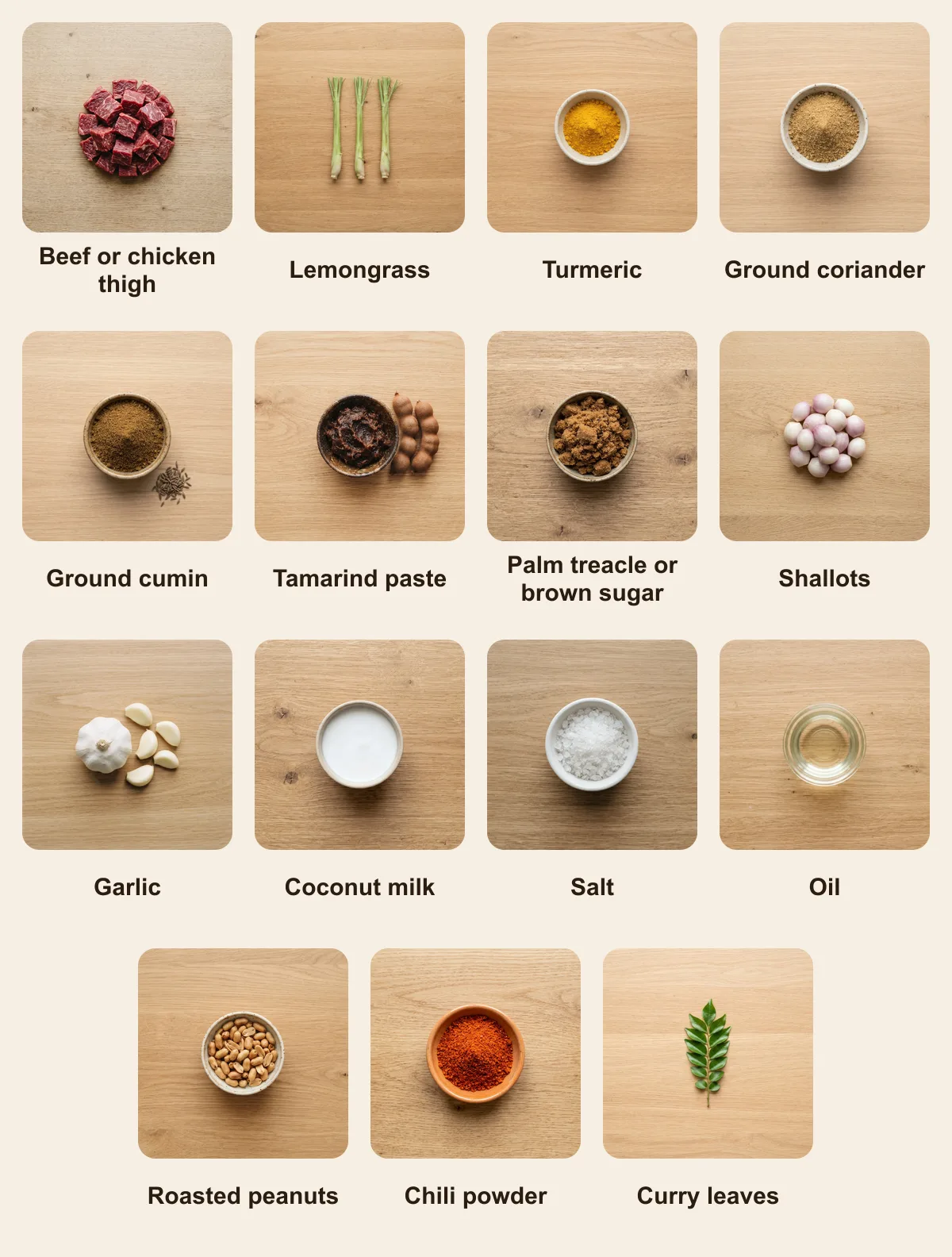
- 600 g beef or chicken thigh, 2.5 cm cubes
- 1 stalk lemongrass, tender core minced, plus extra stalks as optional skewers
- 1 tsp turmeric
- 2 tsp ground coriander and cumin
- 1 tbsp tamarind paste
- 1 tbsp kithul or palm treacle (or brown sugar)
- 2 shallots and 2 garlic cloves, ground
- 100 ml coconut milk
- 1.5 tsp salt
- for the sauce: 1 tbsp oil and 10 curry leaves
- for the sauce: 100 g roasted peanuts, 1 tsp chili powder, 100 ml coconut milk, 1 tsp tamarind paste
How to make it
- 1
Grind the lemongrass, shallots and garlic with turmeric, coriander-cumin, tamarind, treacle and salt, loosen with coconut milk, and marinate the meat 3 hours.
- 2
Simmer the sauce: fry the curry leaves in a little oil until fragrant, then add crushed peanuts, chili, coconut milk, a little tamarind and salt, 10 minutes to a spoonable thickness.
- 3
Thread the cubes onto sticks and grill over medium charcoal 8-10 minutes, turning when each face takes color.
- 4
Warm the peanut sauce and thin with a splash of water if it has tightened.
- 5
Serve Slave Island style — skewers dunked or doused, with bread or seeni sambol rice.
Pro tip: Kithul treacle chars faster than sugar dissolved in a Malay-style kecap baste — turn at 2-minute beats or the sweetness turns acrid.
Where Sri Lankan Sathe comes from
The community descends from Javanese exiles and soldiers brought by the Dutch, and the dish came with them — then diverged, as everything does on an island.
A Javanese cook would recognise the dish and would not recognise the sauce.
How Sri Lankan Sathe is cooked
The marinade carries a spoon of palm treacle alongside the lemongrass, turmeric, coriander, cumin and tamarind — far less than an Indonesian satay's marinade, but enough that the sweetness balancing the dish lives in the marinade rather than the sauce, which stays purely savoury with peanut, coconut and tamarind.
The peanut gravy is built like a Sri Lankan curry rather than like a satay sauce: curry leaves fried in oil until fragrant, then crushed roasted peanut, chilli, coconut milk and tamarind, simmered until thick. Curry leaf is the marker, and it is added at the start so its oils permeate rather than sitting on top.
Ingredients and shopping
Beef or chicken in small cubes. Lemongrass, turmeric, coriander, cumin, tamarind, palm treacle, shallots and garlic for the marinade; chilli powder for the sauce. Roasted peanuts ground coarse rather than peanut butter, which is too smooth and too sweet.
Curry leaves, fresh if possible, in the sauce for the Sri Lankan note. Coconut milk and tamarind. Bamboo skewers, soaked. The sauce should be thick enough to coat the skewers when they are doused, which is how it is served.
How Sri Lankan Sathe is served
Skewers doused in the peanut gravy, with a cucumber and onion sambol and bread or rice. In Slave Island it is sold by the skewer in the evening. It is street food and it is eaten immediately, with the sauce still hot.
Common mistakes
Using peanut butter
It is too smooth and too sweet. Grind roasted peanuts coarsely for the right texture.
Adding curry leaves at the end
They need to be fried in the oil at the start so their aroma permeates the sauce.
Making it as sweet as Indonesian satay
The Sri Lankan version is less sweet. Restraint with the sugar.
Skipping the tamarind
The sauce needs its sourness for balance. Without it the peanut and coconut are cloying.
Sri Lankan Sathe: questions and answers
Is sathe the same as satay?
It descends from Javanese satay, brought to Sri Lanka by the Malay community, but it has diverged — turmeric-heavy marinade and curry-leaf peanut gravy.
Who are the Sri Lankan Malays?
A community descended from Javanese exiles, soldiers and political prisoners brought to Sri Lanka during Dutch rule. Slave Island in Colombo remains a centre of their food culture.
Can I use peanut butter for the sauce?
It is too smooth and too sweet. Coarsely ground roasted peanuts give the correct texture.
Sources and further reading
- Slave Island — Wikipedia
- Malay Street Cuisine — Sunday Observer (Sri Lanka)
- Authentic Sri Lankan Malay food on parade at Cinnamon Grand — The Morning (Sri Lanka)